Tag: blues

  • Muddy Waters – The Best of Muddy Waters

    Muddy Waters – The Best of Muddy Waters

    Compilation | April 1958 | Chess Records
    “He lived on the Stovall plantation, three or four miles outside Clarksdale, in a cabin that doubled as a good time place, a juke house, on weekends. He made the best moonshine whiskey in the vicinity. Sometimes he played guitar in a little country string band, sometimes he played with a partner, and sometimes he played alone. His name was McKinley Morganfield, but everybody knew him as Muddy Waters.”


    My fascination with Muddy Waters has been part of my life since my first deep thinking on the blues began. If you get serious about this music, you’ll be led to Muddy eventually — it’s inevitable. He’s one of the originators, but what separates him from a lot of foundational figures is that he kept moving, kept changing, kept recording well past the moment that should have defined him. For a lot of rock musicians, the argument about where rock and roll actually begins comes down to Muddy or Wolf. Blues had a child, and that child was rock music. That’s set in stone, and Muddy is one of the names carved into it.

    The name itself carries weight for me. Muddy Waters. The music he created feels like it comes from the ground up — from the earth, the mud, the work and the toil, the plantation. It’s evocative in a way that’s hard to articulate and harder to resist. You don’t analyze Muddy Waters so much as you absorb him.

    This record was his first album — a greatest hits collection issued by Chess Records, and one of the first LPs the label ever released. What you get here is a combination of Muddy’s deep Delta roots alongside his full-band Chicago rocking blues of the 1950s. A real historical document. Astonishing works of inspired music. The whole arc of a man’s artistic life compressed into twelve tracks.

    THE OBJECT

    I picked this up in March 2026 at Siren Records. It’s another of the Chess 75th Anniversary releases, same series as the Howlin’ Wolf Moanin’ in the Moonlight pressing I wrote about previously. I was pleased with that presentation, and I’m equally pleased with this one — happy to own a piece of blues greatness in these tracks.

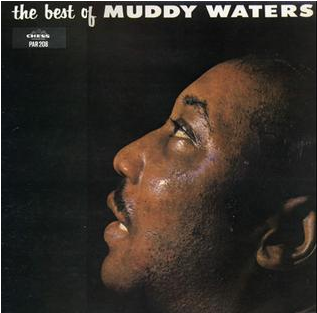
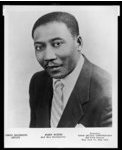
    The cover is a powerful profile image of Muddy that earns its place in the canon of great blues album artwork. There’s an intensity in his face, a longing look upward. This was a man seeking more out of his life and his journey from the Delta to Chicago. It has a pastoral feeling to it despite being so spare: the black background, Muddy’s face, the bold all-caps lettering of his name. Pure simplicity. It reminds me of the Etta James At Last cover — that same combination of commanding presence and elegant restraint. Great cover for 1958.

    When the Rolling Stones first visited Chicago in 1964, they made a pilgrimage to 2120 S. Michigan Avenue and recorded there. Keith Richards has said this record — alongside Robert Johnson’s recordings — was foundational to everything the Stones became. The British Invasion was, in large part, American blues records shipped across the Atlantic and returned electrified, sped up. This compilation was one of the primary texts that made that possible.

    The liner notes on this record are among the best I’ve read from the era. Studs Terkel — Chicago’s great chronicler — wrote them, and he puts Muddy’s legend down with real skill. He establishes the mythology, generates excitement, and leaves you with a kind of eerie awe for what you’re about to hear.


    The Band

    The core ensemble across this period included:

    • Little Walter Jacobs — harmonica. Arguably the greatest blues harmonica player who ever lived. His amplified harp sound, run through a PA microphone, created a tone that had never existed before and hasn’t been replicated since. He’s all over this record and the album is richer for every second he’s on it.
    • Jimmy Rogers — second guitar
    • Elgin Evans / Leroy Foster — drums, varies by session
    • Big Crawford / Willie Dixon — bass (Crawford on the early recordings, Dixon later)
    • Otis Spann — piano, appears on the 1954 sessions

    Production Notes by Track

    Side One

    “I Just Want to Make Love to You” — Recorded April 13, 1954 | 2120 S. Michigan Avenue | Chicago, Illinois

    “Long Distance Call” — Recorded 1951 | Universal Recording | Chicago, Illinois

    “Louisiana Blues” — Recorded late 1950 / early 1951 | Universal Recording | Chicago, Illinois

    “Honey Bee” — Recorded 1951 | Universal Recording | Chicago, Illinois

    “Rollin’ Stone” — Recorded 1950 | Universal Recording | Chicago, Illinois

    “I’m Ready” — Recorded 1954 | 2120 S. Michigan Avenue | Chicago, Illinois

    Side Two

    “(I’m Your) Hoochie Coochie Man” — Recorded January 7, 1954 | 2120 S. Michigan Avenue | Chicago, Illinois

    “She Moves Me” — Recorded 1951–52 | Universal Recording | Chicago, Illinois

    “I Want You to Love Me” — Recorded 1950 | Universal Recording | Chicago, Illinois

    “Standing Around Crying” — Recorded 1952 | Universal Recording | Chicago, Illinois

    “Still a Fool” — Recorded 1951 | Universal Recording | Chicago, Illinois

    “I Can’t Be Satisfied” — Recorded April 20, 1948 | Universal Recording | Chicago, Illinois

    The record is sequenced to open with the most polished material and close with the sparest. You’re hearing the story in reverse — from the full-band Chicago electric sound back toward the lone man and his guitar in 1948.


    THE MUSIC

    Listening Notes — March 11, 2026

    Side One

    “I Just Want to Make Love to You” (1954)

    Blunt lyrics. No idioms, no coded language — just a direct, plainspoken statement of desire. Willie Dixon wrote it and Muddy delivers it like a verdict. Little Walter’s harmonica on this track is otherworldly, a wicked spirit inhabiting the room alongside you. And that’s true for the whole record — Little Walter is a recurring specter throughout.

    The Rolling Stones’ version pumps the tempo up and you have rock and roll alchemy at work — pure magic. You can hear the beginning of an entire movement of music in the distance between these two recordings. Muddy’s voice has a very specific timbre, extremely unique to him. Many people noted that he carried the quality of a church call in his delivery, a spiritual invocation. Here that same quality exists entirely outside any church walls. It sounds great on this pressing — powerful and present, Muddy’s wails right there in the room with you.

    “Long Distance Call” (1951)

    The guitar steps into the foreground more here than on the opener. Muddy’s expertise is on full display, and his blues phrasing is exceptional throughout. But the line that stops you is this one: “the party said another mule kicking in your stall.” One of the best blues lines ever written.

    “Louisiana Blues” (1950)

    “Get me a mojo hand” — Muddy’s source of luck in gambling and with women, rooted in Hoodoo tradition that runs deep through Delta blues culture. Worth spending time with if you’re unfamiliar. There’s also a call and response element here — someone says “take me with you man when you go” — that adds a communal, almost ceremonial quality to the track.

    This is a deep and murky blues. The waters of Louisiana are in the sound itself. Robert Palmer wrote in Deep Blues that this track had a power all its own — the power of the Delta’s deepest music unleashed by electricity. He called it irresistible.

    “Honey Bee” (1951)

    Stripped down to its essentials — first and second guitar, and Muddy. Blues in its plainest form relative to the full-band tracks. When Muddy draws out the “pleaaase” on this one, it’s something else. Listen also for the guitar imitating the buzzing of a bee. It’s a small touch and it’s perfect.

    “Rollin’ Stone” (1950)

    Just Muddy and his guitar. This was his first single for Chess Records, and it sold well enough to give him his freedom — his leverage, his foothold. Even in that uncertain moment, the confidence in his singing and his playing is staggering. All of rock music lives somewhere in this guitar. It’s not about technical skill — it’s about feeling and sound. You can hear what the Stones were inspired by. You can hear riffs from across decades of rock music in the spaces between Muddy’s moving fingers and the strings.

    “I’m Ready” (1954)

    The full band comes back after the intimacy of Rollin’ Stone, and the contrast lands hard. Swinging blues, the drums and bass really walking around on this track. “I’m drinking TNT, I’m smoking dynamite” — that line just works every time. Little Walter again is a spectre here. Something about his sound conjures spirits, makes spooky thoughts. Deeply evocative. There’s a reason people reach for supernatural language when describing this music.


    Side Two

    “(I’m Your) Hoochie Coochie Man” (1954)

    A severe, brutal announcement of a song. Muddy didn’t introduce himself here — he declared himself. The stop-time effect that structures the whole track became one of the defining motifs in electric blues, and you can hear why — those gaps, those silences before the band crashes back in, create a tension that’s almost unbearable in the best way. “John the Conqueror Root” referenced in the lyrics is worth looking up — Studs Terkel addresses it in the liner notes and the context deepens the song considerably.

    When Muddy screams “everybody knows I’m here” — my system shudders. The room shakes.

    “She Moves Me” (1951–52)

    A woman with supernatural powers — the reverse angle from Hoochie Coochie Man. Here it’s the woman who holds the magic. “She can make a blind man see.” The bass drum sound on this track is genuinely curious — it has a resonance I can’t quite place, something uncanny about it. Not sure if it’s a conventional drum or something improvised.

    “I Want You to Love Me” (1950)

    The confidence on this track is what I’m pretty sure inspired generations of rock musicians to pick up guitars and try to feel the same way. Little Walter stands out again here.

    “Standing Around Crying” (1952)

    Low and slow, mournful blues. It’s worth noting that for a compilation of this size and reputation — twelve tracks representing Muddy’s essential early output — this is the only song that’s squarely about a man upset with his circumstances. One out of twelve. That says something about the personality projected across this record. Muddy is rarely a victim. He’s more often a force of nature.

    “Still a Fool” (1951)

    More of that spooky guitar. On this track you can hear voices somewhere in the background It adds immersion. Ghosts are present. Muddy here is acknowledging the terrible weight of the situation — getting involved with another man’s wife, knowing it, doing it anyway. The blues doesn’t moralize.

    “I Can’t Be Satisfied” (1948)

    The album closes with the OG — one of the most important records in blues music, recorded when Muddy was still finding his footing as a recording artist and somehow already fully himself. The fact that Chess saved it for last is a statement. You’ve traveled backward through twelve years of recordings, and you land here, at the source. Just Muddy and his slide guitar, 1948, and everything that followed is already present in the room.


    Closing

    Every song on this collection is a masterclass in electric blues. If it’s an invention, this record is the patent. If it’s a library, these are the essential texts. There’s such a ferocity here that you can feel its influence as the needle tracks along the groove — the record bouncing with Muddy’s wails, his claims full of supernatural imagery and self-mythologization. Robert Palmer called his persona “imperial and commanding.” Listen to this record and you understand exactly what he meant. Even when Muddy gets vulnerable, he never stops being Muddy. That’s a rare thing.

    Essential stuff. Impressive, irreplaceable stuff.


    Thanks for reading.

    RTR
  • Howlin’ Wolf – Moanin’ in the Moonlight

    Compilation | 1959 | Chess Records

    Recorded 1951-1958 | Producers: Leonard Chess, Phil Chess, Willie Dixon, Sam Philips


    My copy is the Chess Records 75th Anniversary pressing, pressed at Quality Record Pressings from the original masters. I snagged this on Discogs in January 2026, and it arrived in great condition. These reissues have a solid reputation, and I’ll attest to that. The tip-on gatefold sleeves are made from high-grade board, and the covers themselves are glossy — they catch the light in a way that feels intentional.

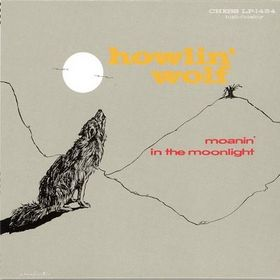
    Then there’s the artwork. What we have here is a study in liminal space: not much to it, and that’s the point. A lone wolf. A single tree far off in the distance. Spare and stark, like a Cormac McCarthy scene before McCarthy became a household name. The whole package is solid, and this pressing is a genuinely good copy to seek out.

    For context on the label itself — Chess Records is one of the all-time great American record labels. Founded in Chicago by Leonard and Phil Chess, the label became the epicenter of blues and R&B in the postwar era, documenting artists whose work became the bedrock of modern popular music. You can’t tell the story of American music without Chess.

    Original pressings of this record are highly sought after and command serious prices. This reissue is a respectable alternative, and while it’s marketed with audiophile credentials, I’d say it meets the minimum threshold for that designation rather than exceeding it. What it does deliver is a clean, open, and spacious sound — large and well-rendered. Whether that presentation fully captures the rawness of the original mono pressing is hard to say without a side-by-side comparison, which I don’t have. What I can say is that an audiophile mastering job inevitably smooths some edges, and with Wolf, those edges are kind of the whole point.

    Before we get into the music, here’s Chess legend Steve Jordan on the style of this record — specifically on that country blues sound and what happened to it when the geography shifted north to Chicago.

    From Memphis to Chicago: Steve Jordan on Howlin’ Wolf’s Moanin’ In The Moonlight


    THE MUSIC

    The first thing that hits you is the voice. Then the clarity within the rawness. Then, if you’re paying attention, something more subtle: the audible difference between the Memphis recordings and the Chicago recordings. You can feel that transition in this music, and that’s what makes this compilation an essential document. It’s not just a greatest hits collection — it’s a case study in how a sound migrated from one geography to another and transformed in the process. You can hear it in the intonations of Wolf’s voice, in the guitar work, in the production itself.

    What you’re getting here, across this entire compilation and within the guttural wail of Chester Burnett’s vocals, is blues as catharsis — an outpouring of emotion, a coping mechanism, a primal release. The blues doesn’t explain itself. It just hits you.


    Production Notes by Track

    Moanin’ at Midnight Recorded July 1951 | Sam Phillips, Producer | Memphis Recording Service | Memphis, Tennessee

    How Many More Years Recorded July 1951 | Sam Phillips, Producer | Memphis Recording Service | Memphis, Tennessee

    Smokestack Lightnin’ Recorded January 1956 | Leonard Chess, Phil Chess, Willie Dixon, Producers | Chess Studios | Chicago, Illinois

    Baby How Long Recorded 1954 | Chess Studios | Chicago, Illinois

    No Place to Go Recorded 1954 | Chess Studios | Chicago, Illinois

    All Night Boogie Recorded 1953 | Memphis, Tennessee

    Evil (Is Going On) Recorded 1954 | Leonard Chess, Phil Chess, Willie Dixon, Producers | Chess Studios | Chicago, Illinois

    I’m Leavin’ You Recorded 1959 | Chess Studios | Chicago, Illinois

    Moanin’ for My Baby Recorded 1958 | Chess Studios | Chicago, Illinois

    I Asked for Water (She Gave Me Gasoline) Recorded 1956 | Chess Studios | Chicago, Illinois

    Forty-Four Recorded 1954 | Leonard Chess, Phil Chess, Willie Dixon, Producers | Chess Studios | Chicago, Illinois

    Somebody in My Home Recorded 1957 | Chess Studios | Chicago, Illinois

    That variance in sound between Chicago and Memphis is the spine of this compilation. The differences are distilled across these twelve tracks — sometimes subtle, sometimes enormous — and together they give you two distinct versions of the same artist. That contrast is the whole story.


    Listening Notes — January 21, 2026

    Side One

    Moanin’ at Midnight — Raw wailing. The production sounds rough in the best possible way — like you’re crammed into a broom closet jamming with the boys. This is ground-up music. The house is rocking. There’s a tinny, close-mic’d quality to it that feels entirely honest. Worth noting: Ike Turner plays piano on this session, one of his earliest documented recording appearances.

    That opening hum grabs you immediately — and compared to his other vocal performances, something feels fundamentally different about it. It doesn’t quite sound like him. There’s a quality of possession to it, as though something else has taken over. The ghost outside the window, the spirit calling on the telephone — these aren’t just lyrical images. They carry the weight of genuine dread, the kind that can be read as an evil spirit closing in, or equally, as the suffocating guilt of an unfaithful man haunted by what he’s done.

    How Many More Years — Same July 1951 session as Moanin’ at Midnight, same Sam Phillips production, same room. Robert Palmer has cited this track as containing one of the earliest recorded distorted power chords in history, courtesy of guitarist Willie Johnson. The harmonica work here is fantastic. This is a foundational document, not just a great song.

    In this song a stark, plain claim is made: Wolf would rather be dead than to deal with an unfaithful woman.

    Smokestack Lightnin’ — Great. Wolf casting spells here. Transcendent. There is so much emotion packed into that voice that it almost defies analysis — you just have to sit with it. The guitar keeps the eternal foundation locked in while Wolf does whatever it is he does up top. Wild man style. This is the one that gets you if nothing else does.

    Baby How Long — More great Hubert Sumlin guitar work. Sumlin is one of the unsung heroes of this entire era, and his presence throughout the Chicago recordings gives them a cohesion and a fire that’s unmistakable.

    No Place to Go — Menacing. That’s the word. There’s a slow, low-end threat running through this one that doesn’t let up.

    All Night Boogie — Uptempo. This is the juke joint side of Wolf — the version of him that packed clubs and kept people on their feet. You can feel the room in this one.

    Side Two

    Evil (Is Going On) — Such aggression in this recording. The plainness of the voice, the directness of the delivery, the seriousness baked into every syllable. This is EVIL. It’s happening, it’s bad, and Wolf wants you to know about it. But the song opens up the more you sit with it. Is the evil the man creeping out the back door? The woman? The singer’s own jealousy and insecurity? There’s a lot you can read into this, and that ambiguity is part of what makes it linger.

    I’m Leavin’ You — Defiance, clean and direct. Good Chicago sound on the production. Traditional mid-tempo blues, but Wolf brings the weight.

    Moanin’ for My Baby — There’s something different in this recording. The moan sounds more mature, more weathered. You can hear the years on him. Not a complaint — it adds gravitas.

    I Asked for Water (She Gave Me Gasoline) — This is some down-home stuff, and I mean that as high praise. So good. I just love this period of blues production.

    Forty-Four — Locked in. The rhythm on this track is relentless, hypnotic. Don’t fight it.

    Somebody in My Home — The drums here are footsteps on the floor. That’s not a metaphor — it just sounds like someone walking through your house. Lots of emotion in Wolf’s voice on this one, and he really howls. The track almost echoes and fades out at the end — a perfect closer. The album earns its ending.


    HISTORICAL AND CULTURAL CONTEXT

    1959

    By 1959, Chess Records was operating at the height of its powers. The label had spent the decade documenting the transformation of Delta blues into the electrified Chicago sound, and Moanin’ in the Moonlight was an attempt to consolidate that story — to issue a formal debut LP that captured Wolf’s range across the decade. It’s not a concept album in any modern sense, but it functions like one in retrospect.

    The broader musical landscape in 1959 was dominated by jazz, early rock and roll, and the first stirrings of the folk revival. Blues artists of Wolf’s generation were rarely given the kind of formal recognition their work deserved. What Chess was doing by issuing this LP was an act of documentation as much as commerce — a statement that this music mattered, that it had a history worth presenting.

    The Memphis-to-Chicago arc that runs through this record also mirrors one of the great social migrations of the 20th century. The Second Great Migration brought over a million Black Americans from the rural South to Northern cities between 1940 and 1960. Wolf was part of that wave. And what this compilation captures — almost accidentally, simply by virtue of its chronological span — is what that migration sounded like. The raw, close, elemental recordings from Sam Phillips’ Memphis studio on one end. The bigger, more electrified, more arranged Chess recordings from Chicago on the other. Between those two poles, you have the story of American music in the postwar era.

    The album would go on to earn a W.C. Handy Award in 1987 and currently sits at number 477 on Rolling Stone’s 2020 list of the 500 Greatest Albums of All Time.


    PERSONAL RESONANCE

    This record sits comfortably among the earliest-dated releases in my collection. Nailing down the exact month of its 1959 release is tricky, so I’ll place it early in the year and leave it there.

    My appreciation for the blues goes back further than my serious collecting years. Growing up in North Houston, my dad played a lot of blues music — driving around on hot summers, catching it on the radio. It was ambient at first, background music before I understood what I was hearing.

    That changed around 2012 and 2013, when I started understanding the connective tissue between the music I already loved and where it all came from. Howlin’ Wolf, Lightnin’ Hopkins, Junior Kimbrough — and then the modern successors who wore the influence openly, the Black Keys and the White Stripes. Follow those threads back far enough and you end up here, in a Memphis studio in 1951, with Chester Burnett wailing into a microphone.

    I remember seeing this record on the racks at a Houston record show — one of those monthly or quarterly events. There was a copy there with a hefty price tag, maybe $40–50. It could have been an original. I left it with the seller. That’s one of my genuine collector’s regrets — I should have at least pulled it out and taken a closer look. Instead, I have this beautifully made reissue, and I’m not complaining.

    What I’ve always loved about the blues is the mythology of it — the persona-building, the legend-making, the urban folklore that surrounds these figures. The idea that these men had access to something beyond the ordinary. Howlin’ Wolf was always the central figure in my mind when I thought about that concept, and this record is where that mythology lives for me. That’s what I’m thinking about when I put it on.

    Moanin’ in the Moonlight sits in my collection as one of the most emotionally pure documents I own — a record that contains both country blues and Chicago blues within a single sleeve, and makes the distance between them feel both enormous and intimate. This is Wolf at the full range of what he could do. Turn it up.

    In a lot of ways, my entire collection emerges out of a Howlin’ Wolf wail.


    FURTHER EXPLORATION

    Watch: The Howlin’ Wolf Story: The Secret History of Rock and Roll

    Read: Deep Blues by Robert Palmer

    Read: Moanin’ At Midnight: The Life and Times of Howlin’ Wolf by James Segrest and Mark Hoffman


    Thanks for reading.

    RTR