Studio Album | September 1959 | Columbia Records
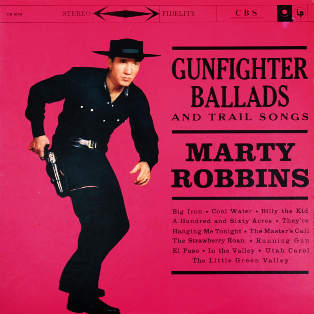
Marty’s 5th Studio Album · Produced by Don Law
My pressing: 1971 Stereo Columbia Reissue — Pitman Pressing
Purchased: Lillington, NC Thrift Store — May 2024
The Object
The album cover. The stance, the lettering, the hat pulled low — I’d seen this thing everywhere. Thrift stores, antique shops, tape decks, cassette bins. It’s one of those records that seems to exist in every collection that ever got broken up and donated. Always struck me as a classic.
The question I kept coming back to was simple: where do all these copies come from? Probably from the dens and living rooms of people who are gone now. Their collections wind up in the local Goodwill or the antique mall on the highway, and there it sits — a five dollar bin treasure if there ever was one, waiting for someone to finally pull it.
May 2024, at a thrift store in Lillington, North Carolina. I was at a transitional point in my life — coming out of a difficult year, possibly leaving behind one of the most intense and meaningful periods of my working life, moving toward something less stressful and, as it’s turned out, more fulfilling. The record felt right for the moment. Some records you can feel the influence of just by looking at the title. It’s in the dust. I’d wanted to understand for a long time why this album means so much to so many people.
Why I Own This Record
I grew up in Houston. Country music was always somewhere in the background — it’s unavoidable in Texas — but in the 1990s, country was a different animal. Popified, polished, a long way from what Nashville looked like in 1959. I gravitated toward rock, punk, and metal instead. It was only in my twenties that outlaw country started pulling me in, and it’s been that way ever since.
My big three have always been Waylon, Willie, and Townes Van Zandt. But Marty Robbins predates all of them, and as I’ve been learning more about the man and this record, I’ve come to understand something important: he wasn’t writing about his time. He was writing with nostalgia for his upbringing — for the stories his grandfather passed on, for the cowboy mythology of the Arizona desert where he grew up. This was an act of personal memory as much as artistic craft. Whatever emotional weight you feel listening to these songs, Robbins felt it first.
As a cultural artifact, Gunfighter Ballads sits at a precise moment in country music when something was shifting. The Nashville Sound was taking over. It was smooth, orchestrated, designed for pop crossover. Marty went in the opposite direction entirely. This record arrived before the full flowering of outlaw country in the seventies, but you can hear in its bones the argument that would eventually define that movement: that country music’s soul is in its stories, not its production values. The idealized gunfighter, the drifter, the pioneer. That mythology permeates this record and the man who made it.
Marty Robbins — The Man
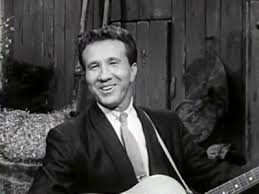
Born Martin David Robinson on September 26, 1925 in Glendale, Arizona. He grew up poor, raised in part by a grandfather named Texas Bob Heckle, who told stories of the Old West and passed them down like scripture. Robbins grew up listening to Gene Autry on the radio and watching cowboy films.
He was self-taught. Picked up the guitar in the Navy during World War II. After the war he worked his way through Phoenix radio and television before signing with Columbia in 1951. And here’s the thing about Marty Robbins that often gets lost in the telling of this particular record: he was not a genre artist. He was a versatile musician who made pop crossovers, rockabilly records, Hawaiian music, and straight-ahead ballads. He even tried calypso. The range was real. But Gunfighter Ballads is where Marty found his element — the place where everything he loved and knew and carried from childhood finally had a home.
His voice is worth dwelling on. It could go anywhere. Hard-edged and Western one moment, pure romantic balladry the next. On this record he uses it like a storytelling instrument, which is exactly what it is. There’s no showboating. He gets out of the way of the song.
He was also a NASCAR driver — a legitimate one, not a celebrity appearance. He raced seriously for years, suffered a heart attack on the track in 1969, came back and kept racing. The cowboy identity was a genuine self-conception, lived out in everything he did.
He died in December 1982 of heart failure, just weeks after his induction into the Country Music Hall of Fame. He was 57. The timing of that induction, arriving at the end of his life, feels like the kind of thing that would have pleased him without surprising him. He knew what he’d made.
The question worth sitting with is this: why does Gunfighter Ballads stand apart from everything else he made? The answer isn’t complicated. It stands apart because it’s true to him. These songs weren’t assigned. They weren’t calculated for the market. El Paso came out of a real experience, a real place, a real feeling. Marty Robbins gave this record everything he genuinely was, and that’s the rarest thing in recorded music.
Nashville and the Recording
All twelve songs on this album were recorded in a single eight-hour session on April 7, 1959 at Columbia Studio B in Nashville. One day. That’s worth letting settle.
The producer was Don Law, who had been Columbia’s primary country A&R man for years and was responsible for a significant portion of the label’s catalog. Law understood what Robbins was doing and didn’t get in the way of it. The arrangements are spare by design — acoustic guitar as the primary voice, with texture added carefully around it. This is not a band record. It’s a voice-and-guitar record, and the production serves that.
The Nashville Sound was in full ascension in 1959 — Chet Atkins was refining it, the strings were getting smoother, the pop crossover was the stated goal. Gunfighter Ballads went completely the other direction. Sparse, deliberate, story-driven. It arrived at a moment when Nashville was going one way and Marty went another, and history has been kind to that decision.
Of the twelve tracks, four were written by Marty himself: El Paso, Big Iron, In the Valley, and The Master’s Call. The Glaser Brothers — Tompall, Chuck, and Jim — contributed Running Gun and also served as backup vocalists throughout the record. The rest are traditional or previously recorded Western songs: Billy the Kid, Strawberry Roan, and Utah Carol in the folk tradition; Cool Water from Bob Nolan and the Sons of the Pioneers (1936); A Hundred and Sixty Acres by Dave Kapp; They’re Hanging Me Tonight by James Low and Art Wolpert; and The Little Green Valley by Carson Robison.
El Paso hit number one on the country charts and stayed there for seven weeks. It held the top spot on Christmas Day 1959, which is either a perfect irony or perfectly fitting depending on your mood. For a four-minute-plus single in an era of two-minute pop radio, that kind of sustained success was virtually unheard of.
Grady Martin and the Nashville A-Team
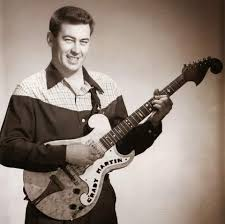
The session musicians on this record deserve their own mention. Grady Martin played guitar on this album, and Grady Martin was, full stop, one of the greatest session players in Nashville history. He appeared on hundreds of the most significant recordings of the era — Patsy Cline, Johnny Cash, Roy Orbison, Loretta Lynn — and brought an authority and feel to every session he touched. On Gunfighter Ballads his guitar work is restrained and exact, which is exactly what the material called for. You hear it most clearly on El Paso, where the playing frames the vocal without ever competing with it.
The Nashville A-Team — the loose collective of session musicians who played on the majority of major Nashville recordings in this era — understood instinctively how to serve a song. One day, one session, twelve tracks, and they nailed it. That’s what professional musicianship looks like.
The Music
Listening notes — January 3, 2026
Side One
Big Iron
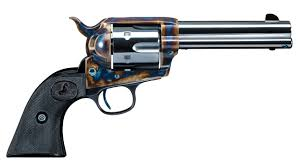
The song that sets the stage. A record inspired by a firearm, by the American West, by the mythology of the gunfighter. An Arizona Ranger rides into a town to take out a seasoned outlaw named Texas Red. Twenty notches on the stranger’s pistol when he arrives. He wins the showdown.
“To the town of Agua Fria rode a stranger one fine day…”
That opening line. Marty riding into Nashville? Or Marty riding out of it?
“The notches on his pistol numbered one and nineteen more.”
If those notches all count for bodies, then scraping that first one into the butt of the pistol came with a lot of weight. There’s a whole life’s worth of violence implied in that number, and Robbins doesn’t explain it. He just states it and lets it sit.
“The swiftness of the ranger is still talked about today.”
We all know what happened. Robbins doesn’t have to describe it. That’s perfect songwriting — giving the emotional weight to an event without a clear description. The ranger’s gun was bigger, faster, and truer. The legend lives on.
Cool Water
The desert as a state of emotion, not just a place. Bob Nolan wrote this in 1936 and it’s been a standard ever since, but Robbins does something particular with it — he lets it become hallucinatory.
“He’s a devil not a man, and he spreads the burning sand with water, cool water.”
I’ve been out in the Mojave, near Fort Irwin. I’ve stood in that heat and watched the road shimmer and understood, in a small way, what mirage feels like. I hear these lyrics and that heat comes back. That’s what this track does — it transports you into a physical experience. The background vocals from the Glaser Brothers and Robbins together are smooth and velvety, perfectly layered. It sounds incredible on a good system. One of the best-sounding tracks on the record.
Billy the Kid
Read all the books, watch all the films, go visit his grave in Fort Sumner. Then listen to this song and let Marty give the legend what he needs — gravitas and genuine sympathy. Not just for Billy, but for all the young men who followed his example and met the same end. The tradition of the Billy the Kid song is long, and this one fits comfortably into the lineage. It’s passed down through the generations because it says something true: the kid was real, the romance around him was real, and the cost was real.
A Hundred and Sixty Acres
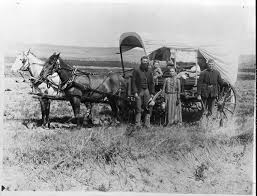
Written by Dave Kapp, this is a callback to the pioneer era — homesteading, open land, the promise of acreage and independence. It makes you think about what it meant to work your own ground, to look up at the stars at night with nobody to answer to. There’s an isolation in it that reads as freedom rather than loneliness. Hard to find much information about Kapp himself.
They’re Hanging Me Tonight
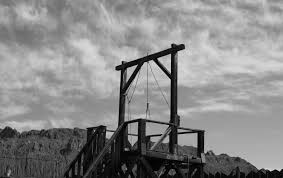
Written by James Low and Art Wolpert. A murdering, jealous man ruminates on what he’s done the night before his execution.
“They’ll bury Flo tomorrow but they’re hanging me tonight.”
Sparse arrangement, exactly right. The production gets out of the way and lets the vocal carry everything. The logic of the character is brutal and clear. He did it, he knows what’s coming, and he doesn’t seem particularly sorry. Just reflective. That’s a harder emotional note to land than remorse, and Robbins lands it.
Strawberry Roan
Written by Curly Fletcher, this is a classic cowboy song about a bronco breaker who learns not to judge things by their appearance. By the time Robbins sang it, it was close to fifty years old — written in the 1910s and passed through countless versions since. He treats it with the respect it deserves while making it his own. The poetic imagery of cowboys doing cowboy things, the rhythm of the work and the rhythm of the song matching up — this is what it sounds like when a tradition is kept alive properly.
Side Two
El Paso
The centerpiece. A mini-film in song. Doomed love, a dead man, a border town, a girl named Felina — every verse is a scene and Robbins shoots them in sequence with the patience of a director who knows he has time. The structure is unusual for country music in 1959, and the length was commercial suicide on paper. It wasn’t. Grady Martin’s guitar and the vocal performance make this a timeless recording. It is cinematic. It has all the darkness and love and violence of the Western setting, compressed into four and a half minutes.
“My love is stronger than my fear of death.”
That’s the whole song in ten words.
Two sequels exist: El Paso City (1976) and Felina from El Paso. Neither reaches the original, but the fact that Robbins kept returning to it says something about what it meant to him.
I spent time in El Paso myself — nine months stationed at Fort Bliss around 2008, trying to find a good time in what was by then a pretty upbeat college town. Different from the conjured images of this song. But El Paso the place and El Paso the song exist in different dimensions, and Robbins knew that. He was writing the myth, not the city.
In the Valley
Another exhibition of the Robbins and Glaser Brothers harmonizing, and it’s beautiful. The song is thinner on story than most of what surrounds it on this record, but maybe that’s the point. After El Paso you need something to catch your breath. In the Valley functions as a palette cleanser — the spirit of the song before it lingers in the atmosphere, and this track lets you sit in that feeling a little longer before the record moves on.
The Master’s Call
This may be the track that resonates most personally for me. A boy leaves home, falls in with a bad outfit, ends up rustling cattle during a lightning storm. In the middle of the storm he hears a voice — a reckoning, and an offer of salvation. Lightning strikes. The mark of a cross remains. Pretty metal, honestly. But the core of it is something I recognize: there have been plenty of moments in my own life where the test was the challenge, where the reminder to stay true and stay moral came not in a quiet moment but in the middle of the storm. Robbins understood that too. This is his songwriting at its most direct — no flourish, just the story and the weight of it. It stands up next to El Paso.
Running Gun
Written by the Glaser Brothers, and the B-side to the El Paso single — which means a significant number of people heard this song playing it over looking for El Paso, which is not a bad way to be discovered.
“A woman’s love is wasted when she loves a running gun.”
The title tells the story pretty completely: the man going town to town, killing for hire, while somewhere a woman waits for him. Amarillo and Kansas City both get name-dropped, two towns I’ve passed through on various criss-crosses through the country. The song has the feel of something lived — a road song, a drifter’s song, the kind that sounds better the more miles you have behind you.
The Little Green Valley
Written by Carson Robison. Slower, more about image than story. The emotion here is homesickness — the longing mind wanting to return to a time that may not be recoverable. It’s the most private track on the record, which makes it feel slightly out of place, and also essential. Every outlaw needs a home they miss. This is that song. I could see this playing in a barracks during Vietnam while somebody gave the guy who put it on a hard time — and the guy sitting there listening quietly, not turning it off.
Utah Carol
A traditional cowboy story song, and a fitting close to the record. The tale involves a red robe spooking some cattle and a cowboy sacrificing himself to save a young girl. It’s a strange and specific story — a red robe, of all things, as the instrument of fate — and it has the quality of something that actually happened, or at least something people have believed happened long enough that it might as well have. Robbins wraps the record here the same way he opened it: a story, a setting, a consequence, and no sentimentality about any of it.
Closing
This record fed directly into the outlaw country tradition that came after it. Waylon Jennings, early in his career in the 1960s, openly mimicked Robbins’s crooning style before finding his own voice. The Western mythology Marty was working with — outlaws, loyalty, landscape, consequence — wasn’t a country music trope so much as an American archetype, and it kept feeding writers and performers for decades.
What Gunfighter Ballads does that most records don’t is provide full immersion. Marty’s songwriting, the harmonies, the guitar, the stories are transporting. This is one of those albums where the concept works completely: you put it on and you go somewhere else. You don’t need to know anything about country music or music theory or Nashville history.
And the pressing format matters here too. All twelve tracks recorded in one eight-hour session, mastered and cut, pressed and distributed, bought and played and donated and thrifted and found. There’s a whole life cycle in that. When you buy a thrift store record, you’re buying everything that came before it in that record’s existence — all the hands it passed through, all the rooms it played in. Somebody’s grandfather sat in his den after a long day, sipped a cold beer, put this on, and thought about something different. I don’t know who he was. But I might have bought his record.
Never underestimate the five dollar bin.
Hank Hill would love this record. Enough said.
RTR
Further Exploration
Listen
Johnny Cash — Ride This Train (1960) — another concept album, another American mythologist
Townes Van Zandt — For the Sake of the Song — the next generation of outlaw storytelling
Sons of the Pioneers — Cool Water (1941)
Read & Listen
Cocaine & Rhinestones — Tyler Mahan Coe (podcast)
Country: The Twisted Roots of Rock ‘n’ Roll — Nick Tosches
Marty Robbins: Fast Cars and Country Music — Barbara J. Pruett
Watch
The Hanging Tree (1959) — Gary Cooper — the film behind one of the album’s tracks
Any available Marty Robbins television footage — his variety show appearances from the late fifties and early sixties are worth finding
 Remember a Day