Studio Album | Released August 30th 1965 | Recorded between June 16 and August 4 1965 at Columbia Studios, New York City | Columbia Records | Produced by Bob Johnston and Tom Wilson

“Philosophy can’t give me anything I don’t already have.”
And we return to Bob. For me, it is the Triumph motorcycle shirt and the look on his face. That face is so unapologetically unique. It isn’t a smirk. On the surface it is barely a smile. And still, a smile lives underneath it. It is him knowing how good he has it as a musician, and how confident he is in the record he is making. This is peak rock of the 60s. This is peak Bob of the 60s. This is iconic music, iconic sounds, and an iconic time. Bob’s rocket was on autopilot. He was revolving around success, locked in its orbit. We don’t have to get bogged down analyzing the lyrics. If you do, you’ll find all sorts of nooks and crannies, nuggets of wisdom, nuggets of pure beauty and poetry, and nuggets that are simply meant to drop a little confusion into the old noggin. Live a life that likes music and you’ll hear this album. Or at least one song from it.
I’ll say this: I’m a simple blogger, trying to get at the feeling this music creates in me. I can’t untangle all of Bob’s words here. Many have tried, and many will keep trying. The true understanding of a lot of Bob’s most complex songs comes through a suspension of disbelief. You won’t understand it all. You might come close. Listen to “Desolation Row,” for example, and let your brain create the images Bob conjures. Enjoy the magic. Let it mean whatever you want it to mean. Take a ride on the mystery. You don’t have to walk around claiming to know who Dr. Filth is. He exists only in a brief glance. It’s just music. It’s art at its finest. But really, it’s just rock and roll. We have to recognize that. Fully organic.

Don’t Look Back, the amazing documentary by D.A. Pennebaker, follows the UK tour Bob made not long after Bringing It All Back Home. It revealed the astonishing scale of his success, maybe even more so in the UK than in the United States. The film explores his touring life, his interactions with the media, and his backstage character and behavior. It is as pure and simple as a rock documentary can be, essential viewing for anyone wanting to understand Bob at the time and the transition between these two great albums. Pennebaker would say of his film and of Bob, “what you see is what you get.”
Work on Highway 61 Revisited began once the touring behind the documentary had ended. Back in the studio, Bob started building on the electric sound of his previous album. The Byrds were riding their own success with a purely electric, California-pop version of “Mr. Tambourine Man.” The Beatles were beginning their folk-rock exploration. Everything was starting to culminate. Bob opened the album by cutting “Like a Rolling Stone.” Not long after, he shocked the crowd at the Newport Folk Festival, plugging in an electric guitar and blasting out a live set backed by members of the Paul Butterfield Blues Band. All of it was a recipe for drastic change. Vietnam was on the horizon. Social change was moving through politics and the civil rights movement. The birth control pill was being introduced. The country was on a tear toward a paradigm shift.
Bob had opened new pathways with Bringing It All Back Home, and this record takes that concept and expands on it. The band builds the full world for him. On a few tracks, Bob’s words take a back seat to the brilliant sidemen and their performances. Think of Al Kooper’s impromptu organ part on the opening track, the first he ever played.
The record’s title: a highway. The highway. Number 61. It runs past the country where Bob grew up, the same road he was traveling in 1959 when he went to see Buddy Holly play, just days before the singer died in a plane crash. The whole album carries a traveling theme. Bob crossed this highway at different points in his life, and here he is revisiting those trips. Each track emotes that feeling of traveling, and of traveling alone. Stopping and learning. Stopping for no reason at all, just to take in the scenery. Snapping a picture, writing a verse down, getting back in the vehicle and moving on. I feel it in the strumming of the guitar on “Tombstone Blues,” and in the blues electric twang running through so many of these songs. Be exhilarated. Roll the window down, hop in, and take to the road on this record.

The sessions for Highway 61 have been described as pretty rough. They happened over a handful of days across July and August 1965. The players were a mix of studio hands and outsiders, so there is an edge to the music, an edge Bob loved, as Al Kooper would tell it.
The Object
I’ve had a couple of copies of this record over the years. The first needed replacing because it was pretty scratchy. That’s fine for some collectors, but give me the best music in recorded history without any pops, please. I think a clean pressing gives the music its due diligence. My current copy is a simple reissue, nothing collectible, nothing limited edition. I bought it at a store known for pumping out common reissues in their shrink wrap: Siren Records in Monterey, California. Some diligent Discogs users will know their online selling machine, Recordmule. I’ve been buying from the store and from Recordmule for some time now. They come in handy when the originals are demanding high prices and the reissues sound great for a decent price.
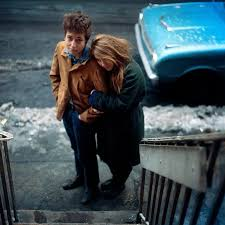
The cover, though. It echoes the previous album. The photo is bordered in white, with the name of the record and the artist landing right on the top edge of the frame. Bob Neuwirth is cut off, shown here only from the torso down. Still, he has enough style to get the point across: striped shirt, thumb hooked in his pants, holding the strap of a beautiful SLR camera. Bob fills most of the frame with that enigmatic look. The goofy colored jacket, the killer Triumph shirt, the hair all a mess. He is sitting on the steps of a building, sunglasses in hand. I think that if he had been wearing those glasses, this artwork would not have the effect it had then and still has now. It is one of the most iconic record photos of the 60s, and of all time.

It was always a cover that drew me in, the way the best record covers should. They give you a feeling of what the record holds. This photo, purely as it is, hints at a life being lived. Bob’s pose and his look are enough. It’s just a glance, and you can gather a lot about someone from a single glance. At the very least, it was inspiring to a lot of “fuck the whole world” hipster crews.
The Music
Side One
Like a Rolling Stone
Bruce Springsteen said the opening snap and crack of the snare drum, Bobby Gregg’s snare drum, was like someone kicking in the door to your mind.
Generation-defining song. Genre-defining song. For many it’s the song of their life. For some it’s the song of their youth. For me, it’s the song of my mid-20s into my mid-30s. Every time I hear it I hear something new. It’s one of those tracks that takes on a bigger meaning as it grows with you. Some say the best art is the art that changes as you come back to it, like a movie you can watch over and over while the life inside it keeps growing outward. “Like a Rolling Stone” has lived that life for me, and it’s still living it.
It doesn’t sound like most other songs from the time. Placed in its context, it’s a massive blast of sound, brilliant from that first drum crack, a whole world of wonder living inside it. Then comes a guitar riff that gives the wonder its color. Hearing this track can leave you questioning the greatest works. At the time, it was unlike anything else, a six-minute rock single full of insults, wild imagery, and characters. This was all abandon. Rock was now changed. The song was staggering in its appeal, reaching #4 in the UK and #2 in America, and it made everyone across both lands aware that Bob’s greatness had reached a new height.
First, Bob’s tone in the vocal. It’s pleading, promising, preaching. Desperation is in there, and so is conviction. He makes a stand with each word, and each line ends on a lean shout. Listen to the track and focus on his eyes on the cover, and you can feel where Bob’s at here. It’s all bravado and all sensitivity. It moves you on the strength of the genuine fun in his voice alone. “You’ve got no secrets to conceal” hits the top of the wavelength. That’s what I’m talking about. If you’re a five-year-old kid barely learning the English language, you’ll feel it too.
Paired beautifully with Bob’s voice, creating a lovely interchange, is the organ. Without it, this song loses its emotional effect. Al Kooper absolutely nailed his work here, and it was pure improvisation. Kooper had never really played organ before, and yet what you hear sounds fully worked out. He must have been deeply tuned into what was happening in the studio to produce a part this good. You can hear the controlled chaos in how he plays.
Who does the song address? I’ve always taken it as self-reference, like a lot of Bob’s work at the time. He is the rolling stone, drifting further and further from home. He is also drifting into the business, sinking into the quicksand of show business, with a lot to answer for to himself. He was facing the world alone. No direction home. It’s a song about learning who you are and making your own reality.
Bob himself has called it one of his best-written and favorite songs. And it sits neatly at the top of Highway 61 Revisited. So you rest the needle down, anticipate it coming, and dive right in. If you had never heard this record before, doing that for the first time must have been mind-blowing and life-changing all at once. The power of music, the power of vinyl, the power of Bob. Rock and roll, man.
Mark Polizzotti, in his book about the record, notes that this was the first time rock and roll started to sound dangerous. It had been building to a point. This was rock and roll’s assault on the other, on “Miss Lonely,” on the other person. Jerry Lee Lewis had assaulted the other. Bob was building on that verbal style, but with greater aplomb, a greater presence of voice, and a deeper wealth of wordplay.
Tombstone Blues
“Tombstone Blues” sits in the same realm and universe as the Depression-era blues that Woody Guthrie inspired, the same territory as “Subterranean Homesick Blues.” This entry into that realm is longer, a slog of words, a dense forest full of characters real and imaginary. Mom and dad are struggling. The narrator is in the kitchen or out in the streets with the tombstone blues. Is he dead? Is he imagining his death? Is he in jail?
The guitar work by Mike Bloomfield is truly great. Flourishes run all the way through, and his signature is felt more here than on any other track. He must have had a great time with this take. You can feel the enjoyment every time you listen.
Again the song has real movement, and it carries more energy than you’d expect from something inspired by Dust Bowl-era traditional folk and blues. Much of the imagery and the characters conjure up old America, or the American West. Soothsayers. Medicine men. Drifters. Penny arcades. Dust on the shoes and in the saloons. Each verse ends somewhere with the tombstone blues.
Holes in the ground, circus performers, people questioning the earth’s movement and shape and the idea of God and the planets. This is another song you can get lost inside, and each time you come back you’ll hear new things and reap the rewards. Who was Gypsy Davey with a blowtorch? Watch the film La Strada. Maybe he’s in there somewhere. Maybe he was out in Vietnam.
It Takes a Lot to Laugh, It Takes a Train to Cry
Dylan dusted off one of his older tracks and reworked it for this reinvention. Track three slows the pace to a jaunt, and the piano turns a little more ragtime, a little less rock. A little less rock. A little more sweet lady swaying on top of the bar, flashing her ankles. Essentially it’s a feel-good song about what it feels like to have a fling, or to love a woman.
It’s worth noting the Bob Johnston influence here. Johnston was a new producer on the album, and he had a country touch. After working for Columbia in New York, he would go on to Nashville, working alongside the session players who provided the studio skill behind some great recordings. He injects a knack for good country sound into this track with ease.
The track shows how Bob took his older influences and molded them into something new. There were earlier versions with the same lyrics and a different mood. This version brings the piano in at full force, and Al Kooper again shines on the instrument. A great song, and a break from the fast-paced whirlwinds of the previous two tracks.
From a Buick 6
Another blues assault on the auditory senses. This time the travel metaphor gets its own vehicle, and the vehicle is not exactly a car despite what the title suggests. Here we have a woman, the woman, who will look after Bob in his time of need. When he’s at his lowest, she’ll be there to take care of him. This simple, loose track features a great bass line, a great harmonica solo, and a rolling organ part that keeps the fun pace going throughout. It’s a rock and roll song if there ever was one, and it puts the listener in a good mood, ready for what comes next.
Ballad of a Thin Man
The opening piano chords, played by Bob, are a sign of what’s coming. This song is relentless in scope, in sound, and in the vituperation spat through the lyrics. Mr. Jones. Who is Mr. Jones? When Al Kooper first heard it, he called it a “nasty” song. What an apt description.
As with many of Bob’s lyrically dense songs built around a main character, people make an effort to figure out who he’s pointing at. Mr. Jones could be, in my opinion, the happy wanderer, the bystander to the circus. He’s someone who isn’t hip. He’s been duped, taken advantage of. He knows something is happening, but he doesn’t know what it is. He lacks the key thing: an open mind. Mr. Jones. It’s fitting that his name is male, and as easy and common a surname as Jones.
The likeliest occupation for this Jones is journalist. He’s me, essentially. He’s the stand-in for the person trying to derive meaning from art and claiming that ability as some kind of gift. Bob was assaulted by reporters in this period, much of it a waste of time, and he developed a knack for handling these people. He may have sat down to write this track right after one of those interviews.
The piano is the core of the track, and it gives the lyrics their dramatic backing. It’s really a piano-and-words song, and that helps Bob get his points across, even steeped as they are in odd imagery and symbolism. The sensation of condescension runs throughout. Whoever Mr. Jones was, he should be happy, and a little watchful, that Bob made such a great song about him.
Side Two
Queen Jane Approximately
Queen Jane? A relative of Mr. Jones? Possibly. Again Bob is laying out the situation of someone’s life, holding a mirror up to them. This is essentially a simple song, the simplest on the album. What draws my ears to it is the melody, and the piano and organ working in tandem. There’s also some great electric rhythm riding underneath all of it. As the opener of the second side, it’s a register change, sweeter and kinder than “Ballad of a Thin Man” was. The rest of the side won’t let up, though. After the track ends on a beauty of a harmonica solo, wishing you hope on your way, the title track awaits.
Many followers of Bob liken Queen Jane to Joan Baez. The narrator has a closeness to the title character, much like Bob and Joan shared the spotlight together. Their breakup, both in career terms and in emotional attachment, was happening around the time this record was being put together. In the song you can sense compassion.
Highway 61 Revisited
Of “Highway 61 Revisited,” Bob would later say he was writing songs meant to be played with a band. He was thinking about the band performance, and probably about the fun too. Nowhere does that fun shine through more than on this title track. It starts right in the intro, with a novelty police whistle, presumably picked up by one of the band members, or by Bob himself, somewhere along the way and brought into the studio.
The song’s title comes from one of America’s great highways, the one Bob spent a young adolescence traversing north and south. Through Mississippi, through the South, through the great heartland of the country. You can feel that travel across the whole record, and the heart of it lives in this title track.
The Bible opens the lines, the story of Abraham and God’s demand that he sacrifice his first son. A test of faith. Getting out on that road, flinging your want or need for a normal life into the universal divide of the highway, that’s what this song is about. Get on a motorcycle, pack your bags, sleep on the side of the road, take your faith and shove it deep down. What runs through the track are quick allusions, character studies drawn in a couple of lines. Accusations. References to figures from Bob’s life and from fiction, Albert Grossman chief among them.
That little whistle brings the fantasy, keeping any sense of groundedness at bay.
Just Like Tom Thumb’s Blues
The sweet guitar chords that appear throughout the verses of this great song are something to focus on. Add the great piano, heard mostly on the right channel if your record is a stereo pressing, and this becomes one of the best-sounding songs on the album.
The traveling theme continues, and this time we’re down in Mexico, in Juárez. Dropped out of the bottom, washed out of America and American life itself.
The two pianos and the slow drawl of the guitar chords really enhance Bob’s tone here. It’s the hangover song, if the album has one.
Desolation Row
You’ve made it this far on this brilliant album, and now you’re thrust into an epic eleven-minute poem, matched by a flamenco-style guitar. This is Bob’s Dante’s Inferno. It spirals downward, or maybe outward. The track lives in its own dimension. It’s not a joke.
Musically, the song is set apart from the rest of the record. It’s just two guitars, Bob and no rhythm section. As if it were meant to bookend the album, it’s the knockout punch, the ten count. It makes you a jealous wanderer for the rest of your life. The images come like a firehose. We don’t know who they all are. It’s like a box of baseball cards, dusty and left in the attic. That’s what listening to this song is like. Picking a card from the deck. What’s your fortune?
Bob gives a fantastic vocal here. It’s classic for him, Bob at his most pure. One of his most uniquely Bob tracks. You just have to listen. It leaves you bludgeoned, bruised by the beauty of his wordplay. Or you think it’s all gobbledygook and you never listen again. Try it on, pay the ticket, take a look at the museum.
Closing
Highway 61 Revisited earned Bob a place in history. The record was received well at the time and rode a wave of success driven mainly by the anthemic greatness of “Like a Rolling Stone.” It’s a powerful song, emotive even today. Every time I hear it, it just sounds important. It’s of its time. It’s of a person. It has character and wit and happiness living inside it. It means different things to different people, as all the best art does. Many people acquainted with Bob call this record, alongside that song, his best. In some ways I recognize it as his best work, but there are two others that mean more to me: Blood on the Tracks and Bringing It All Back Home.
With this record, the boundary was pushed for good. Even after pouring all his heart into the music, Bob was still calling his previous work into question, and maybe even reaching toward work he had not yet made. You can hear Desire in here. You can hear Blood on the Tracks. The album took nine days to make, some of it improvised on the spot. The complexity of this record was born of a mind pushed inward, and of an art form in its genesis. Rock had passed its crawl-and-walk phase and was starting to hit the first strides of an all-out run. The rest of the 60s, the rock movement and the hippies, all seem born from that first snare snap. Put it on your turntable, turn the volume all the way up, and you can hear it.
Thanks for reading.
RTR