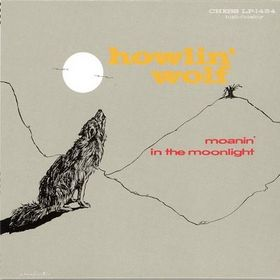
Compilation | 1959 | Chess Records
Recorded 1951-1958 | Producers: Leonard Chess, Phil Chess, Willie Dixon, Sam Philips
My copy is the Chess Records 75th Anniversary pressing, pressed at Quality Record Pressings from the original masters. I snagged this on Discogs in January 2026, and it arrived in great condition. These reissues have a solid reputation, and I’ll attest to that. The tip-on gatefold sleeves are made from high-grade board, and the covers themselves are glossy — they catch the light in a way that feels intentional.
Then there’s the artwork. What we have here is a study in liminal space: not much to it, and that’s the point. A lone wolf. A single tree far off in the distance. Spare and stark, like a Cormac McCarthy scene before McCarthy became a household name. The whole package is solid, and this pressing is a genuinely good copy to seek out.
For context on the label itself — Chess Records is one of the all-time great American record labels. Founded in Chicago by Leonard and Phil Chess, the label became the epicenter of blues and R&B in the postwar era, documenting artists whose work became the bedrock of modern popular music. You can’t tell the story of American music without Chess.
Original pressings of this record are highly sought after and command serious prices. This reissue is a respectable alternative, and while it’s marketed with audiophile credentials, I’d say it meets the minimum threshold for that designation rather than exceeding it. What it does deliver is a clean, open, and spacious sound — large and well-rendered. Whether that presentation fully captures the rawness of the original mono pressing is hard to say without a side-by-side comparison, which I don’t have. What I can say is that an audiophile mastering job inevitably smooths some edges, and with Wolf, those edges are kind of the whole point.
Before we get into the music, here’s Chess legend Steve Jordan on the style of this record — specifically on that country blues sound and what happened to it when the geography shifted north to Chicago.
From Memphis to Chicago: Steve Jordan on Howlin’ Wolf’s Moanin’ In The Moonlight
THE MUSIC
The first thing that hits you is the voice. Then the clarity within the rawness. Then, if you’re paying attention, something more subtle: the audible difference between the Memphis recordings and the Chicago recordings. You can feel that transition in this music, and that’s what makes this compilation an essential document. It’s not just a greatest hits collection — it’s a case study in how a sound migrated from one geography to another and transformed in the process. You can hear it in the intonations of Wolf’s voice, in the guitar work, in the production itself.
What you’re getting here, across this entire compilation and within the guttural wail of Chester Burnett’s vocals, is blues as catharsis — an outpouring of emotion, a coping mechanism, a primal release. The blues doesn’t explain itself. It just hits you.
Production Notes by Track
Moanin’ at Midnight Recorded July 1951 | Sam Phillips, Producer | Memphis Recording Service | Memphis, Tennessee
How Many More Years Recorded July 1951 | Sam Phillips, Producer | Memphis Recording Service | Memphis, Tennessee
Smokestack Lightnin’ Recorded January 1956 | Leonard Chess, Phil Chess, Willie Dixon, Producers | Chess Studios | Chicago, Illinois
Baby How Long Recorded 1954 | Chess Studios | Chicago, Illinois
No Place to Go Recorded 1954 | Chess Studios | Chicago, Illinois
All Night Boogie Recorded 1953 | Memphis, Tennessee
Evil (Is Going On) Recorded 1954 | Leonard Chess, Phil Chess, Willie Dixon, Producers | Chess Studios | Chicago, Illinois
I’m Leavin’ You Recorded 1959 | Chess Studios | Chicago, Illinois
Moanin’ for My Baby Recorded 1958 | Chess Studios | Chicago, Illinois
I Asked for Water (She Gave Me Gasoline) Recorded 1956 | Chess Studios | Chicago, Illinois
Forty-Four Recorded 1954 | Leonard Chess, Phil Chess, Willie Dixon, Producers | Chess Studios | Chicago, Illinois
Somebody in My Home Recorded 1957 | Chess Studios | Chicago, Illinois
That variance in sound between Chicago and Memphis is the spine of this compilation. The differences are distilled across these twelve tracks — sometimes subtle, sometimes enormous — and together they give you two distinct versions of the same artist. That contrast is the whole story.
Listening Notes — January 21, 2026
Side One
Moanin’ at Midnight — Raw wailing. The production sounds rough in the best possible way — like you’re crammed into a broom closet jamming with the boys. This is ground-up music. The house is rocking. There’s a tinny, close-mic’d quality to it that feels entirely honest. Worth noting: Ike Turner plays piano on this session, one of his earliest documented recording appearances.
That opening hum grabs you immediately — and compared to his other vocal performances, something feels fundamentally different about it. It doesn’t quite sound like him. There’s a quality of possession to it, as though something else has taken over. The ghost outside the window, the spirit calling on the telephone — these aren’t just lyrical images. They carry the weight of genuine dread, the kind that can be read as an evil spirit closing in, or equally, as the suffocating guilt of an unfaithful man haunted by what he’s done.
How Many More Years — Same July 1951 session as Moanin’ at Midnight, same Sam Phillips production, same room. Robert Palmer has cited this track as containing one of the earliest recorded distorted power chords in history, courtesy of guitarist Willie Johnson. The harmonica work here is fantastic. This is a foundational document, not just a great song.
In this song a stark, plain claim is made: Wolf would rather be dead than to deal with an unfaithful woman.
Smokestack Lightnin’ — Great. Wolf casting spells here. Transcendent. There is so much emotion packed into that voice that it almost defies analysis — you just have to sit with it. The guitar keeps the eternal foundation locked in while Wolf does whatever it is he does up top. Wild man style. This is the one that gets you if nothing else does.
Baby How Long — More great Hubert Sumlin guitar work. Sumlin is one of the unsung heroes of this entire era, and his presence throughout the Chicago recordings gives them a cohesion and a fire that’s unmistakable.
No Place to Go — Menacing. That’s the word. There’s a slow, low-end threat running through this one that doesn’t let up.
All Night Boogie — Uptempo. This is the juke joint side of Wolf — the version of him that packed clubs and kept people on their feet. You can feel the room in this one.
Side Two
Evil (Is Going On) — Such aggression in this recording. The plainness of the voice, the directness of the delivery, the seriousness baked into every syllable. This is EVIL. It’s happening, it’s bad, and Wolf wants you to know about it. But the song opens up the more you sit with it. Is the evil the man creeping out the back door? The woman? The singer’s own jealousy and insecurity? There’s a lot you can read into this, and that ambiguity is part of what makes it linger.
I’m Leavin’ You — Defiance, clean and direct. Good Chicago sound on the production. Traditional mid-tempo blues, but Wolf brings the weight.
Moanin’ for My Baby — There’s something different in this recording. The moan sounds more mature, more weathered. You can hear the years on him. Not a complaint — it adds gravitas.
I Asked for Water (She Gave Me Gasoline) — This is some down-home stuff, and I mean that as high praise. So good. I just love this period of blues production.
Forty-Four — Locked in. The rhythm on this track is relentless, hypnotic. Don’t fight it.
Somebody in My Home — The drums here are footsteps on the floor. That’s not a metaphor — it just sounds like someone walking through your house. Lots of emotion in Wolf’s voice on this one, and he really howls. The track almost echoes and fades out at the end — a perfect closer. The album earns its ending.
HISTORICAL AND CULTURAL CONTEXT
1959
By 1959, Chess Records was operating at the height of its powers. The label had spent the decade documenting the transformation of Delta blues into the electrified Chicago sound, and Moanin’ in the Moonlight was an attempt to consolidate that story — to issue a formal debut LP that captured Wolf’s range across the decade. It’s not a concept album in any modern sense, but it functions like one in retrospect.
The broader musical landscape in 1959 was dominated by jazz, early rock and roll, and the first stirrings of the folk revival. Blues artists of Wolf’s generation were rarely given the kind of formal recognition their work deserved. What Chess was doing by issuing this LP was an act of documentation as much as commerce — a statement that this music mattered, that it had a history worth presenting.
The Memphis-to-Chicago arc that runs through this record also mirrors one of the great social migrations of the 20th century. The Second Great Migration brought over a million Black Americans from the rural South to Northern cities between 1940 and 1960. Wolf was part of that wave. And what this compilation captures — almost accidentally, simply by virtue of its chronological span — is what that migration sounded like. The raw, close, elemental recordings from Sam Phillips’ Memphis studio on one end. The bigger, more electrified, more arranged Chess recordings from Chicago on the other. Between those two poles, you have the story of American music in the postwar era.
The album would go on to earn a W.C. Handy Award in 1987 and currently sits at number 477 on Rolling Stone’s 2020 list of the 500 Greatest Albums of All Time.
PERSONAL RESONANCE
This record sits comfortably among the earliest-dated releases in my collection. Nailing down the exact month of its 1959 release is tricky, so I’ll place it early in the year and leave it there.
My appreciation for the blues goes back further than my serious collecting years. Growing up in North Houston, my dad played a lot of blues music — driving around on hot summers, catching it on the radio. It was ambient at first, background music before I understood what I was hearing.
That changed around 2012 and 2013, when I started understanding the connective tissue between the music I already loved and where it all came from. Howlin’ Wolf, Lightnin’ Hopkins, Junior Kimbrough — and then the modern successors who wore the influence openly, the Black Keys and the White Stripes. Follow those threads back far enough and you end up here, in a Memphis studio in 1951, with Chester Burnett wailing into a microphone.
I remember seeing this record on the racks at a Houston record show — one of those monthly or quarterly events. There was a copy there with a hefty price tag, maybe $40–50. It could have been an original. I left it with the seller. That’s one of my genuine collector’s regrets — I should have at least pulled it out and taken a closer look. Instead, I have this beautifully made reissue, and I’m not complaining.
What I’ve always loved about the blues is the mythology of it — the persona-building, the legend-making, the urban folklore that surrounds these figures. The idea that these men had access to something beyond the ordinary. Howlin’ Wolf was always the central figure in my mind when I thought about that concept, and this record is where that mythology lives for me. That’s what I’m thinking about when I put it on.
Moanin’ in the Moonlight sits in my collection as one of the most emotionally pure documents I own — a record that contains both country blues and Chicago blues within a single sleeve, and makes the distance between them feel both enormous and intimate. This is Wolf at the full range of what he could do. Turn it up.
In a lot of ways, my entire collection emerges out of a Howlin’ Wolf wail.
FURTHER EXPLORATION
Watch: The Howlin’ Wolf Story: The Secret History of Rock and Roll
Read: Deep Blues by Robert Palmer
Read: Moanin’ At Midnight: The Life and Times of Howlin’ Wolf by James Segrest and Mark Hoffman
Thanks for reading.
RTR
 Remember a Day