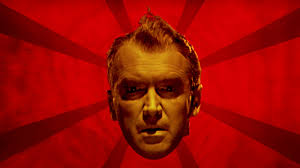
Film Score | Film Released May 9th 1958 | Score Composed Between January and February 1958
Bernard Herrmanns 4th film score as a collaborator with Alfred Hitchcock
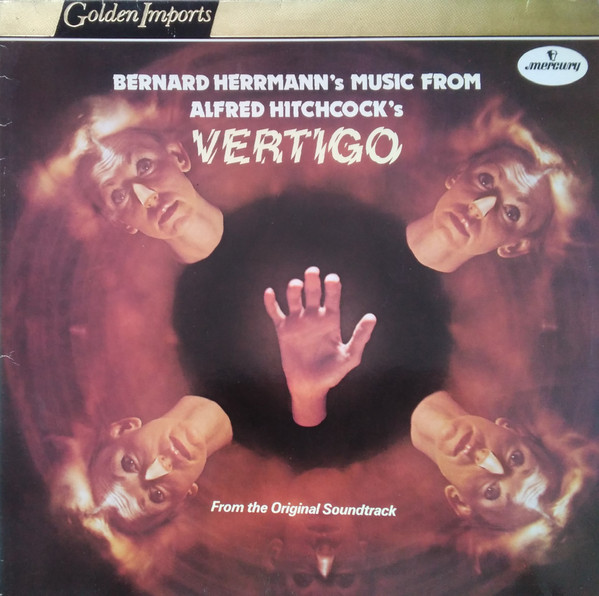
Mercury Golden Imports Series | 1977 | Netherlands
Bought: Discogs | March 2026
Vertigo is another film experience inseparable from its music. I don’t remember the exact first time I watched it, but I have a distinct memory of how the score made me feel. Watching Vertigo is like wading through a melancholic ocean of darkness and painful love. It’s a trance state. You don’t know what’s a dream and what’s real. The film is slow and strange, and the music meanders and weaves with it, spiraling, emoting, blooming in passages of real orchestral beauty. As a classical film score it stands up decades later without any qualification. Herrmann turned in something that belongs in a different category than most film music. It belongs in the same conversation as orchestra and concert halls.
The Object
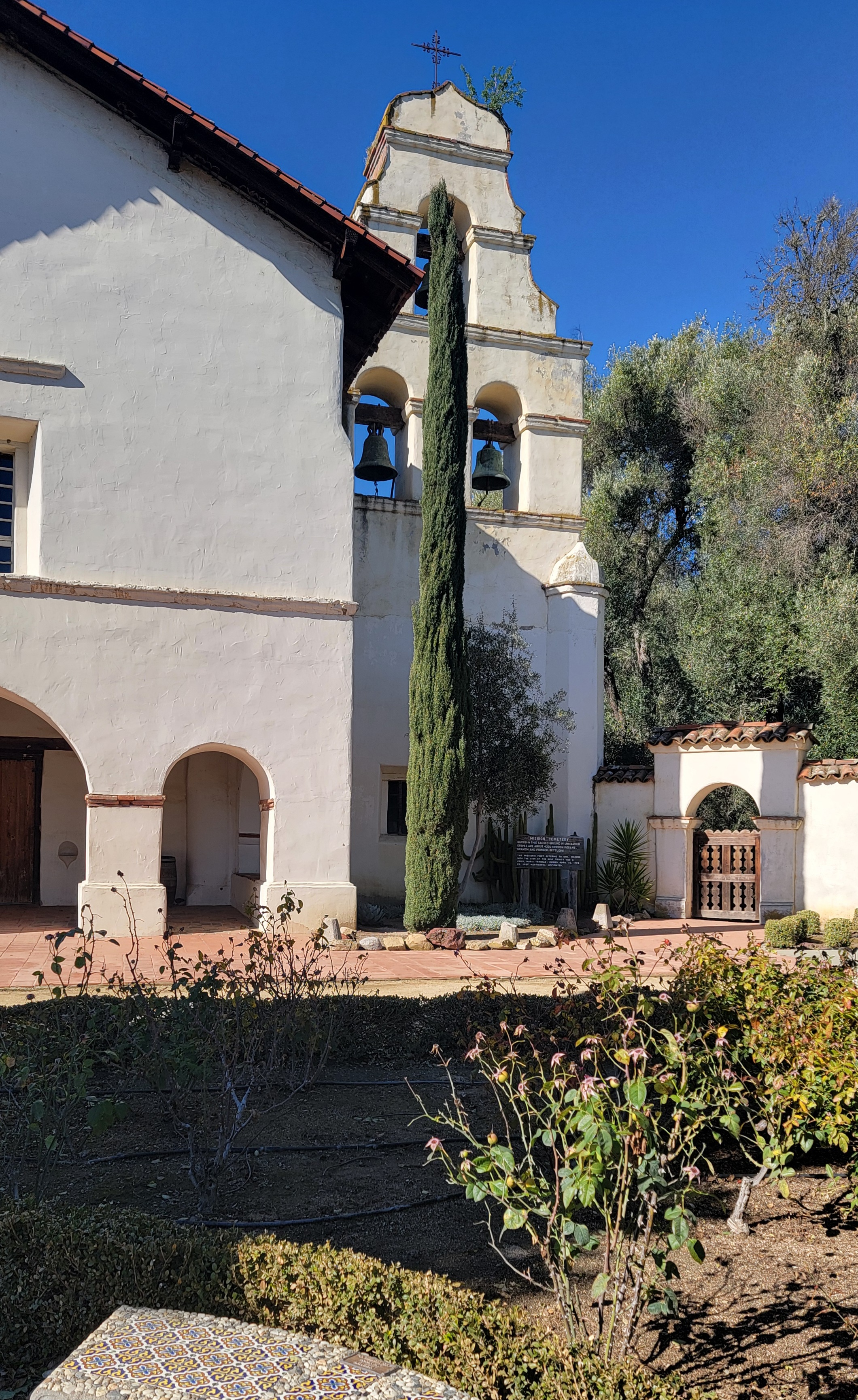
Vertigo has always been a special film for me. It was one of the films that helped me fall in love with movies. I’ve also spent time near the Bay Area, and made it a point to visit with my wife some of the locations where it was filmed like Cypress Point and Mission San Juan Bautista. Standing in those places with the film in your head is a particular kind of experience. My appreciation for Vertigo is an appreciation for its art and its mood. I’m not drawn to any specific genre — not especially to noir — I’m drawn to what’s good and valued for what it is. A great score helps one hundred percent of the time, and this one helps considerably.
My copy is a Mercury Golden Imports pressing from 1977, pressed in the Netherlands. I don’t have a similar pressing to compare it to directly, so I can only speak to what I have. It’s a characteristically European package — interesting fonts, an unusual label design, a gold strip across the top of the cover. The vinyl and the sleeve both have that thin, slightly flimsy quality typical of European pressings from this era. Very 1970s in every sense.
The cover art draws inspiration from the film without using any images from it directly. A hand grasping from the darkness of an iris — a woman’s face transposed four times in a circle, the whole thing suggesting an eye, or a spiral, or both. Weird and alluring in a specifically 1970s way, the kind of image that would pull someone in at a record store whether they’d seen the film or not. By 1977 Vertigo was nearly twenty years old and had not yet been restored or widely reassessed — it was still in the vault. A large sticker on the front cover announces that it was imported from Europe, pressed in the Netherlands. I wish more European imports in American record stores were that straightforward about their origins. Many stores I visit today are quietly moving European pressings to American collectors without much acknowledgment of what they actually are.
Before even playing the record, a genuine highlight: the back cover carries extensive liner notes by Jay Alan Quantrill. A full historical and critical write-up on the score, the film, the collaboration. That kind of documentation is exactly what the collector in me needs — context.
Sound Quality
The sound quality of this pressing leaves something to be desired. The vinyl is soft and the shelf life has taken its toll — there are pops throughout and some distorted passages that I suspect have more to do with the condition of the wax than with the producers’s intentions. Mercury claimed that most of the Golden Imports series were pressed on high-quality vinyl, and that may well be true, but they didn’t say much about how those pressings would age. What I have is what it is. The music survives.
The Music
Central to the theme of Vertigo is obsession, and central to the emotional language of Herrmann’s score is obsession. It manifests here as circling, spiraling, suspending sounds. This is music that builds and returns, builds and returns, never fully resolving, never letting you go. From the first cue through the last, the score provides immense emotional power to the scenes that demand it, and in the quieter scenes it functions as counterpoint giving you a subtle hint of what might be waiting around the next corner, or at the top of a staircase.
Martin Scorsese, speaking of his favorite film, called the score tragically beautiful and absolutely essential to the spirit, the functioning, and the power of Vertigo. Critics have reached for words like symphony and propulsion when trying to describe how the music works inside the film.
Herrmann was working deliberately in the tradition of the Romantic leitmotif — a technique associated most with Wagner, where specific characters, emotions, or ideas are assigned recurring musical themes that develop and transform over the course of the work. Kim Novak’s character carries her own motif, which Herrmann shapes and reshapes throughout the film to mirror what’s happening to Scottie’s perception of her. Wagner’s Tristan und Isolde — an opera built around obsession, longing, and a love that cannot be consummated — was a direct influence on the Vertigo score, and if you know both works, you can hear it.
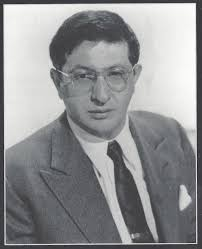
Herrmann wrote the score in approximately 45 days, which seems impossible given how rich and fully developed the final result is. He described what Hitchcock wanted in two words: obsession and longing. Those two words contain the entire score. Herrmann dealt with both more personally and more deeply in this music than in any of his other work — he went headlong into the deep end and found something there that he had not quite found before.
One practical complication: due to a musicians’ strike in America during the recording period, Herrmann was unable to conduct the score himself. The conducting fell to Muir Mathieson, which Herrmann resented deeply. He had always conducted his own work and considered it inseparable from composition. The sessions were recorded in Europe — not what he originally intended, and not something he ever fully made peace with. Given how personal this score was to him, that loss of control must have stung.
The Cues
Prelude (2:58)
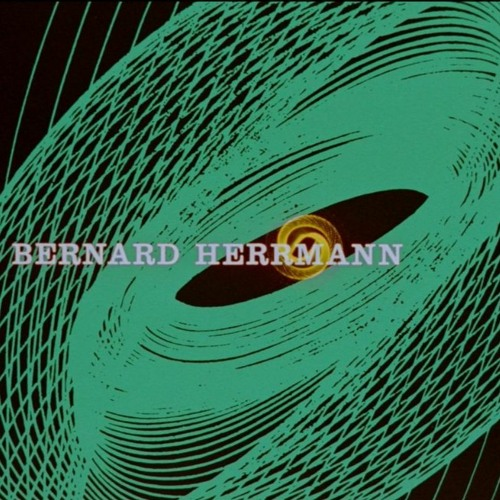
The opening cue, playing over the title sequence. Built around a relentless repeating figure called an ostinato — the same circular pattern cycling over and over, creating a dizzying effect that mirrors the film’s title and its central psychology. Herrmann uses the full orchestra here: strings, brass, woodwinds, harps, vibraphones, celeste, and a Hammond organ. The swirling figures in the strings and harps were designed to complement the hypnotic, spiraling visuals that Saul Bass created for the titles. The whole prelude is built around a single note — D — that keeps returning like an obsession that can’t be shaken. It ends not on a resolution but on that same unresolved D, as if the music itself cannot escape the loop. Herrmann described this kind of writing as creating a sense of going nowhere while moving constantly.
A small aside: the note D appears in the low brass — in tuba form — at the precise moment the words ‘Directed by Alfred Hitchcock’ appear on screen. Who knows if that was Herrmann’s subtle editorial comment on the heavy-set director.
Roof-Top (1:37)
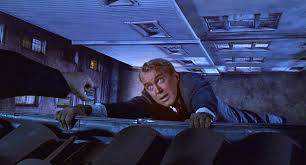
The film opens on a grey metallic bar across the screen. Scottie’s vertigo is introduced to the audience not through dialogue or explanation but through music — a rush of sensation that tells you exactly what the film’s title means before a word is spoken.
The chase scene that opens the film is fast and aggressive, with the strings playing a dizzying circular figure — the same vertigo motif from the prelude, now at a sprint. The brass sustain long tones underneath while the strings race above them. When Scottie slips and hangs from the gutter in his first vertigo episode, the music abruptly stops its motion. The strings cease racing. The brass hold a massive, dissonant chord. Stillness where there was movement. It’s the musical equivalent of looking down.
Madeleine (1:12) — The Restaurant
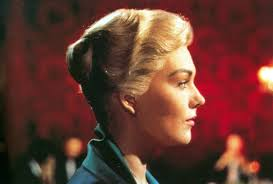
Marked in the score lento amoroso — amorously slow. The first appearance of what will become the Madeleine theme, arriving at the precise moment her face enters the frame. All strings, all muted — con sordini — which produces a softer, silkier, slightly veiled tone. Herrmann uses this deliberately. The theme is built around rising and falling melodic phrases that feel like longing, like something beautiful just out of reach. No brass, no percussion, just muted strings and a single harp. The restraint makes it feel private, interior, as if we’re already inside Scottie’s head before he knows it himself.
Carlotta’s Portrait (1:52)
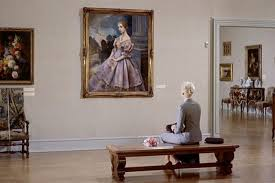
One of the score’s most quietly haunting cues. Built on the habanera rhythm — a Cuban dance rhythm, dotted and syncopated — which Herrmann associates throughout the score with Carlotta, with fate, with obsession. Here the vibraphone gently strikes a single note at regular intervals, like a clock ticking or a heartbeat. The melody passes between flutes, clarinets, and muted horns, each section taking its turn before handing it to the next. The effect is circular and inevitable and trance-like. Madeleine sits staring at the portrait. The music doesn’t dramatize the moment, it inhabits it.
The Beach (3:26)
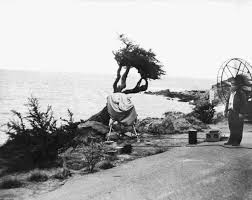
Begins passionately — muted cellos playing an impassioned rising melody, the horns and strings joining in. This is Herrmann at his most romantically expressive, closer to the lush European Romantic tradition than his usual more economical style. As Madeleine talks about a long dark corridor, the strings quiet to a continuous sympathetic murmur — a flowing six-note figure repeated without pause, creating a hypnotic undertow beneath her words. When she talks about her gravestone, the trombones and tuba appear alone, playing spare half-note progressions — low, slow, heavy with everything they imply. The cue ends with the full orchestra at a passionate climax as Scottie and Madeleine embrace. It resolves to a bright major chord — the happiest the score gets.
Farewell and The Tower
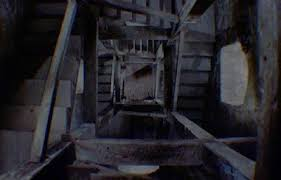
The habanera tempo returns. The Madeleine theme returns with it — lush and full, confirming everything Scottie feels about her, the obsession made music one more time before the film takes it away.
At the tower, the vertigo motifs from the prelude return and begin accumulating, the tension building bar by bar in a way that makes you desperate to know what’s coming. And then a scream and a fall, and Scottie’s confusion and despair are matched precisely by a score that equals both — music that has no resolution to offer because the scene has none either.
The Nightmare and Dawn (2:22)
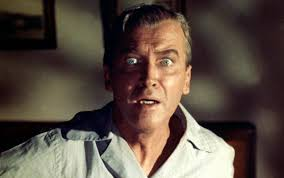
Seductive and frightening in equal measure. The animated nightmare sequence begins with the Madeleine theme distorted and fragmented — the same notes, wrong — then shifts through several stages of increasing agitation. The habanera rhythm appears now beaten on timpani rather than plucked or bowed, growing louder bar by bar until the full orchestra erupts. Herrmann uses sul ponticello — bowing near the bridge of the instrument — to produce a harsh, metallic, thin string tone unlike anything else in the score. The flutes play flutter-tongue technique. At the climax, harps run wild glissandos in opposite directions simultaneously while the cymbals crash and the brass blare. Then the sequence ends and the orchestra simply stops.
Scene d’Amour (4:58)
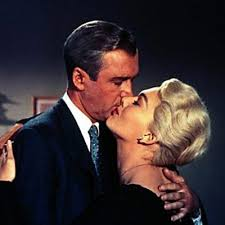
One of the most bewitching pieces of music I know. In the film it’s matched with a wondrous transformation — Scottie caught up in a whirlwind of obsession, watching a woman who resembles Madeleine emerge from a bathroom as the woman he has lost. The theme fills the scene of her entry into the frame and it’s an emotional experience that the film could not achieve without it.
This is the emotional and musical peak of the entire score. Herrmann begins with strings alone — the Madeleine theme in its fullest, most impassioned version. The music builds slowly, adding instruments gradually. Then Scottie waits alone while Judy is in the bathroom. The music shifts — strings playing sul tasto and sul ponticello alternately, an unstable and searching quality, the musical expression of a man holding his breath. When Judy emerges fully transformed, the music erupts: molto largamente e appassionato — broadly and passionately — the full string section in an unrestrained climax. It resolves at the end to C major, the clearest and most unambiguous chord in Western music. A moment of completion that is also, given everything we know by then, deeply tragic.
The Necklace / The Return / Finale
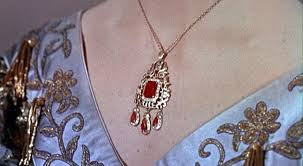
The habanera rhythm returns one final time when Judy puts on Carlotta’s necklace — the gesture that gives everything away. The brass blare it now. Not the subtle, muted versions from earlier in the film — the full brass, loud, inevitable. The return to the tower is built on a slow accumulation: violas, clarinets, bassoons, the timpani rolling underneath. Everything the score has been building toward arrives here, and then the finale follows, and then the film ends the only way it could.
Closing
The score is lush, vibrant, and genuinely beautiful. At times it gives the audience pain. At times it helps us remember things. We remember things not from the film, but from somewhere older in ourselves. It confuses us with wonder, keeps us guessing what’s real, and holds us in a sustained emotional state that very few pieces of music can maintain for two full hours. When I put this record on I’m pulled into the spiral. I’m Jimmy Stewart following Kim Novak around another corner in San Francisco, not knowing what I’ll find.
Thanks for reading.
RTR
 Remember a Day