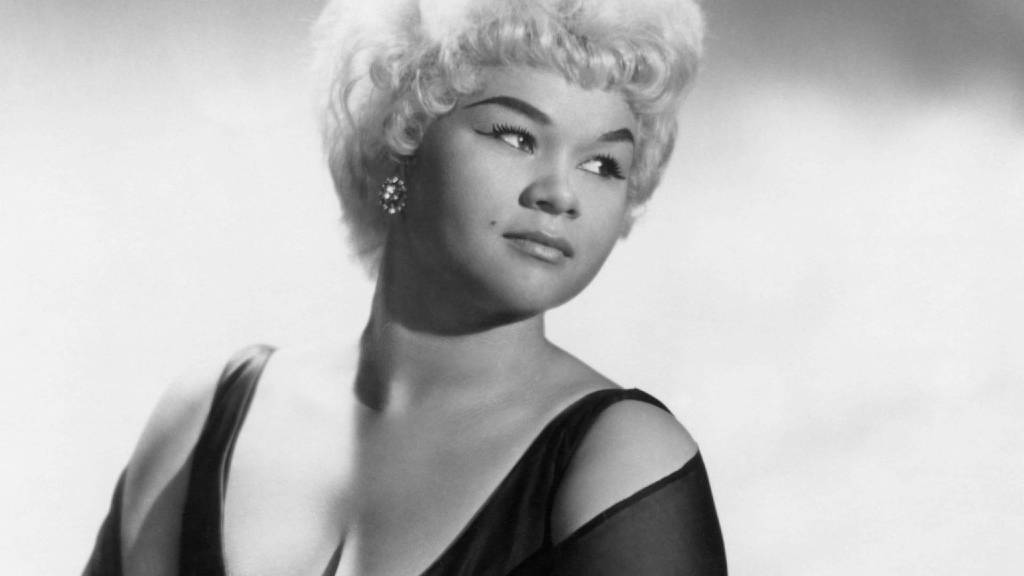
Studio Album · Released November 15th 1960 · Argo Records (Chess Subsidiary)
Orchestral Arrangements and Conducted by Riley Hamilton · Produced by Phil and Leonard Chess
Recorded: Between January and October 1960
My copy: 2013 WaxTime Reissue · Purchased some time in 2016. Siren Records, CA
“That’s why I don’t care to associate with a lot of other entertainers. Its not the drugs, its just that I’ve heard all that jive talk and ego games for too long. When I first started out, touring was fun — riding those old buses, eatin sardines out of a can, white folks runnin you out of town and everybody talkin about it for six months afterward.”
— Etta James
Jamesetta Hawkins was born in Los Angeles in 1938. She never knew her father, and her mother was only fourteen years old. She moved around, raised by relatives, not by her mother, attending a Baptist church with her grandparents. She had a natural talent for singing and was a soloist in her choir. While singing at church, she was subject to regular physical abuse. The director would punch her in the stomach if she didn’t sing correctly. As terrible as that sounds, James later related this period as what gave her the toughness to go it alone as a solo singer, and what gave her voice the raw edge that many came to appreciate. At twelve she started living with her mother, and began a slow drift into delinquency and general trouble.
It was Johnny Otis who discovered her. Otis was a talent scout and bandleader with an extraordinary ear, responsible for unearthing several major artists in the late 1950s and early 1960s. The first song James recorded, “Roll With Me Henry,” was an answer song to Hank Ballard’s “Work With Me Annie” — sexual nuance included, racy undertones for the era. It was a sure-fire formula for a hit in those days. And it was a hit, until Georgia Gibbs covered it and scored a bigger chart position with the same song, now sung by a white artist for white radio. This was a routine injustice of the period. Black artists writing and recording the source material, white artists getting the commercial payoff. James’s dismay pushed her to seek out success as a solo artist on her own terms. She was strong-willed, massively talented, and not interested in compromises.
Her solo career floundered until Leonard Chess signed her. Chess Records, by 1960, was the most important blues and R&B label in the country, with Muddy Waters, Howlin’ Wolf, and Chuck Berry all on the roster. Argo, its subsidiary label, was positioned slightly differently. It was more pop-friendly and more open to orchestral production. That distinction matters when you listen to At Last!, because the lush string arrangements that Riley Hamilton brought to these sessions aren’t an accident or a concession. They’re a statement about where Etta James was meant to sit: not in the low-down gut-bucket blues tradition, but somewhere more expansive. Blues feeling, pop ambition, and genuine soul.
What I hear when I listen to Etta James is a powerful singing voice, even allowing for her young age. There’s a depth and maturity behind that power that you don’t come by easily. You come by it the way she did, which was the hard way. She can growl, she can wail, and she can drop to a murmur in the same line. She has that intensity that very few could imitate because you can’t fake what’s underneath it. The hurt makes the beauty sparkle. And on the title track she shows that she can be delicate and glamorous and pop, and sing with a feeling of love that lands as something rare and real. The combination of roughness and the refinement is what makes this album unlike anything else Chess put out in this period.
At Last! is not exactly a traditional album in the sense of a unified artistic statement. It reads more like a curated greatest-hits collection, pulling together singles, covers, and originals across different emotional registers. There’s raunchy, there’s blues, there’s pop, and there’s the timeless love song of the title track. What ties it together isn’t the songwriting or a conceptual thread — it’s her. She’s the constant.
The Object
This copy is a reissue from 2013 on WaxTime Records, added to the collection, from what I can remember 2016. I was in Arabic school at the time, so it was likely purchased in Monterey or Seaside, probably at Siren Records. It does not maintain the original track listing. There are four additional bonus tracks: “Don’t Cry Baby,” “You Know What I Mean,” “I’ll Dry My Tears,” and “Seven Day Fool.”
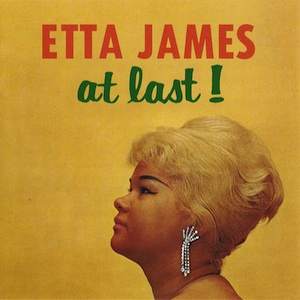
The record sleeve is well made, a perfect reproduction of the original artwork. A beautiful side-profile pose — possibly a nod to Muddy Waters’s debut Chess LP — set against a yellow-orange background. Bold red lettering for Etta’s name, lowercase cursive for At Last! Her face is pensive, confident, and genuinely beautiful. The statement earring might be the entire reason for the decision to go with a profile shot — it adds a shine and distinguished class that points directly to what the music is: refined, bluesy, and elegant all at once.
On the back of the cover, updated liner notes sit alongside the originals, with the new notes written by Santi Comelles. There are also archival images like show bills, photographs of Etta, original single record labels for the interested collector. This is her debut LP. Three of the tracks were released as singles, and all three were successful.
The Music
Songs and Listening Notes — January 6, 2026
All tracks were recorded in Chicago between January and October 1960, except “You Know What I Mean,” recorded with an unidentified rhythm section, possibly in California.
Anything to Say You’re Mine (Written by Sonny Thompson)
A song of longing. Her crying and moaning here is just great. This a beautiful opener to a record that functions more like a greatest-hits collection than a conventional debut. Sonny Thompson was a popular bandleader in the 1940s and 1950s, and this is one of his better compositions, but Etta makes it hers.
My Dearest Darling (A single from 1958 by Eddie Bo, early R&B legend, New Orleans-bred)
A wailing cry and a sensitive soft whisper, effortlessly achieved in the same song. Range. When I listen to this track I can hear where Janis Joplin drew her inspiration. The cover was a solid hit for Etta.
Trust in Me (Written by Ned Wever, Milton Ager, Jean Schwartz)
A vintage composition taken from much earlier in the American songbook, and Etta treats it accordingly.
“Come on daddy, face the future, why don’t you smile” — I just like that line a lot.
Sunday Kind of Love
Lost in the vibe of this song. A smoothly arranged track . The orchestra layers on the smoothness and the sensitivity with real care. This song sounds brand new. Her voice carries a patented soul edge that is legitimate and real and has never really been matched.
Tough Mary (Written by Etta James and Joe Josea)
Going to go ahead and say yes to the background singers and the saxophone solo. Both are highlights on this more uptempo track about a woman singing about exactly what she wants, no compromise.
Don’t Cry Baby (Bonus track from 1961 — originally sung in 1929 by Bessie Smith, written by James P. Johnson)
A slow, vampy blues, but with those strings and her voice it’s elevated well above the low-down blues of Muddy Waters or Howlin’ Wolf. This is exquisite blues. As far as the content goes, I wonder if anyone took this as emasculating to men — she’s pleading with her man not to cry, offering to reconcile and try the relationship one more time. Great song.
You Know What I Mean (Bonus track)
This one doesn’t benefit from the orchestral arrangements of the other material — the rhythm section is different, possibly recorded in California and it’s noticeably different. Despite that, it’s still another outstanding exhibition of her vocal style and ability. Real wails here, and she puts a lot of power behind nearly every line.
Side 2
I Just Want to Make Love to You (Willie Dixon)
Picks up right where Muddy Waters left off, though it’s more swinging and swaying than power blues. The saxophone player goes for a walk. I really like how you can hear the air blowing into the mic on certain lines. And on the title line — she starts at the peak of vocal power, I JUST WANT — and in the second half of the line she lands in a place of softly spoken murmur. Power and class in the same line.
At Last! (Written by Mack Gordon and Harry Warren for the musical Sun Valley Serenade, 1941)
Originally charted in 1942, when Etta was five years old. Glen Miller’s orchestra performed the version that first made it famous, and in its original context it’s a tender, soft-spoken love song — pleasant, well-crafted, and not much more than that.
Knowing that origin and then listening to Etta’s version is what makes the recording so special. She injects her sadness, her emotion, and her life up to this point into every breath and tonal expression. It’s a song with meager origins taken to the peak of an emotional mountain. Many other artists have tried to imitate it. Privilege sometimes gets in the way of true art. Etta never wore her rough past on her sleeve, but it was always there inside the music, and here you can hear it in every note. The song became ubiquitous and that ubiquity has a way of flattening the source into sentiment.
All I Could Do Was Cry (Billy Davis / Gwen Fuqua / Berry Gordy)
A really sad song, and to my ears the best songwriting on the album. Etta gives it its due with another vocal performance equivalent to a grand-slam home run in a playoff game. It’s like she’s singing as if it’s her last song ever. The song could be a personal story about a past lover whoh had moved on. Whatever the inspiration was the result is devastating.
Stormy Weather (Harold Arlen and Ted Koehler)
Another sad and bluesy tune, but sung with a confidence that things will be okay. The arrangement here is restrained and smart.
Girl of My Dreams (Rendered here as “Boy of My Dreams” — written by Charles Clapp)
Another solid track, though by this point in the sequence the album begins to show the effects of its own emotional consistency. Most of the somber material ends up on Side 2, and the sequencing can feel a little front-heavy with sadness by the time you arrive here.
I’ll Dry My Tears (Etta James and Clyde Walker — Bonus track, taken from a 1961 album)
Another somber tune, relegated to the end of Side 2. Still really beautiful. The string arrangements are soaring here, providing a true call-and-response to the vocal.
Seven Day Fool (Billy Davis / Berry Gordy / Sonny Woods — Bonus track)
The album finishes on an upbeat, almost rocker-ish note, and it’s a sign of things to come. This sounds closer to the music on Tell Mama, which benefitted massively from the Muscle Shoals treatment, and that real swampy soul sound. Etta could transmute her blues into whatever container the session demanded, and here you hear the California girl who became the South, who became something else again, but always herself.
Closing
At Last! is Etta James’s debut LP, and in some ways it remains the definitive document of her abilities This is a record that functions simultaneously as a great blues album, a great pop album, and something harder to name, which is just a great album. Three singles, all successful, all now classics. The orchestral arrangements that Riley Hamilton brought to these sessions are sometimes dismissed as pop gloss. The strings are the frame that makes the painting visible. They create the space in which her voice does what it does.
What gets lost in the conversation about Etta James is that the biographical context is inseparable from the music. The roughness of that early life, the church discipline, the years of near-misses and bad luck, the things she absorbed before working with Leonard Chess — all of it is present in these recordings in a way that can’t be manufactured.
After this record and its subsequent success, James stayed in the public eye, following up with singles and performances across multiple genres, even venturing into country and western territory as the decade moved along. As the 1960s became the 1970s she struggled with drug use and lived through some hard years. She eventually got help, resurfaced with that class and vibrancy intact, played terrific live shows, and continued recording tribute material and original work alike. A great career, fully lived. And if you really sit with this record, past the familiarity of the title track, past whatever associations have accumulated around it, you’ll hear what all of that living sounded like when it was young and new and real.
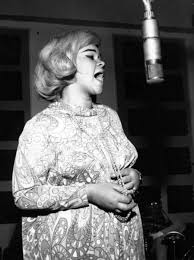
“I sing the songs that people need to hear.” — Etta James
RTR
 Remember a Day