Tag: rock

  • Bob Dylan – Freewheelin’ Bob Dylan

    Bob Dylan – Freewheelin’ Bob Dylan

    Studio Album | Released May 27, 1963
    Recorded July 9, 1962 – April 24, 1963 at Columbia Studio A, New York City | Label: Columbia | Producers: John Hammond & Tom Wilson

    My copy: 2025 Mono Reissue | Purchased in March 2026 | Discogs

    “Anything I can sing, I call a song. Anything I can’t sing, I call a poem. Anything I can’t sing or anything that’s too long to be a poem, I call a novel. But my novels don’t have the usual story-lines. They’re about my feelings at a certain place at a certain time.”

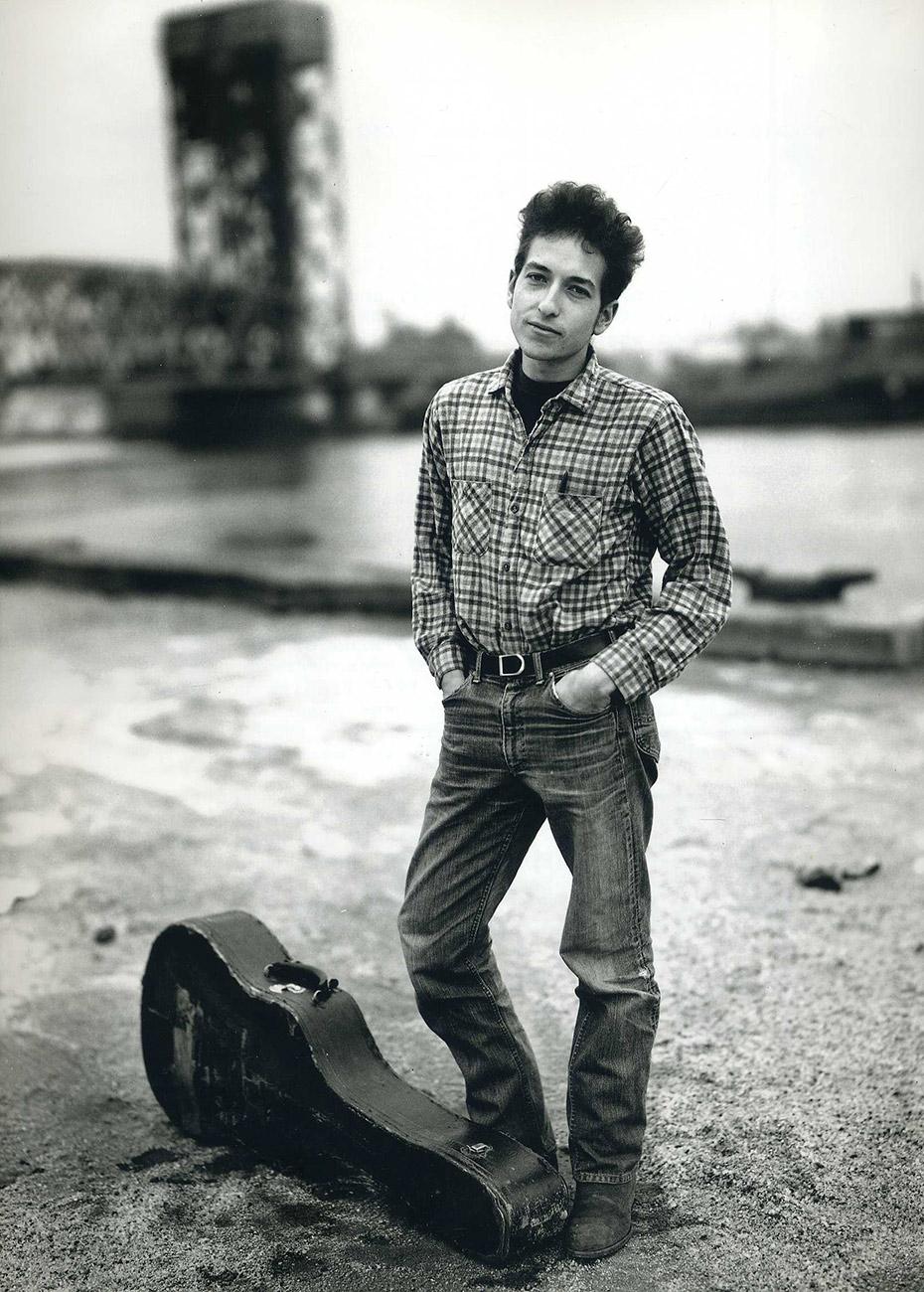
    Bob Dylan. Lots of words written about the man. Should I add to this litany of myth and speculation? He currently lives inside of an ironic public persona, a continuation of what he’s always done. His internal argument, I suspect is that we as a society just don’t know what’s going on. He’s doing AI things now, apparently. I’m not entirely sure. What I find massively appealing is his anti-social, anti-establishment persona, cultivated carefully over decades. I think it’s a product of his uniqueness and his genuine struggle with accepting fame. He writes for himself and for his own myth. The constant “what does your song mean” onslaught must have gotten to him early on, and the rest is a long, deliberate, magnificent evasion.
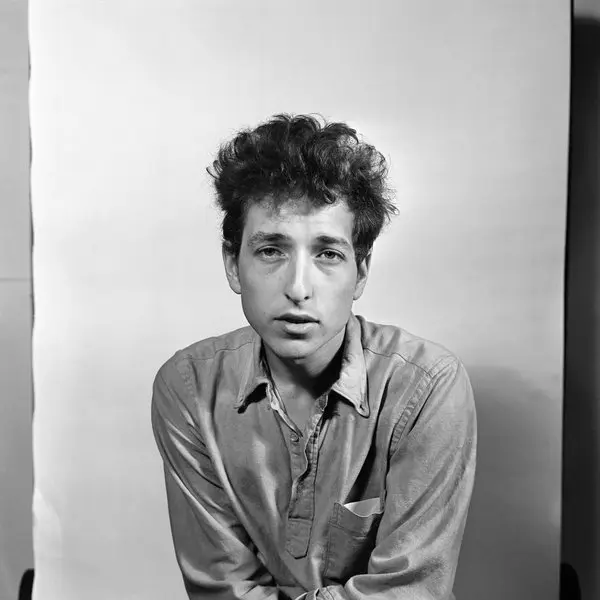
    It started with Freewheelin’, his second album and the first record made up almost entirely of original tracks. This album is still a monument. The obelisk in the folk swamp. It reached a lot of people. The songs inspired people, gave them hope in a genuinely strange and frightening time. 1963. Things were getting real weird in America. The Cuban Missile Crisis. Kennedy shot. The Civil Rights Movement in full boil. Nuclear destruction a real and present possibility, and a fervent anti-communist government dragging the country toward a ground war in Vietnam.

    In 1962 Bob released his first album, simply titled Bob Dylan. It was a piecemealed collection of mostly folk standards previously recorded by other artists, with only two original songs: “Song to Woody” and “Talkin’ New York.” The second record was a massive jump in terms of songwriting ability, recording acumen, and vocal performance. A genuine career maker. You can sense with this album the good feelings Bob had writing and recording his own material. He was only 22 while making it.

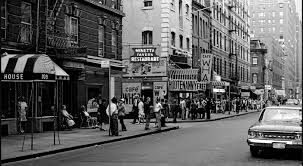
    When the first record came out, it was largely a byproduct of the late 1950s and early 1960s New York City folk scene. On a small scale, a group of thrift shop clothes-wearing hipsters sitting around drinking coffee, listening to music of the vagabond. The guitar case and a few dollars in your pocket. Everyone dropping in to the club to see what new acts are trying to break out into show business. A real scene, and a conscious rejection of the corporate nature of rock and roll at the time. Rock radio, music industry moguls trying desperately to manufacture hits and cash in. It was a rejection of political trends as well. Youth moving toward new directions, thinking big ideas, and imagining the changes required to achieve them.

    Bob Dylan fell into this scene, but in his own way and with his own set of inspirations. His efforts to meet Woody Guthrie, the folk icon, were what brought him to New York City in the first place. His natural tendencies toward rock, blues, and Guthrie’s styles shaped his early sound. The first record was a transmuting of that blend, his songwriting and vocal delivery something between blues tradition and Woody Guthrie. You see this clearly on the debut, and the transformation into the second record was quick, because Bob had always understood the first album as something that just needed to get done so he could get on with what he actually wanted to say.
    Between the two records, behind the scenes, there was an uproar among the money men over the poor sales of the debut. John Hammond, Dylan’s benefactor and producer, possibly with some help from Johnny Cash, secured the contract for Bob to make another record. This next one would be a huge leap forward creatively. A money maker for the ones who cared about that, and possibly for Bob too, who was living place to place and shacking up with his girlfriend. This record would change the face of folk music and the rock music that followed in its wake.


    The Album Cover

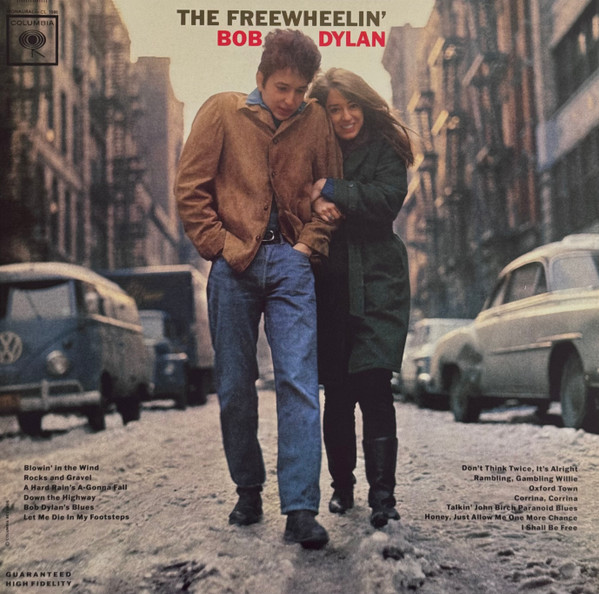
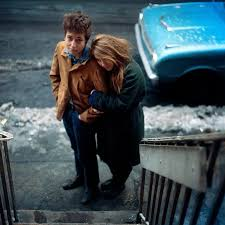
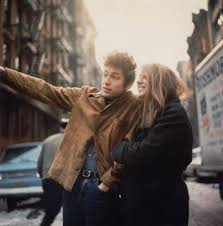
    Bob and his girlfriend at the time, Suze Rotolo, walking in Greenwich Village. Such innocence. Such youth. Honestly, for Bob, this is probably his best cover. A perfect representation of the vibe, the scene, and his life at that moment. That embrace against the cold is everything you need to know about the relationship. You can see the warmth, the appreciation. I also particularly enjoy the old VW bus in the background. Very cool, very of the time. Living in California, I find it quietly amusing that one of those was parked in New York City. But that’s just me.

    Suze was an important piece of the cover and of Dylan’s life. She was deep into the whole equality-freedom thing long before Bob got seriously involved in it. She was possibly the editor, or the litmus test for the content of these songs. Bob said he checked out the songs with her. She had strong left-wing political views and shared them openly with Bob, helping drive his interest in the disenfranchised. Her departure to Italy spurred a period of intensive songwriting, Bob relegated to a pad, a typewriter, a guitar, and a pack of smokes. A friend, Mikki Isaacson, recalled that he was writing at a feverish pace, missing Suze immensely, working on four songs at a time and flipping pages between a spiral notebook, getting one line down at a time.
    The songs were coming quickly. Often it only took a few moments to get a song finished and qualified as poetry. The melodies came from his spongy brain, his ability to pick up on nuance from the vast pool of musical influences around him. He would adopt an old folk tune and suddenly have his song complete. The recording sessions at Columbia’s New York studio started in April 1962 and got seriously productive in July, where the most distinctive material began getting laid down.

    The Object

    I used to own this record, but it was in very rough shape. Unable to be played. Resurrected here with this reissue, I’m finally happy to have a copy that does the music justice. This is where Bob broke out as a songwriter and artist. The songs are ripe with political commentary and imagery. The scene is Greenwich Village, the girlfriend on the cover, young Bob taking on the world and his own artistry.

    My copy is a 2025 RSD reissue, Mono, an MPO pressing. The album cover and rear cover are original, maintains the original liner notes, and retains the pre-controversial tracks. A very important note: it holds the original track listing from before certain songs were eliminated, which I’ll get into below.

    Call RSD what you will. I often regard it as a cash grab for most of those involved, but if it keeps local record stores alive I’m fine with it. There are a few RSD releases worth tracking down, and this is one of them. For collectors, this pressing offers a real alternative to hunting for an original Freewheelin’ with the pre-removal tracks, copies of which have become extremely rare and expensive.

    I bought it on Discogs in March 2026, still filling out the collection with greats from pre-1965.

    This copy sounds really good. Some of these tracks I’ve never heard this clean. The beauty of vinyl. Bob’s voice is front and center where it needs to be, right in the middle of the channel. Super flat and quiet. Perfect.

    I like this track listing. Not sure I’ll ever need the official, most recognized release with the standard tracks, though at some point it might make sense to have both. The familiar songs sound great here, but the new favorite for me is “Down the Highway.”

    It’s a happy time, owning this record. We all should own it. Bask in the greatness of early 1960s Bob and the world gets a little better.

    The Music

    Blowin’ in the Wind

    Blowing In The Wind (Live On TV, March 1963)

    Recorded July 9, 1962

    “The idea came to me that you were betrayed by your silence, that all of us in America who didn’t speak out were betrayed by our silence, betrayed by the silence of the people in power. They refuse to look at what’s happening.”

    Unofficial anthem of the 1960s? This song was already a hit for Peter, Paul and Mary before this record even came out. Apparently written in ten minutes while sitting in a café. The theme of world peace. The question song. The tonal metronome of what was happening in the world at that moment.
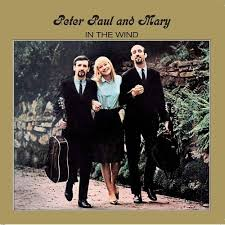
    Dylan may have understood the immensity this song carried, or worried about it. More likely he put the thing out there and watched it begin to live a life of its own. It was his first real attempt at moving from reporting specific events to examining the general, and the vagueness was the whole strategy. Scholars have noted that the reason this song works is precisely because it doesn’t connect to any specific territory. There is no specific event, no villain, no proper name. The argument is exterritorial, and by being untethered it could attach itself to any freedom struggle anywhere.

    The life this song has lived is beyond anything Bob could have imagined when he wrote it. It’s anthemic at this point, embedded in the zeitgeist. We make each other feel something when we talk about what this song is about. Whether it’s stirring or inspiring or bittersweet, by 2026 the things this song helped set in motion have lived through generations, seen their ups and downs. When it really comes down to it, we’re still pondering the same questions Bob was asking when he wrote it.

    I love a song that asks questions, and this one along with “A Hard Rain” asks many, repeatedly. Maybe that’s the real subject. A song that made people question themselves, the institutions that govern them, and their place within those institutions. There’s a comment in No Direction Home noting that this song feels simultaneously brand new and two hundred years old. “Blowin’ in the Wind” became a cliché, and what a profitable one.
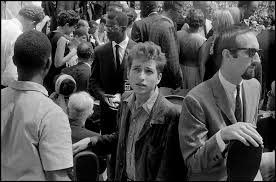

    A Hard Rain’s A-Gonna Fall

    A Hard Rain’s A Gonna Fall

    Recorded December 6, 1962

    Dave Van Ronk recognized this song as a pivot point, the beginning of a new artistic revolution. The proof that poetry could be fully infused into folk music at this scale. That hadn’t been done before.

    Born out of the Cuban Missile Crisis. A period of intense paranoia, genuine talk of mutually assured destruction, nuclear catastrophe on a real timetable. A song like this could only come from that moment, from a mind ripe with dread about the end of the world and eager enough to put one of his best songs ever to paper. More poem than song, a string of imagery inspired by the French poet Arthur Rimbaud, one of Suze and Bob’s favorite writers.

    Epic. Seriously. Personally, this song has taken on different connotations for me over the years. After watching the Ken Burns Vietnam documentary and visiting the wall memorial in DC, hearing those first lines is enough to make the tears well up. For me this song is a collage that lives somewhere in the quiet grey between optimism and pessimism. A request. It wants to know something.
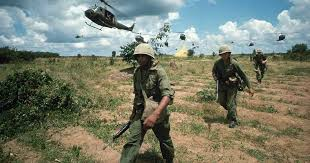
    Probably the best thing I’ve read about it is where Bob makes clear that every line in this song could be a song in itself. Every line starts and ends its own image.

    “Where have you been, my blue-eyed son” shifts to “What did you see”, then “What did you hear”, then “Who did you meet.” That’s the only narrative shift. The blue-eyed son: the wide-eyed youth, the wayward soul, the witness to the prosecution. The fundamental newness of childhood bearing witness to the evidence of the horrors and the beauties of life. Or just, you know, the good old-fashioned end of the world.

    It’s the sincerity, the soft-spoken cry for action in Bob’s voice on the question pieces that gets me. The subtle question is the more urgent one.


    Down the Highway

    Spooky blues, right up my alley. Or highway, as it were. It’s bare and basic, working within the twelve-bar scheme, but those single guitar strums that linger throughout are just maddening. Scary and menacing. Hear that at a crossroads at night and you’ll be looking over both shoulders, seeing things in the cornfields.

    The song is about Bob living in the void of Suze Rotolo’s absence. She’s gone to the far-off land of Italy, leaving the narrator poor and lonely, stripped down, nervous, and afraid. Left to gamble and booze it away. Bob had also been getting real thin and loose around this period of songwriting. Losing weight, appearing gaunt. The relationship with Suze had taken its toll, and this song sits in the middle of that toll.


    Bob Dylan’s Blues

    Recorded July 9, 1962

    A moment of respite in the sequencing. Recorded during the same session as “Blowin’ in the Wind,” it makes for a little breather between the heaviness of what comes before it and the second side. During the actual recording session it probably served the same purpose.

    “Bob Dylan’s Blues” was originally the working title for Freewheelin’ before the final title came along.

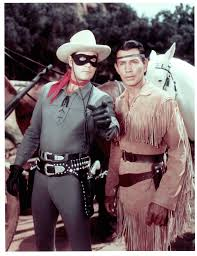
    The Lone Ranger and Tonto: the first characters in Bob Dylan’s menagerie, the kind that would multiply and populate his later albums. Welcome to the carnival.

    Let Me Die in My Footsteps

    One of the four tracks replaced after the John Birch situation.


    Side 2


    Don’t Think Twice, It’s All Right

    Recorded November 14, 1962

    A breakup song, directed at and inspired by the deterioration of Bob and Suze’s relationship. Bob shoots accusations across the table: “You just kind of wasted my precious time.” He’s the one traveling on. In reality, though, it was Suze who left Bob, not the other way around.
    A song with a lot of charisma for me. Bewitching. Just Bob and his guitar, a real knack for dynamic picking, and a voice he’d been sharpening during his New York years. One of those songs that sounds effortless and reveals itself as anything but over time.


    Rambling, Gambling Willie

    One of the four tracks replaced after the John Birch situation.


    Oxford Town

    Recorded December 6, 1962

    Another song written for and published in Broadside magazine, in response to a call for songs about topical events. Bob is making direct reference to one of the key moments in the Civil Rights Movement. James Meredith, a Black man who won a federal court ruling allowing him to register at the University of Mississippi, Ole Miss.
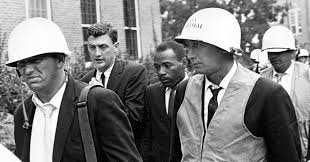
    The governor of Mississippi took extreme conflict with the situation. The whole episode is insane to read about even now, though we have to remind ourselves how far we’ve come. Meredith registered amid a mob of rioters, the National Guard, and an armed conflict that resulted in two deaths and roughly three hundred wounded.

    The final line remains relevant today: “Somebody better investigate soon.” A sarcastic tone. Somebody ought to do something about this. Well, we’ve been waiting and will continue to be waiting.


    Corrina, Corrina

    Recorded October 26, 1962

    The only song on the record not originally composed by Dylan. This composition dates back to 1918, a traditional blues tune about a lost love. Bob most likely knew it through Blind Lemon Jefferson, or possibly Robert Johnson’s version.

    The song is indicative of Bob’s deep connection to the original blues legends, and this adaptation is a direct byproduct of his loneliness in Suze’s absence. He wore that loneliness across most of the album, and here it takes on an older, rawer form.


    Talkin’ John Birch Paranoid Blues

    Deemed too controversial for the original release. Several of the protest songs on this record were published in Broadside, the folk and protest magazine. The first issue of that publication, of which Bob was a contributor, carried the lyrics of this talking blues. The alt-right gets picked apart in the song, with a great punch at the end: the narrator searches for communists everywhere, and eventually finds one looking back at him in the mirror.

    Dylan had planned to perform this on the Ed Sullivan Show, at the time the single most important platform for any musician wanting to get known or stay known. The censors got hold of it during rehearsal and immediately questioned the song, fearing libel against the John Birch Society. Bob made it clear without much deliberation: no song, no show. He walked out. Further down the line this helped his street cred with the anti-establishment Greenwich Village crowd, but that same fear of libel made it to the desks of the Columbia executives, who pulled the song from the album. Bob had to comply under contract. This led to the other songs being pulled as well. “Rocks and Gravel,” “Rambling Gambling Willie,” and “Let Me Die in My Footsteps” went with it.


    Honey, Just Allow Me One More Chance

    Recorded July 9, 1962

    Another cover, this time drawing from Henry Thomas, an old Texas country bluesman. A pretty different mood from the rest of the album, more upbeat, though the subject matter still circles back to Suze’s absence and Dylan’s loneliness. A little lightness before the end.


    I Shall Be Free

    Recorded December 6, 1962

    The album ends on a comic note. Lots of nonsensical remarks in this track, almost a politically incorrect comedy routine. A loose, funny, deliberate exhale after everything that came before it. Bob letting the air out of the balloon before he sends you home.

    Closing

    Freewheelin’ contains some of my favorite Bob tunes ever. For that it will always hold a happy place in the collection. I probably heard Bob Dylan songs in my toddler years, maybe even earlier. I genuinely cannot remember the first time I heard him. But sometimes I listen to “A Hard Rain’s Gonna Fall” and it’s new again. Every single time. That is the sign of great music.

    He was in a unique creative period here. You can tug on a lot of different threads and they all lead to the same place: a spot of intense creativity, a spot of inspired songwriting, a young man taking on the world with a guitar and a typewriter and a burning need to say something. This was the start of Bob’s rise. The best records were still to come, but this one gave us proof of what was possible. An all-time classic if there ever was one.

    Thanks be to the Dylan.

    “If you told the truth, that was all well and good, and if you told the un-truth, well that was still well and good. Folk songs had taught me that.”

    -RTR
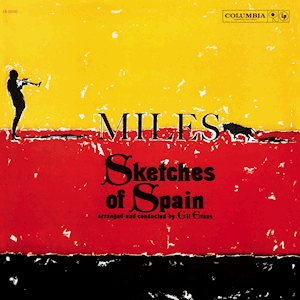
  • Miles Davis — Sketches of Spain

    Miles Davis — Sketches of Spain

    Studio Album  ·  Released July 18, 1960  ·  Columbia Records CL 1480

    Arranged and Conducted by Gil Evans  ·  Produced by Teo Macero and Irving Townsend

    Recorded: November 1959 and March 1960  ·  Columbia 30th Street Studio, New York City

    My copy: 1974 Columbia Reissue  ·  Purchased April 2025, Habitat for Humanity, Seaside CA

    The Object

    This one ranks among Miles Davis’s best works. Before the 1970s funk experiments, before the electric period, there was this — the third entry in the Gil Evans trilogy alongside Miles Ahead and Porgy and Bess, and in some ways the most personal of the three. It arrived right after Kind of Blue, which is to say it arrived at the apex of one of the most fertile periods any jazz musician has ever had. Miles was 34. He was at his peak.

    Sketches of Spain is an example of what gets called third stream music — an amalgamation of jazz improvisation and full orchestral arrangement. But that label doesn’t quite capture what happens when you actually sit with this record. The mood here is geographic, cinematic, emotional. It’s a sense of longing projected through trumpet into Spanish landscape. Miles made music for moods. On this one, the mood is an entire region of the world.

    I found this 1974 Columbia reissue at the Habitat for Humanity thrift shop in Seaside, California in April 2025. Whoever owned it before kept it well — the cover is clean, the wax still has its sheen. It’s a fine copy and it will stay in the collection. This is one of those records you know belongs in the collection as soon as you see it.

    I’ve played this album many times in headphones while working at the NSA building in Fort Gordon, Georgia. That context matters. This is music that transforms the space around you. Put it on and wherever you are — a government building, a small apartment, a car — becomes somewhere else. That kind of transportive quality is rare.

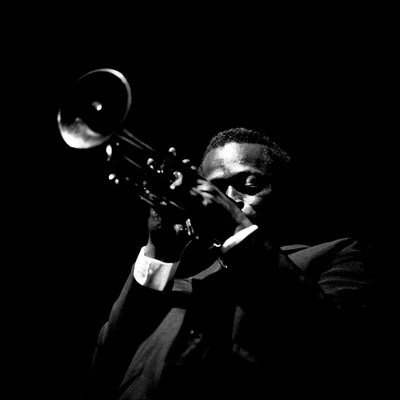
    On Sketches of Spain, Miles plays trumpet but you hear something other than trumpet. He mimics the human voice with an intimacy that is his particular genius, and on this record he also imitates — inhabits, really — the voice of a classical guitar. The way he rose to that challenge was through total immersion in his influences. He didn’t approach the Spanish material as an outsider. He lived inside it until it became personal.

    “That one is a motherfucker.”

    Don Cheadle, playing Miles Davis in Miles Ahead (2015), says that about this record. He’s not wrong. Hearing him say this in the film, I now operate on a half-confident belief that this may have been Davis’s own favorite of his albums.

    “After we finished working on Sketches of Spain I didn’t have nothing inside of me. I was drained of all emotion and I didn’t know what to hear that music after I go through playing all that hard shit.”

    This tells you everything about what it cost him.

    The Music

    The Miles and Gil Evans Relationship

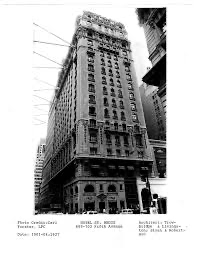
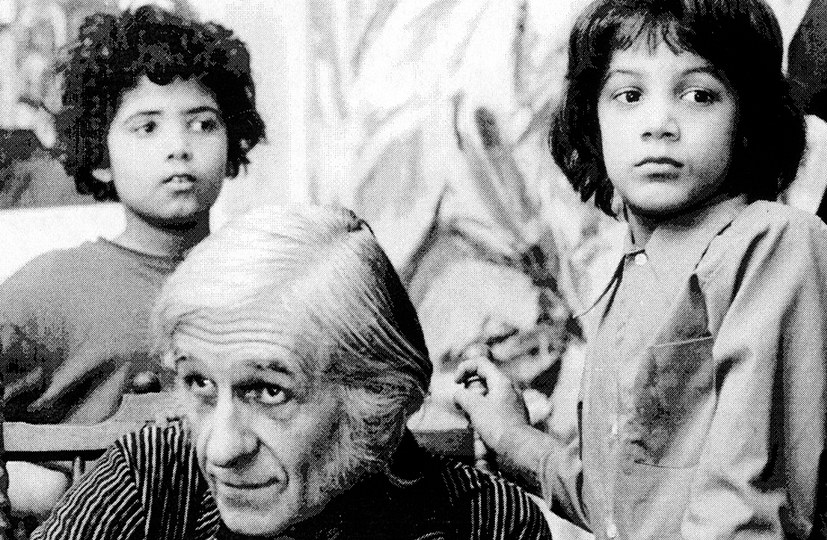
    Miles Davis and Gil Evans first met in 1947. Gil was 35, Miles was 21. Evans brought a classical and contemporary orchestral sensibility into the world of bebop at a moment when that world didn’t know it needed one. His apartment near the St. Regis Hotel in New York was a gathering place for artists — a room where ideas crossed over and contaminated each other in the best possible way, and Miles was one of the regular presences there.

    For Miles, Evans was something of a mentor — a man fourteen years older who understood both the jazz tradition and the European orchestral one, and who could build a bridge between them with an arranger’s precision and a composer’s imagination. Their collaborative trilogy — Miles Ahead (1957), Porgy and Bess (1958), Sketches of Spain (1960) — represents one of the sustained high points in recorded music of any kind. Evans brought functional perfection to these sessions. Miles brought the fire.

    The African connection to the Spanish material was not incidental to either of them. The Moorish influence on Andalusian music — the trace of North Africa and the Arabic world running through flamenco — was something both Evans and Miles were thinking about. Miles dove into Spanish folklore, flamenco, and the historical connections between Africa and Spain with the same depth of research he applied to everything. The Africa-by-way-of-Spain line in Western music was in both their heads. Miles made it personal by immersing himself so fully that the material stopped being research and started being instinct.

    The Inspiration

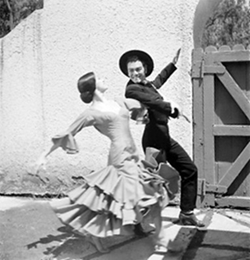
    In 1958, Miles was taken reluctantly, by his wife Frances Davis to see a company of Spanish dancers performing under choreographer Roberto Iglesias. The experience changed him. Back in New York, he bought every Spanish flamenco record he could find. Then he went deeper into Spanish folklore, into the traditional music, into the field recordings Alan Lomax had made in Spain. What you hear on this record is the result of that immersion. This record months of listening and absorbing before a single note was played in the studio.

    Miles always did this. One of the things I’ve come to understand about him is that underneath the iconoclasm and the myth was a serious researcher. He dove into rabbit holes with discipline. He didn’t play a tradition he hadn’t studied. On Sketches of Spain, that commitment is audible.

    Production

    Irving Townsend and Teo Macero were assigned by Columbia to produce the album, but Macero did most of the work. Teo Macero was already legendary. He was a saxophonist with real chops and a producer with serious ears. His collaboration with Miles on this record became the foundation for a working partnership that would last fifteen years and extend through Miles’s most experimental electric work.

    Miles’s approach in the studio was demanding and specific. He wanted his musicians to know the material by heart. He wanted them to read it, learn it, internalize it, and then play it from a place of genuine competence rather than sight-reading. The idea was freedom through preparation. You have to know the music completely before you can let go of it.

    The sessions were difficult. There was stopping and starting. Miles reportedly drank and doubted himself, saying at one point: ‘I always manage to try something I can’t do.’ That sentence is either the most honest thing a creative person can say or the most characteristic thing Miles Davis ever said. Eventually the sessions completed, and what they produced was one of the most cohesive records of his career.

    Trombonist Frank Rehak appears on this record as he did on Miles Ahead and Porgy and Bess — a constant in the Evans sessions, and a player Miles fought hard to have on this date, working through scheduling complications to get him there. Rehak’s presence across all three Evans collaborations gives the trilogy a tonal consistency.

    The Tracks

    Listening notes — January 11, 2026

    Side One

    1. Concierto de Aranjuez

    Recorded November 15 and 20, 1959  ·  Adagio movement

    The Concierto de Aranjuez was written in 1939 by Joaquín Rodrigo, a Spanish composer who was blind from the age of three and who wrote the piece for guitar and orchestra. The origin story of it ending up on this record is straightforward and audacious in equal measure: Miles heard the adagio movement and decided he could play the guitar part with his horn. Only the adagio portion appears here — the slow, central movement — and it occupies most of Side One. We can all be grateful for that decision. It is a powerful work.

    Rodrigo, famously, did not appreciate Miles’s version when he first heard it. Miles’s response was essentially: wait until the royalty checks arrive.

    Listening to this is like being placed deep in the Spanish countryside. Not the tourist version — somewhere real and quiet and ancient. It transports you regardless of where you actually are. I’ve heard it in Georgia, in California, in various unremarkable rooms, and each time the room disappears. The middle section with the castanets and flutes is one of my favorite passages. The final build is dramatic in the best possible way — peak emotional impact from a jazz trumpet player playing a classical guitar concerto.

    2. Will o’ the Wisp

    Recorded March 10, 1960

    Written by Manuel de Falla, another Spanish composer, from his ballet El amor brujo — which translates as ‘Bewitching Love.’ De Falla wrote some of this material as processional music, and parts of it were associated with traditional Spanish ceremony. It’s a different texture entirely from the Concierto — bouncy, tinny, slightly playful, with a galloping quality that puts you somewhere different. If the Concierto puts you in the countryside at dusk, Will o’ the Wisp puts you on horseback in the morning. Short, vivid.

    Side Two

    1. The Pan Piper

    Recorded March 10, 1960

    Based on a Phrygian folk melody from the Lomax field recordings — a shepherd’s tune, stripped down and made strange by Miles’s trumpet. The source material here comes directly from the traditional Spanish folk music Miles had been studying. It’s the quietest thing on the record, and in that quiet there’s something genuinely haunting.

    2. Saeta

    Recorded March 10, 1960

    A saeta is a Spanish religious a cappella genre — a spontaneous, passionate vocal outpouring performed during Semana Santa processions at Easter, sung from balconies or from the crowd as the religious floats pass below. It is street music with the intensity of prayer. Miles plays the trumpet in the role of that voice. He is the lone cry rising above the procession while the orchestra surrounds him as the crowd and the street and the weight of the occasion.

    Saeta and Solea are the two original works on this record, both inspired by Spanish tradition rather than adapted from existing compositions. They are gifts from Miles Davis to his inspiration. That he could produce work of this quality while operating from outside the tradition he was honoring is one of the most impressive things about this record. He earned the right through the research and the immersion.

    3. Solea

    Recorded March 10, 1960

    The closer. Contains a ten-minute trumpet solo from Miles, and what a ten minutes it is. Solea is a foundational form of flamenco — serious, deep, traditionally associated with sorrow and dignity in equal measure. The drums sway underneath, the orchestra provides the weight of tradition, and Miles plays above it all with the assurance of someone who has made this music completely his own. Bullfighter music. Trips to Spain from the living room.

    Closing

    A key record in every serious collection, as far as I’m concerned. This is not background music. It’s not mood setting in the ambient sense. You don’t put on Miles Davis to fill a room. You can put him on with intention, and this record rewards that intention fully. You can feel the inspiration. What Miles said about being drained after the sessions is audible in the performances. He left everything in the studio.

    For some listeners this record sits right next to Kind of Blue in terms of greatness. I understand that argument. It’s a different kind of achievement. Where Kind of Blue opened a modal door for jazz to walk through, Sketches of Spain crossed a geographic and cultural boundary that shouldn’t have been crossable at all. It represents a peak of the Evans collaboration and a serious new direction simultaneously. Both things are true. It holds them without contradiction.

    Whoever left this copy at the Habitat for Humanity did me a favor.

    Thanks for reading.

    RTR

  • Muddy Waters – The Best of Muddy Waters

    Muddy Waters – The Best of Muddy Waters

    Compilation | April 1958 | Chess Records

    “He lived on the Stovall plantation, three or four miles outside Clarksdale, in a cabin that doubled as a good time place, a juke house, on weekends. He made the best moonshine whiskey in the vicinity. Sometimes he played guitar in a little country string band, sometimes he played with a partner, and sometimes he played alone. His name was McKinley Morganfield, but everybody knew him as Muddy Waters.”


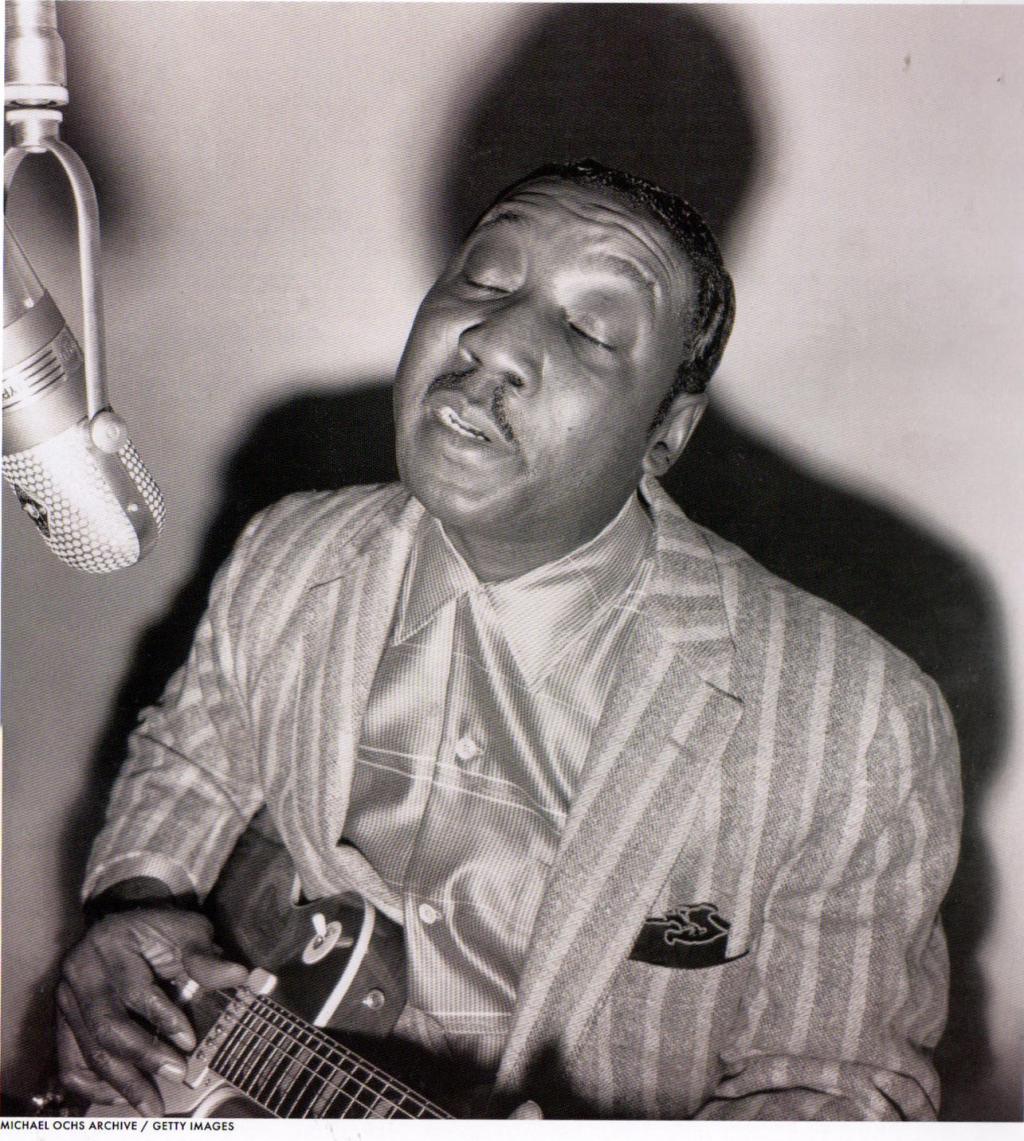
    My fascination with Muddy Waters has been part of my life since my first deep thinking on the blues began. If you get serious about this music, you’ll be led to Muddy eventually — it’s inevitable. He’s one of the originators, but what separates him from a lot of foundational figures is that he kept moving, kept changing, kept recording well past the moment that should have defined him. For a lot of rock musicians, the argument about where rock and roll actually begins comes down to Muddy or Wolf. Blues had a child, and that child was rock music. That’s set in stone, and Muddy is one of the names carved into it.

    The name itself carries weight for me. Muddy Waters. The music he created feels like it comes from the ground up — from the earth, the mud, the work and the toil, the plantation. It’s evocative in a way that’s hard to articulate and harder to resist. You don’t analyze Muddy Waters so much as you absorb him.

    This record was his first album — a greatest hits collection issued by Chess Records, and one of the first LPs the label ever released. What you get here is a combination of Muddy’s deep Delta roots alongside his full-band Chicago rocking blues of the 1950s. A real historical document. Astonishing works of inspired music. The whole arc of a man’s artistic life compressed into twelve tracks.


    THE OBJECT

    I picked this up in March 2026 at Siren Records. It’s another of the Chess 75th Anniversary releases, same series as the Howlin’ Wolf Moanin’ in the Moonlight pressing I wrote about previously. I was pleased with that presentation, and I’m equally pleased with this one — happy to own a piece of blues greatness in these tracks.

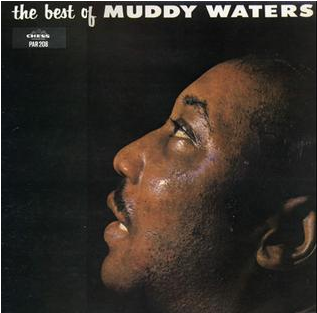
    The cover is a powerful profile image of Muddy that earns its place in the canon of great blues album artwork. There’s an intensity in his face, a longing look upward. This was a man seeking more out of his life and his journey from the Delta to Chicago. It has a pastoral feeling to it despite being so spare: the black background, Muddy’s face, the bold all-caps lettering of his name. Pure simplicity. It reminds me of the Etta James At Last cover — that same combination of commanding presence and elegant restraint. Great cover for 1958.

    When the Rolling Stones first visited Chicago in 1964, they made a pilgrimage to 2120 S. Michigan Avenue and recorded there. Keith Richards has said this record — alongside Robert Johnson’s recordings — was foundational to everything the Stones became. The British Invasion was, in large part, American blues records shipped across the Atlantic and returned electrified, sped up. This compilation was one of the primary texts that made that possible.

    The liner notes on this record are among the best I’ve read from the era. Studs Terkel — Chicago’s great chronicler — wrote them, and he puts Muddy’s legend down with real skill. He establishes the mythology, generates excitement, and leaves you with a kind of eerie awe for what you’re about to hear.


    The Band

    The core ensemble across this period included:

    • Little Walter Jacobs — harmonica. Arguably the greatest blues harmonica player who ever lived. His amplified harp sound, run through a PA microphone, created a tone that had never existed before and hasn’t been replicated since. He’s all over this record and the album is richer for every second he’s on it.
    • Jimmy Rogers — second guitar
    • Elgin Evans / Leroy Foster — drums, varies by session
    • Big Crawford / Willie Dixon — bass (Crawford on the early recordings, Dixon later)
    • Otis Spann — piano, appears on the 1954 sessions

    Production Notes by Track

    Side One

    “I Just Want to Make Love to You” — Recorded April 13, 1954 | 2120 S. Michigan Avenue | Chicago, Illinois

    “Long Distance Call” — Recorded 1951 | Universal Recording | Chicago, Illinois

    “Louisiana Blues” — Recorded late 1950 / early 1951 | Universal Recording | Chicago, Illinois

    “Honey Bee” — Recorded 1951 | Universal Recording | Chicago, Illinois

    “Rollin’ Stone” — Recorded 1950 | Universal Recording | Chicago, Illinois

    “I’m Ready” — Recorded 1954 | 2120 S. Michigan Avenue | Chicago, Illinois

    Side Two

    “(I’m Your) Hoochie Coochie Man” — Recorded January 7, 1954 | 2120 S. Michigan Avenue | Chicago, Illinois

    “She Moves Me” — Recorded 1951–52 | Universal Recording | Chicago, Illinois

    “I Want You to Love Me” — Recorded 1950 | Universal Recording | Chicago, Illinois

    “Standing Around Crying” — Recorded 1952 | Universal Recording | Chicago, Illinois

    “Still a Fool” — Recorded 1951 | Universal Recording | Chicago, Illinois

    “I Can’t Be Satisfied” — Recorded April 20, 1948 | Universal Recording | Chicago, Illinois

    The record is sequenced to open with the most polished material and close with the sparest. You’re hearing the story in reverse — from the full-band Chicago electric sound back toward the lone man and his guitar in 1948.


    THE MUSIC

    Listening Notes — March 11, 2026

    Side One

    “I Just Want to Make Love to You” (1954)

    Blunt lyrics. No idioms, no coded language — just a direct, plainspoken statement of desire. Willie Dixon wrote it and Muddy delivers it like a verdict. Little Walter’s harmonica on this track is otherworldly, a wicked spirit inhabiting the room alongside you. And that’s true for the whole record — Little Walter is a recurring specter throughout.

    The Rolling Stones’ version pumps the tempo up and you have rock and roll alchemy at work — pure magic. You can hear the beginning of an entire movement of music in the distance between these two recordings. Muddy’s voice has a very specific timbre, extremely unique to him. Many people noted that he carried the quality of a church call in his delivery, a spiritual invocation. Here that same quality exists entirely outside any church walls. It sounds great on this pressing — powerful and present, Muddy’s wails right there in the room with you.

    “Long Distance Call” (1951)

    The guitar steps into the foreground more here than on the opener. Muddy’s expertise is on full display, and his blues phrasing is exceptional throughout. But the line that stops you is this one: “the party said another mule kicking in your stall.” One of the best blues lines ever written.

    “Louisiana Blues” (1950)

    “Get me a mojo hand” — Muddy’s source of luck in gambling and with women, rooted in Hoodoo tradition that runs deep through Delta blues culture. Worth spending time with if you’re unfamiliar. There’s also a call and response element here — someone says “take me with you man when you go” — that adds a communal, almost ceremonial quality to the track.

    This is a deep and murky blues. The waters of Louisiana are in the sound itself. Robert Palmer wrote in Deep Blues that this track had a power all its own — the power of the Delta’s deepest music unleashed by electricity. He called it irresistible.

    “Honey Bee” (1951)

    Stripped down to its essentials — first and second guitar, and Muddy. Blues in its plainest form relative to the full-band tracks. When Muddy draws out the “pleaaase” on this one, it’s something else. Listen also for the guitar imitating the buzzing of a bee. It’s a small touch and it’s perfect.

    “Rollin’ Stone” (1950)

    Just Muddy and his guitar. This was his first single for Chess Records, and it sold well enough to give him his freedom — his leverage, his foothold. Even in that uncertain moment, the confidence in his singing and his playing is staggering. All of rock music lives somewhere in this guitar. It’s not about technical skill — it’s about feeling and sound. You can hear what the Stones were inspired by. You can hear riffs from across decades of rock music in the spaces between Muddy’s moving fingers and the strings.

    “I’m Ready” (1954)

    The full band comes back after the intimacy of Rollin’ Stone, and the contrast lands hard. Swinging blues, the drums and bass really walking around on this track. “I’m drinking TNT, I’m smoking dynamite” — that line just works every time. Little Walter again is a spectre here. Something about his sound conjures spirits, makes spooky thoughts. Deeply evocative. There’s a reason people reach for supernatural language when describing this music.


    Side Two

    “(I’m Your) Hoochie Coochie Man” (1954)

    A severe, brutal announcement of a song. Muddy didn’t introduce himself here — he declared himself. The stop-time effect that structures the whole track became one of the defining motifs in electric blues, and you can hear why — those gaps, those silences before the band crashes back in, create a tension that’s almost unbearable in the best way. “John the Conqueror Root” referenced in the lyrics is worth looking up — Studs Terkel addresses it in the liner notes and the context deepens the song considerably.

    When Muddy screams “everybody knows I’m here” — my system shudders. The room shakes.

    “She Moves Me” (1951–52)

    A woman with supernatural powers — the reverse angle from Hoochie Coochie Man. Here it’s the woman who holds the magic. “She can make a blind man see.” The bass drum sound on this track is genuinely curious — it has a resonance I can’t quite place, something uncanny about it. Not sure if it’s a conventional drum or something improvised.

    “I Want You to Love Me” (1950)

    The confidence on this track is what I’m pretty sure inspired generations of rock musicians to pick up guitars and try to feel the same way. Little Walter stands out again here.

    “Standing Around Crying” (1952)

    Low and slow, mournful blues. It’s worth noting that for a compilation of this size and reputation — twelve tracks representing Muddy’s essential early output — this is the only song that’s squarely about a man upset with his circumstances. One out of twelve. That says something about the personality projected across this record. Muddy is rarely a victim. He’s more often a force of nature.

    “Still a Fool” (1951)

    More of that spooky guitar. On this track you can hear voices somewhere in the background It adds immersion. Ghosts are present. Muddy here is acknowledging the terrible weight of the situation — getting involved with another man’s wife, knowing it, doing it anyway. The blues doesn’t moralize.

    “I Can’t Be Satisfied” (1948)

    The album closes with the OG — one of the most important records in blues music, recorded when Muddy was still finding his footing as a recording artist and somehow already fully himself. The fact that Chess saved it for last is a statement. You’ve traveled backward through twelve years of recordings, and you land here, at the source. Just Muddy and his slide guitar, 1948, and everything that followed is already present in the room.


    Closing

    Every song on this collection is a masterclass in electric blues. If it’s an invention, this record is the patent. If it’s a library, these are the essential texts. There’s such a ferocity here that you can feel its influence as the needle tracks along the groove — the record bouncing with Muddy’s wails, his claims full of supernatural imagery and self-mythologization. Robert Palmer called his persona “imperial and commanding.” Listen to this record and you understand exactly what he meant. Even when Muddy gets vulnerable, he never stops being Muddy. That’s a rare thing.

    Essential stuff. Impressive, irreplaceable stuff.


    Thanks for reading.

    RTR