Studio Album | Released May 27, 1963
Recorded July 9, 1962 – April 24, 1963 at Columbia Studio A, New York City | Label: Columbia | Producers: John Hammond & Tom Wilson
My copy: 2025 Mono Reissue | Purchased in March 2026 | Discogs
“Anything I can sing, I call a song. Anything I can’t sing, I call a poem. Anything I can’t sing or anything that’s too long to be a poem, I call a novel. But my novels don’t have the usual story-lines. They’re about my feelings at a certain place at a certain time.”
Bob Dylan. Lots of words written about the man. Should I add to this litany of myth and speculation? He currently lives inside of an ironic public persona, a continuation of what he’s always done. His internal argument, I suspect is that we as a society just don’t know what’s going on. He’s doing AI things now, apparently. I’m not entirely sure. What I find massively appealing is his anti-social, anti-establishment persona, cultivated carefully over decades. I think it’s a product of his uniqueness and his genuine struggle with accepting fame. He writes for himself and for his own myth. The constant “what does your song mean” onslaught must have gotten to him early on, and the rest is a long, deliberate, magnificent evasion.
It started with Freewheelin’, his second album and the first record made up almost entirely of original tracks. This album is still a monument. The obelisk in the folk swamp. It reached a lot of people. The songs inspired people, gave them hope in a genuinely strange and frightening time. 1963. Things were getting real weird in America. The Cuban Missile Crisis. Kennedy shot. The Civil Rights Movement in full boil. Nuclear destruction a real and present possibility, and a fervent anti-communist government dragging the country toward a ground war in Vietnam.
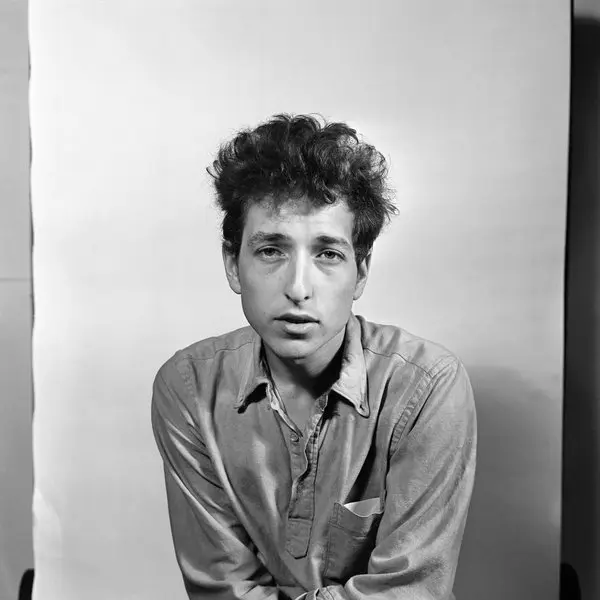
In 1962 Bob released his first album, simply titled Bob Dylan. It was a piecemealed collection of mostly folk standards previously recorded by other artists, with only two original songs: “Song to Woody” and “Talkin’ New York.” The second record was a massive jump in terms of songwriting ability, recording acumen, and vocal performance. A genuine career maker. You can sense with this album the good feelings Bob had writing and recording his own material. He was only 22 while making it.
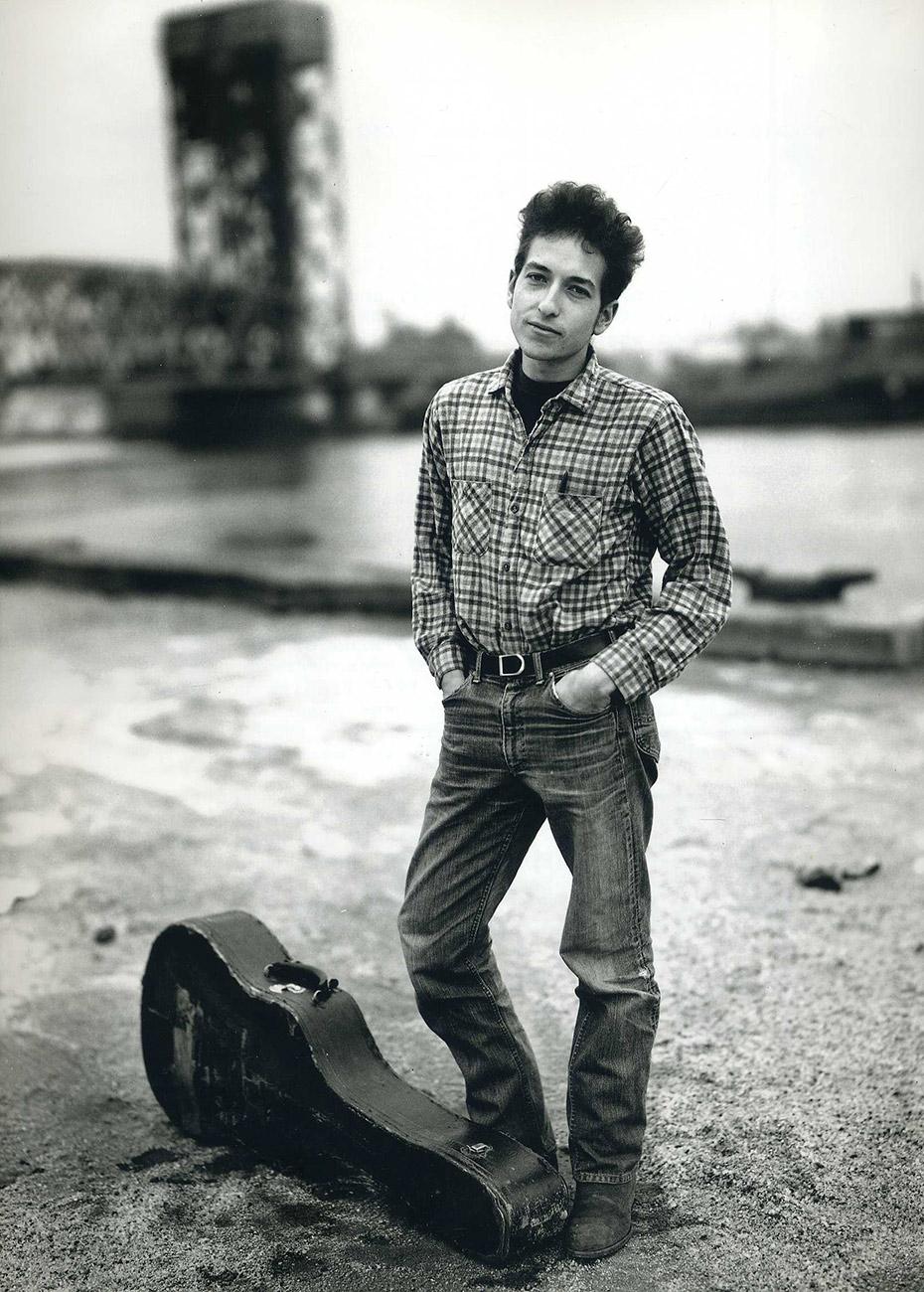
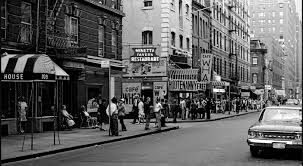
When the first record came out, it was largely a byproduct of the late 1950s and early 1960s New York City folk scene. On a small scale, a group of thrift shop clothes-wearing hipsters sitting around drinking coffee, listening to music of the vagabond. The guitar case and a few dollars in your pocket. Everyone dropping in to the club to see what new acts are trying to break out into show business. A real scene, and a conscious rejection of the corporate nature of rock and roll at the time. Rock radio, music industry moguls trying desperately to manufacture hits and cash in. It was a rejection of political trends as well. Youth moving toward new directions, thinking big ideas, and imagining the changes required to achieve them.
Bob Dylan fell into this scene, but in his own way and with his own set of inspirations. His efforts to meet Woody Guthrie, the folk icon, were what brought him to New York City in the first place. His natural tendencies toward rock, blues, and Guthrie’s styles shaped his early sound. The first record was a transmuting of that blend, his songwriting and vocal delivery something between blues tradition and Woody Guthrie. You see this clearly on the debut, and the transformation into the second record was quick, because Bob had always understood the first album as something that just needed to get done so he could get on with what he actually wanted to say.
Between the two records, behind the scenes, there was an uproar among the money men over the poor sales of the debut. John Hammond, Dylan’s benefactor and producer, possibly with some help from Johnny Cash, secured the contract for Bob to make another record. This next one would be a huge leap forward creatively. A money maker for the ones who cared about that, and possibly for Bob too, who was living place to place and shacking up with his girlfriend. This record would change the face of folk music and the rock music that followed in its wake.
The Album Cover
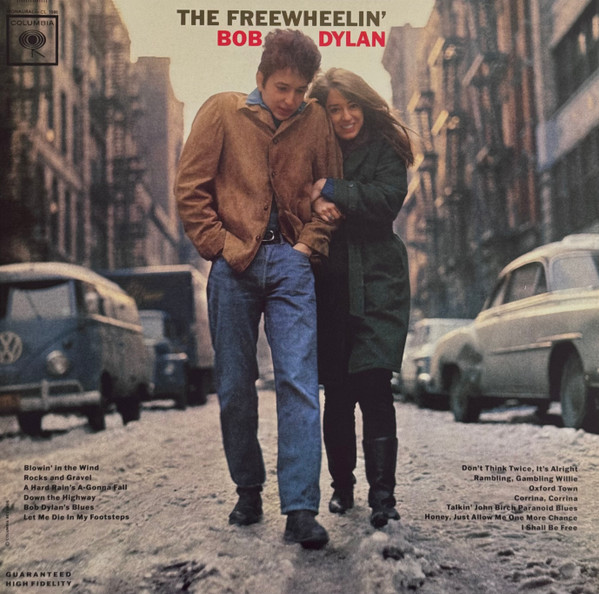
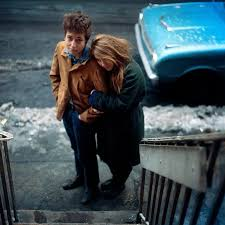
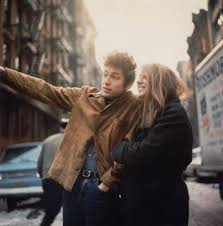
Bob and his girlfriend at the time, Suze Rotolo, walking in Greenwich Village. Such innocence. Such youth. Honestly, for Bob, this is probably his best cover. A perfect representation of the vibe, the scene, and his life at that moment. That embrace against the cold is everything you need to know about the relationship. You can see the warmth, the appreciation. I also particularly enjoy the old VW bus in the background. Very cool, very of the time. Living in California, I find it quietly amusing that one of those was parked in New York City. But that’s just me.
Suze was an important piece of the cover and of Dylan’s life. She was deep into the whole equality-freedom thing long before Bob got seriously involved in it. She was possibly the editor, or the litmus test for the content of these songs. Bob said he checked out the songs with her. She had strong left-wing political views and shared them openly with Bob, helping drive his interest in the disenfranchised. Her departure to Italy spurred a period of intensive songwriting, Bob relegated to a pad, a typewriter, a guitar, and a pack of smokes. A friend, Mikki Isaacson, recalled that he was writing at a feverish pace, missing Suze immensely, working on four songs at a time and flipping pages between a spiral notebook, getting one line down at a time.
The songs were coming quickly. Often it only took a few moments to get a song finished and qualified as poetry. The melodies came from his spongy brain, his ability to pick up on nuance from the vast pool of musical influences around him. He would adopt an old folk tune and suddenly have his song complete. The recording sessions at Columbia’s New York studio started in April 1962 and got seriously productive in July, where the most distinctive material began getting laid down.
The Object
I used to own this record, but it was in very rough shape. Unable to be played. Resurrected here with this reissue, I’m finally happy to have a copy that does the music justice. This is where Bob broke out as a songwriter and artist. The songs are ripe with political commentary and imagery. The scene is Greenwich Village, the girlfriend on the cover, young Bob taking on the world and his own artistry.
My copy is a 2025 RSD reissue, Mono, an MPO pressing. The album cover and rear cover are original, maintains the original liner notes, and retains the pre-controversial tracks. A very important note: it holds the original track listing from before certain songs were eliminated, which I’ll get into below.
Call RSD what you will. I often regard it as a cash grab for most of those involved, but if it keeps local record stores alive I’m fine with it. There are a few RSD releases worth tracking down, and this is one of them. For collectors, this pressing offers a real alternative to hunting for an original Freewheelin’ with the pre-removal tracks, copies of which have become extremely rare and expensive.
I bought it on Discogs in March 2026, still filling out the collection with greats from pre-1965.
This copy sounds really good. Some of these tracks I’ve never heard this clean. The beauty of vinyl. Bob’s voice is front and center where it needs to be, right in the middle of the channel. Super flat and quiet. Perfect.
I like this track listing. Not sure I’ll ever need the official, most recognized release with the standard tracks, though at some point it might make sense to have both. The familiar songs sound great here, but the new favorite for me is “Down the Highway.”
It’s a happy time, owning this record. We all should own it. Bask in the greatness of early 1960s Bob and the world gets a little better.
The Music
Blowin’ in the Wind
Blowing In The Wind (Live On TV, March 1963)
Recorded July 9, 1962
“The idea came to me that you were betrayed by your silence, that all of us in America who didn’t speak out were betrayed by our silence, betrayed by the silence of the people in power. They refuse to look at what’s happening.”
Unofficial anthem of the 1960s? This song was already a hit for Peter, Paul and Mary before this record even came out. Apparently written in ten minutes while sitting in a café. The theme of world peace. The question song. The tonal metronome of what was happening in the world at that moment.
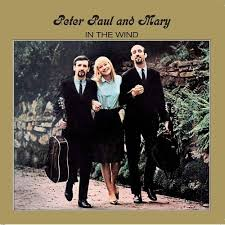
Dylan may have understood the immensity this song carried, or worried about it. More likely he put the thing out there and watched it begin to live a life of its own. It was his first real attempt at moving from reporting specific events to examining the general, and the vagueness was the whole strategy. Scholars have noted that the reason this song works is precisely because it doesn’t connect to any specific territory. There is no specific event, no villain, no proper name. The argument is exterritorial, and by being untethered it could attach itself to any freedom struggle anywhere.
The life this song has lived is beyond anything Bob could have imagined when he wrote it. It’s anthemic at this point, embedded in the zeitgeist. We make each other feel something when we talk about what this song is about. Whether it’s stirring or inspiring or bittersweet, by 2026 the things this song helped set in motion have lived through generations, seen their ups and downs. When it really comes down to it, we’re still pondering the same questions Bob was asking when he wrote it.
I love a song that asks questions, and this one along with “A Hard Rain” asks many, repeatedly. Maybe that’s the real subject. A song that made people question themselves, the institutions that govern them, and their place within those institutions. There’s a comment in No Direction Home noting that this song feels simultaneously brand new and two hundred years old. “Blowin’ in the Wind” became a cliché, and what a profitable one.
A Hard Rain’s A-Gonna Fall
Recorded December 6, 1962
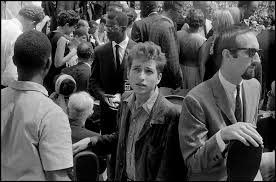
Dave Van Ronk recognized this song as a pivot point, the beginning of a new artistic revolution. The proof that poetry could be fully infused into folk music at this scale. That hadn’t been done before.
Born out of the Cuban Missile Crisis. A period of intense paranoia, genuine talk of mutually assured destruction, nuclear catastrophe on a real timetable. A song like this could only come from that moment, from a mind ripe with dread about the end of the world and eager enough to put one of his best songs ever to paper. More poem than song, a string of imagery inspired by the French poet Arthur Rimbaud, one of Suze and Bob’s favorite writers.
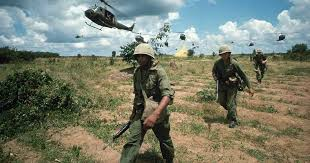
Epic. Seriously. Personally, this song has taken on different connotations for me over the years. After watching the Ken Burns Vietnam documentary and visiting the wall memorial in DC, hearing those first lines is enough to make the tears well up. For me this song is a collage that lives somewhere in the quiet grey between optimism and pessimism. A request. It wants to know something.
Probably the best thing I’ve read about it is where Bob makes clear that every line in this song could be a song in itself. Every line starts and ends its own image.
“Where have you been, my blue-eyed son” shifts to “What did you see”, then “What did you hear”, then “Who did you meet.” That’s the only narrative shift. The blue-eyed son: the wide-eyed youth, the wayward soul, the witness to the prosecution. The fundamental newness of childhood bearing witness to the evidence of the horrors and the beauties of life. Or just, you know, the good old-fashioned end of the world.
It’s the sincerity, the soft-spoken cry for action in Bob’s voice on the question pieces that gets me. The subtle question is the more urgent one.
Down the Highway
Spooky blues, right up my alley. Or highway, as it were. It’s bare and basic, working within the twelve-bar scheme, but those single guitar strums that linger throughout are just maddening. Scary and menacing. Hear that at a crossroads at night and you’ll be looking over both shoulders, seeing things in the cornfields.
The song is about Bob living in the void of Suze Rotolo’s absence. She’s gone to the far-off land of Italy, leaving the narrator poor and lonely, stripped down, nervous, and afraid. Left to gamble and booze it away. Bob had also been getting real thin and loose around this period of songwriting. Losing weight, appearing gaunt. The relationship with Suze had taken its toll, and this song sits in the middle of that toll.
Bob Dylan’s Blues
Recorded July 9, 1962
A moment of respite in the sequencing. Recorded during the same session as “Blowin’ in the Wind,” it makes for a little breather between the heaviness of what comes before it and the second side. During the actual recording session it probably served the same purpose.
“Bob Dylan’s Blues” was originally the working title for Freewheelin’ before the final title came along.
The Lone Ranger and Tonto: the first characters in Bob Dylan’s menagerie, the kind that would multiply and populate his later albums. Welcome to the carnival.
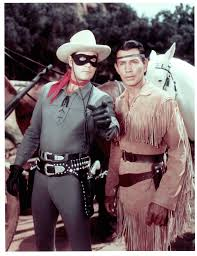
Let Me Die in My Footsteps
One of the four tracks replaced after the John Birch situation.
Side 2
Don’t Think Twice, It’s All Right
Recorded November 14, 1962
A breakup song, directed at and inspired by the deterioration of Bob and Suze’s relationship. Bob shoots accusations across the table: “You just kind of wasted my precious time.” He’s the one traveling on. In reality, though, it was Suze who left Bob, not the other way around.
A song with a lot of charisma for me. Bewitching. Just Bob and his guitar, a real knack for dynamic picking, and a voice he’d been sharpening during his New York years. One of those songs that sounds effortless and reveals itself as anything but over time.
Rambling, Gambling Willie
One of the four tracks replaced after the John Birch situation.
Oxford Town
Recorded December 6, 1962
Another song written for and published in Broadside magazine, in response to a call for songs about topical events. Bob is making direct reference to one of the key moments in the Civil Rights Movement. James Meredith, a Black man who won a federal court ruling allowing him to register at the University of Mississippi, Ole Miss.
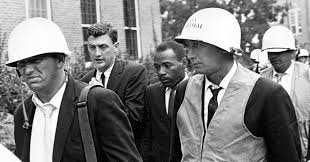
The governor of Mississippi took extreme conflict with the situation. The whole episode is insane to read about even now, though we have to remind ourselves how far we’ve come. Meredith registered amid a mob of rioters, the National Guard, and an armed conflict that resulted in two deaths and roughly three hundred wounded.
The final line remains relevant today: “Somebody better investigate soon.” A sarcastic tone. Somebody ought to do something about this. Well, we’ve been waiting and will continue to be waiting.
Corrina, Corrina
Recorded October 26, 1962
The only song on the record not originally composed by Dylan. This composition dates back to 1918, a traditional blues tune about a lost love. Bob most likely knew it through Blind Lemon Jefferson, or possibly Robert Johnson’s version.
The song is indicative of Bob’s deep connection to the original blues legends, and this adaptation is a direct byproduct of his loneliness in Suze’s absence. He wore that loneliness across most of the album, and here it takes on an older, rawer form.
Talkin’ John Birch Paranoid Blues
Deemed too controversial for the original release. Several of the protest songs on this record were published in Broadside, the folk and protest magazine. The first issue of that publication, of which Bob was a contributor, carried the lyrics of this talking blues. The alt-right gets picked apart in the song, with a great punch at the end: the narrator searches for communists everywhere, and eventually finds one looking back at him in the mirror.
Dylan had planned to perform this on the Ed Sullivan Show, at the time the single most important platform for any musician wanting to get known or stay known. The censors got hold of it during rehearsal and immediately questioned the song, fearing libel against the John Birch Society. Bob made it clear without much deliberation: no song, no show. He walked out. Further down the line this helped his street cred with the anti-establishment Greenwich Village crowd, but that same fear of libel made it to the desks of the Columbia executives, who pulled the song from the album. Bob had to comply under contract. This led to the other songs being pulled as well. “Rocks and Gravel,” “Rambling Gambling Willie,” and “Let Me Die in My Footsteps” went with it.
Honey, Just Allow Me One More Chance
Recorded July 9, 1962
Another cover, this time drawing from Henry Thomas, an old Texas country bluesman. A pretty different mood from the rest of the album, more upbeat, though the subject matter still circles back to Suze’s absence and Dylan’s loneliness. A little lightness before the end.
I Shall Be Free
Recorded December 6, 1962
The album ends on a comic note. Lots of nonsensical remarks in this track, almost a politically incorrect comedy routine. A loose, funny, deliberate exhale after everything that came before it. Bob letting the air out of the balloon before he sends you home.
Closing
Freewheelin’ contains some of my favorite Bob tunes ever. For that it will always hold a happy place in the collection. I probably heard Bob Dylan songs in my toddler years, maybe even earlier. I genuinely cannot remember the first time I heard him. But sometimes I listen to “A Hard Rain’s Gonna Fall” and it’s new again. Every single time. That is the sign of great music.
He was in a unique creative period here. You can tug on a lot of different threads and they all lead to the same place: a spot of intense creativity, a spot of inspired songwriting, a young man taking on the world with a guitar and a typewriter and a burning need to say something. This was the start of Bob’s rise. The best records were still to come, but this one gave us proof of what was possible. An all-time classic if there ever was one.
Thanks be to the Dylan.
“If you told the truth, that was all well and good, and if you told the un-truth, well that was still well and good. Folk songs had taught me that.”
-RTR