Tag: vinyl

  • Bernard Herrmann – Psycho (The Original Film Score)

    Bernard Herrmann – Psycho (The Original Film Score)

    Film Score  |  Film Released June 16th, 1960 in New York City

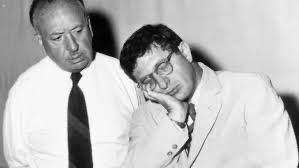
    Bernard Herrmanns 5th film score as a collaborator with Alfred Hitchcock

    Vinyl Passion | 2015 | Netherlands

    Bought: Siren Records, Seaside CA | Sometime in 2016

    The Object

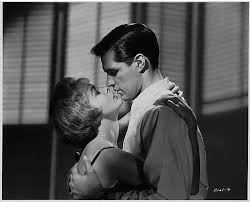
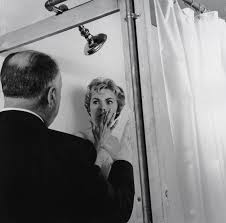
    Film music has a mysterious appeal to me, and especially in horror and suspense. It’s the genre where the finest blend of sound and image happens — full immersion, no separation between what you see and what you feel. And the history of a film is sometimes subverted entirely by the history of its score. That’s what happened with Psycho.
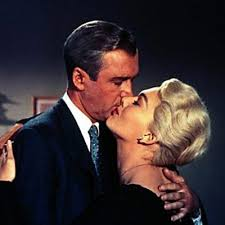
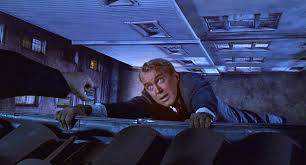
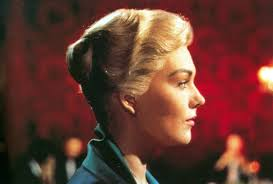
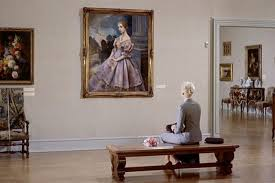
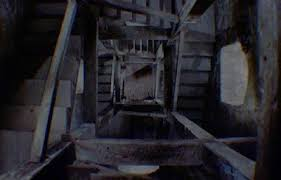
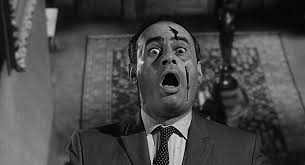
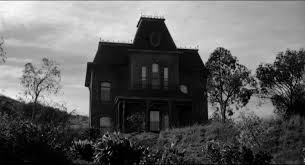
    My first time watching it was probably in high school, early 2000s. I knew it carried a legacy even then, but I wasn’t fully aware yet of the cultural weight of the film or of what that soundtrack had done to modern consciousness. What I remember most distinctly is the staircase scene. The dread of it. That’s no small feat when the era I was growing up in was defined by slashers and gore fests going for full shock and awe. Psycho operates on a completely different frequency. It doesn’t shock you. It unsettles you. It did that to audiences in 1960, and it still does it today. That’s the mark of a real work of art.

    There’s something I’ve always loved about film soundtracks on vinyl. In some ways the film score has become society’s classical music — people are increasingly drawn to film and video game scores as a way to fill a room, to musically enhance a workspace, to just live inside a sound. There are soundtracks out there that function completely as standalone albums. The movie experience deepens with repeated listenings of the score away from the film. You start to hear things differently. The music stops being illustration and starts being its own object.

    Psycho is the horror film that started a lot of people’s relationship with the genre. Everyone has a scene they go back to when they recall their first time watching it. For me it’s the staircase. For most people it’s the shower. But for the full package of this film, there is no separating it from its score. The shrieking strings, the gleam of the knife blade, the staggering suspense of that shower scene — image and sound put together to create something neither could be alone. Bernard Herrmann’s uncanny instinct for sonic suggestion and his close working relationship with Hitchcock made it possible. Hitchcock famously said 33% of the effect of Psycho was due to the music. That feels like an understatement.

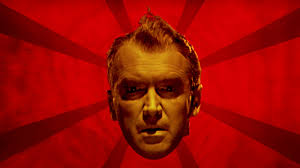
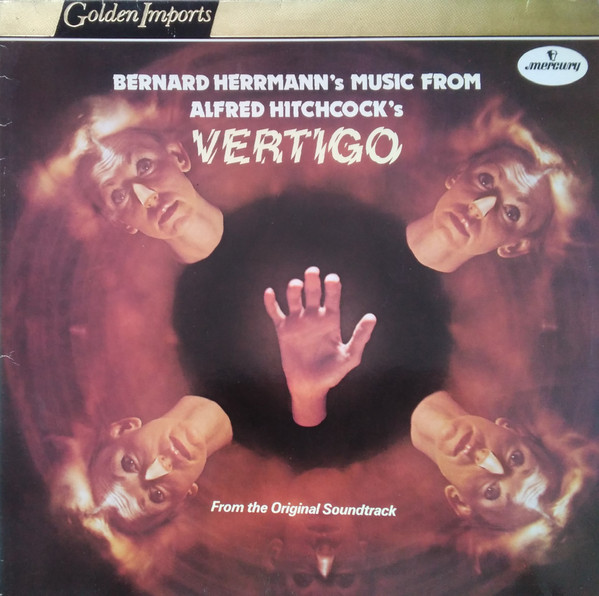
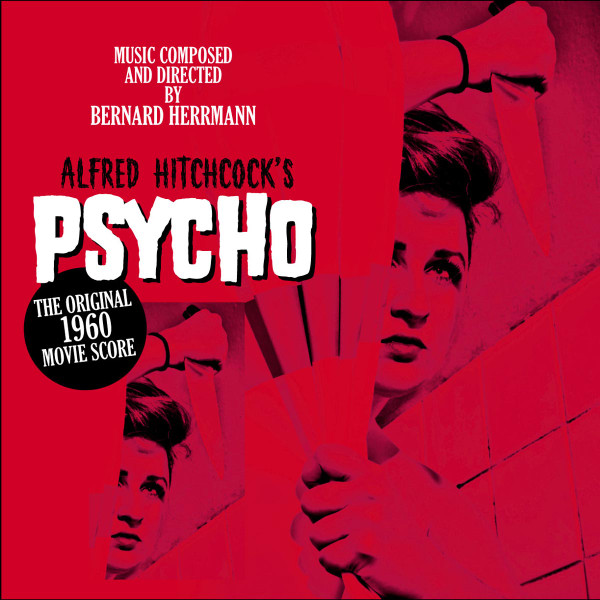
    My copy is a European import pressing, acquired sometime in 2016 — most likely from Siren Records in Seaside, California. The pressing itself does the score justice: good depth, strong highs, which this music demands. The cover is another story. It doesn’t capture the film at all — the scene depicted, the figure shown, looks like a poor recreation rather than anything from the actual movie. But it has the right ingredients on the packaging: the title in that jagged lettering, Alfred Hitchcock’s name, the bright red scene, the knife in a hand, the words Original 1960 Movie Score. That was enough to pull it off the shelf.

    Psycho is one of those films that stays with you long after you’ve watched it, and for me that staying power lives in this score. It’s gripping completely on its own, without the screen. You put this on in a room and something shifts. You visualize that something bad is happening, or has happened, or is about to. The music does that work without any images at all.

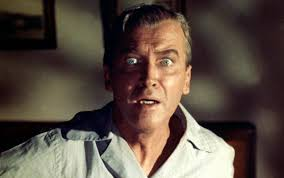
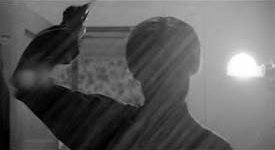
    “The Knife” has to be one of the most recognizable cues in film history — second only, maybe, to the two-note announcement of the shark from Jaws. Parodied and referenced below in the Simpsons, one of my favorite callbacks. We’re talking genuinely iconic sound imagery, burned into the cultural subconscious. But that cue is only about thirty seconds of this score. There’s an entire architecture around it that most people have never sat down and listened to. That’s what this record is for.

    The Music

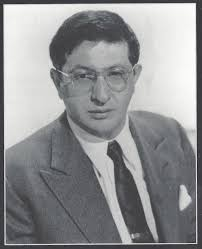
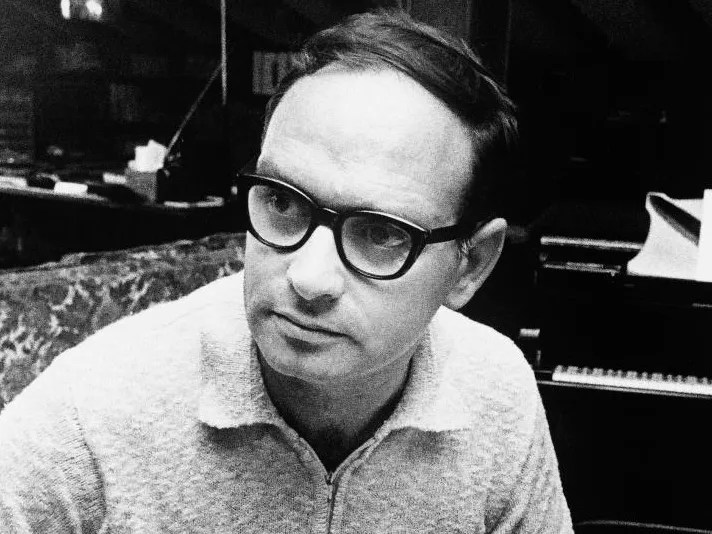
    Bernard Herrmann was born in 1911 in New York City to German Jewish immigrant parents. He was the oldest of his siblings and grew up in a household steeped in arts and culture — the kind of environment that produces serious people. He developed an early fascination with classical composers and received his musical education at some of the finest schools in the city before landing at CBS Radio, where as a young man he was composing and conducting live orchestral broadcasts. It was there that he fell into a close working relationship with Orson Welles, scoring several of Welles’s radio productions before following him into film. Citizen Kane was his first score. The trajectory from there was steep and fast.

    It was his collaboration with Hitchcock, however, where Herrmann’s masterpieces were made. Psycho was Hitchcock’s fiftieth film and their fifth collaboration together. For it, Hitchcock initially wanted something light — a bit of jazz, unobtrusive, background texture. Herrmann had other ideas.

    The story of how this score came to be is almost as dramatic as the film itself. Hitchcock screened the first cut of Psycho and fell into a depression, convinced the film would fail. He considered shelving it entirely. Out of that uncertainty came a fateful creative decision — or rather, an absence of one: Hitchcock decided certain scenes, most notably the shower, should carry no music at all. Just the screams and the sound of the knife and the water.

    Herrmann disagreed. He went off on his own during a holiday break in Hitchcock’s schedule and scored the film his way — including the shower scene. When he played it back for the director, Hitchcock’s response was immediate. He kept everything.

    What made the execution possible was one audacious decision: strings only. No brass, no woodwinds, no percussion. A fifty-piece string orchestra and nothing else. The reasons why this worked go deeper than budget:

    Strings carry a dynamic range that other orchestral families can’t match — they can whisper and they can shriek, and they can move between those two states faster than the human nervous system can process. Herrmann used pizzicato (plucking), tremolando (rapid bow movement to create trembling), harmonics, and sul ponticello — playing near the bridge to produce a harsher, more abrasive sound. He also employed con sordini, mutes placed across the bridge, to create what one scholar called a dark, unexpected tone entirely appropriate for the film. And critically, the all-string palette complemented the black-and-white cinematography — Herrmann himself called it a “black and white sound.”

    But the deeper reason strings worked here is dissonance. The film is about mental disorder, a fractured psyche, the horror of what lives behind a normal face. Herrmann tracked that through the harmonic language of the score — cues that resolve on wrong notes, phrases that end without landing anywhere safe, chords that sound off because something is off. In the murder scenes the music is extreme and aggressive. In the quiet scenes it meanders with a grim foreknowledge of what’s on the screen. The tension is never released. You never get to exhale.


    Listening Notes — January 17, 2026

    Side One

    Prelude / The City / Marion and Sam / Temptation

    Very suspenseful from the first note — almost shocking in its immediacy. Ostinato and repetition, a driving cyclical motif that establishes from the opening seconds that something is wrong and will remain wrong. Then it shifts — love, temptation, racing thoughts. Almost sorrowful. Marion is deeply unhappy with her situation and the nervousness of the score mirrors the nervousness of the performance. Herrmann is already inside her head before we know anything about her.

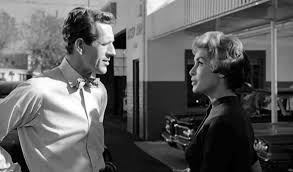
    Flight / The Patrol Car / The Car Lot / The Package / The Rainstorm

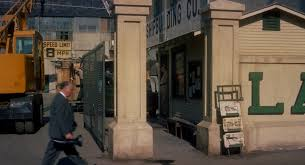
    Paranoia. The feeling of being watched. Sombre and heavy with impending doom that builds without release. Cat and mouse — the flight from the police, the wrong turn, the rain. And then a psycho comes. We’re left with incredible tension, and you think the arrival at the hotel might provide some relief. It doesn’t. The music knows what’s coming and it won’t let you forget that.

    Hotel Room / The Window / The Parlour / The Madhouse / The Peephole

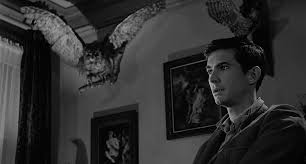
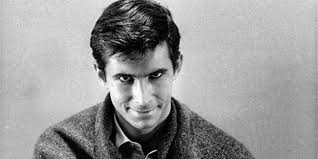
    Silent at first, then sharp strings cutting through. Very spooky atmosphere — eerie calmness, strings floating through the mist. Norman Bates is charming and unsettling in equal measure, and the score walks that line with precision. The surface noise on my copy shows up here, which in a strange way doesn’t hurt the atmosphere.


    Side Two

    The Bathroom / The Murder / The Body / The Office / The Curtains / The Water / The Car / The Swamp

    When it all comes to its inevitable, shocking peak. The string concerto. The shrieks. And then the sorrowful aftermath — sparse, sedate, minimal — the music doesn’t release you from the shock but gives you space, long drawn-out phrases, sharp isolated notes, your mind filling the silence with what you just witnessed. And then the swamp, the car sinking slowly down and down, and the musical phrases spiraling downward in the same direction. The whole universe of this film is going down together.

    The Search / The Shadow / Phone Booth / The Porch / The Stairs / The Knife

    A similar motif returns, but with more purpose behind it now. The stabs come back — but different this time. Something more sinister, more knowing. The difference between shock and realization. The first time you heard these sounds you didn’t know what was coming. Now you do. The music knows you know.

    The Search / The First Floor / Cabin 10 / Cabin 1

    Sustained, drawn-out notes that build and ebb. A flow through the remaining scenes, gathering weight rather than releasing it. The architecture of the score is doing structural work here — you’re moving toward something final.

    The Hill / The Bedroom / The Toys / The Cellar / Discovery / Finale

    Up and up we go. The plot is fully in command now, information arriving faster than the music can comment on it. And then it gets strange — a creeping quality before the finale, unsettling and odd in a way that’s almost surreal. The ending doesn’t resolve. It lands, but not somewhere comfortable.

    Closing

    This is a fine recreation of the score on vinyl. The pressing does right by the music — the highs land where they need to and the depth is there. The cover art is a different story, but you’re not buying this for the cover.

    Whether this score works as a standalone listen depends entirely on what you bring to it. For some it will be repetitive — and it is repetitive, deliberately and structurally so. But in that repetition there is emotion and a specific kind of beauty. You have to be a willing listener, someone patient with string arrangements and comfortable sitting inside a single mood for the length of a record. If you are, there’s real reward here.

    Herrmann believed that music was cinema. For the black-and-white bleakness of this film, he turned in an equally bleak and moody score — spare, unornamented, uncompromising. He and Hitchcock were working in the same register, building the same thing from different ends of the creative process. Black and white all the way through. In the end, the film and the score are inseparable. You can’t hear one without the other.

    Thanks for reading.

    RTR

  • Muddy Waters – The Best of Muddy Waters

    Muddy Waters – The Best of Muddy Waters

    Compilation | April 1958 | Chess Records

    “He lived on the Stovall plantation, three or four miles outside Clarksdale, in a cabin that doubled as a good time place, a juke house, on weekends. He made the best moonshine whiskey in the vicinity. Sometimes he played guitar in a little country string band, sometimes he played with a partner, and sometimes he played alone. His name was McKinley Morganfield, but everybody knew him as Muddy Waters.”


    My fascination with Muddy Waters has been part of my life since my first deep thinking on the blues began. If you get serious about this music, you’ll be led to Muddy eventually — it’s inevitable. He’s one of the originators, but what separates him from a lot of foundational figures is that he kept moving, kept changing, kept recording well past the moment that should have defined him. For a lot of rock musicians, the argument about where rock and roll actually begins comes down to Muddy or Wolf. Blues had a child, and that child was rock music. That’s set in stone, and Muddy is one of the names carved into it.

    The name itself carries weight for me. Muddy Waters. The music he created feels like it comes from the ground up — from the earth, the mud, the work and the toil, the plantation. It’s evocative in a way that’s hard to articulate and harder to resist. You don’t analyze Muddy Waters so much as you absorb him.

    This record was his first album — a greatest hits collection issued by Chess Records, and one of the first LPs the label ever released. What you get here is a combination of Muddy’s deep Delta roots alongside his full-band Chicago rocking blues of the 1950s. A real historical document. Astonishing works of inspired music. The whole arc of a man’s artistic life compressed into twelve tracks.


    THE OBJECT

    I picked this up in March 2026 at Siren Records. It’s another of the Chess 75th Anniversary releases, same series as the Howlin’ Wolf Moanin’ in the Moonlight pressing I wrote about previously. I was pleased with that presentation, and I’m equally pleased with this one — happy to own a piece of blues greatness in these tracks.

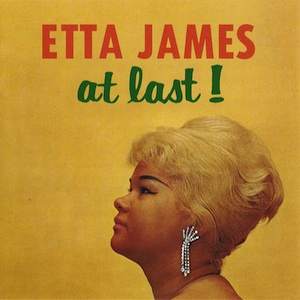
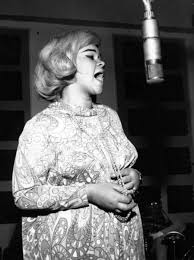
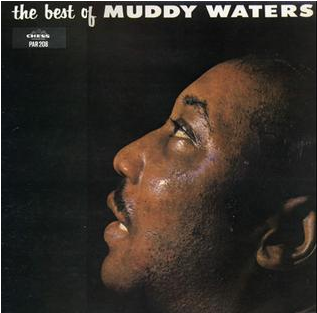
    The cover is a powerful profile image of Muddy that earns its place in the canon of great blues album artwork. There’s an intensity in his face, a longing look upward. This was a man seeking more out of his life and his journey from the Delta to Chicago. It has a pastoral feeling to it despite being so spare: the black background, Muddy’s face, the bold all-caps lettering of his name. Pure simplicity. It reminds me of the Etta James At Last cover — that same combination of commanding presence and elegant restraint. Great cover for 1958.

    When the Rolling Stones first visited Chicago in 1964, they made a pilgrimage to 2120 S. Michigan Avenue and recorded there. Keith Richards has said this record — alongside Robert Johnson’s recordings — was foundational to everything the Stones became. The British Invasion was, in large part, American blues records shipped across the Atlantic and returned electrified, sped up. This compilation was one of the primary texts that made that possible.

    The liner notes on this record are among the best I’ve read from the era. Studs Terkel — Chicago’s great chronicler — wrote them, and he puts Muddy’s legend down with real skill. He establishes the mythology, generates excitement, and leaves you with a kind of eerie awe for what you’re about to hear.


    The Band

    The core ensemble across this period included:

    • Little Walter Jacobs — harmonica. Arguably the greatest blues harmonica player who ever lived. His amplified harp sound, run through a PA microphone, created a tone that had never existed before and hasn’t been replicated since. He’s all over this record and the album is richer for every second he’s on it.
    • Jimmy Rogers — second guitar
    • Elgin Evans / Leroy Foster — drums, varies by session
    • Big Crawford / Willie Dixon — bass (Crawford on the early recordings, Dixon later)
    • Otis Spann — piano, appears on the 1954 sessions

    Production Notes by Track

    Side One

    “I Just Want to Make Love to You” — Recorded April 13, 1954 | 2120 S. Michigan Avenue | Chicago, Illinois

    “Long Distance Call” — Recorded 1951 | Universal Recording | Chicago, Illinois

    “Louisiana Blues” — Recorded late 1950 / early 1951 | Universal Recording | Chicago, Illinois

    “Honey Bee” — Recorded 1951 | Universal Recording | Chicago, Illinois

    “Rollin’ Stone” — Recorded 1950 | Universal Recording | Chicago, Illinois

    “I’m Ready” — Recorded 1954 | 2120 S. Michigan Avenue | Chicago, Illinois

    Side Two

    “(I’m Your) Hoochie Coochie Man” — Recorded January 7, 1954 | 2120 S. Michigan Avenue | Chicago, Illinois

    “She Moves Me” — Recorded 1951–52 | Universal Recording | Chicago, Illinois

    “I Want You to Love Me” — Recorded 1950 | Universal Recording | Chicago, Illinois

    “Standing Around Crying” — Recorded 1952 | Universal Recording | Chicago, Illinois

    “Still a Fool” — Recorded 1951 | Universal Recording | Chicago, Illinois

    “I Can’t Be Satisfied” — Recorded April 20, 1948 | Universal Recording | Chicago, Illinois

    The record is sequenced to open with the most polished material and close with the sparest. You’re hearing the story in reverse — from the full-band Chicago electric sound back toward the lone man and his guitar in 1948.


    THE MUSIC

    Listening Notes — March 11, 2026

    Side One

    “I Just Want to Make Love to You” (1954)

    Blunt lyrics. No idioms, no coded language — just a direct, plainspoken statement of desire. Willie Dixon wrote it and Muddy delivers it like a verdict. Little Walter’s harmonica on this track is otherworldly, a wicked spirit inhabiting the room alongside you. And that’s true for the whole record — Little Walter is a recurring specter throughout.

    The Rolling Stones’ version pumps the tempo up and you have rock and roll alchemy at work — pure magic. You can hear the beginning of an entire movement of music in the distance between these two recordings. Muddy’s voice has a very specific timbre, extremely unique to him. Many people noted that he carried the quality of a church call in his delivery, a spiritual invocation. Here that same quality exists entirely outside any church walls. It sounds great on this pressing — powerful and present, Muddy’s wails right there in the room with you.

    “Long Distance Call” (1951)

    The guitar steps into the foreground more here than on the opener. Muddy’s expertise is on full display, and his blues phrasing is exceptional throughout. But the line that stops you is this one: “the party said another mule kicking in your stall.” One of the best blues lines ever written.

    “Louisiana Blues” (1950)

    “Get me a mojo hand” — Muddy’s source of luck in gambling and with women, rooted in Hoodoo tradition that runs deep through Delta blues culture. Worth spending time with if you’re unfamiliar. There’s also a call and response element here — someone says “take me with you man when you go” — that adds a communal, almost ceremonial quality to the track.

    This is a deep and murky blues. The waters of Louisiana are in the sound itself. Robert Palmer wrote in Deep Blues that this track had a power all its own — the power of the Delta’s deepest music unleashed by electricity. He called it irresistible.

    “Honey Bee” (1951)

    Stripped down to its essentials — first and second guitar, and Muddy. Blues in its plainest form relative to the full-band tracks. When Muddy draws out the “pleaaase” on this one, it’s something else. Listen also for the guitar imitating the buzzing of a bee. It’s a small touch and it’s perfect.

    “Rollin’ Stone” (1950)

    Just Muddy and his guitar. This was his first single for Chess Records, and it sold well enough to give him his freedom — his leverage, his foothold. Even in that uncertain moment, the confidence in his singing and his playing is staggering. All of rock music lives somewhere in this guitar. It’s not about technical skill — it’s about feeling and sound. You can hear what the Stones were inspired by. You can hear riffs from across decades of rock music in the spaces between Muddy’s moving fingers and the strings.

    “I’m Ready” (1954)

    The full band comes back after the intimacy of Rollin’ Stone, and the contrast lands hard. Swinging blues, the drums and bass really walking around on this track. “I’m drinking TNT, I’m smoking dynamite” — that line just works every time. Little Walter again is a spectre here. Something about his sound conjures spirits, makes spooky thoughts. Deeply evocative. There’s a reason people reach for supernatural language when describing this music.


    Side Two

    “(I’m Your) Hoochie Coochie Man” (1954)

    A severe, brutal announcement of a song. Muddy didn’t introduce himself here — he declared himself. The stop-time effect that structures the whole track became one of the defining motifs in electric blues, and you can hear why — those gaps, those silences before the band crashes back in, create a tension that’s almost unbearable in the best way. “John the Conqueror Root” referenced in the lyrics is worth looking up — Studs Terkel addresses it in the liner notes and the context deepens the song considerably.

    When Muddy screams “everybody knows I’m here” — my system shudders. The room shakes.

    “She Moves Me” (1951–52)

    A woman with supernatural powers — the reverse angle from Hoochie Coochie Man. Here it’s the woman who holds the magic. “She can make a blind man see.” The bass drum sound on this track is genuinely curious — it has a resonance I can’t quite place, something uncanny about it. Not sure if it’s a conventional drum or something improvised.

    “I Want You to Love Me” (1950)

    The confidence on this track is what I’m pretty sure inspired generations of rock musicians to pick up guitars and try to feel the same way. Little Walter stands out again here.

    “Standing Around Crying” (1952)

    Low and slow, mournful blues. It’s worth noting that for a compilation of this size and reputation — twelve tracks representing Muddy’s essential early output — this is the only song that’s squarely about a man upset with his circumstances. One out of twelve. That says something about the personality projected across this record. Muddy is rarely a victim. He’s more often a force of nature.

    “Still a Fool” (1951)

    More of that spooky guitar. On this track you can hear voices somewhere in the background It adds immersion. Ghosts are present. Muddy here is acknowledging the terrible weight of the situation — getting involved with another man’s wife, knowing it, doing it anyway. The blues doesn’t moralize.

    “I Can’t Be Satisfied” (1948)

    The album closes with the OG — one of the most important records in blues music, recorded when Muddy was still finding his footing as a recording artist and somehow already fully himself. The fact that Chess saved it for last is a statement. You’ve traveled backward through twelve years of recordings, and you land here, at the source. Just Muddy and his slide guitar, 1948, and everything that followed is already present in the room.


    Closing

    Every song on this collection is a masterclass in electric blues. If it’s an invention, this record is the patent. If it’s a library, these are the essential texts. There’s such a ferocity here that you can feel its influence as the needle tracks along the groove — the record bouncing with Muddy’s wails, his claims full of supernatural imagery and self-mythologization. Robert Palmer called his persona “imperial and commanding.” Listen to this record and you understand exactly what he meant. Even when Muddy gets vulnerable, he never stops being Muddy. That’s a rare thing.

    Essential stuff. Impressive, irreplaceable stuff.


    Thanks for reading.

    RTR

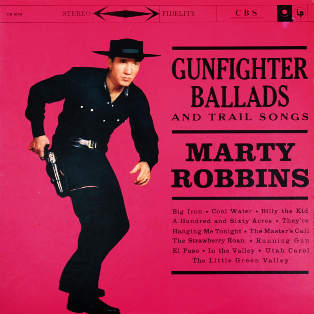
  • Marty Robbins – Gunfighter Ballads and Trail Songs

    Studio Album  |  September 1959 | Columbia Records

    Marty’s 5th Studio Album  ·  Produced by Don Law

    My pressing: 1971 Stereo Columbia Reissue — Pitman Pressing

    Purchased: Lillington, NC Thrift Store — May 2024

    The Object

    The album cover. The stance, the lettering, the hat pulled low — I’d seen this thing everywhere. Thrift stores, antique shops, tape decks, cassette bins. It’s one of those records that seems to exist in every collection that ever got broken up and donated. Always struck me as a classic.

    The question I kept coming back to was simple: where do all these copies come from? Probably from the dens and living rooms of people who are gone now. Their collections wind up in the local Goodwill or the antique mall on the highway, and there it sits — a five dollar bin treasure if there ever was one, waiting for someone to finally pull it.

    May 2024, at a thrift store in Lillington, North Carolina. I was at a transitional point in my life — coming out of a difficult year, possibly leaving behind one of the most intense and meaningful periods of my working life, moving toward something less stressful and, as it’s turned out, more fulfilling. The record felt right for the moment. Some records you can feel the influence of just by looking at the title. It’s in the dust. I’d wanted to understand for a long time why this album means so much to so many people.

    Why I Own This Record

    I grew up in Houston. Country music was always somewhere in the background — it’s unavoidable in Texas — but in the 1990s, country was a different animal. Popified, polished, a long way from what Nashville looked like in 1959. I gravitated toward rock, punk, and metal instead. It was only in my twenties that outlaw country started pulling me in, and it’s been that way ever since.

    My big three have always been Waylon, Willie, and Townes Van Zandt. But Marty Robbins predates all of them, and as I’ve been learning more about the man and this record, I’ve come to understand something important: he wasn’t writing about his time. He was writing with nostalgia for his upbringing — for the stories his grandfather passed on, for the cowboy mythology of the Arizona desert where he grew up. This was an act of personal memory as much as artistic craft. Whatever emotional weight you feel listening to these songs, Robbins felt it first.

    As a cultural artifact, Gunfighter Ballads sits at a precise moment in country music when something was shifting. The Nashville Sound was taking over. It was smooth, orchestrated, designed for pop crossover. Marty went in the opposite direction entirely. This record arrived before the full flowering of outlaw country in the seventies, but you can hear in its bones the argument that would eventually define that movement: that country music’s soul is in its stories, not its production values. The idealized gunfighter, the drifter, the pioneer. That mythology permeates this record and the man who made it.

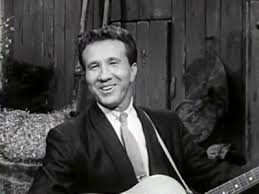
    Marty Robbins — The Man

    Born Martin David Robinson on September 26, 1925 in Glendale, Arizona. He grew up poor, raised in part by a grandfather named Texas Bob Heckle, who told stories of the Old West and passed them down like scripture. Robbins grew up listening to Gene Autry on the radio and watching cowboy films.

    He was self-taught. Picked up the guitar in the Navy during World War II. After the war he worked his way through Phoenix radio and television before signing with Columbia in 1951. And here’s the thing about Marty Robbins that often gets lost in the telling of this particular record: he was not a genre artist. He was a versatile musician who made pop crossovers, rockabilly records, Hawaiian music, and straight-ahead ballads. He even tried calypso. The range was real. But Gunfighter Ballads is where Marty found his element — the place where everything he loved and knew and carried from childhood finally had a home.

    His voice is worth dwelling on. It could go anywhere. Hard-edged and Western one moment, pure romantic balladry the next. On this record he uses it like a storytelling instrument, which is exactly what it is. There’s no showboating. He gets out of the way of the song.

    He was also a NASCAR driver — a legitimate one, not a celebrity appearance. He raced seriously for years, suffered a heart attack on the track in 1969, came back and kept racing. The cowboy identity was a genuine self-conception, lived out in everything he did.

    He died in December 1982 of heart failure, just weeks after his induction into the Country Music Hall of Fame. He was 57. The timing of that induction, arriving at the end of his life, feels like the kind of thing that would have pleased him without surprising him. He knew what he’d made.

    The question worth sitting with is this: why does Gunfighter Ballads stand apart from everything else he made? The answer isn’t complicated. It stands apart because it’s true to him. These songs weren’t assigned. They weren’t calculated for the market. El Paso came out of a real experience, a real place, a real feeling. Marty Robbins gave this record everything he genuinely was, and that’s the rarest thing in recorded music.

    Nashville and the Recording

    All twelve songs on this album were recorded in a single eight-hour session on April 7, 1959 at Columbia Studio B in Nashville. One day. That’s worth letting settle.

    The producer was Don Law, who had been Columbia’s primary country A&R man for years and was responsible for a significant portion of the label’s catalog. Law understood what Robbins was doing and didn’t get in the way of it. The arrangements are spare by design — acoustic guitar as the primary voice, with texture added carefully around it. This is not a band record. It’s a voice-and-guitar record, and the production serves that.

    The Nashville Sound was in full ascension in 1959 — Chet Atkins was refining it, the strings were getting smoother, the pop crossover was the stated goal. Gunfighter Ballads went completely the other direction. Sparse, deliberate, story-driven. It arrived at a moment when Nashville was going one way and Marty went another, and history has been kind to that decision.

    Of the twelve tracks, four were written by Marty himself: El Paso, Big Iron, In the Valley, and The Master’s Call. The Glaser Brothers — Tompall, Chuck, and Jim — contributed Running Gun and also served as backup vocalists throughout the record. The rest are traditional or previously recorded Western songs: Billy the Kid, Strawberry Roan, and Utah Carol in the folk tradition; Cool Water from Bob Nolan and the Sons of the Pioneers (1936); A Hundred and Sixty Acres by Dave Kapp; They’re Hanging Me Tonight by James Low and Art Wolpert; and The Little Green Valley by Carson Robison.

    El Paso hit number one on the country charts and stayed there for seven weeks. It held the top spot on Christmas Day 1959, which is either a perfect irony or perfectly fitting depending on your mood. For a four-minute-plus single in an era of two-minute pop radio, that kind of sustained success was virtually unheard of.

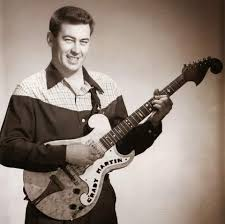
    Grady Martin and the Nashville A-Team

    The session musicians on this record deserve their own mention. Grady Martin played guitar on this album, and Grady Martin was, full stop, one of the greatest session players in Nashville history. He appeared on hundreds of the most significant recordings of the era — Patsy Cline, Johnny Cash, Roy Orbison, Loretta Lynn — and brought an authority and feel to every session he touched. On Gunfighter Ballads his guitar work is restrained and exact, which is exactly what the material called for. You hear it most clearly on El Paso, where the playing frames the vocal without ever competing with it.

    The Nashville A-Team — the loose collective of session musicians who played on the majority of major Nashville recordings in this era — understood instinctively how to serve a song. One day, one session, twelve tracks, and they nailed it. That’s what professional musicianship looks like.

    The Music

    Listening notes — January 3, 2026

    Side One

    Big Iron

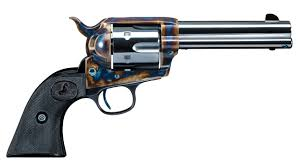
    The song that sets the stage. A record inspired by a firearm, by the American West, by the mythology of the gunfighter. An Arizona Ranger rides into a town to take out a seasoned outlaw named Texas Red. Twenty notches on the stranger’s pistol when he arrives. He wins the showdown.

    “To the town of Agua Fria rode a stranger one fine day…”

    That opening line. Marty riding into Nashville? Or Marty riding out of it?

    “The notches on his pistol numbered one and nineteen more.”

    If those notches all count for bodies, then scraping that first one into the butt of the pistol came with a lot of weight. There’s a whole life’s worth of violence implied in that number, and Robbins doesn’t explain it. He just states it and lets it sit.

    “The swiftness of the ranger is still talked about today.”

    We all know what happened. Robbins doesn’t have to describe it. That’s perfect songwriting — giving the emotional weight to an event without a clear description. The ranger’s gun was bigger, faster, and truer. The legend lives on.

    Cool Water

    The desert as a state of emotion, not just a place. Bob Nolan wrote this in 1936 and it’s been a standard ever since, but Robbins does something particular with it — he lets it become hallucinatory.

    “He’s a devil not a man, and he spreads the burning sand with water, cool water.”

    I’ve been out in the Mojave, near Fort Irwin. I’ve stood in that heat and watched the road shimmer and understood, in a small way, what mirage feels like. I hear these lyrics and that heat comes back. That’s what this track does — it transports you into a physical experience. The background vocals from the Glaser Brothers and Robbins together are smooth and velvety, perfectly layered. It sounds incredible on a good system. One of the best-sounding tracks on the record.

    Billy the Kid

    Read all the books, watch all the films, go visit his grave in Fort Sumner. Then listen to this song and let Marty give the legend what he needs — gravitas and genuine sympathy. Not just for Billy, but for all the young men who followed his example and met the same end. The tradition of the Billy the Kid song is long, and this one fits comfortably into the lineage. It’s passed down through the generations because it says something true: the kid was real, the romance around him was real, and the cost was real.

    A Hundred and Sixty Acres

    Written by Dave Kapp, this is a callback to the pioneer era — homesteading, open land, the promise of acreage and independence. It makes you think about what it meant to work your own ground, to look up at the stars at night with nobody to answer to. There’s an isolation in it that reads as freedom rather than loneliness. Hard to find much information about Kapp himself.

    They’re Hanging Me Tonight

    Written by James Low and Art Wolpert. A murdering, jealous man ruminates on what he’s done the night before his execution.

    “They’ll bury Flo tomorrow but they’re hanging me tonight.”

    Sparse arrangement, exactly right. The production gets out of the way and lets the vocal carry everything. The logic of the character is brutal and clear. He did it, he knows what’s coming, and he doesn’t seem particularly sorry. Just reflective. That’s a harder emotional note to land than remorse, and Robbins lands it.

    Strawberry Roan

    Written by Curly Fletcher, this is a classic cowboy song about a bronco breaker who learns not to judge things by their appearance. By the time Robbins sang it, it was close to fifty years old — written in the 1910s and passed through countless versions since. He treats it with the respect it deserves while making it his own. The poetic imagery of cowboys doing cowboy things, the rhythm of the work and the rhythm of the song matching up — this is what it sounds like when a tradition is kept alive properly.

    Side Two

    El Paso

    The centerpiece. A mini-film in song. Doomed love, a dead man, a border town, a girl named Felina — every verse is a scene and Robbins shoots them in sequence with the patience of a director who knows he has time. The structure is unusual for country music in 1959, and the length was commercial suicide on paper. It wasn’t. Grady Martin’s guitar and the vocal performance make this a timeless recording. It is cinematic. It has all the darkness and love and violence of the Western setting, compressed into four and a half minutes.

    “My love is stronger than my fear of death.”

    That’s the whole song in ten words.

    Two sequels exist: El Paso City (1976) and Felina from El Paso. Neither reaches the original, but the fact that Robbins kept returning to it says something about what it meant to him.

    I spent time in El Paso myself — nine months stationed at Fort Bliss around 2008, trying to find a good time in what was by then a pretty upbeat college town. Different from the conjured images of this song. But El Paso the place and El Paso the song exist in different dimensions, and Robbins knew that. He was writing the myth, not the city.

    In the Valley

    Another exhibition of the Robbins and Glaser Brothers harmonizing, and it’s beautiful. The song is thinner on story than most of what surrounds it on this record, but maybe that’s the point. After El Paso you need something to catch your breath. In the Valley functions as a palette cleanser — the spirit of the song before it lingers in the atmosphere, and this track lets you sit in that feeling a little longer before the record moves on.

    The Master’s Call

    This may be the track that resonates most personally for me. A boy leaves home, falls in with a bad outfit, ends up rustling cattle during a lightning storm. In the middle of the storm he hears a voice — a reckoning, and an offer of salvation. Lightning strikes. The mark of a cross remains. Pretty metal, honestly. But the core of it is something I recognize: there have been plenty of moments in my own life where the test was the challenge, where the reminder to stay true and stay moral came not in a quiet moment but in the middle of the storm. Robbins understood that too. This is his songwriting at its most direct — no flourish, just the story and the weight of it. It stands up next to El Paso.

    Running Gun

    Written by the Glaser Brothers, and the B-side to the El Paso single — which means a significant number of people heard this song playing it over looking for El Paso, which is not a bad way to be discovered.

    “A woman’s love is wasted when she loves a running gun.”

    The title tells the story pretty completely: the man going town to town, killing for hire, while somewhere a woman waits for him. Amarillo and Kansas City both get name-dropped, two towns I’ve passed through on various criss-crosses through the country. The song has the feel of something lived — a road song, a drifter’s song, the kind that sounds better the more miles you have behind you.

    The Little Green Valley

    Written by Carson Robison. Slower, more about image than story. The emotion here is homesickness — the longing mind wanting to return to a time that may not be recoverable. It’s the most private track on the record, which makes it feel slightly out of place, and also essential. Every outlaw needs a home they miss. This is that song. I could see this playing in a barracks during Vietnam while somebody gave the guy who put it on a hard time — and the guy sitting there listening quietly, not turning it off.

    Utah Carol

    A traditional cowboy story song, and a fitting close to the record. The tale involves a red robe spooking some cattle and a cowboy sacrificing himself to save a young girl. It’s a strange and specific story — a red robe, of all things, as the instrument of fate — and it has the quality of something that actually happened, or at least something people have believed happened long enough that it might as well have. Robbins wraps the record here the same way he opened it: a story, a setting, a consequence, and no sentimentality about any of it.

    Closing

    This record fed directly into the outlaw country tradition that came after it. Waylon Jennings, early in his career in the 1960s, openly mimicked Robbins’s crooning style before finding his own voice. The Western mythology Marty was working with — outlaws, loyalty, landscape, consequence — wasn’t a country music trope so much as an American archetype, and it kept feeding writers and performers for decades.

    What Gunfighter Ballads does that most records don’t is provide full immersion. Marty’s songwriting, the harmonies, the guitar, the stories are transporting. This is one of those albums where the concept works completely: you put it on and you go somewhere else. You don’t need to know anything about country music or music theory or Nashville history.

    And the pressing format matters here too. All twelve tracks recorded in one eight-hour session, mastered and cut, pressed and distributed, bought and played and donated and thrifted and found. There’s a whole life cycle in that. When you buy a thrift store record, you’re buying everything that came before it in that record’s existence — all the hands it passed through, all the rooms it played in. Somebody’s grandfather sat in his den after a long day, sipped a cold beer, put this on, and thought about something different. I don’t know who he was. But I might have bought his record.

    Never underestimate the five dollar bin.

    Hank Hill would love this record. Enough said.

    RTR

    Further Exploration

    Listen

    Johnny Cash — Ride This Train (1960) — another concept album, another American mythologist

    Townes Van Zandt — For the Sake of the Song — the next generation of outlaw storytelling

    Sons of the Pioneers — Cool Water (1941)

    Read & Listen

    Cocaine & Rhinestones — Tyler Mahan Coe (podcast)

    Country: The Twisted Roots of Rock ‘n’ Roll — Nick Tosches

    Marty Robbins: Fast Cars and Country Music — Barbara J. Pruett

    Watch

    The Hanging Tree (1959) — Gary Cooper — the film behind one of the album’s tracks

    Any available Marty Robbins television footage — his variety show appearances from the late fifties and early sixties are worth finding

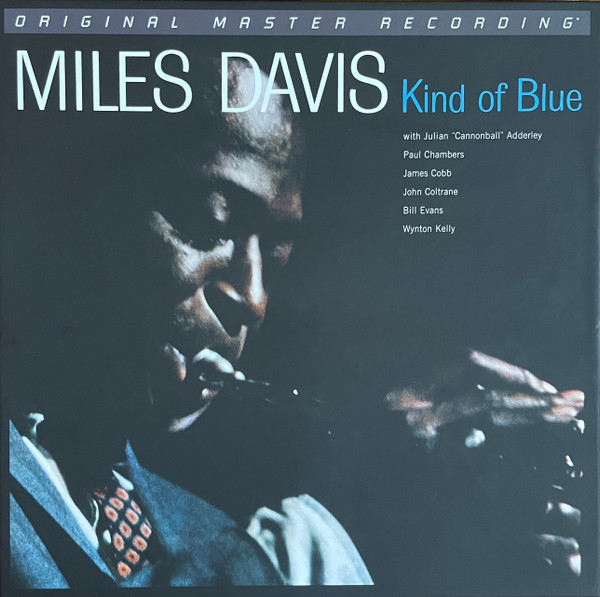
  • Miles Davis – Kind of Blue

    Studio Album  | August 17, 1959 | Columbia Records

    Recorded March and April 1959 | Produced by Irving Townsend

    My pressing: Mobile Fidelity Sound Lab (MOFI) Box Set, 2021  ·  45 RPM  ·  Purchased on Discogs, 2026

    For many people, this is their first jazz album. It wasn’t mine — but it became one of the most important records in my understanding of what jazz could be.

    I’ve been with Miles for a long time. I read his autobiography around 2018 or 2019, trying to understand the man and his music together. That book was my real introduction — not just to Miles, but to the wider world of jazz. Alongside Coltrane and Mingus, he forms the triumvirate that defines what I think of when I think of jazz greatness. Miles is the one I’ve followed most closely, given the most listening effort, and what comes back from that is a tremendous satisfaction. He was one of the best instrumentalists and pure musicians who ever lived. Full stop.

    I’d owned Kind of Blue on CD for years. Putting off the vinyl was intentional — I wanted an honest copy, something that did the record justice. The MOFI box set from 2021 was the answer. I bought it on Discogs in 2026, arrived open but in solid condition and ready to spin. The box is well made. The records are high quality. Each piece of music gets its own side or half-side at 45 RPM, which gives every track room to breathe. It’s a serious presentation of a serious album, and it sounds like it.


    Historical Context

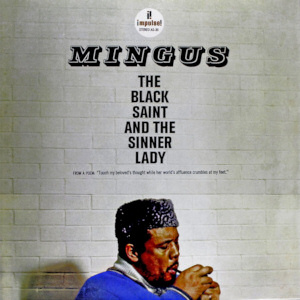
    1959 was a year of radical divergence in jazz. John Cage could have been speaking about the music of that year when he said, “We are all going in different directions.” Ornette Coleman’s The Shape of Jazz to Come, Charles Mingus’s Mingus Ah Um, and Dave Brubeck’s Time Out all arrived that year — the latter two on Columbia, same label as Miles. Four dramatically different statements about how to organize jazz music. Each avant-garde in its own way. Each arguing for the technical possibilities and aesthetic reach of the music. Kind of Blue landed in the middle of all that, and somehow became the most enduring of them all.

    The album was recorded at Columbia’s 30th Street Studio in New York — a converted church with natural acoustics that Columbia relied on heavily for both jazz and classical recordings throughout the fifties and sixties. The room is part of the sound. That warmth, that space, that sense of air around every instrument — some of it is the playing, and some of it is the building.

    Miles was always a chameleon. Jimmy Cobb said he craved change, that he lived in the unknown and didn’t give any care about the consequences. By 1959, Miles had already moved through bebop, the Birth of the Cool sessions, and the hard bop of his First Great Quintet. Kind of Blue was a deliberate move away from all of that. The switch to modal improvisation was a rejection of the dense chord changes of hard bop — Miles wanted open space. He wanted his musicians to invent in real time, without the furniture of a complex harmonic map getting in the way.

    It’s as much a Bill Evans record as it is a Miles Davis record. The two men had been working through modal ideas together for some time before the sessions — Evans introduced Miles to Ravel and Khachaturian, and their conversations about scales, space, and color shaped the album’s entire conception. Miles said plainly: “I planned that album around the piano playing of Bill Evans.” Evans wrote the liner notes. He developed the frameworks for several tracks. Miles retained sole authorship credit, a decision that remains contested, but the collaboration was real and deep.

    The classical influence runs throughout. Debussy, Ravel, Bartók, Stravinsky, Khachaturian — Miles spent six months listening carefully to Khachaturian before these sessions and told Nat Hentoff in 1958 that what intrigued him was “all the different scales he uses — they’re different from the usual Western scales.” That search for new scalar resources is exactly what Kind of Blue delivered.

    None of these tunes were written out beforehand in any conventional sense. Miles arrived at the studio with sketches — outlines, scales, frameworks — and talked the band through them on the day. No rehearsals. First takes. What you hear on this record is musicians encountering the music for the first time and finding their way through it together. That’s the spontaneity you feel when you listen. It isn’t a myth. It’s documented.


    The Musicians

    Seven people walked into 30th Street Studio in the spring of 1959. The average age was 28.

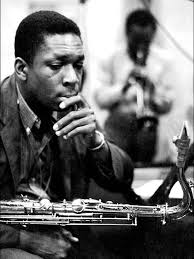
    Miles Davis — Trumpet — Age 32

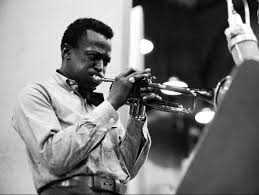
    Leader and composer. The King of Cool. Miles plays trumpet throughout, frequently with a Harmon mute, which gives his tone that intimate, almost whispered quality that defines much of this album. He was the architect — the one who set the parameters, chose the musicians, and created the conditions for what was about to happen. He didn’t always give detailed instructions. He didn’t have to. He knew who was in the room and trusted them. His solos on Kind of Blue are lessons in restraint: he gives you just enough, holds back just enough, and makes the space between the notes feel as important as the notes themselves.

    John Coltrane — Tenor Saxophone — Age 32

    Coltrane was developing what would become known as his “sheets of sound” approach — dense, cascading, harmonically complex runs that were the opposite of everything Kind of Blue was asking for. The album caught him at a crossroads. Modal playing required him to slow down, work with less, and resist his instincts. In his own words: “There was a time in the past that he was devoted to multichord structures… But now it seemed that he was moving in the opposite direction to the use of fewer and fewer chord changes.” The tension between his instincts and Miles’s vision is audible, especially on Flamenco Sketches — and it’s part of what makes his playing here so compelling. He wasn’t fully comfortable, and it shows in the best possible way. Within a few years he would record A Love Supreme and reshape jazz again.

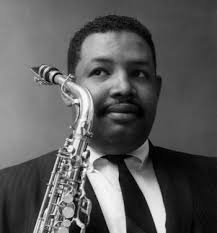
    Cannonball Adderley — Alto Saxophone — Age 30

    Cannonball joined the group in 1958 and remained something of a legend in this lineup. His playing is warmer and more rooted in the blues than Coltrane’s, and he functions as the center of gravity between two extremes. Where Miles holds back and Coltrane pushes outward, Cannonball swings. His solos have a naturalness and ease that ground the record. His work on Freddie Freeloader in particular is some of the most joyful playing on the album.

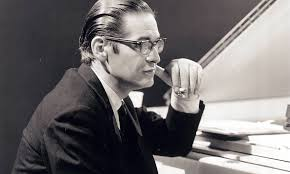
    Bill Evans — Piano — Five Tracks — Age 28

    The essential collaborator. Evans had actually left Miles’s working band before the sessions — Wynton Kelly was the regular pianist — but Miles brought him back specifically for Kind of Blue. His impressionistic approach to the piano, rooted as much in Debussy and Ravel as in jazz, gave the album its particular atmospheric quality. His piece “Peace Piece,” recorded in 1958, provided the direct foundation for Flamenco Sketches — Miles heard it, liked it, and the morning of the second session the two men went to Miles’s apartment and worked out the five-scale cycle together at the piano. Evans sketched the scales out on a small piece of staff paper and wrote the instruction: “play in the sound of these scales.” Jimmy Cobb said afterward that the music sounded more like what Bill would play than what Miles would play. It’s an observation about how deep the influence ran.

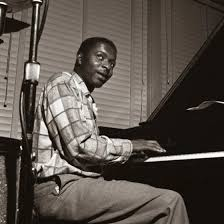
    Wynton Kelly — Piano — One Track — Age 27

    Kelly plays on exactly one track — Freddie Freeloader — and it’s the most traditionally swinging moment on the album. His earthier, more blues-rooted style suited the 12-bar blues structure of the track better than Evans’s impressionism. Evans himself reportedly felt he had little to add to that particular song, and Kelly’s presence there is exactly right. The contrast between his playing and Evans’s across the album is one of the subtle pleasures of listening closely.

    Paul Chambers — Bass — Age 23

    Chambers had been working with Miles for four years by the time these sessions took place, and his opening bass line on So What — stating the melody before Miles even enters — is one of the most remarkable moments on the record. He was 23 years old. His playing holds the album together with remarkable poise for someone that young, and the warmth of his tone is a constant throughout. He died in 1969 at 33, largely without the recognition he deserved.

    Jimmy Cobb — Drums — Age 30

    Cobb joined the band after Philly Joe Jones departed and brought exactly what this music needed — restraint, openness, and a willingness to serve the moment rather than dominate it. He played brushes rather than sticks across much of the album, and Miles’s instruction was simple: keep it light, keep it open. Cobb honored that completely. He spoke about the sessions extensively in the Birth of the Cool documentary. He was still performing into his eighties and passed away in 2020 at 91, the last surviving member of the Kind of Blue sessions.


    The Music

    All tracks recorded at Columbia’s 30th Street Studio, New York City

    Record 1

    So What  |  March 2, 1959  |  Session 1

    The great opening. Chambers states the melody in the bass before anyone else plays a note — an extraordinary compositional choice that sets the tone immediately. When Miles enters, he gives you just enough. It’s a “so what” solo in the best sense — unhurried, deliberate, almost indifferent in the coolest possible way. Coltrane’s solo opens up and goes somewhere freer. Cannonball follows with something more down to earth. He’s the middle between the two extremes of Miles and Coltrane, and that dynamic plays out across the whole record. The sound quality on this MOFI pressing on this track is superb.

    Freddie Freeloader  |  March 2, 1959  |  Session 1

    The blues. Wynton Kelly on piano instead of Evans, and you feel the shift immediately — something earthier and more settled in the groove. The blues structure lets the musicians move around and feel comfortable in the way that a standard blues always does. Miles’s solo here has more joy to it, a little more generosity, his horn right up in the mic. And the way Coltrane enters this track — huge, insisting his voice into the recording — is one of the great moments on the album. Cannonball delivers another carefree solo. Kelly is exactly right throughout.

    Blue in Green  |  March 2, 1959  |  Session 1

    Slow down and settle in. Miles’s intro feels like a quiet stroll around the recording room — no urgency, no statement to make, just a presence. Bill Evans’s piano is the shining moment of this record for me. There’s a depth of emotion in his playing on this track that’s hard to articulate. He wrote the music. You can hear that it came from somewhere real.

    Record 2

    All Blues  |  March 2, 1959  |  Session 1

    A 12-bar blues in 6/8 — Miles took the standard blues form and gave it a waltz feel, which opens the whole thing up. There’s an urgency to it, a forward motion that’s different from what came before. Miles floats on top of that rhythm wave. One of the real pleasures of this album is hearing how distinct the three voices are — Miles, Coltrane, Adderley — and All Blues is a good place to sit with that. They’re three entirely different personalities contributing to the same conversation.

    Flamenco Sketches  |  April 22, 1959  |  Session 2

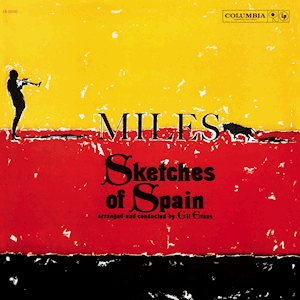
    My favorite track. It reaches somewhere the others don’t. The structure is unlike anything else on the record — five scales, each soloist moving through them at their own pace, no fixed time, no formal repetition. Beauty out of improvisation. I don’t always follow the jazz mechanics and theory, but I know what this sounds like. It’s music to think by. It’s music that moves the way thought moves — associative, patient, occasionally surprising. It reminds me of Sketches of Spain, another Miles record I love, and I don’t think that’s a coincidence.

    The ending is somewhat abrupt, but it tails off beautifully. It ends the way a good conversation ends — not with a conclusion, just a quiet agreement to stop talking.


    Closing

    This is the record that lifts any situation. It’s romantic and direct. It works in the foreground and the background. I hear something new every time I play it. It’s perfect for any occasion and takes me somewhere that makes me appreciate art in the best way — which is quietly, without needing to explain it.

    I’m not a jazz scholar. I’m a lover of music and musicians, and what I appreciate is the story of how artists move through their lives and what they leave behind. The story of Kind of Blue, and Miles Davis’s life leading up to it and after it, is a perfect distillation of what it looks like when an artist commits fully to doing his own thing. An exhibition of the unknown. A drift into the new.

    In some ways Miles was never the same after this record. It shot him into a wider popularity and defined this period of his career. He kept doing great things — the electric years, Sketches of Spain, Bitches Brew — but Kind of Blue stands apart. If you’re coming to Miles for the first time, this is where you start. If you’ve been with him a long time, this is where you return.

    Essential item in the collection. I can put this on for anyone, any time, and the day will be better than it was before.

    RTR


    Further Exploration

    3 Shades of Blue: Miles Davis, John Coltrane, Bill Evans, and the Lost Empire of Cool — James Kaplan

    Miles: The Autobiography — Miles Davis with Quincy Troupe

    Kind of Blue: The Making of the Miles Davis Masterpiece — Ashley Kahn

    Miles Davis: Birth of the Cool — Documentary, dir. Stanley Nelson, 2019

  • Howlin’ Wolf – Moanin’ in the Moonlight

    Compilation | 1959 | Chess Records

    Recorded 1951-1958 | Producers: Leonard Chess, Phil Chess, Willie Dixon, Sam Philips


    My copy is the Chess Records 75th Anniversary pressing, pressed at Quality Record Pressings from the original masters. I snagged this on Discogs in January 2026, and it arrived in great condition. These reissues have a solid reputation, and I’ll attest to that. The tip-on gatefold sleeves are made from high-grade board, and the covers themselves are glossy — they catch the light in a way that feels intentional.

    Then there’s the artwork. What we have here is a study in liminal space: not much to it, and that’s the point. A lone wolf. A single tree far off in the distance. Spare and stark, like a Cormac McCarthy scene before McCarthy became a household name. The whole package is solid, and this pressing is a genuinely good copy to seek out.

    For context on the label itself — Chess Records is one of the all-time great American record labels. Founded in Chicago by Leonard and Phil Chess, the label became the epicenter of blues and R&B in the postwar era, documenting artists whose work became the bedrock of modern popular music. You can’t tell the story of American music without Chess.

    Original pressings of this record are highly sought after and command serious prices. This reissue is a respectable alternative, and while it’s marketed with audiophile credentials, I’d say it meets the minimum threshold for that designation rather than exceeding it. What it does deliver is a clean, open, and spacious sound — large and well-rendered. Whether that presentation fully captures the rawness of the original mono pressing is hard to say without a side-by-side comparison, which I don’t have. What I can say is that an audiophile mastering job inevitably smooths some edges, and with Wolf, those edges are kind of the whole point.

    Before we get into the music, here’s Chess legend Steve Jordan on the style of this record — specifically on that country blues sound and what happened to it when the geography shifted north to Chicago.

    From Memphis to Chicago: Steve Jordan on Howlin’ Wolf’s Moanin’ In The Moonlight


    THE MUSIC

    The first thing that hits you is the voice. Then the clarity within the rawness. Then, if you’re paying attention, something more subtle: the audible difference between the Memphis recordings and the Chicago recordings. You can feel that transition in this music, and that’s what makes this compilation an essential document. It’s not just a greatest hits collection — it’s a case study in how a sound migrated from one geography to another and transformed in the process. You can hear it in the intonations of Wolf’s voice, in the guitar work, in the production itself.

    What you’re getting here, across this entire compilation and within the guttural wail of Chester Burnett’s vocals, is blues as catharsis — an outpouring of emotion, a coping mechanism, a primal release. The blues doesn’t explain itself. It just hits you.


    Production Notes by Track

    Moanin’ at Midnight Recorded July 1951 | Sam Phillips, Producer | Memphis Recording Service | Memphis, Tennessee

    How Many More Years Recorded July 1951 | Sam Phillips, Producer | Memphis Recording Service | Memphis, Tennessee

    Smokestack Lightnin’ Recorded January 1956 | Leonard Chess, Phil Chess, Willie Dixon, Producers | Chess Studios | Chicago, Illinois

    Baby How Long Recorded 1954 | Chess Studios | Chicago, Illinois

    No Place to Go Recorded 1954 | Chess Studios | Chicago, Illinois

    All Night Boogie Recorded 1953 | Memphis, Tennessee

    Evil (Is Going On) Recorded 1954 | Leonard Chess, Phil Chess, Willie Dixon, Producers | Chess Studios | Chicago, Illinois

    I’m Leavin’ You Recorded 1959 | Chess Studios | Chicago, Illinois

    Moanin’ for My Baby Recorded 1958 | Chess Studios | Chicago, Illinois

    I Asked for Water (She Gave Me Gasoline) Recorded 1956 | Chess Studios | Chicago, Illinois

    Forty-Four Recorded 1954 | Leonard Chess, Phil Chess, Willie Dixon, Producers | Chess Studios | Chicago, Illinois

    Somebody in My Home Recorded 1957 | Chess Studios | Chicago, Illinois

    That variance in sound between Chicago and Memphis is the spine of this compilation. The differences are distilled across these twelve tracks — sometimes subtle, sometimes enormous — and together they give you two distinct versions of the same artist. That contrast is the whole story.


    Listening Notes — January 21, 2026

    Side One

    Moanin’ at Midnight — Raw wailing. The production sounds rough in the best possible way — like you’re crammed into a broom closet jamming with the boys. This is ground-up music. The house is rocking. There’s a tinny, close-mic’d quality to it that feels entirely honest. Worth noting: Ike Turner plays piano on this session, one of his earliest documented recording appearances.

    That opening hum grabs you immediately — and compared to his other vocal performances, something feels fundamentally different about it. It doesn’t quite sound like him. There’s a quality of possession to it, as though something else has taken over. The ghost outside the window, the spirit calling on the telephone — these aren’t just lyrical images. They carry the weight of genuine dread, the kind that can be read as an evil spirit closing in, or equally, as the suffocating guilt of an unfaithful man haunted by what he’s done.

    How Many More Years — Same July 1951 session as Moanin’ at Midnight, same Sam Phillips production, same room. Robert Palmer has cited this track as containing one of the earliest recorded distorted power chords in history, courtesy of guitarist Willie Johnson. The harmonica work here is fantastic. This is a foundational document, not just a great song.

    In this song a stark, plain claim is made: Wolf would rather be dead than to deal with an unfaithful woman.

    Smokestack Lightnin’ — Great. Wolf casting spells here. Transcendent. There is so much emotion packed into that voice that it almost defies analysis — you just have to sit with it. The guitar keeps the eternal foundation locked in while Wolf does whatever it is he does up top. Wild man style. This is the one that gets you if nothing else does.

    Baby How Long — More great Hubert Sumlin guitar work. Sumlin is one of the unsung heroes of this entire era, and his presence throughout the Chicago recordings gives them a cohesion and a fire that’s unmistakable.

    No Place to Go — Menacing. That’s the word. There’s a slow, low-end threat running through this one that doesn’t let up.

    All Night Boogie — Uptempo. This is the juke joint side of Wolf — the version of him that packed clubs and kept people on their feet. You can feel the room in this one.

    Side Two

    Evil (Is Going On) — Such aggression in this recording. The plainness of the voice, the directness of the delivery, the seriousness baked into every syllable. This is EVIL. It’s happening, it’s bad, and Wolf wants you to know about it. But the song opens up the more you sit with it. Is the evil the man creeping out the back door? The woman? The singer’s own jealousy and insecurity? There’s a lot you can read into this, and that ambiguity is part of what makes it linger.

    I’m Leavin’ You — Defiance, clean and direct. Good Chicago sound on the production. Traditional mid-tempo blues, but Wolf brings the weight.

    Moanin’ for My Baby — There’s something different in this recording. The moan sounds more mature, more weathered. You can hear the years on him. Not a complaint — it adds gravitas.

    I Asked for Water (She Gave Me Gasoline) — This is some down-home stuff, and I mean that as high praise. So good. I just love this period of blues production.

    Forty-Four — Locked in. The rhythm on this track is relentless, hypnotic. Don’t fight it.

    Somebody in My Home — The drums here are footsteps on the floor. That’s not a metaphor — it just sounds like someone walking through your house. Lots of emotion in Wolf’s voice on this one, and he really howls. The track almost echoes and fades out at the end — a perfect closer. The album earns its ending.


    HISTORICAL AND CULTURAL CONTEXT

    1959

    By 1959, Chess Records was operating at the height of its powers. The label had spent the decade documenting the transformation of Delta blues into the electrified Chicago sound, and Moanin’ in the Moonlight was an attempt to consolidate that story — to issue a formal debut LP that captured Wolf’s range across the decade. It’s not a concept album in any modern sense, but it functions like one in retrospect.

    The broader musical landscape in 1959 was dominated by jazz, early rock and roll, and the first stirrings of the folk revival. Blues artists of Wolf’s generation were rarely given the kind of formal recognition their work deserved. What Chess was doing by issuing this LP was an act of documentation as much as commerce — a statement that this music mattered, that it had a history worth presenting.

    The Memphis-to-Chicago arc that runs through this record also mirrors one of the great social migrations of the 20th century. The Second Great Migration brought over a million Black Americans from the rural South to Northern cities between 1940 and 1960. Wolf was part of that wave. And what this compilation captures — almost accidentally, simply by virtue of its chronological span — is what that migration sounded like. The raw, close, elemental recordings from Sam Phillips’ Memphis studio on one end. The bigger, more electrified, more arranged Chess recordings from Chicago on the other. Between those two poles, you have the story of American music in the postwar era.

    The album would go on to earn a W.C. Handy Award in 1987 and currently sits at number 477 on Rolling Stone’s 2020 list of the 500 Greatest Albums of All Time.


    PERSONAL RESONANCE

    This record sits comfortably among the earliest-dated releases in my collection. Nailing down the exact month of its 1959 release is tricky, so I’ll place it early in the year and leave it there.

    My appreciation for the blues goes back further than my serious collecting years. Growing up in North Houston, my dad played a lot of blues music — driving around on hot summers, catching it on the radio. It was ambient at first, background music before I understood what I was hearing.

    That changed around 2012 and 2013, when I started understanding the connective tissue between the music I already loved and where it all came from. Howlin’ Wolf, Lightnin’ Hopkins, Junior Kimbrough — and then the modern successors who wore the influence openly, the Black Keys and the White Stripes. Follow those threads back far enough and you end up here, in a Memphis studio in 1951, with Chester Burnett wailing into a microphone.

    I remember seeing this record on the racks at a Houston record show — one of those monthly or quarterly events. There was a copy there with a hefty price tag, maybe $40–50. It could have been an original. I left it with the seller. That’s one of my genuine collector’s regrets — I should have at least pulled it out and taken a closer look. Instead, I have this beautifully made reissue, and I’m not complaining.

    What I’ve always loved about the blues is the mythology of it — the persona-building, the legend-making, the urban folklore that surrounds these figures. The idea that these men had access to something beyond the ordinary. Howlin’ Wolf was always the central figure in my mind when I thought about that concept, and this record is where that mythology lives for me. That’s what I’m thinking about when I put it on.

    Moanin’ in the Moonlight sits in my collection as one of the most emotionally pure documents I own — a record that contains both country blues and Chicago blues within a single sleeve, and makes the distance between them feel both enormous and intimate. This is Wolf at the full range of what he could do. Turn it up.

    In a lot of ways, my entire collection emerges out of a Howlin’ Wolf wail.


    FURTHER EXPLORATION

    Watch: The Howlin’ Wolf Story: The Secret History of Rock and Roll

    Read: Deep Blues by Robert Palmer

    Read: Moanin’ At Midnight: The Life and Times of Howlin’ Wolf by James Segrest and Mark Hoffman


    Thanks for reading.

    RTR