Film Score | Film Released 12 September 1964 (Italy) | Soundtrack Originally Released in 1966 in Italy
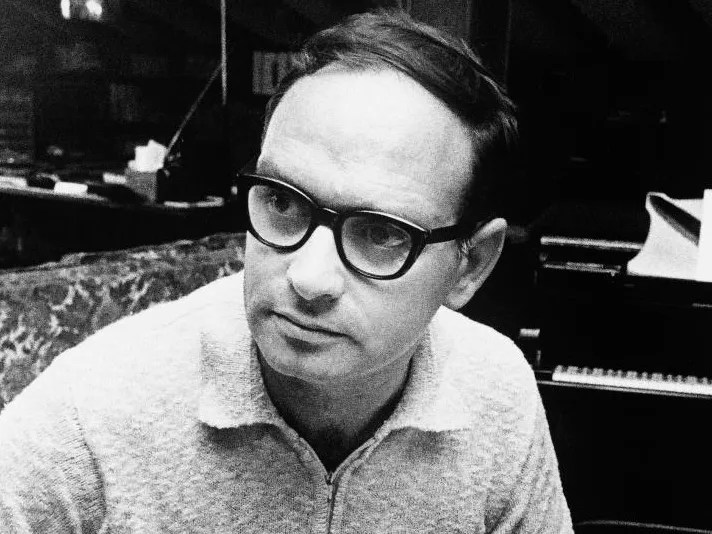
Sergio Leone. Ennio Morricone. Two masters of their form who converged to create great films and great soundtracks. I remember watching The Good, the Bad and the Ugly when I was young, probably middle school or high school, and feeling more moved by the soundtrack than the film itself. I immediately had to see and hear more. Soon after, I realized that film occurs at the end of a trilogy, with the beginning being A Fistful of Dollars. Released in 1964 in Italy, this movie revolutionized the film industry, the western genre in America, and most importantly, the film soundtrack and score.
“I tried to vary as much as I could to break the rules of the craft and avoid boredom.” — Morricone
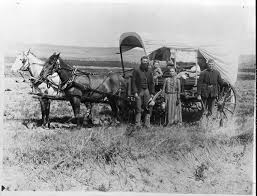
Hollywood dominated the western scene in the 60s. Italian westerns had been made before, but until Sergio Leone made A Fistful of Dollars, there had not been a western like it. It was rugged, expertly shot with cutting-edge techniques, and had a main character unrivaled up to that point in Clint Eastwood. The film is generally a remake of Akira Kurosawa’s Yojimbo, but with a gunslinger instead of a samurai. The plot is simple: a lone gunman enters a town, gets on the bad side of two rival gangs, plays the gangs against each other, saves a family, and leaves town with the loot.
What was different about this western was mainly the main character’s rugged coolness, and the fact that he is pretty much as bad as the villains. The classic, quintessential antihero. Clint Eastwood’s portrayal of the “Man with No Name” in these three films shot him to the top of international celebrity and stardom. There’s reason to believe, then, that on this soundtrack release, it’s his name that’s on top. Not Ennio Morricone’s. Also different about the film is the violence. Leone made the film in Italy, allowing him to play by his own rules and do whatever he wanted. The Hollywood rules were out the window, and now we have a protagonist as equally reckless and greedy as the villains.
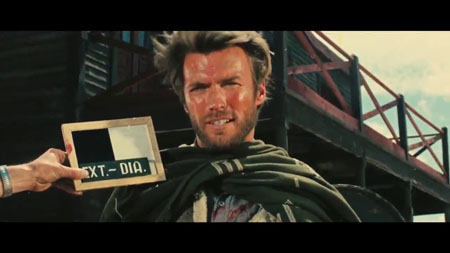
What we see with this movie is a soundtrack that dramatizes the action and the hero to the fullest extent. I fully believe that if these films were not scored by Morricone, we don’t see the popularity of the trilogy, and we don’t see the celebrity of Eastwood rise. Every cool moment from the main character in the film is punctuated by, or comes along with, a piece of the soundtrack.
Morricone had, up until that point, made movie scores, even westerns, that followed the rulebook. They weren’t experimental, but they were still seen as good, well-written music. At the time, Morricone had started experimenting with different sounds as a composer, including different approaches to the human voice, and musique concrète, like using a typewriter as a rhythm instrument. What appears on this soundtrack didn’t sound like anything before it. There was a Fender guitar, unheard of in westerns that had been pleasant, orchestral pieces. The guitar was synonymous with rock and blues, and must have sounded absurd compared to what folks were used to. It must have sounded violent. To modern ears, the guitar Morricone uses is fantastic, played with an expert ear. It’s western through and through. Violent and folk.
There is also the motif of the whistle, which, how can you beat that as a western motif? It’s always struck me as making sense in these films, and it’s hard to realize how radical it must have sounded to an American audience in the early 60s, used to the Hollywood pomp and graciousness. Along with the whistling, the voices you hear are sometimes a shout, or a chant. Set to mimic the film’s environment, this soundtrack was Morricone making the music that would fit the film best. And the film is violent, so the music has a violent edge too.
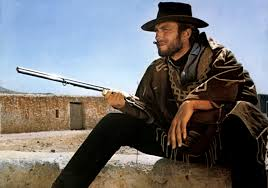
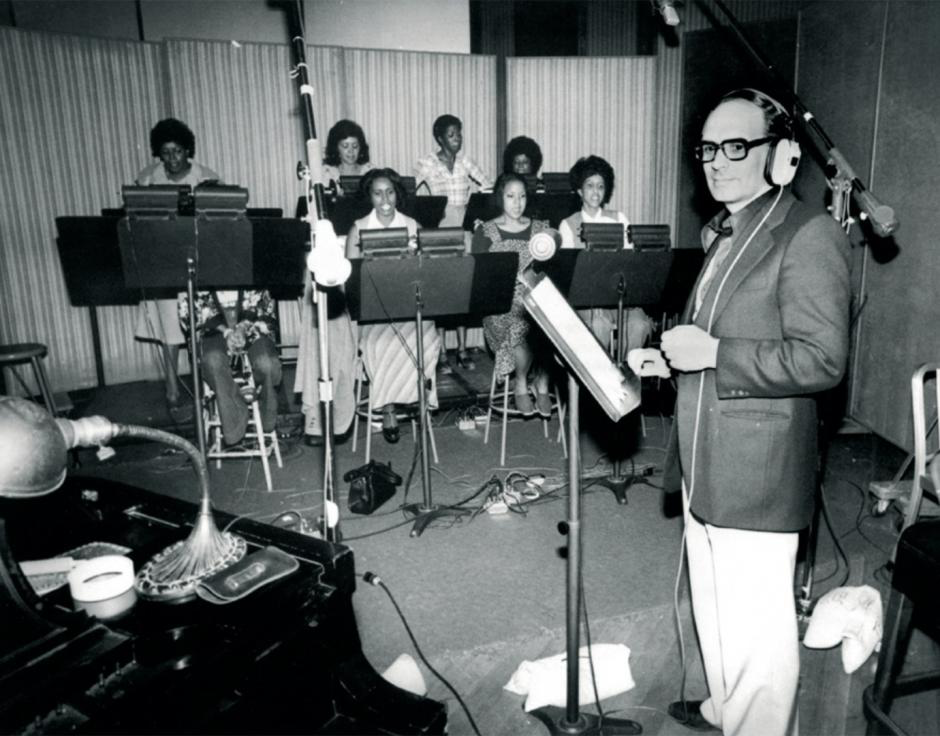
Sergio Leone said that Morricone was his best screenwriter. The meaning here is the relationship between the two around what’s going to appear on the screen. The order of events usually goes: screenwriting, filming, soundtrack composition. With Leone and Morricone it was different, and revolutionary. The writing of the screenplay usually happened alongside the writing of the soundtrack and score. Morricone helped Leone realize what images he had in his head. There were even times when Leone would play the music during the shoot. A true melding of image and sound.
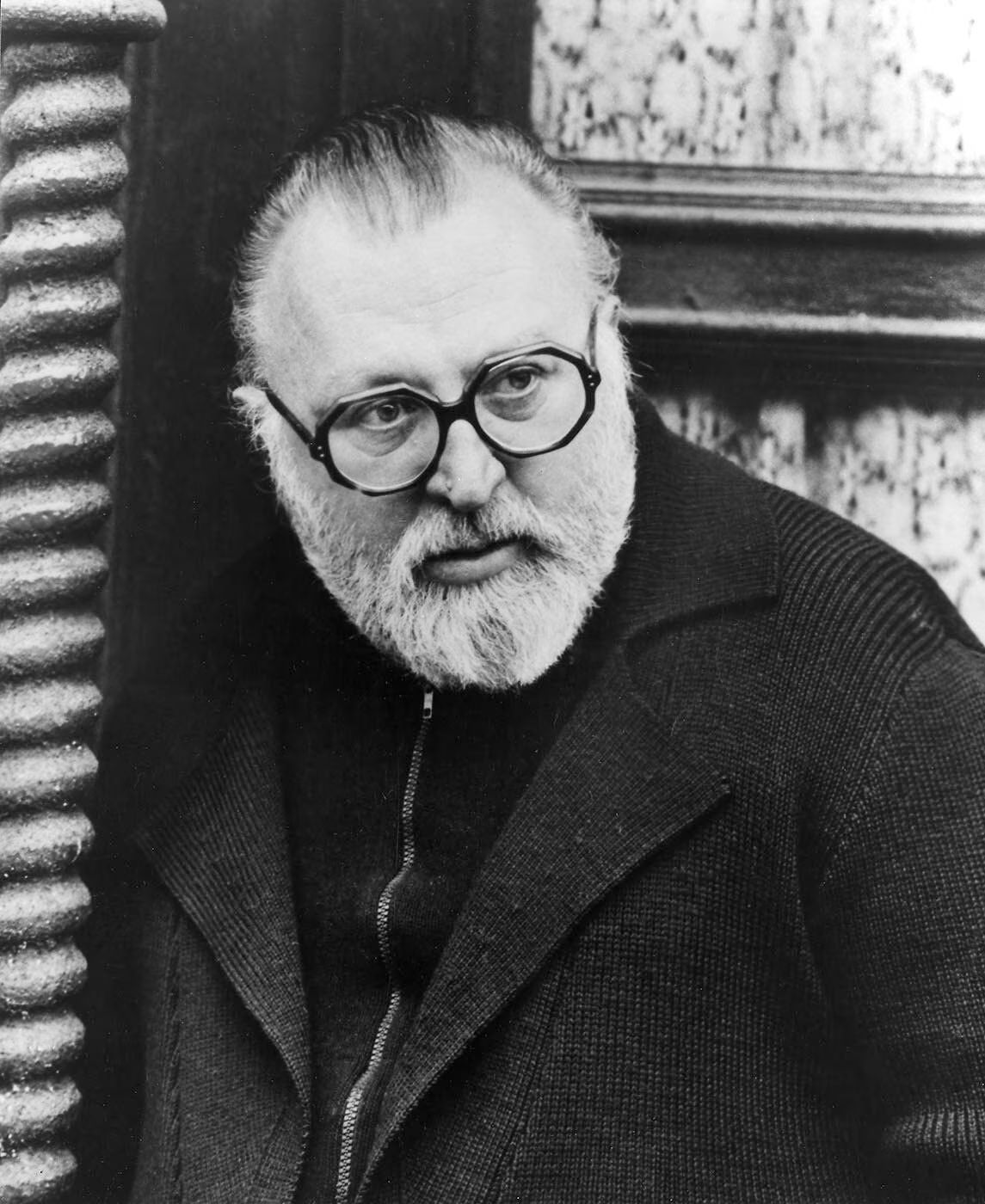
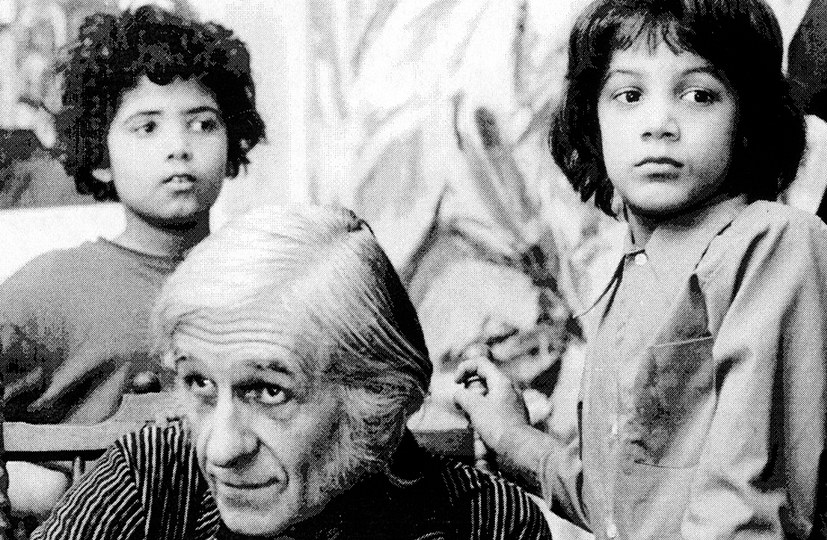
Fistful of Dollars was Ennio and Sergio’s first time working together, but oddly enough, in a great piece of kismet or serendipity, when they first met they slowly realized they were schoolmates long ago. Ennio had proof: a picture of the two together during elementary school. The two had similar backgrounds, as became known between them. Morricone’s father was a trumpeter, and Leone’s father was also involved in show business. They both converged at a point in their lives where things were growing stale; they needed more out of their creative fields. Morricone’s path to their meeting was pretty straightforward. Leone had a different path but ended up finding his way as a director.
Morricone had a background in composition, but by way of being a trumpeter first. He grew up learning the trumpet from his father, but entered the Santa Cecilia Conservatory in Rome in order to learn the trumpet as well as harmony and composition. This was his training course in music composition. He did well and was starting to get noticed. Life went on. He married and had a son. He kept composing, but started working for radio, television, and theater, and eventually started working on films. This was generally the path that brought Morricone to work with Leone.
The Object
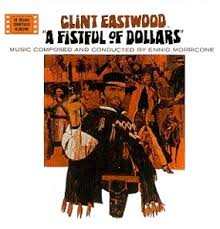
My copy is an original release of the soundtrack from 1967. It is an RCA Victor release, in stereo. It’s in great shape and came from Discogs at a generally solid price, no less. You can’t go wrong picking up cheap used movie soundtracks on vinyl. They are, still to me, some of the most enjoyable music on the format. Depending on movie and composer, of course.
My copy is true 60s movie soundtrack vinyl. Marketed using the name of the film and the name of the lead, what we don’t see prominent on the cover is Ennio Morricone’s name. We also don’t see Sergio Leone’s name up there either. We see Clint Eastwood, in name and image, prominent as all get out. He’s there, centered in the stylized frame, his name in bold letters atop the bold stylized letters of the film’s title. I really like this artwork, even if it doesn’t give the composer center stage. For the 60s releases of Ennio Morricone soundtracks, this one may have the best artwork. The front has a mash-up of characters and scenes from the film in a dashing burnt orange. Eastwood’s visage and character pop on top of all of it, showing the potential buyer the true character of the music within. The music was meant to offer style and substance to the main character’s actions, so if that was the main goal of the artwork, they accomplished it.
The rear of the cover does more to describe the film itself than the music on the vinyl disc. There are small black-and-white vignettes showing all the characters of the film, with brief captions of their intentions and goals in the plot.
The Music
Essentially, what both wanted from the score was a turn away from the over-orchestrated folk melodies that were occurring in the Hollywood westerns of the 60s. They wanted the audience to experience a western as if they were in the environment, dealing with the dust, the wind, the clash of gunmetal, and the walk of boots in the gravel. The score imitates naturalist feelings on occasion, and gives you the experience of being on the frontier. Every sound has a purpose, and the motivation was for music and sound to interact essentially with the picture.
Budget constraints had an effect on the score. There is no full woodwind or brass section, only flutes, cor anglais, and trumpet. Trombones only appear here and there. Morricone had to recycle from earlier work, and it can be questioned just how much effort he put into this project, not expecting it to have the impact that it did. There was also no way to pre-record music for the set, something they would later try to make happen. That did not become fully realized until The Good, the Bad and the Ugly.
The music for this film defied any convention up to that point. It must have felt at the time so distinctive and unlike the norm that it was completely immersive. The music feels contemporary to the era and the landscape of the film, with the exception of the sweet Fender guitar. The music intensifies the drama of the film.
For the film’s music, Morricone won the Nastro d’Argento for Best Score, and there was a popular single featuring the film’s music. Morricone was a success from then on, and a celebrity figure in Italy. Even with the success, the director and composer were not happy with their work. Morricone later said the score was his worst. The two would go on to work together after this film, and they truly achieved the greatness they had ambitions for with The Good, the Bad and the Ugly.
Titoli
Another piece that was arranged before Leone’s involvement and their working together: this was an arrangement of Woody Guthrie’s “Pastures of Plenty,” which Morricone had produced in 1962 for the RCA Victor label and for the television show Piccolo Concerto. The Morricone-Tevis version departed substantially from Guthrie’s original. It featured a thin texture moving through minor-key triadic harmonies, modal melodies, and an unlikely ensemble of nylon-string guitar, men’s chorus, recorder, strings, and percussion comprising drums, whip, bell, and anvil. American expatriate Peter Tevis sang the vocal line. Morricone later described this arrangement as his attempt to evoke the solitude and aural environment of the American West. Scholars have argued this was effectively the musical progenitor of Morricone’s entire western vernacular.
Ennio Morricone & Peter Tevis – Pastures of Plenty
Leone heard this arrangement and was interested in the music, but did not enjoy the vocal from Tevis. It was western-ballad style, not what Leone wanted. Morricone had kept a master recording without the vocal, and Leone requested this version. Alessandro Alessandroni added a whistled melody to the track, and an electric guitar was added on top. The texture and instrumentation were pretty much the same. Title music born.
“My thought was to put listeners in touch with the faraway pastures described by Guthrie; this is why I inserted the timbres of the whip and the [clay] whistle. The bells were intended to suggest the countryman who longs for the life in the city, away from his daily routine.”
The whistle is a definite highlight of this entire score, along with the churning voices and strings. Above it all, we have a guitar sharing the melody. The picking style is utility, only notes, but it captures the essence so well. Throughout the soundtrack, and most explicitly shown here, is the use of the human voice and vocal method as an instrument, hence the use of the whistle. Morricone wanted music that evoked an escape to the prairie or desert, and solitude. The whistle is one person making one sound with their mouth. It can be done anywhere, and is deeply connected with western or remote locations. A lone cowboy working his land, whistling a tune to make the day go by faster. It’s an expression of being alone in a desolate place. Perfectly matching the main character’s vibe.
The use of sound effects is also used to extreme pleasure for the viewing audience. The piccolo or flute flourish, which sounds like a bird call to me, is used throughout the film as a sort of punctuation when Clint Eastwood does something really cool and badass, or is about to. The whip is also used here. You see, Morricone had been exposed to the works of John Cage, who introduced into composition the idea that all sound is music. This concept and its execution seeped into Morricone’s inspiration for this score.
Almost Dead
A piano chugging a dirgeful melody. A harmonica. Then a surge. This track really notes the tension at the introduction, and then opens up into a reuse of the motif of the original title, with strings and a slower tempo. It takes the original title and makes it more emotional, effectively bringing the hurried tension into something more sympathetic and moody.
Square Dance
A full composition that evokes the time period well. Sounds like a Civil War jaunt through a town. The title pretty much tells you the feeling of this song.
The Chase
The most chugging, intense song from the score. High tempo and boisterous, with horns used to their biggest emotional effect here. Trumpets and violins screeching. A fanfare, basically. Then the track opens with the choir singing a progressive melody, and you’re out in the open, moving along with the action. Then the single horn and a slow motif that will appear in full force later on the album: the deguello motif. Very emotionally affecting.
The Result
Another very rousing track. Uses violins, a snare drum, and a piano as a band, pretty much. Then the flute motif returns, but more to confuse and disorient the viewer with sound along with the action. Not a flowery melody here. A disorienting mood to make the viewer follow the action and await what comes next.
Without Pity
A two-minute piece. The introduction is right out of Bernard Herrmann’s style. Just strings, a horror scene. What follows is a rousing, action-packed trumpet fanfare similar to what happens in “The Chase,” but cut shorter for the next track to begin.
A Fistful of Dollars
For “A Fistful of Dollars,” there was a mixture of inspirations between the two. Leone wanted something similar to what was being heard in the American westerns of the time, such as Rio Bravo. A piece by Dimitri Tiomkin, “Deguello,” appears in Rio Bravo, and Leone wanted Morricone to write something similar. Deguello is the slit throat or cut throat song. It’s a dance of death song. The Mexicans played it for the boys that were holed up in the Alamo before the big fight. Nothing more dramatic than that, I would say, and a great piece of historical inspiration for what would become one of the key pieces for the first film of the Dollars Trilogy.
Morricone instructed the trumpeter Michele Lacerenza to play the theme with a little Mexican flavor. The flourishes are extremely evocative. It’s a truly effective theme that became a lasting touchstone for Italian-western composition. When the trumpet hits its high point in the solo, man, that is some transforming music. It’s as good as anything you’ll hear in a film.
Side Two
A Fistful of Dollars Suite
The entire second side of this release is essentially the entire soundtrack from the first side. It covers all the notes of the first compositions, but allows them all to meld together into a mélange of composition.
Closing
The Dollars Trilogy contains some of my favorite western films. The cause of these films’ fame is owed to Morricone’s work on the soundtrack. What we see with A Fistful of Dollars is a composer trying something new, and turning away from convention. What follows in the second film is more of the same, a development on the first film. The third film in the trilogy features a soundtrack that most argue to be the best of all time. What Morricone went on to do with Leone, their works together, are stationary pieces, artistic masterworks in the medium of film and film score. Morricone understood his assignment. These films are good because they have good scores. The score stands alone. Always a mark of a good score, in my opinion. Morricone’s scores also pretty much invented the popular film soundtrack, and drew folks to record stores to buy soundtracks pressed onto the vinyl medium. That just about makes anything Ennio Morricone did essential vinyl listening in my book.
Thanks for reading. RTR.