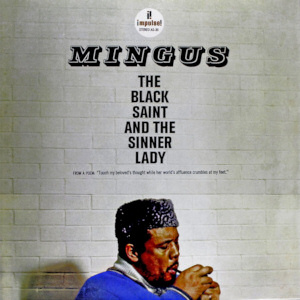
Studio Album | Released July 1963 | Impulse! | Produced by Bob Thiele
Charles Mingus defied conception. His personality, his words, his volatility all condensed into a maelstrom of creative energy and flow. His work is distinguished by composition. The man was a sponge for all forms of music, and he used his compositional abilities, the written format in musical terms, to create some amazingly unique pieces and records. The Black Saint and the Sinner Lady stands at the mountaintop as one of the greatest achievements in jazz composition and orchestration, but Mingus would not want his work given any labels. He made music the way he imagined it, and his MO seemed to be to defy all convention. This is not the everyday jazz album. This is a work of uniqueness and something to feel.
This isn’t a record to put on at quarter volume in the background while you fold laundry. It’s a record to turn up, absorb, let envelop your senses. It has hallucinatory qualities. It’s intricate and complex, but also simple and powerful. It’s chaotic, but it finds a way through the chaos. It generally makes sense, but also doesn’t.
I got acquainted with Mingus while looking for music to accompany my mind during intensive, long-form intelligence analyst work at Fort Meade, Maryland during a short three-month stint. It was a very busy time for me. I was deconstructing layers of information for twelve to fourteen hours a day. It was a heady period personally as well. I was in a stasis of confusion about my professional future, in the forest essentially, looking over my shoulder and trying to find my way. I was staring down a rough road. Within that time there was a lot of revelation about what the term success meant. What draws people to want to be the best at what they do. What draws people to want to be renowned, or recognized.
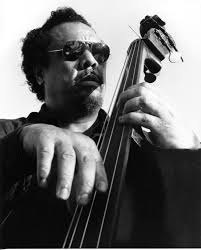
As I learned more about Mingus and his life, I began to connect those feelings to my understanding of how he may have felt about his own place in the world and in the music business. It seems like he self-pariahd, or he just always felt like the underdog. He made work that people had a hard time understanding or accepting. It was just too brilliant for the status quo.
In all honesty, I see jazz brilliance as a passive observer. I’m in the audience watching a performance, marveling at the technicality, but without a firm grasp on theory or the decision-making behind composition. With that said, I do believe that determining whether a jazz record or any piece of music is brilliant comes down to whether the listener derives something from the listening session. The art itself is true. It may contain a meaning somewhere in it, but pure art, as cliché as it sounds, is just art. It doesn’t have to be anything else. If you like it, if it moves you, that’s enough.
Mingus once stated, “What do I care what the world sees, I’m only trying to find out how I should feel about myself.” The argument stands. For some that applies to Mingus. For others, it may not. Some music can only be felt, and attaching words to it, as I’m doing with this post, is either ill-advised, too challenging, or just plain meaningless.
What this record is, as I’ve come to understand it, is a direct contradiction to anything normal at the time. I think it was so unique, so different from conventional jazz, even within Mingus’s own catalogue, that it went too far over some people’s heads. But it wasn’t avant-garde for the sake of it. It wasn’t complex on purpose. If you sit down without any jazz acumen, you will derive some feeling or emotion from it. That’s what all the great records in any genre can do. The ones that still get talked about, that still matter. This is one of those records. It was a milestone in 1963.
The record deals with texture from the very first notes. It’s a sound collage, a stack of cards. The sonic scale is massive. The onslaught of some of the pieces is unmatched, yet even at peak volume, every instrument sounds crisp and purposeful. Approach it from any angle and your attention will be rewarded. You’ll be immersed in the world of Mingus. Placing it in a genre is futile. Mingus disliked labels, and the critics who used them.
Mingus Psychology
The central psychological framework for understanding Mingus comes from the opening of Beneath the Underdog, where he describes himself as three simultaneous people:
“One man stands forever in the middle, unconcerned, unmoved, watching…. The second man is like a frightened animal that attacks for fear of being attacked. Then there’s an over-loving gentle person who… gets talked down to working cheap or for nothing, and when he realizes what’s been done to him he feels like killing and destroying everything around him including himself for being so stupid. But he can’t — he goes back inside himself.”
“Which one is real?”
“They’re all real.”
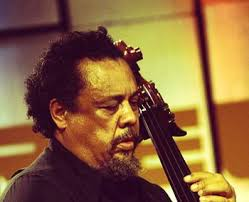
Mingus One is passive and observant. Mingus Two is afraid. Mingus Three is the angry man. He could be the most loving person in the world to someone he cared about and at the next turn erupt like a volcano of rage and emotion. These traits were what made Mingus who he was as a person and as an artist. He had tendencies across every part of the spectrum, and so did his music.
Scholars have read this not as pathology but as a sophisticated self-portrait, Mingus maintaining multiple real selves rather than collapsing into a unified public persona. The “middleman” who watches is the narrator; the others are competing expressions of the same consciousness. Al Young, a friend, found even more than three Minguses: “Don Juan Mingus…, Mingus as lightweight Iceberg Slim…, Mingus the son, Mingus the husband, Mingus the father, Mingus the comic sufferer on the psychiatrist’s couch.”
His music, and especially The Black Saint and the Sinner Lady, is psychologically dense because it emerges directly from that psyche. In his view, the only person truly qualified to annotate the record was his psychologist, Dr. Edmund Pollock, who wrote the liner notes.
Dr. Pollock’s Analysis
One of the most unusual features of the album is that Mingus invited his analyst, Dr. Edmund Pollock (fictionalized as “Dr. Wallach” in Beneath the Underdog), to write an interpretive essay for the liner notes.
Pollock’s reading of the album centers on a few key observations: that Mingus “seems to state that the black man is not alone but all mankind must unite in revolution against any society that restricts freedom and human rights,” and that Mingus “feels intensely… He cannot accept that he is alone, all by himself, he wants to love and be loved.” Most strikingly, Pollock concluded that “Mr. Mingus is inarticulate in words, he is gifted in musical expression which he constantly uses to articulate what he perceives, knows, feels… It must be emphasized that Mr. Mingus is not yet complete. He is still in a process of change and personal development. Hopefully the integration in society will keep pace with his.”
Barry Ulanov corroborated this view: Mingus was “alternately eloquent and tongue-tied with words,” but held the conviction that someday he could make his ideas perfectly clear on his own instrument or someone else’s.
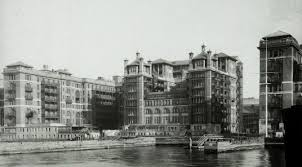
Mingus voluntarily committed himself to Bellevue in the late 1950s, driven by desperate insomnia and disorientation. “I couldn’t think who I was, I wanted to lay down and sleep. I was like a child lost with people milling all around me and no one to love me.” He chose Bellevue over his private analyst partly because they were estranged, and partly to avoid appearing to seek sympathy.
His experience there became a crystallizing image of institutional oppression in his memoir. The doctor told him within minutes: “Negroes are paranoiac, unrealistic people who believe the whole world is against them,” and immediately proposed a lobotomy. Mingus wrote to Nat Hentoff from inside: “There’s a Nazi-thinking Jew called Dr. Bonk or something down here saying all Negroes are paranoid and he knows just the treatment for them, which is frontal lobotomy.”
He filed a formal complaint he titled “HELLVIEW OF BELLEVUE,” listing grievances including: “Dr. Bonk keeps saying I’m a failure. I did not come here to discuss my career or I would have brought a press agent.”
His reflection on leaving says everything: “You know, I believe Bellevue did me some good. How could anybody outside bug me when I remember those closed-in helpless people? Everywhere I go I’ll take those bars with me in my mind… Those bars stand for power over others, the power to make you hold still and take it. Is that why I feel so much better out here where the real insanity is?”
The Object
My copy is a European import, looks to be from 2020 according to Discogs. Unfortunately I don’t have a copy that includes the original artwork or the original liner notes. Even with those qualities absent, the presentation of this record on vinyl feels authentic and important. The artwork is Mingus, though older. The track listings are displayed boldly alongside his name. It’s simplicity. It’s built on the lore of the record itself.
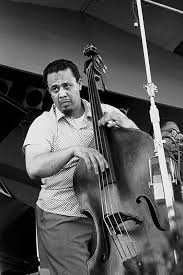
The lore of any record will always be connected to its album artwork, and in this instance the artwork is pure: the name of the album, the name of the composer, and an uncanny image of the master behind the composition. Mingus is not giving the camera any recognition. In the original pressing he is working on lighting a pipe. In this recreation he appears older and is playing his instrument. It’s a captivating image, and that was always a draw for me. It gives the sense that the music contains secrets and stories, and the lore is right there on display. That quality has always been part of my attraction to jazz.
The Music
“This is the first time the company I have recorded with set out to help me give you, my audience, a clear picture of my musical ideas without that rush feeling. Impulse went to great expense and patience to give me complete freedom, along with engineer Bob Simpson, for balance and editing.”
Pianist Mal Waldron described working with Mingus: “If you play in his band, you play his way. Mingus is the personality. But at the same time, playing with him brings you out and forces you to play yourself.”
Mingus on the record itself:
“Black Saint and the Sinner Lady is true music with much and many of my meanings. It is my living epitaph from birth til the day I first heard of Bird and Diz. Now it is me again. This music is only one little wave of styles and waves of little ideas my mind has encompassed through living in a society that calls itself sane… Crazy? They’d never get out of the observation ward at Bellevue. I did. So, listen how. Play this record.”
In some way, The Black Saint is a response to everything in Mingus’s career up to that point. He had struggled with depression and anger, had issues with the music business, and had dealt with endless disrespect rooted in racism and in who he simply was as a person. The album is a fulcrum in his career. He was around forty years old, at his creative and emotional peak. It’s a rejection of the commercialism of jazz at the time, a rejection of the posturing around it, and an exhibition of who he truly was creatively and emotionally.
Across multiple sources the same idea surfaces repeatedly: words failed Mingus in ways music did not.
His own statement: “My music is evidence of my soul’s will to live beyond my sperm’s grave, my metathesis or eternal soul’s new encasement.” And most directly: “I play and write me, the way I feel. And I’m changing all the time. As long as I can remember, I’ve never been satisfied with the ways in which people and things seem to be. I’ve got to go inside, especially as far inside myself as I can.”
And to Hentoff: “We create our own slavery, but I’m going to get through and find out the kind of man I am, or die.”
The music on this record lends itself to nighttime listening, or closed-eyes, full-immersion listening. There is a lot going on. I think I could listen to this record my entire life and each play would be a rediscovery, a revisiting of a feeling, and I would always hear something new. It’s philosophically and psychologically dense, but oddly accessible enough that it rewards a patient listener. It’s reached a lot of people that way, in the same way intricate art reaches people, art that makes someone feel something real.
The performances were recorded in a single session on January 20th, 1963, but months of work followed to complete the required overdubs.
Mingus was deeply influenced by Duke Ellington and his orchestral arrangements. What Mingus did with that inspiration was create a space and a musical context of psychodrama, entering deeply personal realms. That’s what makes this music so fully realized and gives it an immense sense of truth. You feel what you hear. If these trumpets and trombones are speaking, they are in some places wailing in agony, and in others singing a hymn of rejoice and a lust for freedom.
Track A: Solo Dancer (Stop! And Listen, Sinner Jim Whitney!)
The subtle tiss tiss drum beat and the contrabass trombone intro. Saxophones enter on top of one another. A tenor saxophone takes a solo over a swingier drum beat, and beneath all of it is Mingus on double bass, leading from within.
The introduction is explosive and commanding, eleven pieces working as one, stacked on top of each other. The bass works on its own terms, not as a function of the rhythm section but as a leader in its own right. The bass was Mingus’s master instrument, and it was how he understood music. It was how he knew to layer instruments and compose the way he did.
The saxes, horns, and trombone, when focused on closely, are distinguished enough to constitute a song in themselves.
I see a cast of characters. The dancer and a surrounding ensemble. Everyone seems to be clapping, urging the dance to continue.
Track B: Duet Solo Dancers (Heart’s Beat and Shades in Physical Embraces)
Opens with a piano flourish, then bass and horns and drums settle in for a waltzy, languishing song. The piano is fantastic. Moody, melodic, and lush. The horns answer with a simple up-and-down motion and then a big crescendo, a walk down the stairs, and the trombones enter.
This movement is more subdued. The horns are doing remarkable work mimicking the human voice. The muted trumpets make leering, harsh cries.
This track shows the full intensity of Mingus. Drums like gunshots. The horn crying a slow death.
Track C: Group Dancers (Soul Fusion: Freewoman and Oh This Freedom’s Slave Cries)
Another track that begins with piano, though this time it feels more technical, more hurried, on a pace rather than an emotional flourish. Piano tinkles and an interplay of in/out, black/white, good/bad. The piano on this track is my favorite thing on the album so far.
Fantasy elements are being added to the narrative. New territory. Guitar and flutes enter.
I hear the ills of society in the horns. There is no release.
Side 2
Side 2 is a medley, a group of three tracks. Motifs return from the previous three, but things begin to blend together. The menage.
Track D: Trio and Group Dancers (Stop! Look! And Sing Songs of Revolutions)
Seems like a continuation from before, then a Latin-inflected or Spanish guitar enters. Amazing guitar. Bullfighters, or just the bull.
The pace is picking up. There is a wild energy flowing through everything.
Have the characters from Track A returned?
Track E: Single Solos and Group Dance (Saint and Sinner Join in Merriment on Battlefront)
Things are becoming looser. On the second side, ideas are stated with more purpose versus the loose interpretation of Side 1. This music is in capital letters. It’s yelling.
That tempo progression toward the end is very moving. Very strong.
Track F: Group and Solo Dance (Of Love, Pain, and Passioned Revolt, Then Farewell My Beloved, ‘Til It’s Freedom Day)
It’s getting wild and the heat is being turned up.
Mingus’s masterwork coming to its conclusion with the full ensemble. This cacophony caps off a killer record. Must have driven people wild in 1963.
Closing
This record is one of the better examples of a jazz artist creating a truly unique composition. It can be approached from different angles. Close your eyes and focus and you’ll hear new things at every listen. You can imagine characters, voices, scenes from an imaginary film. It’s hallucinatory music, and I think Mingus designed it to be. This is probably the best single window into Charles Mingus among his entire catalogue, and he self-declared it the record he was most proud of, alongside one other he never named.
I’m glad to have discovered this album at the time I did, and using it as a window into Mingus’s mentality is both rewarding and gives me perspective at another key point in my own working life. For that I’ll always hold Mingus in high regard and deep respect.
RTR.

