Tag: Orchestra

  • Ennio Morricone — A Fistful Of Dollars

    Ennio Morricone — A Fistful Of Dollars

    Film Score | Film Released 12 September 1964 (Italy) | Soundtrack Originally Released in 1966 in Italy

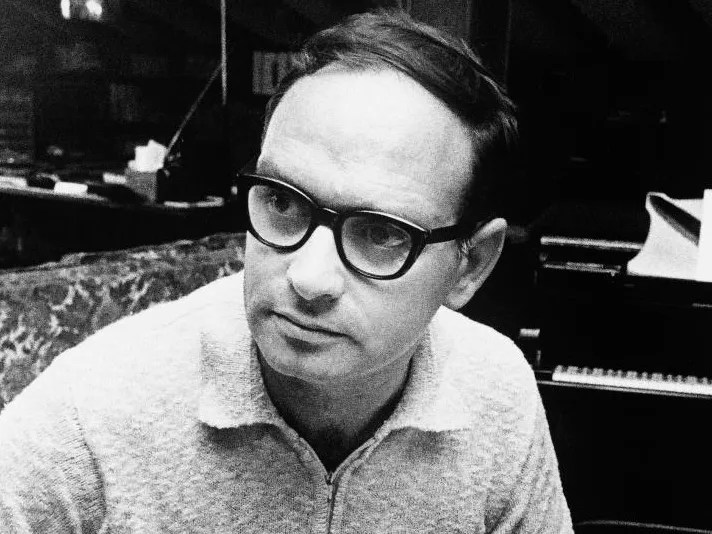
    Sergio Leone. Ennio Morricone. Two masters of their form who converged to create great films and great soundtracks. I remember watching The Good, the Bad and the Ugly when I was young, probably middle school or high school, and feeling more moved by the soundtrack than the film itself. I immediately had to see and hear more. Soon after, I realized that film occurs at the end of a trilogy, with the beginning being A Fistful of Dollars. Released in 1964 in Italy, this movie revolutionized the film industry, the western genre in America, and most importantly, the film soundtrack and score.

    “I tried to vary as much as I could to break the rules of the craft and avoid boredom.” — Morricone
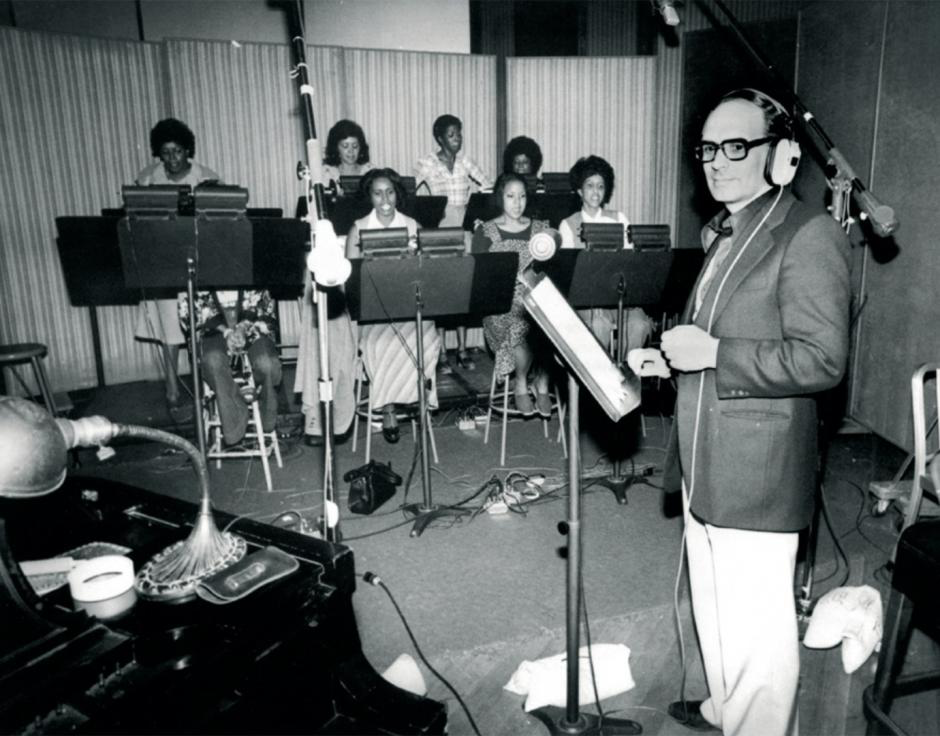
    Hollywood dominated the western scene in the 60s. Italian westerns had been made before, but until Sergio Leone made A Fistful of Dollars, there had not been a western like it. It was rugged, expertly shot with cutting-edge techniques, and had a main character unrivaled up to that point in Clint Eastwood. The film is generally a remake of Akira Kurosawa’s Yojimbo, but with a gunslinger instead of a samurai. The plot is simple: a lone gunman enters a town, gets on the bad side of two rival gangs, plays the gangs against each other, saves a family, and leaves town with the loot.

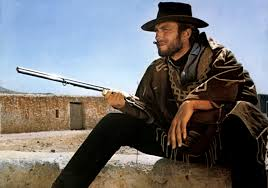
    What was different about this western was mainly the main character’s rugged coolness, and the fact that he is pretty much as bad as the villains. The classic, quintessential antihero. Clint Eastwood’s portrayal of the “Man with No Name” in these three films shot him to the top of international celebrity and stardom. There’s reason to believe, then, that on this soundtrack release, it’s his name that’s on top. Not Ennio Morricone’s. Also different about the film is the violence. Leone made the film in Italy, allowing him to play by his own rules and do whatever he wanted. The Hollywood rules were out the window, and now we have a protagonist as equally reckless and greedy as the villains.
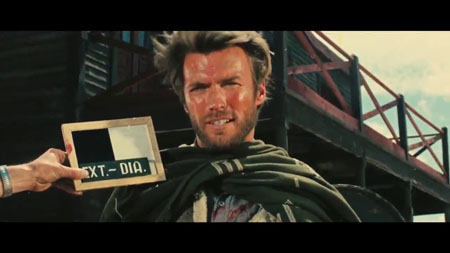
    What we see with this movie is a soundtrack that dramatizes the action and the hero to the fullest extent. I fully believe that if these films were not scored by Morricone, we don’t see the popularity of the trilogy, and we don’t see the celebrity of Eastwood rise. Every cool moment from the main character in the film is punctuated by, or comes along with, a piece of the soundtrack.

    Morricone had, up until that point, made movie scores, even westerns, that followed the rulebook. They weren’t experimental, but they were still seen as good, well-written music. At the time, Morricone had started experimenting with different sounds as a composer, including different approaches to the human voice, and musique concrète, like using a typewriter as a rhythm instrument. What appears on this soundtrack didn’t sound like anything before it. There was a Fender guitar, unheard of in westerns that had been pleasant, orchestral pieces. The guitar was synonymous with rock and blues, and must have sounded absurd compared to what folks were used to. It must have sounded violent. To modern ears, the guitar Morricone uses is fantastic, played with an expert ear. It’s western through and through. Violent and folk.

    There is also the motif of the whistle, which, how can you beat that as a western motif? It’s always struck me as making sense in these films, and it’s hard to realize how radical it must have sounded to an American audience in the early 60s, used to the Hollywood pomp and graciousness. Along with the whistling, the voices you hear are sometimes a shout, or a chant. Set to mimic the film’s environment, this soundtrack was Morricone making the music that would fit the film best. And the film is violent, so the music has a violent edge too.
    Sergio Leone said that Morricone was his best screenwriter. The meaning here is the relationship between the two around what’s going to appear on the screen. The order of events usually goes: screenwriting, filming, soundtrack composition. With Leone and Morricone it was different, and revolutionary. The writing of the screenplay usually happened alongside the writing of the soundtrack and score. Morricone helped Leone realize what images he had in his head. There were even times when Leone would play the music during the shoot. A true melding of image and sound.
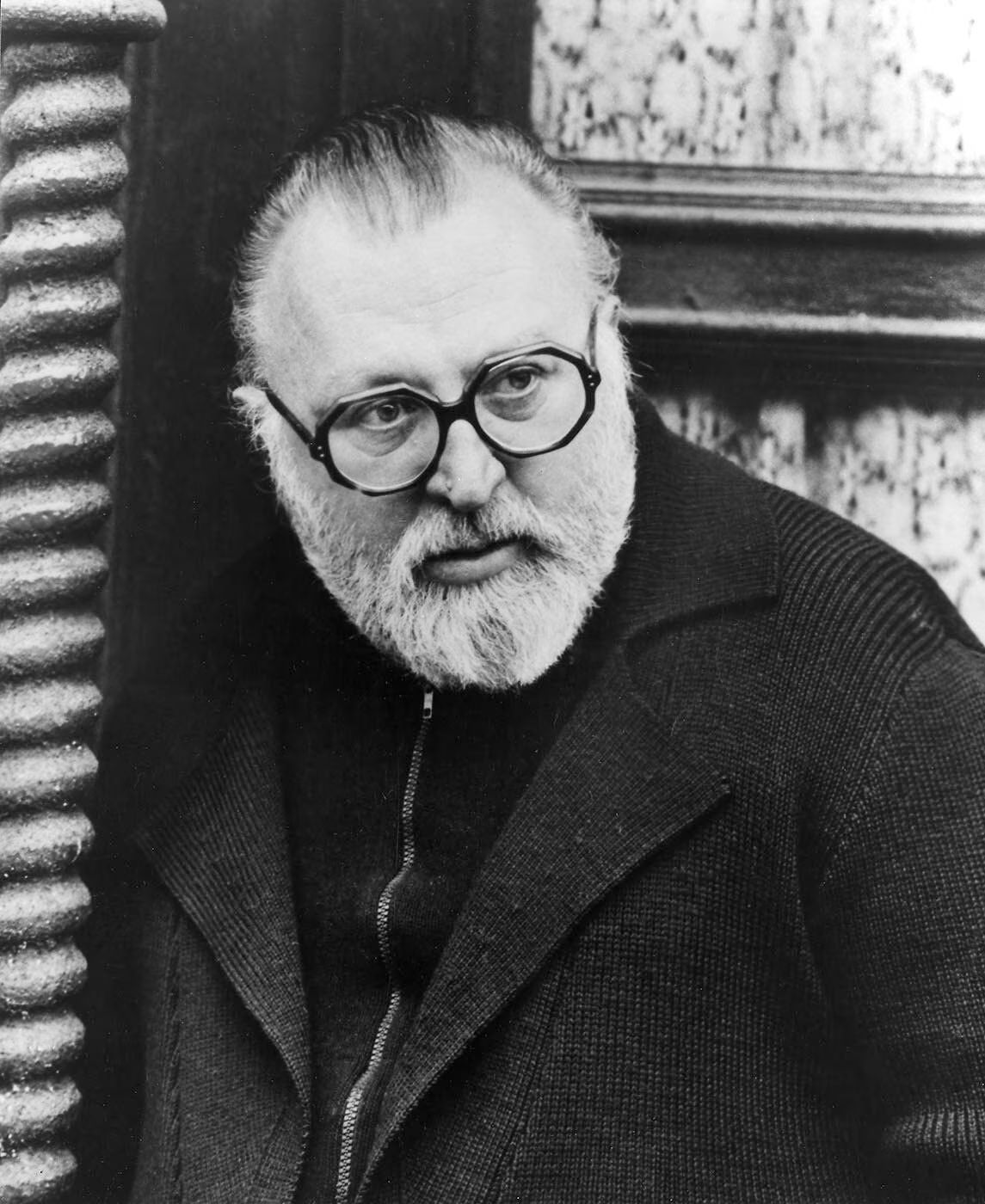
    Fistful of Dollars was Ennio and Sergio’s first time working together, but oddly enough, in a great piece of kismet or serendipity, when they first met they slowly realized they were schoolmates long ago. Ennio had proof: a picture of the two together during elementary school. The two had similar backgrounds, as became known between them. Morricone’s father was a trumpeter, and Leone’s father was also involved in show business. They both converged at a point in their lives where things were growing stale; they needed more out of their creative fields. Morricone’s path to their meeting was pretty straightforward. Leone had a different path but ended up finding his way as a director.

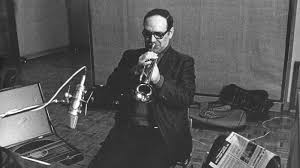
    Morricone had a background in composition, but by way of being a trumpeter first. He grew up learning the trumpet from his father, but entered the Santa Cecilia Conservatory in Rome in order to learn the trumpet as well as harmony and composition. This was his training course in music composition. He did well and was starting to get noticed. Life went on. He married and had a son. He kept composing, but started working for radio, television, and theater, and eventually started working on films. This was generally the path that brought Morricone to work with Leone.
    The Object
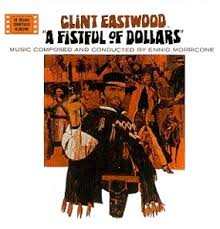
    My copy is an original release of the soundtrack from 1967. It is an RCA Victor release, in stereo. It’s in great shape and came from Discogs at a generally solid price, no less. You can’t go wrong picking up cheap used movie soundtracks on vinyl. They are, still to me, some of the most enjoyable music on the format. Depending on movie and composer, of course.

    My copy is true 60s movie soundtrack vinyl. Marketed using the name of the film and the name of the lead, what we don’t see prominent on the cover is Ennio Morricone’s name. We also don’t see Sergio Leone’s name up there either. We see Clint Eastwood, in name and image, prominent as all get out. He’s there, centered in the stylized frame, his name in bold letters atop the bold stylized letters of the film’s title. I really like this artwork, even if it doesn’t give the composer center stage. For the 60s releases of Ennio Morricone soundtracks, this one may have the best artwork. The front has a mash-up of characters and scenes from the film in a dashing burnt orange. Eastwood’s visage and character pop on top of all of it, showing the potential buyer the true character of the music within. The music was meant to offer style and substance to the main character’s actions, so if that was the main goal of the artwork, they accomplished it.

    The rear of the cover does more to describe the film itself than the music on the vinyl disc. There are small black-and-white vignettes showing all the characters of the film, with brief captions of their intentions and goals in the plot.

    The Music

    Essentially, what both wanted from the score was a turn away from the over-orchestrated folk melodies that were occurring in the Hollywood westerns of the 60s. They wanted the audience to experience a western as if they were in the environment, dealing with the dust, the wind, the clash of gunmetal, and the walk of boots in the gravel. The score imitates naturalist feelings on occasion, and gives you the experience of being on the frontier. Every sound has a purpose, and the motivation was for music and sound to interact essentially with the picture.

    Budget constraints had an effect on the score. There is no full woodwind or brass section, only flutes, cor anglais, and trumpet. Trombones only appear here and there. Morricone had to recycle from earlier work, and it can be questioned just how much effort he put into this project, not expecting it to have the impact that it did. There was also no way to pre-record music for the set, something they would later try to make happen. That did not become fully realized until The Good, the Bad and the Ugly.

    The music for this film defied any convention up to that point. It must have felt at the time so distinctive and unlike the norm that it was completely immersive. The music feels contemporary to the era and the landscape of the film, with the exception of the sweet Fender guitar. The music intensifies the drama of the film.
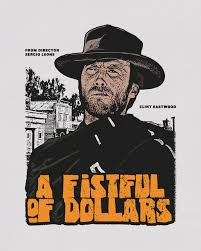
    For the film’s music, Morricone won the Nastro d’Argento for Best Score, and there was a popular single featuring the film’s music. Morricone was a success from then on, and a celebrity figure in Italy. Even with the success, the director and composer were not happy with their work. Morricone later said the score was his worst. The two would go on to work together after this film, and they truly achieved the greatness they had ambitions for with The Good, the Bad and the Ugly.

    Titoli

    Another piece that was arranged before Leone’s involvement and their working together: this was an arrangement of Woody Guthrie’s “Pastures of Plenty,” which Morricone had produced in 1962 for the RCA Victor label and for the television show Piccolo Concerto. The Morricone-Tevis version departed substantially from Guthrie’s original. It featured a thin texture moving through minor-key triadic harmonies, modal melodies, and an unlikely ensemble of nylon-string guitar, men’s chorus, recorder, strings, and percussion comprising drums, whip, bell, and anvil. American expatriate Peter Tevis sang the vocal line. Morricone later described this arrangement as his attempt to evoke the solitude and aural environment of the American West. Scholars have argued this was effectively the musical progenitor of Morricone’s entire western vernacular.

    Ennio Morricone & Peter Tevis – Pastures of Plenty

    Leone heard this arrangement and was interested in the music, but did not enjoy the vocal from Tevis. It was western-ballad style, not what Leone wanted. Morricone had kept a master recording without the vocal, and Leone requested this version. Alessandro Alessandroni added a whistled melody to the track, and an electric guitar was added on top. The texture and instrumentation were pretty much the same. Title music born.

    “My thought was to put listeners in touch with the faraway pastures described by Guthrie; this is why I inserted the timbres of the whip and the [clay] whistle. The bells were intended to suggest the countryman who longs for the life in the city, away from his daily routine.”

    The whistle is a definite highlight of this entire score, along with the churning voices and strings. Above it all, we have a guitar sharing the melody. The picking style is utility, only notes, but it captures the essence so well. Throughout the soundtrack, and most explicitly shown here, is the use of the human voice and vocal method as an instrument, hence the use of the whistle. Morricone wanted music that evoked an escape to the prairie or desert, and solitude. The whistle is one person making one sound with their mouth. It can be done anywhere, and is deeply connected with western or remote locations. A lone cowboy working his land, whistling a tune to make the day go by faster. It’s an expression of being alone in a desolate place. Perfectly matching the main character’s vibe.

    The use of sound effects is also used to extreme pleasure for the viewing audience. The piccolo or flute flourish, which sounds like a bird call to me, is used throughout the film as a sort of punctuation when Clint Eastwood does something really cool and badass, or is about to. The whip is also used here. You see, Morricone had been exposed to the works of John Cage, who introduced into composition the idea that all sound is music. This concept and its execution seeped into Morricone’s inspiration for this score.

    Almost Dead

    A piano chugging a dirgeful melody. A harmonica. Then a surge. This track really notes the tension at the introduction, and then opens up into a reuse of the motif of the original title, with strings and a slower tempo. It takes the original title and makes it more emotional, effectively bringing the hurried tension into something more sympathetic and moody.

    Square Dance

    A full composition that evokes the time period well. Sounds like a Civil War jaunt through a town. The title pretty much tells you the feeling of this song.

    The Chase

    The most chugging, intense song from the score. High tempo and boisterous, with horns used to their biggest emotional effect here. Trumpets and violins screeching. A fanfare, basically. Then the track opens with the choir singing a progressive melody, and you’re out in the open, moving along with the action. Then the single horn and a slow motif that will appear in full force later on the album: the deguello motif. Very emotionally affecting.

    The Result

    Another very rousing track. Uses violins, a snare drum, and a piano as a band, pretty much. Then the flute motif returns, but more to confuse and disorient the viewer with sound along with the action. Not a flowery melody here. A disorienting mood to make the viewer follow the action and await what comes next.

    Without Pity

    A two-minute piece. The introduction is right out of Bernard Herrmann’s style. Just strings, a horror scene. What follows is a rousing, action-packed trumpet fanfare similar to what happens in “The Chase,” but cut shorter for the next track to begin.

    A Fistful of Dollars

    For “A Fistful of Dollars,” there was a mixture of inspirations between the two. Leone wanted something similar to what was being heard in the American westerns of the time, such as Rio Bravo. A piece by Dimitri Tiomkin, “Deguello,” appears in Rio Bravo, and Leone wanted Morricone to write something similar. Deguello is the slit throat or cut throat song. It’s a dance of death song. The Mexicans played it for the boys that were holed up in the Alamo before the big fight. Nothing more dramatic than that, I would say, and a great piece of historical inspiration for what would become one of the key pieces for the first film of the Dollars Trilogy.

    Rio Bravo –   Deguello

    Morricone instructed the trumpeter Michele Lacerenza to play the theme with a little Mexican flavor. The flourishes are extremely evocative. It’s a truly effective theme that became a lasting touchstone for Italian-western composition. When the trumpet hits its high point in the solo, man, that is some transforming music. It’s as good as anything you’ll hear in a film.

    Side Two

    A Fistful of Dollars Suite

    The entire second side of this release is essentially the entire soundtrack from the first side. It covers all the notes of the first compositions, but allows them all to meld together into a mélange of composition.

    Closing

    The Dollars Trilogy contains some of my favorite western films. The cause of these films’ fame is owed to Morricone’s work on the soundtrack. What we see with A Fistful of Dollars is a composer trying something new, and turning away from convention. What follows in the second film is more of the same, a development on the first film. The third film in the trilogy features a soundtrack that most argue to be the best of all time. What Morricone went on to do with Leone, their works together, are stationary pieces, artistic masterworks in the medium of film and film score. Morricone understood his assignment. These films are good because they have good scores. The score stands alone. Always a mark of a good score, in my opinion. Morricone’s scores also pretty much invented the popular film soundtrack, and drew folks to record stores to buy soundtracks pressed onto the vinyl medium. That just about makes anything Ennio Morricone did essential vinyl listening in my book.

    Thanks for reading. RTR.
  • Charles Mingus – The Black Saint and The Sinner Lady

    Charles Mingus – The Black Saint and The Sinner Lady

    Studio Album | Released July 1963 | Impulse! | Produced by Bob Thiele

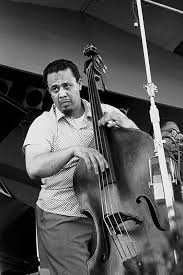
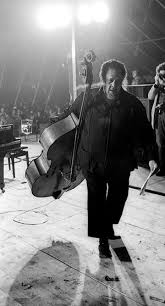
    Charles Mingus defied conception. His personality, his words, his volatility all condensed into a maelstrom of creative energy and flow. His work is distinguished by composition. The man was a sponge for all forms of music, and he used his compositional abilities, the written format in musical terms, to create some amazingly unique pieces and records. The Black Saint and the Sinner Lady stands at the mountaintop as one of the greatest achievements in jazz composition and orchestration, but Mingus would not want his work given any labels. He made music the way he imagined it, and his MO seemed to be to defy all convention. This is not the everyday jazz album. This is a work of uniqueness and something to feel.

    This isn’t a record to put on at quarter volume in the background while you fold laundry. It’s a record to turn up, absorb, let envelop your senses. It has hallucinatory qualities. It’s intricate and complex, but also simple and powerful. It’s chaotic, but it finds a way through the chaos. It generally makes sense, but also doesn’t.


    I got acquainted with Mingus while looking for music to accompany my mind during intensive, long-form intelligence analyst work at Fort Meade, Maryland during a short three-month stint. It was a very busy time for me. I was deconstructing layers of information for twelve to fourteen hours a day. It was a heady period personally as well. I was in a stasis of confusion about my professional future, in the forest essentially, looking over my shoulder and trying to find my way. I was staring down a rough road. Within that time there was a lot of revelation about what the term success meant. What draws people to want to be the best at what they do. What draws people to want to be renowned, or recognized.

    As I learned more about Mingus and his life, I began to connect those feelings to my understanding of how he may have felt about his own place in the world and in the music business. It seems like he self-pariahd, or he just always felt like the underdog. He made work that people had a hard time understanding or accepting. It was just too brilliant for the status quo.

    In all honesty, I see jazz brilliance as a passive observer. I’m in the audience watching a performance, marveling at the technicality, but without a firm grasp on theory or the decision-making behind composition. With that said, I do believe that determining whether a jazz record or any piece of music is brilliant comes down to whether the listener derives something from the listening session. The art itself is true. It may contain a meaning somewhere in it, but pure art, as cliché as it sounds, is just art. It doesn’t have to be anything else. If you like it, if it moves you, that’s enough.

    Mingus once stated, “What do I care what the world sees, I’m only trying to find out how I should feel about myself.” The argument stands. For some that applies to Mingus. For others, it may not. Some music can only be felt, and attaching words to it, as I’m doing with this post, is either ill-advised, too challenging, or just plain meaningless.

    What this record is, as I’ve come to understand it, is a direct contradiction to anything normal at the time. I think it was so unique, so different from conventional jazz, even within Mingus’s own catalogue, that it went too far over some people’s heads. But it wasn’t avant-garde for the sake of it. It wasn’t complex on purpose. If you sit down without any jazz acumen, you will derive some feeling or emotion from it. That’s what all the great records in any genre can do. The ones that still get talked about, that still matter. This is one of those records. It was a milestone in 1963.

    The record deals with texture from the very first notes. It’s a sound collage, a stack of cards. The sonic scale is massive. The onslaught of some of the pieces is unmatched, yet even at peak volume, every instrument sounds crisp and purposeful. Approach it from any angle and your attention will be rewarded. You’ll be immersed in the world of Mingus. Placing it in a genre is futile. Mingus disliked labels, and the critics who used them.


    Mingus Psychology

    The central psychological framework for understanding Mingus comes from the opening of Beneath the Underdog, where he describes himself as three simultaneous people:

    “One man stands forever in the middle, unconcerned, unmoved, watching…. The second man is like a frightened animal that attacks for fear of being attacked. Then there’s an over-loving gentle person who… gets talked down to working cheap or for nothing, and when he realizes what’s been done to him he feels like killing and destroying everything around him including himself for being so stupid. But he can’t — he goes back inside himself.”

    “Which one is real?”

    “They’re all real.”

    Mingus One is passive and observant. Mingus Two is afraid. Mingus Three is the angry man. He could be the most loving person in the world to someone he cared about and at the next turn erupt like a volcano of rage and emotion. These traits were what made Mingus who he was as a person and as an artist. He had tendencies across every part of the spectrum, and so did his music.

    Scholars have read this not as pathology but as a sophisticated self-portrait, Mingus maintaining multiple real selves rather than collapsing into a unified public persona. The “middleman” who watches is the narrator; the others are competing expressions of the same consciousness. Al Young, a friend, found even more than three Minguses: “Don Juan Mingus…, Mingus as lightweight Iceberg Slim…, Mingus the son, Mingus the husband, Mingus the father, Mingus the comic sufferer on the psychiatrist’s couch.”

    His music, and especially The Black Saint and the Sinner Lady, is psychologically dense because it emerges directly from that psyche. In his view, the only person truly qualified to annotate the record was his psychologist, Dr. Edmund Pollock, who wrote the liner notes.


    Dr. Pollock’s Analysis

    One of the most unusual features of the album is that Mingus invited his analyst, Dr. Edmund Pollock (fictionalized as “Dr. Wallach” in Beneath the Underdog), to write an interpretive essay for the liner notes.

    Pollock’s reading of the album centers on a few key observations: that Mingus “seems to state that the black man is not alone but all mankind must unite in revolution against any society that restricts freedom and human rights,” and that Mingus “feels intensely… He cannot accept that he is alone, all by himself, he wants to love and be loved.” Most strikingly, Pollock concluded that “Mr. Mingus is inarticulate in words, he is gifted in musical expression which he constantly uses to articulate what he perceives, knows, feels… It must be emphasized that Mr. Mingus is not yet complete. He is still in a process of change and personal development. Hopefully the integration in society will keep pace with his.”

    Barry Ulanov corroborated this view: Mingus was “alternately eloquent and tongue-tied with words,” but held the conviction that someday he could make his ideas perfectly clear on his own instrument or someone else’s.

    Mingus voluntarily committed himself to Bellevue in the late 1950s, driven by desperate insomnia and disorientation. “I couldn’t think who I was, I wanted to lay down and sleep. I was like a child lost with people milling all around me and no one to love me.” He chose Bellevue over his private analyst partly because they were estranged, and partly to avoid appearing to seek sympathy.

    His experience there became a crystallizing image of institutional oppression in his memoir. The doctor told him within minutes: “Negroes are paranoiac, unrealistic people who believe the whole world is against them,” and immediately proposed a lobotomy. Mingus wrote to Nat Hentoff from inside: “There’s a Nazi-thinking Jew called Dr. Bonk or something down here saying all Negroes are paranoid and he knows just the treatment for them, which is frontal lobotomy.”

    He filed a formal complaint he titled “HELLVIEW OF BELLEVUE,” listing grievances including: “Dr. Bonk keeps saying I’m a failure. I did not come here to discuss my career or I would have brought a press agent.”

    His reflection on leaving says everything: “You know, I believe Bellevue did me some good. How could anybody outside bug me when I remember those closed-in helpless people? Everywhere I go I’ll take those bars with me in my mind… Those bars stand for power over others, the power to make you hold still and take it. Is that why I feel so much better out here where the real insanity is?”

    The Object

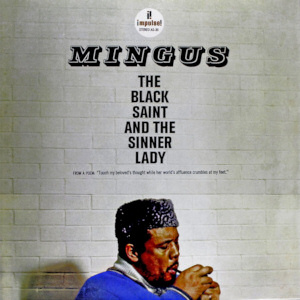
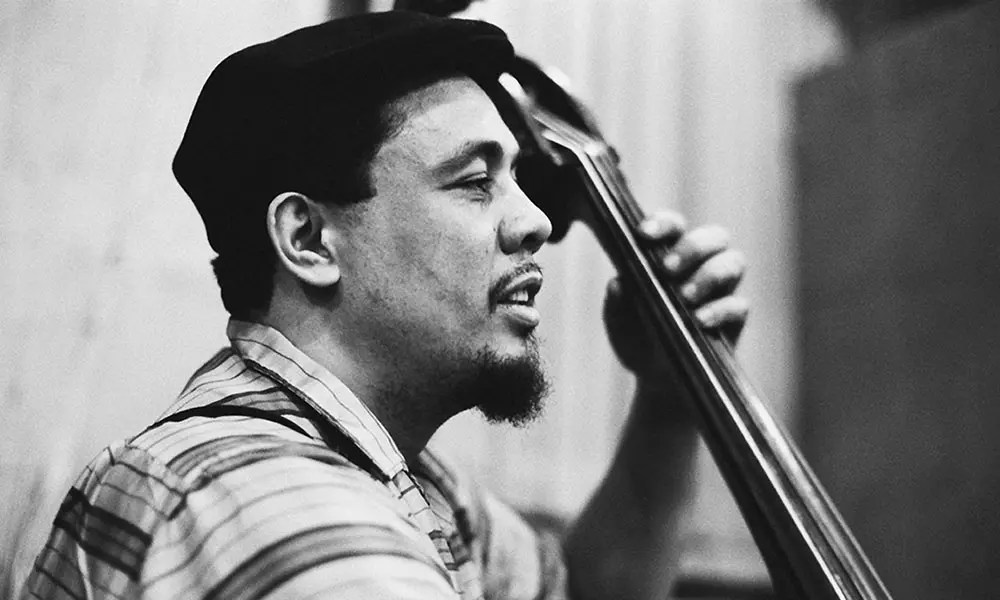
    My copy is a European import, looks to be from 2020 according to Discogs. Unfortunately I don’t have a copy that includes the original artwork or the original liner notes. Even with those qualities absent, the presentation of this record on vinyl feels authentic and important. The artwork is Mingus, though older. The track listings are displayed boldly alongside his name. It’s simplicity. It’s built on the lore of the record itself.

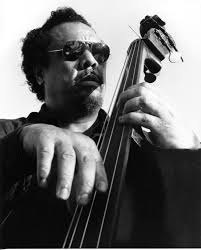
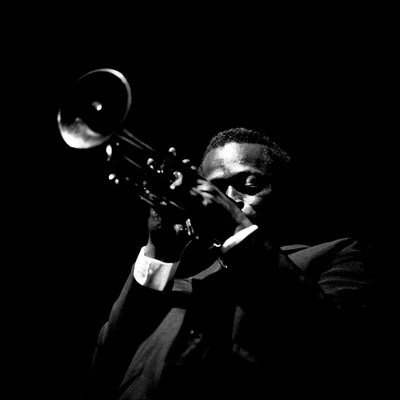
    The lore of any record will always be connected to its album artwork, and in this instance the artwork is pure: the name of the album, the name of the composer, and an uncanny image of the master behind the composition. Mingus is not giving the camera any recognition. In the original pressing he is working on lighting a pipe. In this recreation he appears older and is playing his instrument. It’s a captivating image, and that was always a draw for me. It gives the sense that the music contains secrets and stories, and the lore is right there on display. That quality has always been part of my attraction to jazz.

    The Music

    “This is the first time the company I have recorded with set out to help me give you, my audience, a clear picture of my musical ideas without that rush feeling. Impulse went to great expense and patience to give me complete freedom, along with engineer Bob Simpson, for balance and editing.”

    Pianist Mal Waldron described working with Mingus: “If you play in his band, you play his way. Mingus is the personality. But at the same time, playing with him brings you out and forces you to play yourself.”

    Mingus on the record itself:

    “Black Saint and the Sinner Lady is true music with much and many of my meanings. It is my living epitaph from birth til the day I first heard of Bird and Diz. Now it is me again. This music is only one little wave of styles and waves of little ideas my mind has encompassed through living in a society that calls itself sane… Crazy? They’d never get out of the observation ward at Bellevue. I did. So, listen how. Play this record.”

    In some way, The Black Saint is a response to everything in Mingus’s career up to that point. He had struggled with depression and anger, had issues with the music business, and had dealt with endless disrespect rooted in racism and in who he simply was as a person. The album is a fulcrum in his career. He was around forty years old, at his creative and emotional peak. It’s a rejection of the commercialism of jazz at the time, a rejection of the posturing around it, and an exhibition of who he truly was creatively and emotionally.

    Across multiple sources the same idea surfaces repeatedly: words failed Mingus in ways music did not.

    His own statement: “My music is evidence of my soul’s will to live beyond my sperm’s grave, my metathesis or eternal soul’s new encasement.” And most directly: “I play and write me, the way I feel. And I’m changing all the time. As long as I can remember, I’ve never been satisfied with the ways in which people and things seem to be. I’ve got to go inside, especially as far inside myself as I can.”

    And to Hentoff: “We create our own slavery, but I’m going to get through and find out the kind of man I am, or die.”

    The music on this record lends itself to nighttime listening, or closed-eyes, full-immersion listening. There is a lot going on. I think I could listen to this record my entire life and each play would be a rediscovery, a revisiting of a feeling, and I would always hear something new. It’s philosophically and psychologically dense, but oddly accessible enough that it rewards a patient listener. It’s reached a lot of people that way, in the same way intricate art reaches people, art that makes someone feel something real.

    The performances were recorded in a single session on January 20th, 1963, but months of work followed to complete the required overdubs.

    Mingus was deeply influenced by Duke Ellington and his orchestral arrangements. What Mingus did with that inspiration was create a space and a musical context of psychodrama, entering deeply personal realms. That’s what makes this music so fully realized and gives it an immense sense of truth. You feel what you hear. If these trumpets and trombones are speaking, they are in some places wailing in agony, and in others singing a hymn of rejoice and a lust for freedom.


    Track A: Solo Dancer (Stop! And Listen, Sinner Jim Whitney!)

    The subtle tiss tiss drum beat and the contrabass trombone intro. Saxophones enter on top of one another. A tenor saxophone takes a solo over a swingier drum beat, and beneath all of it is Mingus on double bass, leading from within.

    The introduction is explosive and commanding, eleven pieces working as one, stacked on top of each other. The bass works on its own terms, not as a function of the rhythm section but as a leader in its own right. The bass was Mingus’s master instrument, and it was how he understood music. It was how he knew to layer instruments and compose the way he did.

    The saxes, horns, and trombone, when focused on closely, are distinguished enough to constitute a song in themselves.

    I see a cast of characters. The dancer and a surrounding ensemble. Everyone seems to be clapping, urging the dance to continue.


    Track B: Duet Solo Dancers (Heart’s Beat and Shades in Physical Embraces)

    Opens with a piano flourish, then bass and horns and drums settle in for a waltzy, languishing song. The piano is fantastic. Moody, melodic, and lush. The horns answer with a simple up-and-down motion and then a big crescendo, a walk down the stairs, and the trombones enter.

    This movement is more subdued. The horns are doing remarkable work mimicking the human voice. The muted trumpets make leering, harsh cries.

    This track shows the full intensity of Mingus. Drums like gunshots. The horn crying a slow death.


    Track C: Group Dancers (Soul Fusion: Freewoman and Oh This Freedom’s Slave Cries)

    Another track that begins with piano, though this time it feels more technical, more hurried, on a pace rather than an emotional flourish. Piano tinkles and an interplay of in/out, black/white, good/bad. The piano on this track is my favorite thing on the album so far.

    Fantasy elements are being added to the narrative. New territory. Guitar and flutes enter.

    I hear the ills of society in the horns. There is no release.


    Side 2

    Side 2 is a medley, a group of three tracks. Motifs return from the previous three, but things begin to blend together. The menage.


    Track D: Trio and Group Dancers (Stop! Look! And Sing Songs of Revolutions)

    Seems like a continuation from before, then a Latin-inflected or Spanish guitar enters. Amazing guitar. Bullfighters, or just the bull.

    The pace is picking up. There is a wild energy flowing through everything.

    Have the characters from Track A returned?


    Track E: Single Solos and Group Dance (Saint and Sinner Join in Merriment on Battlefront)

    Things are becoming looser. On the second side, ideas are stated with more purpose versus the loose interpretation of Side 1. This music is in capital letters. It’s yelling.

    That tempo progression toward the end is very moving. Very strong.


    Track F: Group and Solo Dance (Of Love, Pain, and Passioned Revolt, Then Farewell My Beloved, ‘Til It’s Freedom Day)

    It’s getting wild and the heat is being turned up.

    Mingus’s masterwork coming to its conclusion with the full ensemble. This cacophony caps off a killer record. Must have driven people wild in 1963.

    Closing

    This record is one of the better examples of a jazz artist creating a truly unique composition. It can be approached from different angles. Close your eyes and focus and you’ll hear new things at every listen. You can imagine characters, voices, scenes from an imaginary film. It’s hallucinatory music, and I think Mingus designed it to be. This is probably the best single window into Charles Mingus among his entire catalogue, and he self-declared it the record he was most proud of, alongside one other he never named.

    I’m glad to have discovered this album at the time I did, and using it as a window into Mingus’s mentality is both rewarding and gives me perspective at another key point in my own working life. For that I’ll always hold Mingus in high regard and deep respect.

    RTR.

  • Etta James – At Last!

    Etta James – At Last!

    Studio Album  ·  Released November 15th 1960  ·  Argo Records (Chess Subsidiary)

    Orchestral Arrangements and Conducted by Riley Hamilton ·  Produced by Phil and Leonard Chess

    Recorded: Between January and October 1960

    My copy: 2013 WaxTime Reissue ·  Purchased some time in 2016. Siren Records, CA

    “That’s why I don’t care to associate with a lot of other entertainers. Its not the drugs, its just that I’ve heard all that jive talk and ego games for too long. When I first started out, touring was fun — riding those old buses, eatin sardines out of a can, white folks runnin you out of town and everybody talkin about it for six months afterward.”

    — Etta James

    Jamesetta Hawkins was born in Los Angeles in 1938. She never knew her father, and her mother was only fourteen years old. She moved around, raised by relatives, not by her mother, attending a Baptist church with her grandparents. She had a natural talent for singing and was a soloist in her choir. While singing at church, she was subject to regular physical abuse. The director would punch her in the stomach if she didn’t sing correctly. As terrible as that sounds, James later related this period as what gave her the toughness to go it alone as a solo singer, and what gave her voice the raw edge that many came to appreciate. At twelve she started living with her mother, and began a slow drift into delinquency and general trouble.

    It was Johnny Otis who discovered her. Otis was a talent scout and bandleader with an extraordinary ear, responsible for unearthing several major artists in the late 1950s and early 1960s. The first song James recorded, “Roll With Me Henry,” was an answer song to Hank Ballard’s “Work With Me Annie” — sexual nuance included, racy undertones for the era. It was a sure-fire formula for a hit in those days. And it was a hit, until Georgia Gibbs covered it and scored a bigger chart position with the same song, now sung by a white artist for white radio. This was a routine injustice of the period. Black artists writing and recording the source material, white artists getting the commercial payoff. James’s dismay pushed her to seek out success as a solo artist on her own terms. She was strong-willed, massively talented, and not interested in compromises.

    Her solo career floundered until Leonard Chess signed her. Chess Records, by 1960, was the most important blues and R&B label in the country, with Muddy Waters, Howlin’ Wolf, and Chuck Berry all on the roster. Argo, its subsidiary label, was positioned slightly differently. It was more pop-friendly and more open to orchestral production. That distinction matters when you listen to At Last!, because the lush string arrangements that Riley Hamilton brought to these sessions aren’t an accident or a concession. They’re a statement about where Etta James was meant to sit: not in the low-down gut-bucket blues tradition, but somewhere more expansive. Blues feeling, pop ambition, and genuine soul.


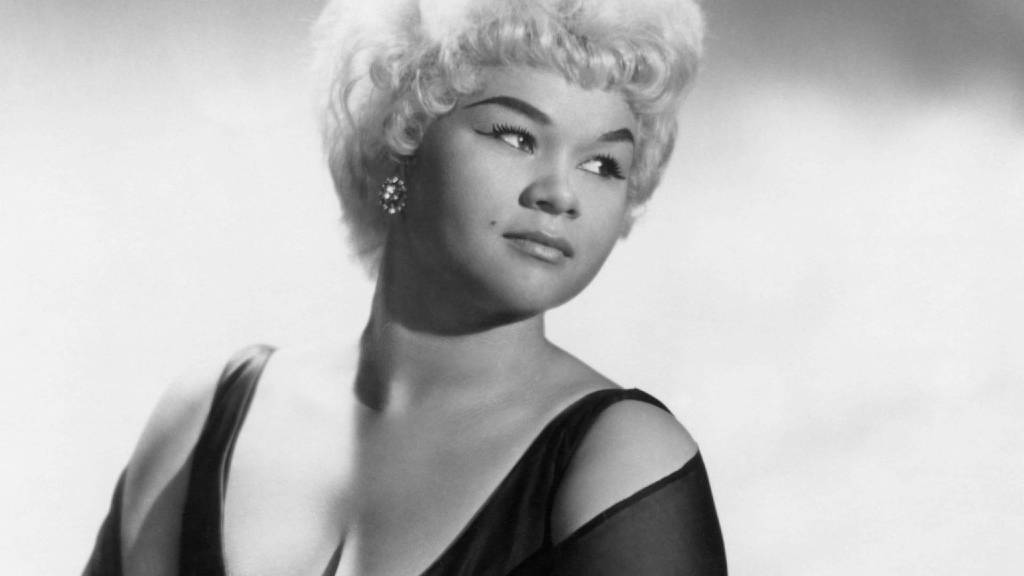
    What I hear when I listen to Etta James is a powerful singing voice, even allowing for her young age. There’s a depth and maturity behind that power that you don’t come by easily. You come by it the way she did, which was the hard way. She can growl, she can wail, and she can drop to a murmur in the same line. She has that intensity that very few could imitate because you can’t fake what’s underneath it. The hurt makes the beauty sparkle. And on the title track she shows that she can be delicate and glamorous and pop, and sing with a feeling of love that lands as something rare and real. The combination of roughness and the refinement is what makes this album unlike anything else Chess put out in this period.

    At Last! is not exactly a traditional album in the sense of a unified artistic statement. It reads more like a curated greatest-hits collection, pulling together singles, covers, and originals across different emotional registers. There’s raunchy, there’s blues, there’s pop, and there’s the timeless love song of the title track. What ties it together isn’t the songwriting or a conceptual thread — it’s her. She’s the constant.

    The Object

    This copy is a reissue from 2013 on WaxTime Records, added to the collection, from what I can remember 2016. I was in Arabic school at the time, so it was likely purchased in Monterey or Seaside, probably at Siren Records. It does not maintain the original track listing. There are four additional bonus tracks: “Don’t Cry Baby,” “You Know What I Mean,” “I’ll Dry My Tears,” and “Seven Day Fool.”

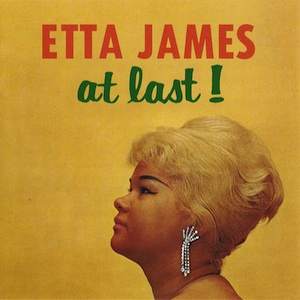
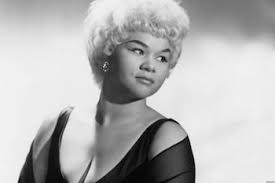
    The record sleeve is well made, a perfect reproduction of the original artwork. A beautiful side-profile pose — possibly a nod to Muddy Waters’s debut Chess LP — set against a yellow-orange background. Bold red lettering for Etta’s name, lowercase cursive for At Last! Her face is pensive, confident, and genuinely beautiful. The statement earring might be the entire reason for the decision to go with a profile shot — it adds a shine and distinguished class that points directly to what the music is: refined, bluesy, and elegant all at once.

    On the back of the cover, updated liner notes sit alongside the originals, with the new notes written by Santi Comelles. There are also archival images like show bills, photographs of Etta, original single record labels for the interested collector. This is her debut LP. Three of the tracks were released as singles, and all three were successful.

    The Music

    Songs and Listening Notes — January 6, 2026

    All tracks were recorded in Chicago between January and October 1960, except “You Know What I Mean,” recorded with an unidentified rhythm section, possibly in California.


    Anything to Say You’re Mine (Written by Sonny Thompson)

    A song of longing. Her crying and moaning here is just great. This a beautiful opener to a record that functions more like a greatest-hits collection than a conventional debut. Sonny Thompson was a popular bandleader in the 1940s and 1950s, and this is one of his better compositions, but Etta makes it hers.


    My Dearest Darling (A single from 1958 by Eddie Bo, early R&B legend, New Orleans-bred)

    A wailing cry and a sensitive soft whisper, effortlessly achieved in the same song. Range. When I listen to this track I can hear where Janis Joplin drew her inspiration. The cover was a solid hit for Etta.


    Trust in Me (Written by Ned Wever, Milton Ager, Jean Schwartz)

    A vintage composition taken from much earlier in the American songbook, and Etta treats it accordingly.

    “Come on daddy, face the future, why don’t you smile” — I just like that line a lot.


    Sunday Kind of Love

    Lost in the vibe of this song. A smoothly arranged track . The orchestra layers on the smoothness and the sensitivity with real care. This song sounds brand new. Her voice carries a patented soul edge that is legitimate and real and has never really been matched.


    Tough Mary (Written by Etta James and Joe Josea)

    Going to go ahead and say yes to the background singers and the saxophone solo. Both are highlights on this more uptempo track about a woman singing about exactly what she wants, no compromise.


    Don’t Cry Baby (Bonus track from 1961 — originally sung in 1929 by Bessie Smith, written by James P. Johnson)

    A slow, vampy blues, but with those strings and her voice it’s elevated well above the low-down blues of Muddy Waters or Howlin’ Wolf. This is exquisite blues. As far as the content goes, I wonder if anyone took this as emasculating to men — she’s pleading with her man not to cry, offering to reconcile and try the relationship one more time. Great song.


    You Know What I Mean (Bonus track)

    This one doesn’t benefit from the orchestral arrangements of the other material — the rhythm section is different, possibly recorded in California and it’s noticeably different. Despite that, it’s still another outstanding exhibition of her vocal style and ability. Real wails here, and she puts a lot of power behind nearly every line.


    Side 2

    I Just Want to Make Love to You (Willie Dixon)

    Picks up right where Muddy Waters left off, though it’s more swinging and swaying than power blues. The saxophone player goes for a walk. I really like how you can hear the air blowing into the mic on certain lines. And on the title line — she starts at the peak of vocal power, I JUST WANT — and in the second half of the line she lands in a place of softly spoken murmur. Power and class in the same line.


    At Last! (Written by Mack Gordon and Harry Warren for the musical Sun Valley Serenade, 1941)

    Originally charted in 1942, when Etta was five years old. Glen Miller’s orchestra performed the version that first made it famous, and in its original context it’s a tender, soft-spoken love song — pleasant, well-crafted, and not much more than that.

    Knowing that origin and then listening to Etta’s version is what makes the recording so special. She injects her sadness, her emotion, and her life up to this point into every breath and tonal expression. It’s a song with meager origins taken to the peak of an emotional mountain. Many other artists have tried to imitate it. Privilege sometimes gets in the way of true art. Etta never wore her rough past on her sleeve, but it was always there inside the music, and here you can hear it in every note. The song became ubiquitous and that ubiquity has a way of flattening the source into sentiment.


    All I Could Do Was Cry (Billy Davis / Gwen Fuqua / Berry Gordy)

    A really sad song, and to my ears the best songwriting on the album. Etta gives it its due with another vocal performance equivalent to a grand-slam home run in a playoff game. It’s like she’s singing as if it’s her last song ever. The song could be a personal story about a past lover whoh had moved on. Whatever the inspiration was the result is devastating.


    Stormy Weather (Harold Arlen and Ted Koehler)

    Another sad and bluesy tune, but sung with a confidence that things will be okay. The arrangement here is restrained and smart.


    Girl of My Dreams (Rendered here as “Boy of My Dreams” — written by Charles Clapp)

    Another solid track, though by this point in the sequence the album begins to show the effects of its own emotional consistency. Most of the somber material ends up on Side 2, and the sequencing can feel a little front-heavy with sadness by the time you arrive here.


    I’ll Dry My Tears (Etta James and Clyde Walker — Bonus track, taken from a 1961 album)

    Another somber tune, relegated to the end of Side 2. Still really beautiful. The string arrangements are soaring here, providing a true call-and-response to the vocal.


    Seven Day Fool (Billy Davis / Berry Gordy / Sonny Woods — Bonus track)

    The album finishes on an upbeat, almost rocker-ish note, and it’s a sign of things to come. This sounds closer to the music on Tell Mama, which benefitted massively from the Muscle Shoals treatment, and that real swampy soul sound. Etta could transmute her blues into whatever container the session demanded, and here you hear the California girl who became the South, who became something else again, but always herself.

    Closing

    At Last! is Etta James’s debut LP, and in some ways it remains the definitive document of her abilities This is a record that functions simultaneously as a great blues album, a great pop album, and something harder to name, which is just a great album. Three singles, all successful, all now classics. The orchestral arrangements that Riley Hamilton brought to these sessions are sometimes dismissed as pop gloss. The strings are the frame that makes the painting visible. They create the space in which her voice does what it does.

    What gets lost in the conversation about Etta James is that the biographical context is inseparable from the music. The roughness of that early life, the church discipline, the years of near-misses and bad luck, the things she absorbed before working with Leonard Chess — all of it is present in these recordings in a way that can’t be manufactured.

    After this record and its subsequent success, James stayed in the public eye, following up with singles and performances across multiple genres, even venturing into country and western territory as the decade moved along. As the 1960s became the 1970s she struggled with drug use and lived through some hard years. She eventually got help, resurfaced with that class and vibrancy intact, played terrific live shows, and continued recording tribute material and original work alike. A great career, fully lived. And if you really sit with this record, past the familiarity of the title track, past whatever associations have accumulated around it, you’ll hear what all of that living sounded like when it was young and new and real.

    “I sing the songs that people need to hear.” — Etta James

    RTR

  • Miles Davis — Sketches of Spain

    Miles Davis — Sketches of Spain

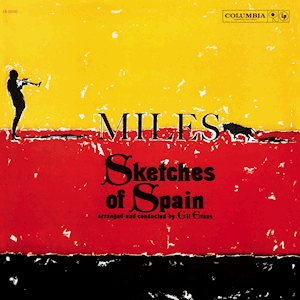
    Studio Album  ·  Released July 18, 1960  ·  Columbia Records CL 1480

    Arranged and Conducted by Gil Evans  ·  Produced by Teo Macero and Irving Townsend

    Recorded: November 1959 and March 1960  ·  Columbia 30th Street Studio, New York City

    My copy: 1974 Columbia Reissue  ·  Purchased April 2025, Habitat for Humanity, Seaside CA

    The Object

    This one ranks among Miles Davis’s best works. Before the 1970s funk experiments, before the electric period, there was this — the third entry in the Gil Evans trilogy alongside Miles Ahead and Porgy and Bess, and in some ways the most personal of the three. It arrived right after Kind of Blue, which is to say it arrived at the apex of one of the most fertile periods any jazz musician has ever had. Miles was 34. He was at his peak.

    Sketches of Spain is an example of what gets called third stream music — an amalgamation of jazz improvisation and full orchestral arrangement. But that label doesn’t quite capture what happens when you actually sit with this record. The mood here is geographic, cinematic, emotional. It’s a sense of longing projected through trumpet into Spanish landscape. Miles made music for moods. On this one, the mood is an entire region of the world.

    I found this 1974 Columbia reissue at the Habitat for Humanity thrift shop in Seaside, California in April 2025. Whoever owned it before kept it well — the cover is clean, the wax still has its sheen. It’s a fine copy and it will stay in the collection. This is one of those records you know belongs in the collection as soon as you see it.

    I’ve played this album many times in headphones while working at the NSA building in Fort Gordon, Georgia. That context matters. This is music that transforms the space around you. Put it on and wherever you are — a government building, a small apartment, a car — becomes somewhere else. That kind of transportive quality is rare.

    On Sketches of Spain, Miles plays trumpet but you hear something other than trumpet. He mimics the human voice with an intimacy that is his particular genius, and on this record he also imitates — inhabits, really — the voice of a classical guitar. The way he rose to that challenge was through total immersion in his influences. He didn’t approach the Spanish material as an outsider. He lived inside it until it became personal.

    “That one is a motherfucker.”

    Don Cheadle, playing Miles Davis in Miles Ahead (2015), says that about this record. He’s not wrong. Hearing him say this in the film, I now operate on a half-confident belief that this may have been Davis’s own favorite of his albums.

    “After we finished working on Sketches of Spain I didn’t have nothing inside of me. I was drained of all emotion and I didn’t know what to hear that music after I go through playing all that hard shit.”

    This tells you everything about what it cost him.

    The Music

    The Miles and Gil Evans Relationship

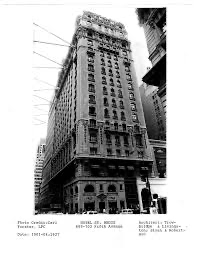
    Miles Davis and Gil Evans first met in 1947. Gil was 35, Miles was 21. Evans brought a classical and contemporary orchestral sensibility into the world of bebop at a moment when that world didn’t know it needed one. His apartment near the St. Regis Hotel in New York was a gathering place for artists — a room where ideas crossed over and contaminated each other in the best possible way, and Miles was one of the regular presences there.

    For Miles, Evans was something of a mentor — a man fourteen years older who understood both the jazz tradition and the European orchestral one, and who could build a bridge between them with an arranger’s precision and a composer’s imagination. Their collaborative trilogy — Miles Ahead (1957), Porgy and Bess (1958), Sketches of Spain (1960) — represents one of the sustained high points in recorded music of any kind. Evans brought functional perfection to these sessions. Miles brought the fire.

    The African connection to the Spanish material was not incidental to either of them. The Moorish influence on Andalusian music — the trace of North Africa and the Arabic world running through flamenco — was something both Evans and Miles were thinking about. Miles dove into Spanish folklore, flamenco, and the historical connections between Africa and Spain with the same depth of research he applied to everything. The Africa-by-way-of-Spain line in Western music was in both their heads. Miles made it personal by immersing himself so fully that the material stopped being research and started being instinct.

    The Inspiration

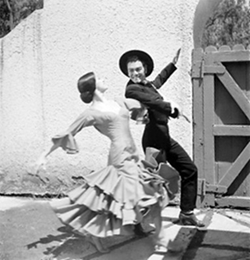
    In 1958, Miles was taken reluctantly, by his wife Frances Davis to see a company of Spanish dancers performing under choreographer Roberto Iglesias. The experience changed him. Back in New York, he bought every Spanish flamenco record he could find. Then he went deeper into Spanish folklore, into the traditional music, into the field recordings Alan Lomax had made in Spain. What you hear on this record is the result of that immersion. This record months of listening and absorbing before a single note was played in the studio.

    Miles always did this. One of the things I’ve come to understand about him is that underneath the iconoclasm and the myth was a serious researcher. He dove into rabbit holes with discipline. He didn’t play a tradition he hadn’t studied. On Sketches of Spain, that commitment is audible.

    Production

    Irving Townsend and Teo Macero were assigned by Columbia to produce the album, but Macero did most of the work. Teo Macero was already legendary. He was a saxophonist with real chops and a producer with serious ears. His collaboration with Miles on this record became the foundation for a working partnership that would last fifteen years and extend through Miles’s most experimental electric work.

    Miles’s approach in the studio was demanding and specific. He wanted his musicians to know the material by heart. He wanted them to read it, learn it, internalize it, and then play it from a place of genuine competence rather than sight-reading. The idea was freedom through preparation. You have to know the music completely before you can let go of it.

    The sessions were difficult. There was stopping and starting. Miles reportedly drank and doubted himself, saying at one point: ‘I always manage to try something I can’t do.’ That sentence is either the most honest thing a creative person can say or the most characteristic thing Miles Davis ever said. Eventually the sessions completed, and what they produced was one of the most cohesive records of his career.

    Trombonist Frank Rehak appears on this record as he did on Miles Ahead and Porgy and Bess — a constant in the Evans sessions, and a player Miles fought hard to have on this date, working through scheduling complications to get him there. Rehak’s presence across all three Evans collaborations gives the trilogy a tonal consistency.

    The Tracks

    Listening notes — January 11, 2026

    Side One

    1. Concierto de Aranjuez

    Recorded November 15 and 20, 1959  ·  Adagio movement

    The Concierto de Aranjuez was written in 1939 by Joaquín Rodrigo, a Spanish composer who was blind from the age of three and who wrote the piece for guitar and orchestra. The origin story of it ending up on this record is straightforward and audacious in equal measure: Miles heard the adagio movement and decided he could play the guitar part with his horn. Only the adagio portion appears here — the slow, central movement — and it occupies most of Side One. We can all be grateful for that decision. It is a powerful work.

    Rodrigo, famously, did not appreciate Miles’s version when he first heard it. Miles’s response was essentially: wait until the royalty checks arrive.

    Listening to this is like being placed deep in the Spanish countryside. Not the tourist version — somewhere real and quiet and ancient. It transports you regardless of where you actually are. I’ve heard it in Georgia, in California, in various unremarkable rooms, and each time the room disappears. The middle section with the castanets and flutes is one of my favorite passages. The final build is dramatic in the best possible way — peak emotional impact from a jazz trumpet player playing a classical guitar concerto.

    2. Will o’ the Wisp

    Recorded March 10, 1960

    Written by Manuel de Falla, another Spanish composer, from his ballet El amor brujo — which translates as ‘Bewitching Love.’ De Falla wrote some of this material as processional music, and parts of it were associated with traditional Spanish ceremony. It’s a different texture entirely from the Concierto — bouncy, tinny, slightly playful, with a galloping quality that puts you somewhere different. If the Concierto puts you in the countryside at dusk, Will o’ the Wisp puts you on horseback in the morning. Short, vivid.

    Side Two

    1. The Pan Piper

    Recorded March 10, 1960

    Based on a Phrygian folk melody from the Lomax field recordings — a shepherd’s tune, stripped down and made strange by Miles’s trumpet. The source material here comes directly from the traditional Spanish folk music Miles had been studying. It’s the quietest thing on the record, and in that quiet there’s something genuinely haunting.

    2. Saeta

    Recorded March 10, 1960

    A saeta is a Spanish religious a cappella genre — a spontaneous, passionate vocal outpouring performed during Semana Santa processions at Easter, sung from balconies or from the crowd as the religious floats pass below. It is street music with the intensity of prayer. Miles plays the trumpet in the role of that voice. He is the lone cry rising above the procession while the orchestra surrounds him as the crowd and the street and the weight of the occasion.

    Saeta and Solea are the two original works on this record, both inspired by Spanish tradition rather than adapted from existing compositions. They are gifts from Miles Davis to his inspiration. That he could produce work of this quality while operating from outside the tradition he was honoring is one of the most impressive things about this record. He earned the right through the research and the immersion.

    3. Solea

    Recorded March 10, 1960

    The closer. Contains a ten-minute trumpet solo from Miles, and what a ten minutes it is. Solea is a foundational form of flamenco — serious, deep, traditionally associated with sorrow and dignity in equal measure. The drums sway underneath, the orchestra provides the weight of tradition, and Miles plays above it all with the assurance of someone who has made this music completely his own. Bullfighter music. Trips to Spain from the living room.

    Closing

    A key record in every serious collection, as far as I’m concerned. This is not background music. It’s not mood setting in the ambient sense. You don’t put on Miles Davis to fill a room. You can put him on with intention, and this record rewards that intention fully. You can feel the inspiration. What Miles said about being drained after the sessions is audible in the performances. He left everything in the studio.

    For some listeners this record sits right next to Kind of Blue in terms of greatness. I understand that argument. It’s a different kind of achievement. Where Kind of Blue opened a modal door for jazz to walk through, Sketches of Spain crossed a geographic and cultural boundary that shouldn’t have been crossable at all. It represents a peak of the Evans collaboration and a serious new direction simultaneously. Both things are true. It holds them without contradiction.

    Whoever left this copy at the Habitat for Humanity did me a favor.

    Thanks for reading.

    RTR