Tag: folkmusic

  • Dave Van Ronk – Folksinger

    Dave Van Ronk – Folksinger

    Studio Album | Released November 1962 | Recorded April 1962 at Van Gelder Studio | Prestige Records | Producer Shel Kagan
    This album is pure and simple. An urban performer taking his trade and applying it to reshape and reform the golden nuggets of folklore. The folk song unearthed, repurposed, re-bluesified and re-jazzified by a singer with a powerful, emotive voice and a knack for the guitar bent upon years and years of rambling, and practice practice practice.
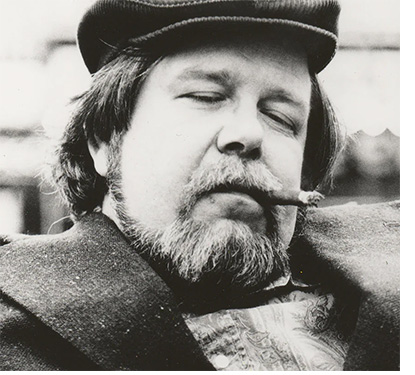
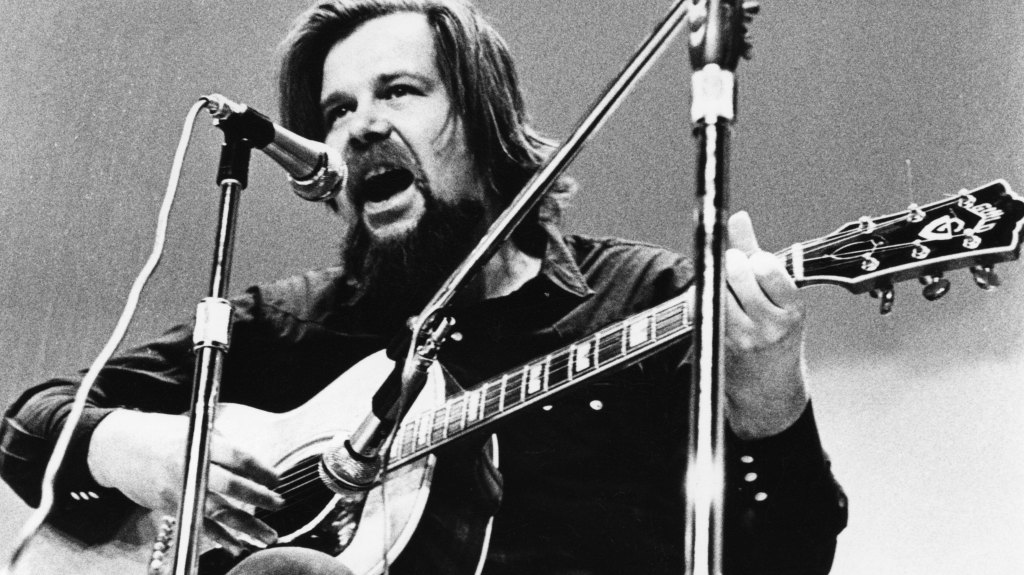
    Dave Van Ronk didn’t agree with the title this release bestowed upon him. Van Ronk had traveled to Manhattan in the early 50s in an attempt to work and succeed and be famous as a jazz singer. His inspirations were jazz artists and big band leaders and musicians. Those jazz leanings were fused with blues leanings, and his inspirations remained as such throughout his life. The early members of his audience made note of his appearance and his voice. He was a very big guy. Above six feet and above 200 pounds. With a voice that could raise Lazarus from the grave.
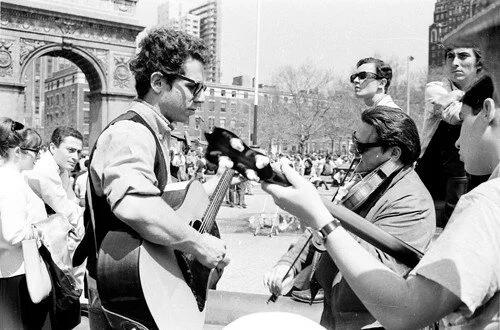
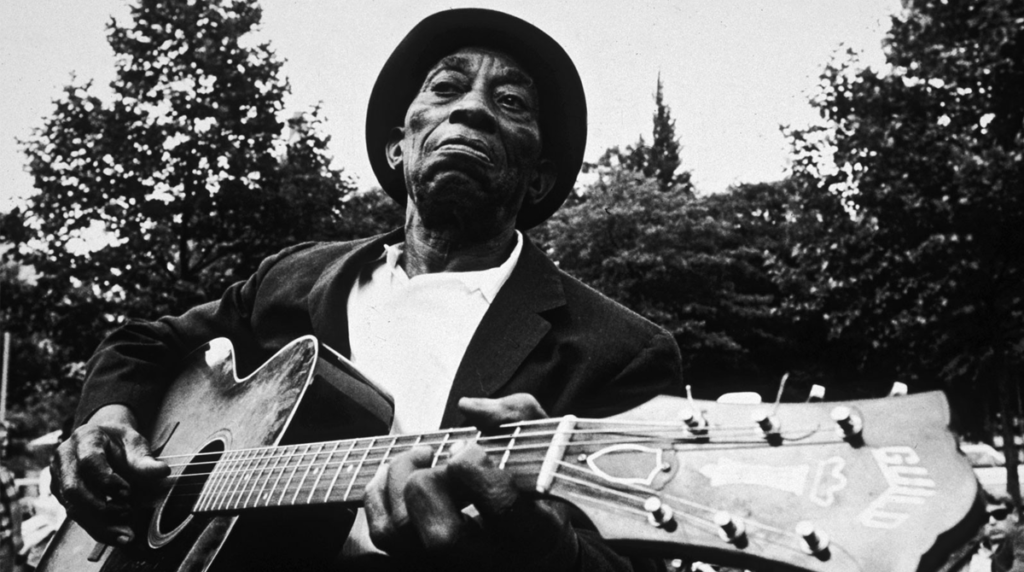
    In The Mayor of MacDougal Street, Van Ronk relates hearing an early version of “Stackolee” on an Alan Lomax reissue series record, one of the earliest records he ever purchased. The version by Furry Lewis had a distinct fingerpicking guitar style, and it perplexed Van Ronk. He felt it was two different guitars playing, when it really was one person playing both melody and bass line simultaneously. He ran into someone later in Washington Square Park picking their guitar in a similar way. He sat down and listened, and asked the person for a quick on-the-spot lesson. After that day, Van Ronk took a head-first nose-dive into the fingerpicking style. He would go to Washington Square Park to play, and to learn from those who already knew. He gave everything he had to mastering that style of playing, and that was his change from jazz to folk. It was a career decision, as Van Ronk states in his memoir. It was a move from complex to simple. It came out of necessity, and it was also a change in mood and mind, arriving right at the time the Village scene was about to make history.

    It was the Washington Square Park scene that Van Ronk developed inside of. This scene was sporadic pockets of musicians occupying various parts of the park, striking up tunes together or by themselves. A fertile music-breeding ground if there ever was one. Also passed around in copious amounts were drugs and left-leaning ideology. This was libertarian, progressive, communistic support for music that these folk thought was going to affect change at upper levels of government. Lots of hate for other groups, as he would say. Van Ronk’s MO at the time was to sit down somewhere and sing. The hope was that folks would gather around, and maybe pitch in money. He had an advantage for these impromptu live sessions: his voice volume. If you’ve heard Van Ronk you immediately notice his voice. It would carry well in a park setting, and even the least curious passerby would notice it.

    Somewhere around this time a reissue record comes out. The Anthology of American Folk Music, a compendium of traditional American music. Some had never heard these recordings before. Most hadn’t, actually. This became Van Ronk and friends’ guidebook for how to sing and make their music. It was the tome of the elders. It had all-time greats on it. Mississippi John Hurt, Blind Lemon Jefferson. Triple OGs. On contemporary phonograph equipment at the time, this record set must have blown minds. What it actually was was a set of old 78s collected onto LPs.

    The music would come from places other than America as well. Van Ronk’s song on this record, “Chicken Is Nice,” was a Liberian original. One of the only recordings at the time of an American folk singer repurposing a song from Liberia as his own. That alone makes this record a must-own and a must-listen.

    MacDougal Street, the Folklore Center, and the Scene
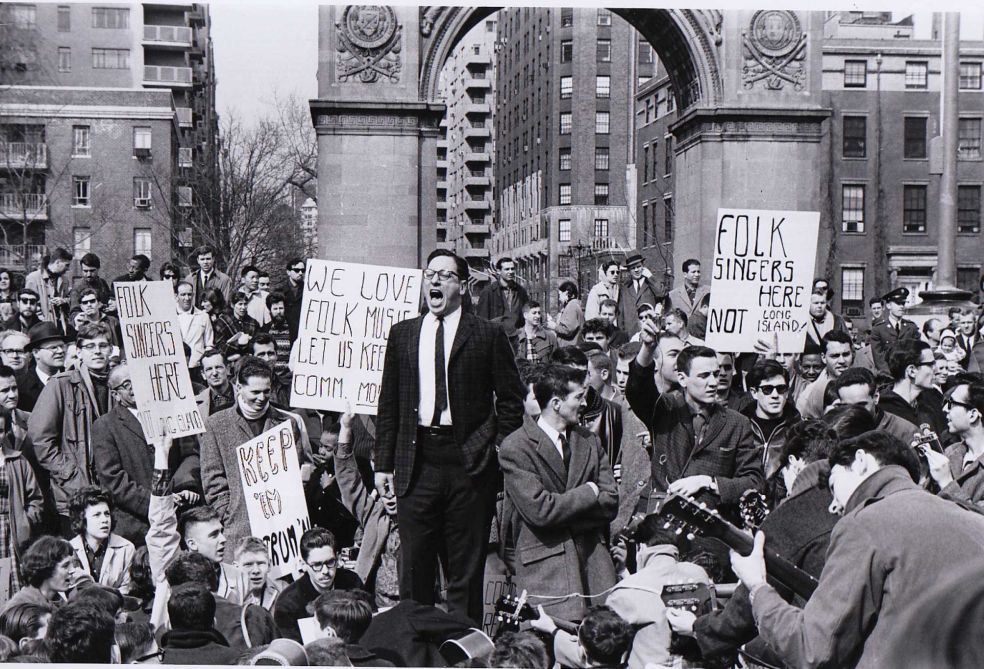
    By the time Folksinger came out, Van Ronk was pretty well established in the scene. He had become somewhat of a mentor and ringleader of sorts. The hangouts were the Caricature Coffee House, the lofts down on the Bowery, and the Café Bizarre. It was at a gig at the Café Bizarre, with Odetta as the lead attraction, that Odetta saw Van Ronk’s performance and was so impressed she asked him to send her a tape so she could pass it along to Albert Grossman.

    Van Ronk’s vocal influences were jazz and blues artists he began to mimic through a jazz lens. Josh White was one of those touchstones. White was a Black blues and folk singer who had lived in the Village for years and represented exactly the kind of vocal authority, dramatic phrasing and stagecraft that Van Ronk admired and absorbed. You can hear White’s influence in the way Van Ronk shapes a phrase, how he leans into a line for emotion and then pulls back.

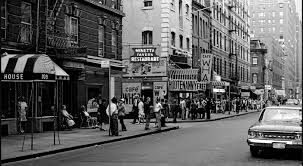
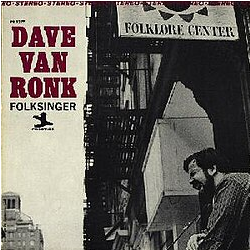
    Izzy Young’s Folklore Center on MacDougal Street was the other anchor of this world. It was part shop, part hangout, part bulletin board, part informal concert hall. Van Ronk spent enormous time there in the late 50s and early 60s, and the cover photo of Folksinger shows him standing right under its sign. There were also the hootenannies at the Gaslight Café and up and down MacDougal Street, which Van Ronk was central to.

    The Object

    My record is a faithful reissue of only the best kind, by the great company Vinyl Me Please. Every one of their reissues that I own I cherish for the quality of sound and the great presentation of some of the all-time greatest records, or at least the ones that hold the most importance. The sound quality on this release is fantastic. The jacket and wax are sturdy and guaranteed to last my lifetime. The liner notes are recreated. The true highlight of this package comes in the listening notes by Elijah Wald, in a little Moleskine-style notebook tucked away in the record sleeve. Give me something like that with every single record and I’ll be happy. With this record, and with the ones that come with lore, it’s a cool thing to see, a writer putting heart and devotion into detailing the music you’ll hear and giving you the stories you need to understand the notes and heart and emotion in Van Ronk’s voice.

    The album cover has a great photo of Van Ronk on it, in full belt, standing under the sign of the Folklore Center, the place where he spent a lot of his time in the late 50s and early 60s, and like the church of his inspiration, where he became linked to so many of the songs you hear on the record.

    The Music

    He Was a Friend of Mine

    This is a traditional folk song, originally unearthed by Alan Lomax. It’s simplistic in nature and exhibition in most versions that you hear. A song of lament, about a person recounting the death of an old friend. There are numerous versions. One of the most incidental was the Byrds’ version, given more weight as a somewhat pointed tribute to the dead president John F. Kennedy. The two early folk versions of the 60s belong to both Bob Dylan and Dave Van Ronk. Dylan’s version precedes Van Ronk’s and is similar in execution, and it did not end up being placed on Bob’s first record.

    Van Ronk’s version really makes you think this song belonged to him. When I first heard it, I suspected the song was new. As the first song on the record, it opens up the listener to the Van Ronk universe. The song is sung with quiet beauty here. Sustained notes start getting scratchy toward their end, like a road going from pavement to loose asphalt to grit. The road is the setting. The man who died, we don’t know who he was. What we do know is that Van Ronk is intensely broken up over this person’s death. And since Van Ronk himself has passed on, leaving his legacy in tattered records and folk legends and lore, perhaps this is a song that can serve as an obituary to the man himself.

    Maybe this is the one song on the record most connected with Dylan and the strange way that people connected Van Ronk to Bob Dylan. Each of them sang their own version of the track, maybe in reference to each other. As far as friends, enemies, rivals, mentors, I don’t know where the two fell. It’s difficult to understand truly how each of them felt for the other. What we do know is that they were both somewhat influences on each other, maybe moreso Van Ronk on Bob. Still friends though.

    The man who most could have been this friend, though, was Phil Ochs.

    A great live version of the song, maybe the most meaningful, was put forth by Van Ronk at the Phil Ochs Memorial Concert in 1976. Van Ronk sounds tore up singing it, his voice cracking with the emotion at the lament of the death of a fellow folk giant.

    Motherless Children

    Originally recorded by Blind Willie Johnson in 1927. The song moves through the gospel and blues tradition and was a natural fit for Van Ronk’s range, sitting somewhere between spiritual and field holler. He gives it that wide, deep voice and lets the guitar do the mourning underneath.

    Stackerlee

    This song’s legend holds a mirror to itself. It’s one of those legends made into song, and with each iteration a new artist and performer etches their name in the logbook of history. Originally the song was performed in the 19th century, about a famous African American criminal. Lee Shelton lived in St. Louis, Missouri, was a member of underground clubs, and gambled, drank, and bedded women. He would go “stag,” and eventually Stag Lee became his name.

    As folk tradition has it, the passing down of songs with different variations was the tradition. The names get changed, the ideas of the song change. The legend grows larger. “Stackolee” is a great example of this passing-down through generations, but with things different each time, like a generational game of telephone.

    Van Ronk relates his first time hearing “Stackolee” and it not making sense to him, that it must have been two guitar players in unison. Furry Lewis is completely inspiring on his rendition of this legendary song. Van Ronk makes note that he never changed much about the original Furry version. Bottom line up front though: if Van Ronk never hears this song on the Listen to Our Story anthology, put together by Alan Lomax and released in 1947 on 78 and 1950 as a 10-inch LP, Van Ronk probably never takes up fingerpicking.

    If you listen to a version by Furry Lewis, you can really make out the great imitator that Van Ronk was, in both his vocal stylings and his guitar work.

    Mississippi John Hurt’s version of this track is one of the most famous and earliest put down. That came in 1928.
    Mr. Noah

    An exhibition of Van Ronk’s great sense of humor, and a touch of goofiness. This one was sourced from blackface minstrel shows by way of Greenwich Village banjo great Billy Faier.

    As simple as this song appears to be, it exposes something inherent about Van Ronk, which is that he was a skeptic of institutions, religion being one of those. According to Elijah Wald, the song was popular as a barroom number, sung by drunk men in circles. It was a mock at religion, with a chorus of “hallelu, hallelu, hallelu.”

    Van Ronk deftly replaces “hallelu” with “doodly-dee-doo.” I think Ned Flanders would not enjoy this song.

    Come Back Baby

    Dave had recorded a version of this song on his preceding record. That version sounds primitive, worked out as a blues recording. On Folksinger, the version has more personal qualities to it. It’s recorded better, for one. You hear the inside of the guitar sound so well. And the vocal has resonance, and you are personally affected. Dave is singing in a slightly tender register. But it’s gruff. It’s like a bear with a soft voice in one line, and then a growl in the next line. That artistic style, that variance in pitch and demeanor, was something Van Ronk was a master of.

    Poor Lazarus

    This song’s source was Alan Lomax’s anthology American Ballads and Folk Songs. A work song with chain-gang roots, sung with a heaviness that Van Ronk’s voice was built for.

    Samson and Delilah

    Original arrangement by Reverend Gary Davis. Of biblical nature, and a narrative song. Reverend Gary Davis was another legend, and probably loomed pretty large for Van Ronk. The banjo of Davis is replaced here by Van Ronk in his own way. Van Ronk is in full throat on some of these lines, giving his best effort to imitate the master.

    Cocaine Blues

    Another song Van Ronk sang as an inspiration from Reverend Gary Davis. Davis’s version is a borrowing of a vintage country song, popularized in modernity by Johnny Cash, but here taken in the folk-singer revival tradition. Van Ronk gives this track its due, and it seems like a personal lament to the drug and its adverse effects. It’s really got that one-man-in-a-song-in-a-small-room setting, maybe more so than any other track on the record. Toward the end it becomes a confessional of sorts. On that last line of the chorus, Van Ronk raises his voice to full effect.

    This track was one of the early folk songs that mentioned drugs, and that inspired dozens of artists to create their own versions. Dave’s version maintains that original status still, and the song about cocaine gained definite appeal long after the 60s and into the 70s, as that drug lived its own life and so did this song about it.

    Many people connect this song to Dave Van Ronk as the closest thing he ever made to a hit. It was always requested, loudly, from the crowds at his live concerts. Van Ronk probably got sick of it. He stopped singing the song in 1972.

    A large section of Dave’s memoir is given over to the inspiration and the authority that Reverend Gary Davis had in his life as an influence. He notes the song’s importance as it came from the Reverend, who was the biggest inspiration on Van Ronk’s life.

    You’ve Been a Good Old Wagon

    This may be the track where you can most make out Dave’s jazz big-band and ragtime influence. You can hear just how important Dave’s vocals are in the arrangement and how the guitar part is giving the vocal its power. On a larger scale, there would be a full band backing up a vocal like this, but here it’s done subtly with just guitar and voice.

    An original song by Bessie Smith in the vaudeville blues tradition. A song that in Dave’s rendition is meant to be funny, though later Van Ronk would express some regret, since the original version holds a more funereal aspect to it.

    Fixin’ to Die

    A Bukka White song, from the album The Country Blues, put together by Dave’s roommate at the time, Samuel Charters. Dylan had also recorded his version of this track a year earlier.

    Hang Me, Oh Hang Me

    Sourced from an album by Sam Hinton, who was a West Coast folksinger. If you watch Inside Llewyn Davis, you’ll get a good dose of this song, sung by Oscar Isaac. The Coen brothers borrowed a lot of inspiration from the life of Van Ronk to make that movie, and it’s fitting that they chose this song as one of the figurepieces. The main character, down on his luck, in a constant cycle of trying to break out of a lack of success through music and talent. It’s downtrodden. If “He Was a Friend of Mine” is a lament about a friend gone away, then this song is a lament about one’s own miserable lot in life. Destined for poverty and hard times.

    Long John

    This song came from a version by Woody Guthrie on a 1950 record called Chain Gang. Another work song, another voice in the long American line of singing under the lash and the sun.

    Chicken Is Nice

    A fantastic ending song, and a unique one. Originally put down by a Liberian pianist named Howard Hayes. Van Ronk found it on a set called Tribal, Folk and Café Music of West Africa. Dave’s early years were occupied with searching out the deepest and best material out there on records. Likely on 78s, and not usually on LP compilations.

    Closing

    I must admit, purchasing, owning and listening to this Van Ronk record are recent events in my life. As an offering of songs, Folksinger is a truly brilliant gift of an album, from a singer who should definitely not be forgotten but too often is. And it’s more than being forgotten. I think he’s a bit misunderstood. Many connect Van Ronk to the Greenwich scene, but to me his life was much bigger than that. That scene was fertile ground for dozens of songwriters, artists, poets and all sorts of creativity. Van Ronk stood solo based on his presence as a person, and on his influences. Folksinger, from 1962, is a good entryway into the efforts and works of art of how he took his song influences and made them his own. Don’t compare him to anyone else. Don’t associate his name with any particular setting other than late-50s and early-60s American music revivals. It’s essential that Van Ronk is remembered as such. Folksinger is in fact a statement of that, and a great record.
  • Bob Dylan — The Times They Are A-Changin’

    Bob Dylan — The Times They Are A-Changin’

    Studio Album | Released February 10th, 1964 | Recorded August 6 – October 31, 1963 | Columbia Records| Produced by Tom Wilson

    In my opinion this record is Bob’s second brush with greatness after his second record, The Freewheelin’ Bob Dylan. The third record from the master bard and songwriter represents a stark contrast to that second one. On Freewheelin’ there’s some hidden optimism somewhere within it. It’s hopeful, it’s youth, and the world is open. There’s a hope that we can get things fixed if we all get on the right track. With The Times They Are A-Changin’, we along with Bob must accept the onslaught of an apocalypse. It’s a stark and haunting landscape. Windswept. Dusty. Dark. Black and white. The title represents a regard for a movement in a different direction. You listen to the record intently, you can feel that movement. In some songs you feel the damage already being done. In some ways things have already changed for the worst.

    Being noticed can be a burden.

    Bob’s fame was shooting to the top in the period between his second record and his third. Between spring 1963 and early 1964, Bob was being crowned the king of the protest song. This was a persona he was beginning to reject and come to terms with at the same time. You can feel that rejection, and some quiet acceptance, in this record. What also occurred during this period was the assassination of John Kennedy. That event really informed the album and had an indelible effect on the songwriter. Many people still associate that event with the title track, and rightfully so, it being such a turning point in his country’s and the world’s history.

    Bob’s relationship with Suze, which helped inspire several of the songs on his sophomore record, continued to struggle. What was coming into his life was a semi-rivalry, semi-courtship with female folk powerhouse Joan Baez. This partnership and career advancement opportunistic relationship took center stage on multiple occasions, most famously during the Newport Folk Festival held in July 1963. That festival was Bob’s joining of the folk zeitgeist, the world giving him the title of folk and protest song master. Bob was applauded in dirges. The want for his words and the want for him to represent the teeming masses was massive. They were on edge waiting for him to come and lead the way, even though he was just trying to make his way as a songwriter and as a young human man being.

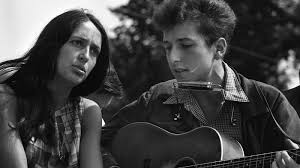
    A guest tour with Joan Baez, and a performance at the March on Washington alongside Joan later, pretty much sealed the deal for Bob and Suze. Bob spent time with manager Albert Grossman, as well as spending time in Carmel, California, at the home of Baez. I currently live near this place, and have spent a lot of time in the area. I can sense the pastoral quality of this time period being injected into these lyrics. It may be why I’ve always felt a closeness to this record. It’s got that feel of sitting inside a cozy bedroom or living room, reading and writing, but with a black cloud of woe and worry passing overhead. The Carmel and Monterey fog living within the lines, maybe.

    Bob’s rejection of his personification as the spokesman of his generation informs much of the record as well. His popularity came with an expectation that he began to work against. He just wanted to do his own thing. What emerges are songs that evoke his inspirations and his life as a songwriter up to this point. What emerges in Bob and his persona is a spikiness, and an unwillingness to accept bullshit from the media, the critics, and the endless line of microphones and magazine article writers. It was this spiky Bob Dylan that went on to create his third record.

    The Object

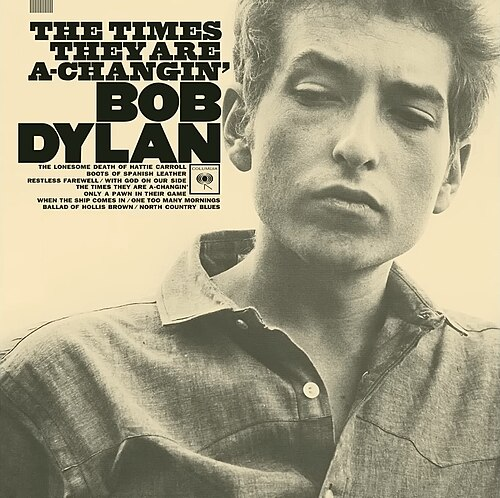
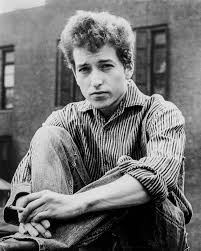
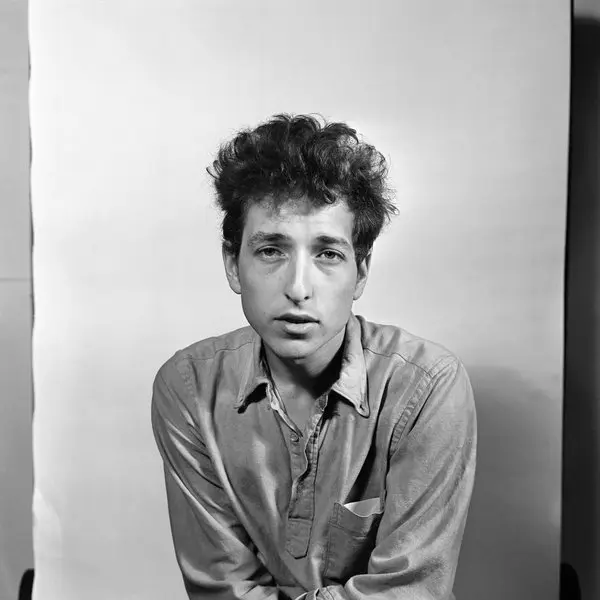
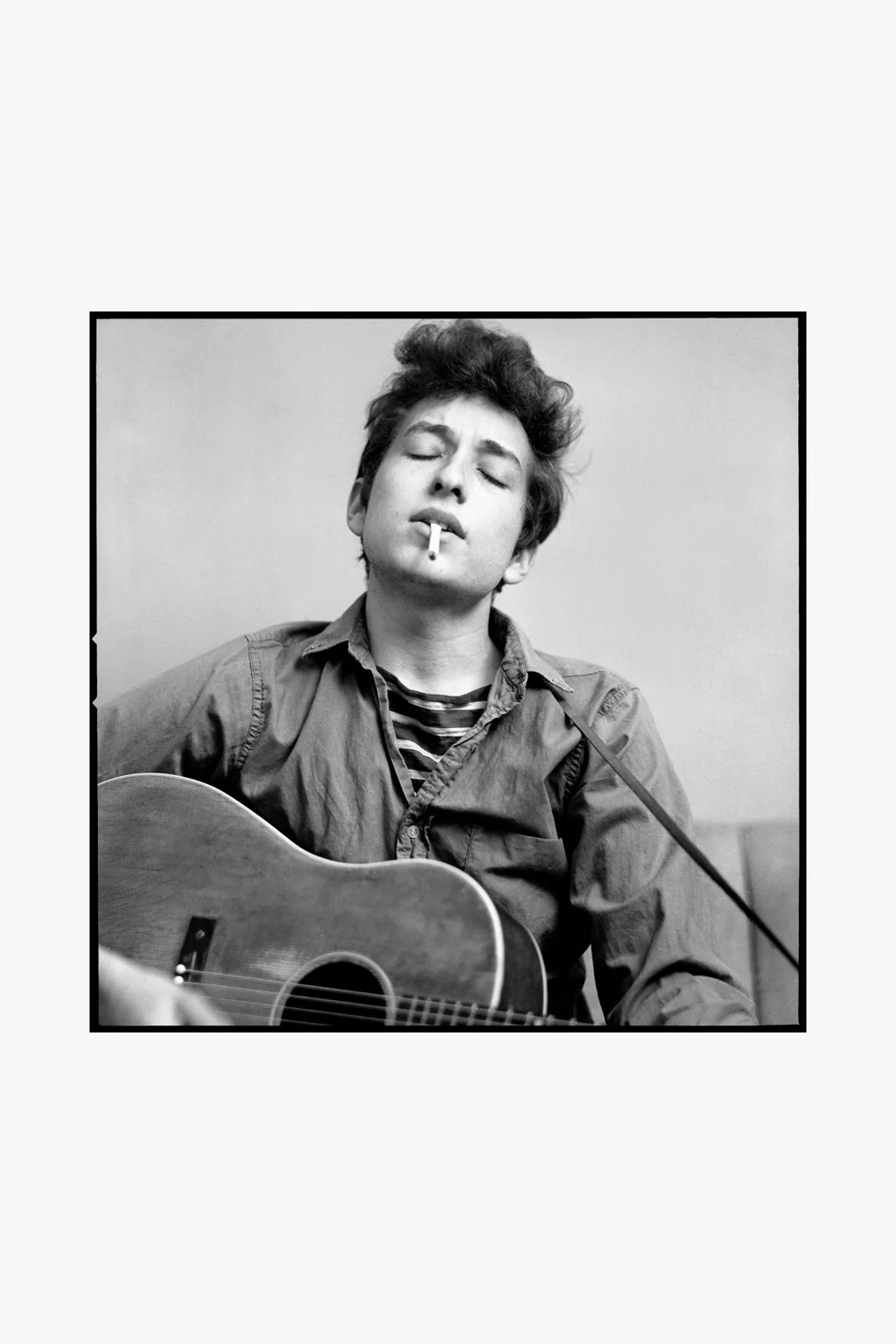
    This record’s album cover has always been striking to me. The monochrome quality, the edges of age and maturity progressing across Bob’s face. It’s a very captivating image. Bob’s face shows a recognition of something harsh and intense going on. It’s post-apocalyptic in a way. You see age but also inexperience on his face. You sense a great emotion, and along with the big typeface of the lead track and the album’s title, a strong statement is made. It’s still very affecting, even by modern standards.

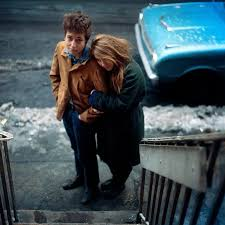
    This cover is also striking as a stark contrast to the preceding record. The brace against the cold on the New York street, along with the kind embrace with Suze and a general optimism, has been replaced with something like a mugshot or an image of poverty, isolation, and longing.

    The Music

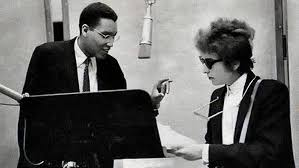
    Recording began on the record in August 1963, and Columbia brought back the company producer Tom Wilson to oversee production. Tom Wilson had produced Bob’s preceding record, and went on to produce the next two. Wilson served the artistry here as more of a facilitator than an overseer. The approach with The Times They Are A-Changin’ is less is more, and you feel it throughout the record. If you focus intently on the songs and how they sound, you’ll notice more prominence to Bob’s vocal, and the refinements in the gentle rhythmic strumming guitars are assisting that voice, not playing alongside it.

    Three sessions were conducted in early August 1963 and produced the master takes for several songs: “North Country Blues,” “Ballad of Hollis Brown,” “With God on Our Side,” “Only A Pawn in Their Game,” and “Boots of Spanish Leather.” Touring interrupted further recording, and the rest of the master tracks were completed in October 1963. In this interim period, Bob may have actually been writing the tracks for the album as well, or at least finalizing ideas for songs he wanted for the record.


    The Times They Are A-Changin’

    Finger-pointing songs.

    Bob said this track was influenced by Irish and Scottish ballads like “Come All Ye Bold Highwaymen” and “Come All Ye Tender Hearted Maidens.” Each verse addresses a different group, and each verse provides a command to that group or groups. It’s a song and an anthem, wanting something from society, civilization, the institution, and the individual. Bob admitted that he made this song with the intent to make some social change. Maybe it’s his most literal call to change from his time as a protest singer in the 60s. It became one of his most well known songs.

    The opening verse calls everyone to gather and admit that the waters around them have grown. Water can destroy all things over time, water erodes. What exact waters is Bob referring to? Just the concept that we’re going in a direction where, if the tide or the flood hits a certain point, we’ll all be affected in some way. And we must admit that. Sink or swim, folks. Adapt, learn, evolve, or die essentially. On this first verse you can sense Bob settling in to the song in the studio, his voice and demeanor and maybe his body getting comfortable with the feeling and progression.

    The second verse turns to writers and critics. Is Bob calling to mind his own quality, or is he asking his writer peers to join with him, don’t miss the opportunity to make a grand statement about what’s going on? I can read these words in a political light. The constant flux of leadership. Don’t criticize the leaders now or the losers, the inevitability that they will be replaced is a constant. The loser now will later win, as if it’s all a game, a constant change, the tables always turning, all up to chance, the spinning wheel.

    Next come the senators and congressmen. Bob’s urge here is to get with the friggin’ program. Don’t cause hindrance. Don’t be an obstacle to change, be a facilitator of it. The times need you to change as well, and call upon yourselves to be the ones that help out. If you stand still, you’ll feel the pain of the oncoming change. The battle outside, the conflict you fail to participate in, will affect your home.

    Then mothers and fathers. Every new generation feels this. Bob would like the old ways to go away. It takes old folks to learn and adapt to new ways of thinking. Always. The youth movement was on its way. The times were showing a protesting population full of college-aged youths. They had ideas and were discussing them. Bob joins the thrall, and requests that if the older generation can’t get along or get with the change, then to simply get out of the way.

    Turning points are no longer even acknowledged. It’s a boundary, and the change has been made. Many have drawn biblical parallels to the final lines of this song, however I find similarity in Yeats’s “The Second Coming.” The order is rapidly fading. The blood-dimmed tide is loose.


    Ballad Of Hollis Brown

    This is a grim, morose song, full of hard-edged dusty imagery, of the poor farmer variety. Very Grapes of Wrath. Very Woody Guthrie, and old American. The story is of a South Dakota farmer overcome by poverty, reaching such desperation that he kills his entire family and then himself.

    An earlier version of the track was recorded during the Freewheelin’ Bob Dylan sessions in November 1962. The early version had a guitar strum pattern, the final version has a more primitive, fingerpicking style.

    This song is amazing and it’s my favorite on the album. It’s a staggering work and could be one of Bob’s more underrated masterpieces. Definitely belongs in the list of great murder ballads.

    If the title track was meant to attract, this song with its dark imagery, themes of ending, murder, and poverty, is meant to repel. The quick one-two punch of the title track’s finger-pointing call to action, paired with this track’s brought-down gloomy mood, establishes both the black-and-white theme of the record and the bleakness of Bob’s optimism. He asks folks to look at what’s happening, but in reality things all turn out bad in the end, and we all die and towns die with us. Whoever this Hollis Brown character is, none of us should want to be him or experience his woes.

    Sonically, the song is definitely gloomy. Bob takes that lower, Woody Guthrie or more dark folk register, delivering each line with a strong punctuation. A matter-of-fact, line-by-line storytelling style. The fingerpicking guitar strum, albeit gloomy as well with its simple chord sequence, is deliciously infectious when paired with the gloom of the song. If you’re someone who likes dark moods in songs, which I am, you’ll get enjoyment from this dark folk tale.

    The scenery and imagery are stark here. Hollis Brown lives on the outside of town with his wife and five children in a broken-down cabin. Such harsh poverty reduced to a hard one-line image: a child not able to smile due to hunger. I enjoy the way Bob is addressing the subject as “you,” placing his audience inside the character’s scene. It makes the listener feel the emotion as if it’s happening to them. Pacing the floor, asking why, never to get a response.

    The horror continues, and the want for some assistance, whether in human form or spiritual, continues. These added questioning lines give the song an anti-religious bent. Money is lord here in this universe, and when there is no money there is no lord. The psychosis is starting to set in. This is a maddening portrayal of someone pushed to his limits.

    Bleakness reaches its breaking point. He’s finished, and the shells will execute the plan. The cold coyote call. Just amazing alliteration. Very deep western. This song is spooky.

    What’s driving this character to commit this harsh act? Does the brain-bleeding imagery imply some madness taking over? Does the man have the same bad blood that the horses have in an earlier verse? There’s a slight disruption in the fingerpicking here, slight new note intonations. Indicative of the madness occurring.

    The seven breezes, to me, indicate an effort to escape, perhaps a run out of the house and the disturbed wind because of it. Nonetheless, seven shots ring out, seven shells spent. The ending lands hard. Seven people dead on a South Dakota farm, and somewhere in the distance, seven new people are born. That’s an inevitability. There are folks being born every day, and folks dying every day. The seven tragic endings may be replaced by even more tragic endings. Who knows.

    Bob chose to sing this song as part of his performance during Live Aid on July 13th, 1985. He expressed he hoped some of the money raised for the event would go to pay mortgages on farms in Africa.


    With God on Our Side

    The anti-war and anti-religious songs continue with this great track to make up more of the powerful songs of side one on this record. The irony of the song is simple. The events mentioned all fit the same pattern. It’s war justified by righteousness, throughout history.

    Bob was accused of plagiarism for this song, and how similar it is to “The Patriot Game” by Dominic Behan. He declined any conflict with Behan.

    With this song, Bob takes a stab at patriotism, at history’s alignment with religion, and at political will bending to support both for the pursuit of land, real estate, and monetary gain through war and killing.

    The song sounds like a funeral march. It’s simple, along with all the other tracks on the record, relegated to just Bob, a guitar, and harmonica. At this point in his life and career he’s still up against the man, and probably up against his own indifference to religion and institutions overall. His later days get a little preachy, and lots of folks drew issue with that when you look back on the statements he was making in songs like this.

    Bob does place himself inside the irony and the argument, though, stating that the country he comes from is called the Midwest. He was taught and grew up there, and the land he lives in has God on its side. He belongs to the country, so there are no exemptions.

    The next verse begins the walk through history, mentioning that the cavalries that charged and killed the Native Americans had God on their side. After that, the Spanish-American War and the Civil War take place. Bob notes that all the names in the history books, that he had to memorize, were the winners, and thus had God on their side.

    The First World War comes next. Bob didn’t get what the conflict was for. But he accepted it, because the dead don’t matter when God’s on your side.

    After that, the Second World War, naturally. And the most biting verse of all. The Germans lost, we forgave them, even though they oversaw massive genocides, and now they are on our side, with God.

    Cold War fascinations come next, where Bob notes that he’s been taught to distrust the Russians. If a war with them comes, it will be fought bravely with God on our side.

    Nuclear weaponry makes up the next verse, the weapons of chemical dust. Bob argues the decision would not be questioned. Because God’s on our side.

    Even the Bible’s key event is brought into question. Did Judas Iscariot have God on his side when he betrayed Jesus?

    The last verse brings it all together, and is basically the punchline to the song, if the song is a joke. If God really was on our side, there won’t be any war, and that God, if caring, would stop it. That turned out to be not exactly the way things went for the subsequent decades. Perhaps Bob found God through all those years of hurt.


    One Too Many Mornings

    This track has a calm beauty to it. It’s emotional, and shows a side of Dylan that has been affected by a difficult time and a difficult relationship. Probably the fallout of his Suze relationship coming to an end is the driver of the emotion in the track. The two impressionable young adults seemed to be on different tracks altogether, and eventually broke up in March 1964, after estrangement due to distance and people in the background interfering.

    This song at the time was cast aside as not protesty enough. A re-look at it, and a placement against some of Bob’s later material like Blood on the Tracks, gives it an immense weight. It’s an amazing track and gave a glimmer of the direction Bob would be taking in a few albums and into the 70s.

    To my ears, it has the best vocal performance as well as the best harmonica insertions on any song on the record. Following up the previous grim track with this sweet ballad is like stepping inside after being caught in an acid rainstorm.

    There’s still some melancholy here, and much of the themes deal with sadness and endings, and a mind not equipped for letting go.


    North Country Blues

    We’re back to the protest songs, and we’re back to the circle, gathered around Bob while he tells us a tale. This tale will turn out to be a personal one, about the iron mining towns of Minnesota and how they break people, and the effect on working people of capitalism’s ever-creeping cycle.

    Most people attribute the setting of this song’s story to Dylan’s hometown of Hibbing, Minnesota. Iron to Minnesota was like gold for Californians. It was a mad rush to mine the land in the 1890s, and Hibbing was a town built on those strips. The iron ranges, where Bob grew up near, gave birth to generations of miners. John D. Rockefeller broke the land, buying up huge pieces of land, amassing huge profits by selling iron to U.S. Steel in the early 20th century. By the 50s the area was mined up, and Bob saw the effects of the industry decline causing a depression in his town. Bob himself did not come from one of these poor mining families, but he was exposed to all of it enough to see it and empathize with their experiences on this great song. Perhaps young Bob’s exposure to downtrodden miners was his first brush with the disenfranchised.

    Bob is putting on a vocal performance on this track evocative of the bards of old, and really is emulating Woody Guthrie. His storytelling skills on this track are downright intense, and the vocal performance helps give the narrative the weight it deserves. He’s singing this story like a good country artist, but a folk country.

    The narrative of the track is told from the POV of a woman. The scene opens with an acknowledgement that this town doesn’t have the luster it used to. The red iron ore pits used to run a-plenty, but now folks have cardboard in their windows. Damage done. The woman narrator’s children are grown, but her own mother was sick and died, and she was raised by a brother. The ore trade flowed, but the woman’s brother died, just like her father. So this woman has children, a dead brother, and a dead mother and father.

    Winter comes, her schooling is cut, an indication that schools may have been closed or shut down. She notes she quit in the spring and marries John Thomas, who as luck would have it, is a miner. Three babies later, but work starts going away. The line about work being cut down to a half-day shift with no reason is a greatly written piece of poetry.

    More mines were closed. Prices for ore rise as supply goes down. Inevitably, and along with what would later resemble free-trade dynamics, the labor goes outside the country. The miners in the South American towns work almost for nothing.

    The next verse has an amazing line about the room smelling heavy from drinking. The work gone, no one to support the family, the inevitable demise. The man dies, the narrator is left alone, the stores all start to close. The children grow up and need to leave. There’s nothing left there to hold them.


    Only A Pawn In Their Game

    This track refers to the murder of Medgar Evers, one of the key leaders of the NAACP in Mississippi, in June of 1963. It was first performed by Bob at a voter registration rally in Greenwood, Mississippi. This was a peak song for Bob at the time, a very important event in the civil rights movement given its due treatment by a young folk singer on his way to making some of the greatest lyrics ever put down, in any genre.

    The song does a lot to recognize and analyze the origins of institutional racism in the South. It doesn’t just say this was a bad thing and we should all learn from it. Evers’s death was one in a string of heinous events towards black people in the South in the 60s. Heinous things purely just for asking for equal rights and freedoms.

    To my ears, there are similarities between the sound of this song and “With God on Our Side.” Of course, the verses end with the same line, each building on an examination of what the hell did this have to happen for. And Evers is just a small piece in the machine.

    In the second verse, the pawn in their game is the poor white man. The Southern politician tells the poor white man that he’s better than the black man, but as we all know, and Bob effortlessly explains to us, this is the game. They play us against each other for their own gain. It continues with the next verse, where the G-men are the ones getting paid, while the poor white man is their tool. He’s taught early that he’s privileged, the laws on his side. And that his skin will save him, so there’s no need to look outside himself, no need for empathy or creative thought.

    The next verse is where the worm turns in the mind of the poor white man. His enemy grows wider in his vision, while his poverty continues, wearing at his self-esteem and respect. The hate for the other leads him to gather with others who think the same, and to kill and lynch along with them.

    The final verse nails the concept true, with great skill. Medgar Evers’s death occurs, his funeral a moment of sadness, but the martyrdom is only surface level, because on the epitaph will read that he was only a pawn in their game.


    Boots of Spanish Leather

    Another beauty of a song inspired by the Bob and Suze relationship. This one feels achingly sad in its details, and Bob’s emotion in his voice. Bob describes it simply as a boy-leaves-girl story. It was written during Suze’s time in Italy, and when Bob had traveled there with folk singer Odetta. He had hoped to meet up with Suze on this trip, but that’s not what happened. This kind of wondering long-distance love vibe weaves through the track and Bob’s pain in his voice shows that.

    Each verse is like a letter to a loved one on a distant journey, so much delicate beauty packed into each neat package. There’s a subtle naivete about love and life here, Bob being young and in love. Generally there isn’t too much story, but each image brings to mind that lover seeing the end of their relationship in sight, and the journey through life becoming solitary, the distance between the two ever widening. The boots of Spanish leather, as the key metaphor, are the footwear for a long journey. The ever-rambling man must ever ramble on. If that’s the gift he wants given, the implication is he wants to be getting on down the road.


    When The Ship Comes In

    Written after an event shared between him and Joan Baez. They were supposedly checking into a hotel together, the clerk snubbed Bob but acknowledged Joan with much respect. The ensuing anger resulted in a quick flash of songwriting, and “When the Ship Comes In” was written that night. Bob’s biographer mentions the snub was due to Bob’s unkempt appearance at the time of check-in. Joan had to vouch for Bob.

    Maybe in this fit of anger, Bob’s selfishness set in. I read in the lyrics that the ship on the sail is Bob himself, or Bob’s ambition. The hour of this metaphorical ship’s coming is Bob’s rise to fame. It’s kinda like “I’ll show ’em.” That’s the feeling I get from the words, as well as the jaunty melody and uptempo strumming of the guitar chords, and the harmonica filled with a hope for better times.

    The track also features a lot of biblical imagery, with interpretations of conquering enemies and revolutionary time periods. Upheavals, new beginnings, the tide of change bringing in ships of hope for better.


    The Lonesome Death of Hattie Carroll

    The penultimate track is another semi-lengthy story song, this one about a hotel barmaid who was killed after being struck by a wealthy white man. The incident happened in early February 1963, in a Baltimore hotel. The barmaid was serving the man a drink, too slow for this rich person named William Zantzinger. He was the first white man accused of killing a black woman in Baltimore, and ended up only receiving six months in prison.

    Bob’s response to this severely sad event was a song that again spoke about the broader issue, not the event itself. He pens a terrific series of verses of poetry about the environment of serious racism in the country. He does this through poetry strong and evolving, the creativity of Bob getting stronger and on firmer ground. There are some intensely good and memorable lines, including an accusatory address to those who philosophize disgrace and criticize all fears, telling them to take the rag away from their face, that now isn’t the time for their tears. Bob is taking an accusatory tone with the people who politicize events such as this. William Zantzinger’s six-month sentence is the final line of the track, really nailing down the injustice of the system here.


    Restless Farewell

    Opinions seem to divide on this final track on the album. For my ears and my experiences with Dylan, hearing this track at the end of this record, knowing the change in direction he will take after this record, it may be the most fitting final track on any of his records.

    As with a lot of the tracks on this record, the melody is borrowed from some old folk songs popularized long ago. This track seems to borrow the melody from the Irish folk song “The Parting Glass.” That song is usually a parting song, sung after a gathering of sorts.

    Why did Bob want to have the punctuation on his third record be a farewell song? Who was he singing farewell to? To me, Bob wrote a lot about himself, his own life, his own songs, his own mind. The restless farewell could allude to his new direction and a relinquishing of his folk traditions, since after this record he’s on the pathway to rejecting the scene that made him famous, rejecting the old style for the new style, and plugging in an electric guitar at the Newport Folk Festival. And the reason why his next record would be called Another Side of Bob Dylan.

    There are plenty of lines that refer to this attitude towards the scene and life in general. The final words really were an attack, a true goodbye and a promise to never care about anything anybody said about him. Pretty ballsy of Bob at the time, he was getting criticism from multiple sides at this point, not to mention a rocky personal life. The image of the straight arrow, the slick point, piercing through dust no matter how thick. Making his stand and remaining as he is, and bidding farewell without giving a damn.

    Closing

    The assassination of John Kennedy looms over this record. The event turned out as pivotal to the mind of Bob, the reaction his album got, and his own reaction to feeling helpless against the G-men, his institutions, and the media. That event changed how the title track meant to a lot of folks. It was a turning point, a cultural hinge point. A revolution, towards one direction or another.

    The overall feeling of the record, even if we just focus on that last final line, is black and white. The world as black and white, whether in skin tone, or us and them. The vibe of the record is also darkness and whiteness. There are happy glimpses of bright, very subtle, but overall the darkness is what gives images their contour and context. It may be his most politically charged album, but there’s a frustration about the situation that exists on the fringe of hopelessness and giving up. If you match “bid farewell and not give a damn” to the songs he’s written, arguing to everyone to get their head out of their ass, then we see such a frightening display, a serious pessimism. It’s the darkness to his previous album’s lightness. It’s no easy listen for a vinyl spin. It’s quite bleak. But that’s what makes it a worthy album.

  • Bob Dylan – Freewheelin’ Bob Dylan

    Bob Dylan – Freewheelin’ Bob Dylan

    Studio Album | Released May 27, 1963

    Recorded July 9, 1962 – April 24, 1963 at Columbia Studio A, New York City | Label: Columbia | Producers: John Hammond & Tom Wilson

    My copy: 2025 Mono Reissue | Purchased in March 2026 | Discogs

    “Anything I can sing, I call a song. Anything I can’t sing, I call a poem. Anything I can’t sing or anything that’s too long to be a poem, I call a novel. But my novels don’t have the usual story-lines. They’re about my feelings at a certain place at a certain time.”

    Bob Dylan. Lots of words written about the man. Should I add to this litany of myth and speculation? He currently lives inside of an ironic public persona, a continuation of what he’s always done. His internal argument, I suspect is that we as a society just don’t know what’s going on. He’s doing AI things now, apparently. I’m not entirely sure. What I find massively appealing is his anti-social, anti-establishment persona, cultivated carefully over decades. I think it’s a product of his uniqueness and his genuine struggle with accepting fame. He writes for himself and for his own myth. The constant “what does your song mean” onslaught must have gotten to him early on, and the rest is a long, deliberate, magnificent evasion.

    It started with Freewheelin’, his second album and the first record made up almost entirely of original tracks. This album is still a monument. The obelisk in the folk swamp. It reached a lot of people. The songs inspired people, gave them hope in a genuinely strange and frightening time. 1963. Things were getting real weird in America. The Cuban Missile Crisis. Kennedy shot. The Civil Rights Movement in full boil. Nuclear destruction a real and present possibility, and a fervent anti-communist government dragging the country toward a ground war in Vietnam.

    In 1962 Bob released his first album, simply titled Bob Dylan. It was a piecemealed collection of mostly folk standards previously recorded by other artists, with only two original songs: “Song to Woody” and “Talkin’ New York.” The second record was a massive jump in terms of songwriting ability, recording acumen, and vocal performance. A genuine career maker. You can sense with this album the good feelings Bob had writing and recording his own material. He was only 22 while making it.

    When the first record came out, it was largely a byproduct of the late 1950s and early 1960s New York City folk scene. On a small scale, a group of thrift shop clothes-wearing hipsters sitting around drinking coffee, listening to music of the vagabond. The guitar case and a few dollars in your pocket. Everyone dropping in to the club to see what new acts are trying to break out into show business. A real scene, and a conscious rejection of the corporate nature of rock and roll at the time. Rock radio, music industry moguls trying desperately to manufacture hits and cash in. It was a rejection of political trends as well. Youth moving toward new directions, thinking big ideas, and imagining the changes required to achieve them.

    Bob Dylan fell into this scene, but in his own way and with his own set of inspirations. His efforts to meet Woody Guthrie, the folk icon, were what brought him to New York City in the first place. His natural tendencies toward rock, blues, and Guthrie’s styles shaped his early sound. The first record was a transmuting of that blend, his songwriting and vocal delivery something between blues tradition and Woody Guthrie. You see this clearly on the debut, and the transformation into the second record was quick, because Bob had always understood the first album as something that just needed to get done so he could get on with what he actually wanted to say.

    Between the two records, behind the scenes, there was an uproar among the money men over the poor sales of the debut. John Hammond, Dylan’s benefactor and producer, possibly with some help from Johnny Cash, secured the contract for Bob to make another record. This next one would be a huge leap forward creatively. A money maker for the ones who cared about that, and possibly for Bob too, who was living place to place and shacking up with his girlfriend. This record would change the face of folk music and the rock music that followed in its wake.


    The Album Cover

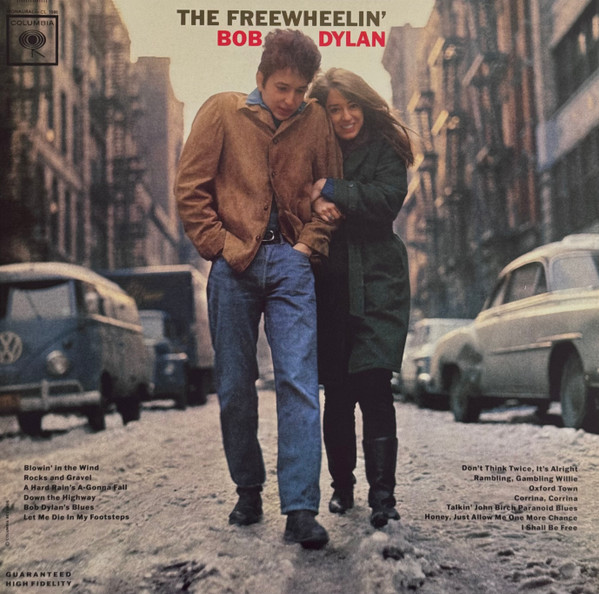
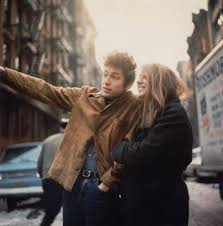
    Bob and his girlfriend at the time, Suze Rotolo, walking in Greenwich Village. Such innocence. Such youth. Honestly, for Bob, this is probably his best cover. A perfect representation of the vibe, the scene, and his life at that moment. That embrace against the cold is everything you need to know about the relationship. You can see the warmth, the appreciation. I also particularly enjoy the old VW bus in the background. Very cool, very of the time. Living in California, I find it quietly amusing that one of those was parked in New York City. But that’s just me.

    Suze was an important piece of the cover and of Dylan’s life. She was deep into the whole equality-freedom thing long before Bob got seriously involved in it. She was possibly the editor, or the litmus test for the content of these songs. Bob said he checked out the songs with her. She had strong left-wing political views and shared them openly with Bob, helping drive his interest in the disenfranchised. Her departure to Italy spurred a period of intensive songwriting, Bob relegated to a pad, a typewriter, a guitar, and a pack of smokes. A friend, Mikki Isaacson, recalled that he was writing at a feverish pace, missing Suze immensely, working on four songs at a time and flipping pages between a spiral notebook, getting one line down at a time.

    The songs were coming quickly. Often it only took a few moments to get a song finished and qualified as poetry. The melodies came from his spongy brain, his ability to pick up on nuance from the vast pool of musical influences around him. He would adopt an old folk tune and suddenly have his song complete. The recording sessions at Columbia’s New York studio started in April 1962 and got seriously productive in July, where the most distinctive material began getting laid down.

    The Object

    I used to own this record, but it was in very rough shape. Unable to be played. Resurrected here with this reissue, I’m finally happy to have a copy that does the music justice. This is where Bob broke out as a songwriter and artist. The songs are ripe with political commentary and imagery. The scene is Greenwich Village, the girlfriend on the cover, young Bob taking on the world and his own artistry.

    My copy is a 2025 RSD reissue, Mono, an MPO pressing. The album cover and rear cover are original, maintains the original liner notes, and retains the pre-controversial tracks. A very important note: it holds the original track listing from before certain songs were eliminated, which I’ll get into below.

    Call RSD what you will. I often regard it as a cash grab for most of those involved, but if it keeps local record stores alive I’m fine with it. There are a few RSD releases worth tracking down, and this is one of them. For collectors, this pressing offers a real alternative to hunting for an original Freewheelin’ with the pre-removal tracks, copies of which have become extremely rare and expensive.

    I bought it on Discogs in March 2026, still filling out the collection with greats from pre-1965.

    This copy sounds really good. Some of these tracks I’ve never heard this clean. The beauty of vinyl. Bob’s voice is front and center where it needs to be, right in the middle of the channel. Super flat and quiet. Perfect.

    I like this track listing. Not sure I’ll ever need the official, most recognized release with the standard tracks, though at some point it might make sense to have both. The familiar songs sound great here, but the new favorite for me is “Down the Highway.”

    It’s a happy time, owning this record. We all should own it. Bask in the greatness of early 1960s Bob and the world gets a little better.

    The Music

    Blowin’ in the Wind

    Blowing In The Wind (Live On TV, March 1963)

    Recorded July 9, 1962

    “The idea came to me that you were betrayed by your silence, that all of us in America who didn’t speak out were betrayed by our silence, betrayed by the silence of the people in power. They refuse to look at what’s happening.”

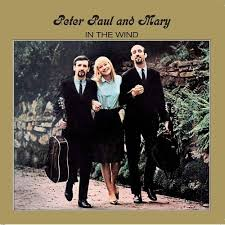
    Unofficial anthem of the 1960s? This song was already a hit for Peter, Paul and Mary before this record even came out. Apparently written in ten minutes while sitting in a café. The theme of world peace. The question song. The tonal metronome of what was happening in the world at that moment.

    Dylan may have understood the immensity this song carried, or worried about it. More likely he put the thing out there and watched it begin to live a life of its own. It was his first real attempt at moving from reporting specific events to examining the general, and the vagueness was the whole strategy. Scholars have noted that the reason this song works is precisely because it doesn’t connect to any specific territory. There is no specific event, no villain, no proper name. The argument is exterritorial, and by being untethered it could attach itself to any freedom struggle anywhere.

    The life this song has lived is beyond anything Bob could have imagined when he wrote it. It’s anthemic at this point, embedded in the zeitgeist. We make each other feel something when we talk about what this song is about. Whether it’s stirring or inspiring or bittersweet, by 2026 the things this song helped set in motion have lived through generations, seen their ups and downs. When it really comes down to it, we’re still pondering the same questions Bob was asking when he wrote it.

    I love a song that asks questions, and this one along with “A Hard Rain” asks many, repeatedly. Maybe that’s the real subject. A song that made people question themselves, the institutions that govern them, and their place within those institutions. There’s a comment in No Direction Home noting that this song feels simultaneously brand new and two hundred years old. “Blowin’ in the Wind” became a cliché, and what a profitable one.


    A Hard Rain’s A-Gonna Fall

    A Hard Rain’s A Gonna Fall

    Recorded December 6, 1962

    Dave Van Ronk recognized this song as a pivot point, the beginning of a new artistic revolution. The proof that poetry could be fully infused into folk music at this scale. That hadn’t been done before.

    Born out of the Cuban Missile Crisis. A period of intense paranoia, genuine talk of mutually assured destruction, nuclear catastrophe on a real timetable. A song like this could only come from that moment, from a mind ripe with dread about the end of the world and eager enough to put one of his best songs ever to paper. More poem than song, a string of imagery inspired by the French poet Arthur Rimbaud, one of Suze and Bob’s favorite writers.

    Epic. Seriously. Personally, this song has taken on different connotations for me over the years. After watching the Ken Burns Vietnam documentary and visiting the wall memorial in DC, hearing those first lines is enough to make the tears well up. For me this song is a collage that lives somewhere in the quiet grey between optimism and pessimism. A request. It wants to know something.

    Probably the best thing I’ve read about it is where Bob makes clear that every line in this song could be a song in itself. Every line starts and ends its own image.

    “Where have you been, my blue-eyed son” shifts to “What did you see”, then “What did you hear”, then “Who did you meet.” That’s the only narrative shift. The blue-eyed son: the wide-eyed youth, the wayward soul, the witness to the prosecution. The fundamental newness of childhood bearing witness to the evidence of the horrors and the beauties of life. Or just, you know, the good old-fashioned end of the world.

    It’s the sincerity, the soft-spoken cry for action in Bob’s voice on the question pieces that gets me. The subtle question is the more urgent one.


    Down the Highway

    Spooky blues, right up my alley. Or highway, as it were. It’s bare and basic, working within the twelve-bar scheme, but those single guitar strums that linger throughout are just maddening. Scary and menacing. Hear that at a crossroads at night and you’ll be looking over both shoulders, seeing things in the cornfields.

    The song is about Bob living in the void of Suze Rotolo’s absence. She’s gone to the far-off land of Italy, leaving the narrator poor and lonely, stripped down, nervous, and afraid. Left to gamble and booze it away. Bob had also been getting real thin and loose around this period of songwriting. Losing weight, appearing gaunt. The relationship with Suze had taken its toll, and this song sits in the middle of that toll.


    Bob Dylan’s Blues

    Recorded July 9, 1962

    A moment of respite in the sequencing. Recorded during the same session as “Blowin’ in the Wind,” it makes for a little breather between the heaviness of what comes before it and the second side. During the actual recording session it probably served the same purpose.

    “Bob Dylan’s Blues” was originally the working title for Freewheelin’ before the final title came along.

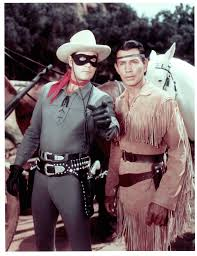
    The Lone Ranger and Tonto: the first characters in Bob Dylan’s menagerie, the kind that would multiply and populate his later albums. Welcome to the carnival.


    Let Me Die in My Footsteps

    One of the four tracks replaced after the John Birch situation.


    Side 2


    Don’t Think Twice, It’s All Right

    Recorded November 14, 1962

    A breakup song, directed at and inspired by the deterioration of Bob and Suze’s relationship. Bob shoots accusations across the table: “You just kind of wasted my precious time.” He’s the one traveling on. In reality, though, it was Suze who left Bob, not the other way around.

    A song with a lot of charisma for me. Bewitching. Just Bob and his guitar, a real knack for dynamic picking, and a voice he’d been sharpening during his New York years. One of those songs that sounds effortless and reveals itself as anything but over time.


    Rambling, Gambling Willie

    One of the four tracks replaced after the John Birch situation.


    Oxford Town

    Recorded December 6, 1962

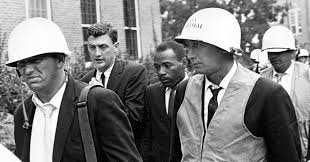
    Another song written for and published in Broadside magazine, in response to a call for songs about topical events. Bob is making direct reference to one of the key moments in the Civil Rights Movement. James Meredith, a Black man who won a federal court ruling allowing him to register at the University of Mississippi, Ole Miss.

    The governor of Mississippi took extreme conflict with the situation. The whole episode is insane to read about even now, though we have to remind ourselves how far we’ve come. Meredith registered amid a mob of rioters, the National Guard, and an armed conflict that resulted in two deaths and roughly three hundred wounded.

    The final line remains relevant today: “Somebody better investigate soon.” A sarcastic tone. Somebody ought to do something about this. Well, we’ve been waiting and will continue to be waiting.


    Corrina, Corrina

    Recorded October 26, 1962

    The only song on the record not originally composed by Dylan. This composition dates back to 1918, a traditional blues tune about a lost love. Bob most likely knew it through Blind Lemon Jefferson, or possibly Robert Johnson’s version.

    The song is indicative of Bob’s deep connection to the original blues legends, and this adaptation is a direct byproduct of his loneliness in Suze’s absence. He wore that loneliness across most of the album, and here it takes on an older, rawer form.


    Talkin’ John Birch Paranoid Blues

    Deemed too controversial for the original release. Several of the protest songs on this record were published in Broadside, the folk and protest magazine. The first issue of that publication, of which Bob was a contributor, carried the lyrics of this talking blues. The alt-right gets picked apart in the song, with a great punch at the end: the narrator searches for communists everywhere, and eventually finds one looking back at him in the mirror.

    Dylan had planned to perform this on the Ed Sullivan Show, at the time the single most important platform for any musician wanting to get known or stay known. The censors got hold of it during rehearsal and immediately questioned the song, fearing libel against the John Birch Society. Bob made it clear without much deliberation: no song, no show. He walked out. Further down the line this helped his street cred with the anti-establishment Greenwich Village crowd, but that same fear of libel made it to the desks of the Columbia executives, who pulled the song from the album. Bob had to comply under contract. This led to the other songs being pulled as well. “Rocks and Gravel,” “Rambling Gambling Willie,” and “Let Me Die in My Footsteps” went with it.


    Honey, Just Allow Me One More Chance

    Recorded July 9, 1962

    Another cover, this time drawing from Henry Thomas, an old Texas country bluesman. A pretty different mood from the rest of the album, more upbeat, though the subject matter still circles back to Suze’s absence and Dylan’s loneliness. A little lightness before the end.


    I Shall Be Free

    Recorded December 6, 1962

    The album ends on a comic note. Lots of nonsensical remarks in this track, almost a politically incorrect comedy routine. A loose, funny, deliberate exhale after everything that came before it. Bob letting the air out of the balloon before he sends you home.

    Closing

    Freewheelin’ contains some of my favorite Bob tunes ever. For that it will always hold a happy place in the collection. I probably heard Bob Dylan songs in my toddler years, maybe even earlier. I genuinely cannot remember the first time I heard him. But sometimes I listen to “A Hard Rain’s Gonna Fall” and it’s new again. Every single time. That is the sign of great music.

    He was in a unique creative period here. You can tug on a lot of different threads and they all lead to the same place: a spot of intense creativity, a spot of inspired songwriting, a young man taking on the world with a guitar and a typewriter and a burning need to say something. This was the start of Bob’s rise. The best records were still to come, but this one gave us proof of what was possible. An all-time classic if there ever was one.

    Thanks be to the Dylan.

    “If you told the truth, that was all well and good, and if you told the un-truth, well that was still well and good. Folk songs had taught me that.”

    -RTR