Studio Album | Released February 10th, 1964 | Recorded August 6 – October 31, 1963 | Columbia Records| Produced by Tom Wilson
In my opinion this record is Bob’s second brush with greatness after his second record, The Freewheelin’ Bob Dylan. The third record from the master bard and songwriter represents a stark contrast to that second one. On Freewheelin’ there’s some hidden optimism somewhere within it. It’s hopeful, it’s youth, and the world is open. There’s a hope that we can get things fixed if we all get on the right track. With The Times They Are A-Changin’, we along with Bob must accept the onslaught of an apocalypse. It’s a stark and haunting landscape. Windswept. Dusty. Dark. Black and white. The title represents a regard for a movement in a different direction. You listen to the record intently, you can feel that movement. In some songs you feel the damage already being done. In some ways things have already changed for the worst.
Being noticed can be a burden.
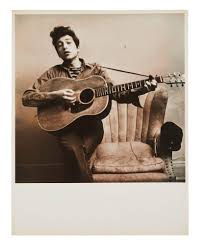
Bob’s fame was shooting to the top in the period between his second record and his third. Between spring 1963 and early 1964, Bob was being crowned the king of the protest song. This was a persona he was beginning to reject and come to terms with at the same time. You can feel that rejection, and some quiet acceptance, in this record. What also occurred during this period was the assassination of John Kennedy. That event really informed the album and had an indelible effect on the songwriter. Many people still associate that event with the title track, and rightfully so, it being such a turning point in his country’s and the world’s history.
Bob’s relationship with Suze, which helped inspire several of the songs on his sophomore record, continued to struggle. What was coming into his life was a semi-rivalry, semi-courtship with female folk powerhouse Joan Baez. This partnership and career advancement opportunistic relationship took center stage on multiple occasions, most famously during the Newport Folk Festival held in July 1963. That festival was Bob’s joining of the folk zeitgeist, the world giving him the title of folk and protest song master. Bob was applauded in dirges. The want for his words and the want for him to represent the teeming masses was massive. They were on edge waiting for him to come and lead the way, even though he was just trying to make his way as a songwriter and as a young human man being.
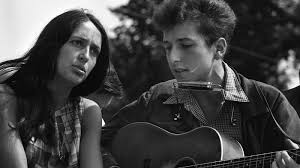
A guest tour with Joan Baez, and a performance at the March on Washington alongside Joan later, pretty much sealed the deal for Bob and Suze. Bob spent time with manager Albert Grossman, as well as spending time in Carmel, California, at the home of Baez. I currently live near this place, and have spent a lot of time in the area. I can sense the pastoral quality of this time period being injected into these lyrics. It may be why I’ve always felt a closeness to this record. It’s got that feel of sitting inside a cozy bedroom or living room, reading and writing, but with a black cloud of woe and worry passing overhead. The Carmel and Monterey fog living within the lines, maybe.
Bob’s rejection of his personification as the spokesman of his generation informs much of the record as well. His popularity came with an expectation that he began to work against. He just wanted to do his own thing. What emerges are songs that evoke his inspirations and his life as a songwriter up to this point. What emerges in Bob and his persona is a spikiness, and an unwillingness to accept bullshit from the media, the critics, and the endless line of microphones and magazine article writers. It was this spiky Bob Dylan that went on to create his third record.
The Object
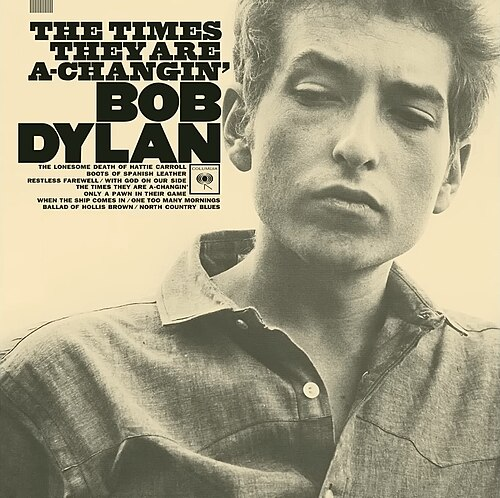
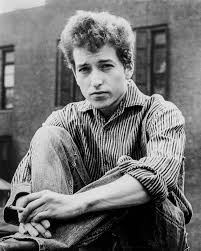
This record’s album cover has always been striking to me. The monochrome quality, the edges of age and maturity progressing across Bob’s face. It’s a very captivating image. Bob’s face shows a recognition of something harsh and intense going on. It’s post-apocalyptic in a way. You see age but also inexperience on his face. You sense a great emotion, and along with the big typeface of the lead track and the album’s title, a strong statement is made. It’s still very affecting, even by modern standards.
This cover is also striking as a stark contrast to the preceding record. The brace against the cold on the New York street, along with the kind embrace with Suze and a general optimism, has been replaced with something like a mugshot or an image of poverty, isolation, and longing.
The Music
Recording began on the record in August 1963, and Columbia brought back the company producer Tom Wilson to oversee production. Tom Wilson had produced Bob’s preceding record, and went on to produce the next two. Wilson served the artistry here as more of a facilitator than an overseer. The approach with The Times They Are A-Changin’ is less is more, and you feel it throughout the record. If you focus intently on the songs and how they sound, you’ll notice more prominence to Bob’s vocal, and the refinements in the gentle rhythmic strumming guitars are assisting that voice, not playing alongside it.
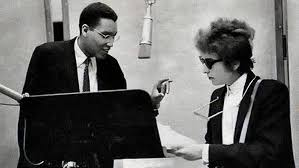
Three sessions were conducted in early August 1963 and produced the master takes for several songs: “North Country Blues,” “Ballad of Hollis Brown,” “With God on Our Side,” “Only A Pawn in Their Game,” and “Boots of Spanish Leather.” Touring interrupted further recording, and the rest of the master tracks were completed in October 1963. In this interim period, Bob may have actually been writing the tracks for the album as well, or at least finalizing ideas for songs he wanted for the record.
The Times They Are A-Changin’
Finger-pointing songs.
Bob said this track was influenced by Irish and Scottish ballads like “Come All Ye Bold Highwaymen” and “Come All Ye Tender Hearted Maidens.” Each verse addresses a different group, and each verse provides a command to that group or groups. It’s a song and an anthem, wanting something from society, civilization, the institution, and the individual. Bob admitted that he made this song with the intent to make some social change. Maybe it’s his most literal call to change from his time as a protest singer in the 60s. It became one of his most well known songs.
The opening verse calls everyone to gather and admit that the waters around them have grown. Water can destroy all things over time, water erodes. What exact waters is Bob referring to? Just the concept that we’re going in a direction where, if the tide or the flood hits a certain point, we’ll all be affected in some way. And we must admit that. Sink or swim, folks. Adapt, learn, evolve, or die essentially. On this first verse you can sense Bob settling in to the song in the studio, his voice and demeanor and maybe his body getting comfortable with the feeling and progression.
The second verse turns to writers and critics. Is Bob calling to mind his own quality, or is he asking his writer peers to join with him, don’t miss the opportunity to make a grand statement about what’s going on? I can read these words in a political light. The constant flux of leadership. Don’t criticize the leaders now or the losers, the inevitability that they will be replaced is a constant. The loser now will later win, as if it’s all a game, a constant change, the tables always turning, all up to chance, the spinning wheel.
Next come the senators and congressmen. Bob’s urge here is to get with the friggin’ program. Don’t cause hindrance. Don’t be an obstacle to change, be a facilitator of it. The times need you to change as well, and call upon yourselves to be the ones that help out. If you stand still, you’ll feel the pain of the oncoming change. The battle outside, the conflict you fail to participate in, will affect your home.
Then mothers and fathers. Every new generation feels this. Bob would like the old ways to go away. It takes old folks to learn and adapt to new ways of thinking. Always. The youth movement was on its way. The times were showing a protesting population full of college-aged youths. They had ideas and were discussing them. Bob joins the thrall, and requests that if the older generation can’t get along or get with the change, then to simply get out of the way.
Turning points are no longer even acknowledged. It’s a boundary, and the change has been made. Many have drawn biblical parallels to the final lines of this song, however I find similarity in Yeats’s “The Second Coming.” The order is rapidly fading. The blood-dimmed tide is loose.
Ballad Of Hollis Brown
This is a grim, morose song, full of hard-edged dusty imagery, of the poor farmer variety. Very Grapes of Wrath. Very Woody Guthrie, and old American. The story is of a South Dakota farmer overcome by poverty, reaching such desperation that he kills his entire family and then himself.
An earlier version of the track was recorded during the Freewheelin’ Bob Dylan sessions in November 1962. The early version had a guitar strum pattern, the final version has a more primitive, fingerpicking style.
This song is amazing and it’s my favorite on the album. It’s a staggering work and could be one of Bob’s more underrated masterpieces. Definitely belongs in the list of great murder ballads.
If the title track was meant to attract, this song with its dark imagery, themes of ending, murder, and poverty, is meant to repel. The quick one-two punch of the title track’s finger-pointing call to action, paired with this track’s brought-down gloomy mood, establishes both the black-and-white theme of the record and the bleakness of Bob’s optimism. He asks folks to look at what’s happening, but in reality things all turn out bad in the end, and we all die and towns die with us. Whoever this Hollis Brown character is, none of us should want to be him or experience his woes.
Sonically, the song is definitely gloomy. Bob takes that lower, Woody Guthrie or more dark folk register, delivering each line with a strong punctuation. A matter-of-fact, line-by-line storytelling style. The fingerpicking guitar strum, albeit gloomy as well with its simple chord sequence, is deliciously infectious when paired with the gloom of the song. If you’re someone who likes dark moods in songs, which I am, you’ll get enjoyment from this dark folk tale.
The scenery and imagery are stark here. Hollis Brown lives on the outside of town with his wife and five children in a broken-down cabin. Such harsh poverty reduced to a hard one-line image: a child not able to smile due to hunger. I enjoy the way Bob is addressing the subject as “you,” placing his audience inside the character’s scene. It makes the listener feel the emotion as if it’s happening to them. Pacing the floor, asking why, never to get a response.
The horror continues, and the want for some assistance, whether in human form or spiritual, continues. These added questioning lines give the song an anti-religious bent. Money is lord here in this universe, and when there is no money there is no lord. The psychosis is starting to set in. This is a maddening portrayal of someone pushed to his limits.
Bleakness reaches its breaking point. He’s finished, and the shells will execute the plan. The cold coyote call. Just amazing alliteration. Very deep western. This song is spooky.
What’s driving this character to commit this harsh act? Does the brain-bleeding imagery imply some madness taking over? Does the man have the same bad blood that the horses have in an earlier verse? There’s a slight disruption in the fingerpicking here, slight new note intonations. Indicative of the madness occurring.
The seven breezes, to me, indicate an effort to escape, perhaps a run out of the house and the disturbed wind because of it. Nonetheless, seven shots ring out, seven shells spent. The ending lands hard. Seven people dead on a South Dakota farm, and somewhere in the distance, seven new people are born. That’s an inevitability. There are folks being born every day, and folks dying every day. The seven tragic endings may be replaced by even more tragic endings. Who knows.
Bob chose to sing this song as part of his performance during Live Aid on July 13th, 1985. He expressed he hoped some of the money raised for the event would go to pay mortgages on farms in Africa.
With God on Our Side
The anti-war and anti-religious songs continue with this great track to make up more of the powerful songs of side one on this record. The irony of the song is simple. The events mentioned all fit the same pattern. It’s war justified by righteousness, throughout history.
Bob was accused of plagiarism for this song, and how similar it is to “The Patriot Game” by Dominic Behan. He declined any conflict with Behan.
With this song, Bob takes a stab at patriotism, at history’s alignment with religion, and at political will bending to support both for the pursuit of land, real estate, and monetary gain through war and killing.
The song sounds like a funeral march. It’s simple, along with all the other tracks on the record, relegated to just Bob, a guitar, and harmonica. At this point in his life and career he’s still up against the man, and probably up against his own indifference to religion and institutions overall. His later days get a little preachy, and lots of folks drew issue with that when you look back on the statements he was making in songs like this.
Bob does place himself inside the irony and the argument, though, stating that the country he comes from is called the Midwest. He was taught and grew up there, and the land he lives in has God on its side. He belongs to the country, so there are no exemptions.
The next verse begins the walk through history, mentioning that the cavalries that charged and killed the Native Americans had God on their side. After that, the Spanish-American War and the Civil War take place. Bob notes that all the names in the history books, that he had to memorize, were the winners, and thus had God on their side.
The First World War comes next. Bob didn’t get what the conflict was for. But he accepted it, because the dead don’t matter when God’s on your side.
After that, the Second World War, naturally. And the most biting verse of all. The Germans lost, we forgave them, even though they oversaw massive genocides, and now they are on our side, with God.
Cold War fascinations come next, where Bob notes that he’s been taught to distrust the Russians. If a war with them comes, it will be fought bravely with God on our side.
Nuclear weaponry makes up the next verse, the weapons of chemical dust. Bob argues the decision would not be questioned. Because God’s on our side.
Even the Bible’s key event is brought into question. Did Judas Iscariot have God on his side when he betrayed Jesus?
The last verse brings it all together, and is basically the punchline to the song, if the song is a joke. If God really was on our side, there won’t be any war, and that God, if caring, would stop it. That turned out to be not exactly the way things went for the subsequent decades. Perhaps Bob found God through all those years of hurt.
One Too Many Mornings
This track has a calm beauty to it. It’s emotional, and shows a side of Dylan that has been affected by a difficult time and a difficult relationship. Probably the fallout of his Suze relationship coming to an end is the driver of the emotion in the track. The two impressionable young adults seemed to be on different tracks altogether, and eventually broke up in March 1964, after estrangement due to distance and people in the background interfering.
This song at the time was cast aside as not protesty enough. A re-look at it, and a placement against some of Bob’s later material like Blood on the Tracks, gives it an immense weight. It’s an amazing track and gave a glimmer of the direction Bob would be taking in a few albums and into the 70s.
To my ears, it has the best vocal performance as well as the best harmonica insertions on any song on the record. Following up the previous grim track with this sweet ballad is like stepping inside after being caught in an acid rainstorm.
There’s still some melancholy here, and much of the themes deal with sadness and endings, and a mind not equipped for letting go.
North Country Blues
We’re back to the protest songs, and we’re back to the circle, gathered around Bob while he tells us a tale. This tale will turn out to be a personal one, about the iron mining towns of Minnesota and how they break people, and the effect on working people of capitalism’s ever-creeping cycle.
Most people attribute the setting of this song’s story to Dylan’s hometown of Hibbing, Minnesota. Iron to Minnesota was like gold for Californians. It was a mad rush to mine the land in the 1890s, and Hibbing was a town built on those strips. The iron ranges, where Bob grew up near, gave birth to generations of miners. John D. Rockefeller broke the land, buying up huge pieces of land, amassing huge profits by selling iron to U.S. Steel in the early 20th century. By the 50s the area was mined up, and Bob saw the effects of the industry decline causing a depression in his town. Bob himself did not come from one of these poor mining families, but he was exposed to all of it enough to see it and empathize with their experiences on this great song. Perhaps young Bob’s exposure to downtrodden miners was his first brush with the disenfranchised.
Bob is putting on a vocal performance on this track evocative of the bards of old, and really is emulating Woody Guthrie. His storytelling skills on this track are downright intense, and the vocal performance helps give the narrative the weight it deserves. He’s singing this story like a good country artist, but a folk country.
The narrative of the track is told from the POV of a woman. The scene opens with an acknowledgement that this town doesn’t have the luster it used to. The red iron ore pits used to run a-plenty, but now folks have cardboard in their windows. Damage done. The woman narrator’s children are grown, but her own mother was sick and died, and she was raised by a brother. The ore trade flowed, but the woman’s brother died, just like her father. So this woman has children, a dead brother, and a dead mother and father.
Winter comes, her schooling is cut, an indication that schools may have been closed or shut down. She notes she quit in the spring and marries John Thomas, who as luck would have it, is a miner. Three babies later, but work starts going away. The line about work being cut down to a half-day shift with no reason is a greatly written piece of poetry.
More mines were closed. Prices for ore rise as supply goes down. Inevitably, and along with what would later resemble free-trade dynamics, the labor goes outside the country. The miners in the South American towns work almost for nothing.
The next verse has an amazing line about the room smelling heavy from drinking. The work gone, no one to support the family, the inevitable demise. The man dies, the narrator is left alone, the stores all start to close. The children grow up and need to leave. There’s nothing left there to hold them.
Only A Pawn In Their Game
This track refers to the murder of Medgar Evers, one of the key leaders of the NAACP in Mississippi, in June of 1963. It was first performed by Bob at a voter registration rally in Greenwood, Mississippi. This was a peak song for Bob at the time, a very important event in the civil rights movement given its due treatment by a young folk singer on his way to making some of the greatest lyrics ever put down, in any genre.
The song does a lot to recognize and analyze the origins of institutional racism in the South. It doesn’t just say this was a bad thing and we should all learn from it. Evers’s death was one in a string of heinous events towards black people in the South in the 60s. Heinous things purely just for asking for equal rights and freedoms.
To my ears, there are similarities between the sound of this song and “With God on Our Side.” Of course, the verses end with the same line, each building on an examination of what the hell did this have to happen for. And Evers is just a small piece in the machine.
In the second verse, the pawn in their game is the poor white man. The Southern politician tells the poor white man that he’s better than the black man, but as we all know, and Bob effortlessly explains to us, this is the game. They play us against each other for their own gain. It continues with the next verse, where the G-men are the ones getting paid, while the poor white man is their tool. He’s taught early that he’s privileged, the laws on his side. And that his skin will save him, so there’s no need to look outside himself, no need for empathy or creative thought.
The next verse is where the worm turns in the mind of the poor white man. His enemy grows wider in his vision, while his poverty continues, wearing at his self-esteem and respect. The hate for the other leads him to gather with others who think the same, and to kill and lynch along with them.
The final verse nails the concept true, with great skill. Medgar Evers’s death occurs, his funeral a moment of sadness, but the martyrdom is only surface level, because on the epitaph will read that he was only a pawn in their game.
Boots of Spanish Leather
Another beauty of a song inspired by the Bob and Suze relationship. This one feels achingly sad in its details, and Bob’s emotion in his voice. Bob describes it simply as a boy-leaves-girl story. It was written during Suze’s time in Italy, and when Bob had traveled there with folk singer Odetta. He had hoped to meet up with Suze on this trip, but that’s not what happened. This kind of wondering long-distance love vibe weaves through the track and Bob’s pain in his voice shows that.
Each verse is like a letter to a loved one on a distant journey, so much delicate beauty packed into each neat package. There’s a subtle naivete about love and life here, Bob being young and in love. Generally there isn’t too much story, but each image brings to mind that lover seeing the end of their relationship in sight, and the journey through life becoming solitary, the distance between the two ever widening. The boots of Spanish leather, as the key metaphor, are the footwear for a long journey. The ever-rambling man must ever ramble on. If that’s the gift he wants given, the implication is he wants to be getting on down the road.
When The Ship Comes In
Written after an event shared between him and Joan Baez. They were supposedly checking into a hotel together, the clerk snubbed Bob but acknowledged Joan with much respect. The ensuing anger resulted in a quick flash of songwriting, and “When the Ship Comes In” was written that night. Bob’s biographer mentions the snub was due to Bob’s unkempt appearance at the time of check-in. Joan had to vouch for Bob.
Maybe in this fit of anger, Bob’s selfishness set in. I read in the lyrics that the ship on the sail is Bob himself, or Bob’s ambition. The hour of this metaphorical ship’s coming is Bob’s rise to fame. It’s kinda like “I’ll show ’em.” That’s the feeling I get from the words, as well as the jaunty melody and uptempo strumming of the guitar chords, and the harmonica filled with a hope for better times.
The track also features a lot of biblical imagery, with interpretations of conquering enemies and revolutionary time periods. Upheavals, new beginnings, the tide of change bringing in ships of hope for better.
The Lonesome Death of Hattie Carroll
The penultimate track is another semi-lengthy story song, this one about a hotel barmaid who was killed after being struck by a wealthy white man. The incident happened in early February 1963, in a Baltimore hotel. The barmaid was serving the man a drink, too slow for this rich person named William Zantzinger. He was the first white man accused of killing a black woman in Baltimore, and ended up only receiving six months in prison.
Bob’s response to this severely sad event was a song that again spoke about the broader issue, not the event itself. He pens a terrific series of verses of poetry about the environment of serious racism in the country. He does this through poetry strong and evolving, the creativity of Bob getting stronger and on firmer ground. There are some intensely good and memorable lines, including an accusatory address to those who philosophize disgrace and criticize all fears, telling them to take the rag away from their face, that now isn’t the time for their tears. Bob is taking an accusatory tone with the people who politicize events such as this. William Zantzinger’s six-month sentence is the final line of the track, really nailing down the injustice of the system here.
Restless Farewell
Opinions seem to divide on this final track on the album. For my ears and my experiences with Dylan, hearing this track at the end of this record, knowing the change in direction he will take after this record, it may be the most fitting final track on any of his records.
As with a lot of the tracks on this record, the melody is borrowed from some old folk songs popularized long ago. This track seems to borrow the melody from the Irish folk song “The Parting Glass.” That song is usually a parting song, sung after a gathering of sorts.
Why did Bob want to have the punctuation on his third record be a farewell song? Who was he singing farewell to? To me, Bob wrote a lot about himself, his own life, his own songs, his own mind. The restless farewell could allude to his new direction and a relinquishing of his folk traditions, since after this record he’s on the pathway to rejecting the scene that made him famous, rejecting the old style for the new style, and plugging in an electric guitar at the Newport Folk Festival. And the reason why his next record would be called Another Side of Bob Dylan.
There are plenty of lines that refer to this attitude towards the scene and life in general. The final words really were an attack, a true goodbye and a promise to never care about anything anybody said about him. Pretty ballsy of Bob at the time, he was getting criticism from multiple sides at this point, not to mention a rocky personal life. The image of the straight arrow, the slick point, piercing through dust no matter how thick. Making his stand and remaining as he is, and bidding farewell without giving a damn.
Closing
The assassination of John Kennedy looms over this record. The event turned out as pivotal to the mind of Bob, the reaction his album got, and his own reaction to feeling helpless against the G-men, his institutions, and the media. That event changed how the title track meant to a lot of folks. It was a turning point, a cultural hinge point. A revolution, towards one direction or another.
The overall feeling of the record, even if we just focus on that last final line, is black and white. The world as black and white, whether in skin tone, or us and them. The vibe of the record is also darkness and whiteness. There are happy glimpses of bright, very subtle, but overall the darkness is what gives images their contour and context. It may be his most politically charged album, but there’s a frustration about the situation that exists on the fringe of hopelessness and giving up. If you match “bid farewell and not give a damn” to the songs he’s written, arguing to everyone to get their head out of their ass, then we see such a frightening display, a serious pessimism. It’s the darkness to his previous album’s lightness. It’s no easy listen for a vinyl spin. It’s quite bleak. But that’s what makes it a worthy album.


Leave a Reply