Tag: review

  • John Coltrane – A Love Supreme

    John Coltrane – A Love Supreme

    Studio Album | Released January 1965 | Recorded December 9th 1964 at Van Gelder Studio | Impulse! Records | Producer Bob Thiele

    The John Coltrane sound: heavenly, spiritual, otherworldly. A Love Supreme is for many the peak Coltrane album. For others it is at least the most famous one, the record that hit the jazz world the hardest and left the deepest mark.

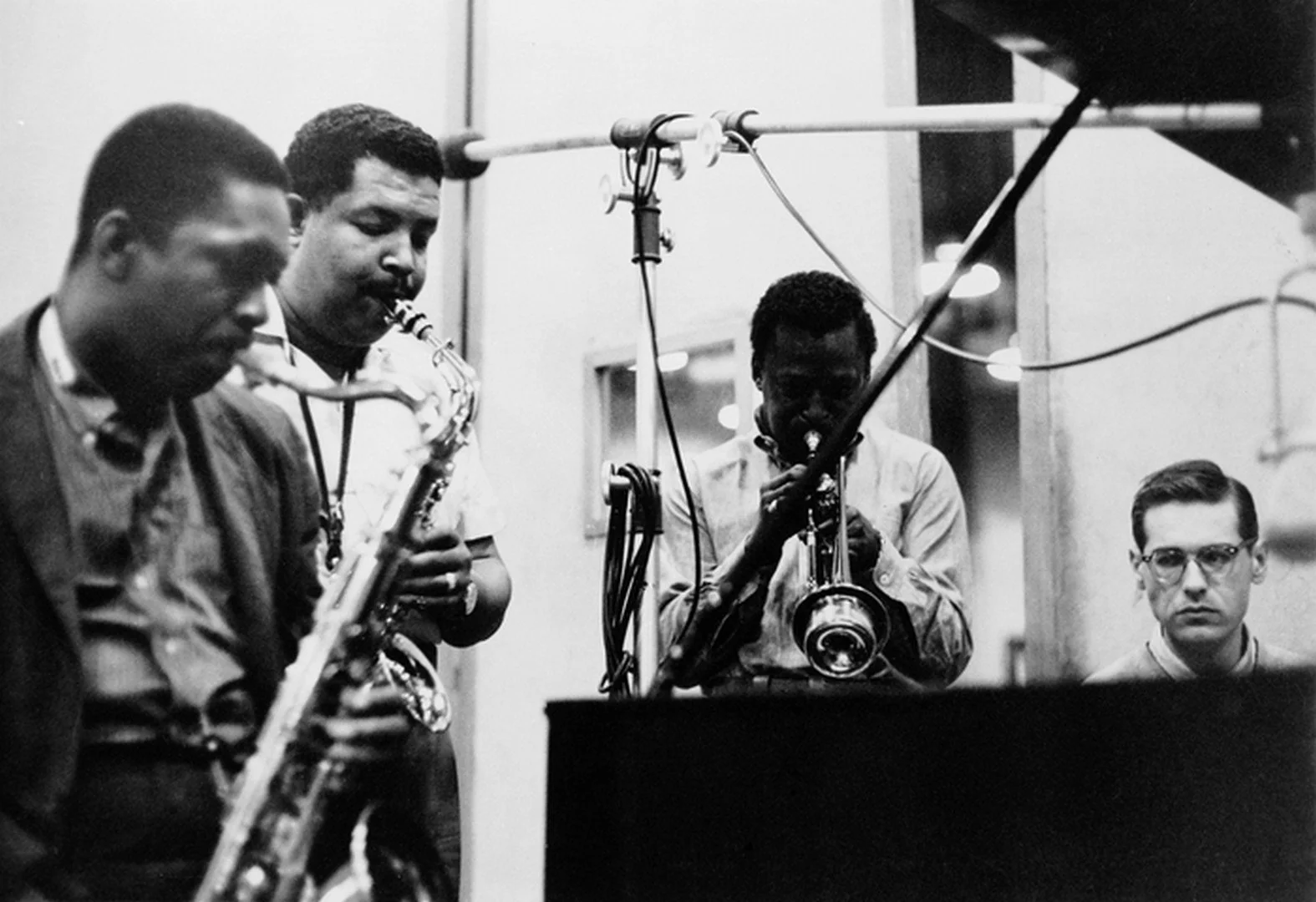
    Music as expression of soul and spirit. That is what John Coltrane eventually dedicated his life to. By the time he began working on A Love Supreme, prior to 1965, he was already deeply accomplished as a musician and a horn player, having appeared in probably the best jazz band ever put together alongside Miles Davis.

    1964

    The album was conceived and recorded in 1964. In many ways the cultural movements of the decade were still at the cuff. The wave had not yet formed. Music was definitely pushing toward societal reflection and change, with records like Bob Dylan’s The Times They Are A-Changin’ and Sam Cooke’s “A Change Is Gonna Come.” The civil rights movement is key context as well. By 1964 the movement had developed into a massive outpouring of protest. Lyndon Johnson had taken over as president after the assassination of John Kennedy. The war in Vietnam was not yet on most folks’ minds, but it was looming.

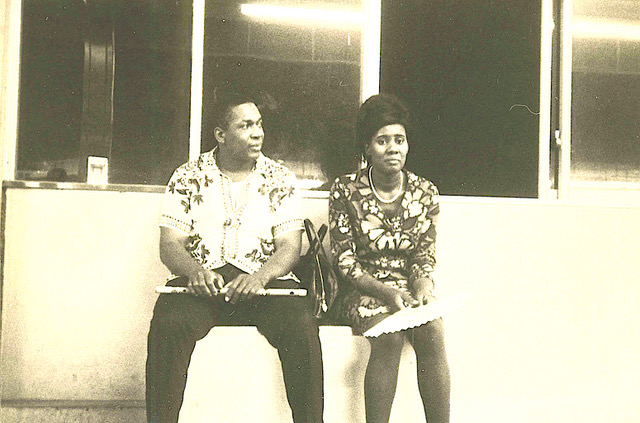
    In jazz, John Coltrane loomed over others as an emerging figure of the free jazz movement. He had broken out as a solo artist after his stints working under Miles Davis. 1964 was a year of hard work, but it also gave him room to rest, enjoy his newborn son, his first, and spend time with Alice in their new house on Long Island, New York. It was at this house that John secluded himself and began to develop the concept of A Love Supreme.

    Coltrane’s path to A Love Supreme ran through his years with Miles Davis, and a lot of the inspiration for free improvisation most likely took root while working on Kind of Blue. It was a time of listening, learning, and growing. And between the two recording sessions of Kind of Blue, Coltrane made Giant Steps. A seriously innovative record on its own, but what it also was for Coltrane was an exhibition in composition and music writing. It was proof that he was on the path to getting things going for himself and growing as a creative.

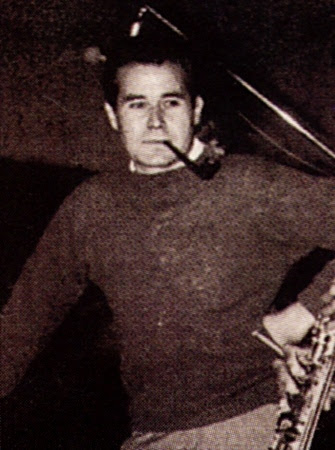
    Then there was the soprano saxophone, a new instrument picked up mid-career. An interesting move. There’s a lightness to the soprano, he would say. You can play lighter things on it. It’s a relief to shift to it. The soprano gave him “My Favorite Things” and a hit, and it widened the range of what his voice on a horn could be. That widening matters on A Love Supreme, even on a record where the soprano never appears.

    Something else Coltrane had to traverse to get to the point of making A Love Supreme was severe heroin addiction. In the 50s, using was not universal among jazz artists, but it was readily done and many artists had easy access to it. John was caught up in the attraction of drugs as a path to higher planes and higher abilities on his instrument. It did everything but that. Coltrane quit heroin cold turkey, and through sheer willpower and faith made it through a darkness few people have any idea of the difficulty of. That moment, the spiritual awakening of 1957, is the very experience he references in the liner notes of this album. A Love Supreme is, in a real sense, the thank you note for surviving it.

    December

    Coltrane’s record label had set aside about half of the second week of December. Tyner and Jones remember Coltrane calling them up and arranging a session for December 9th.

    Recording an album usually takes time. Days, weeks, sometimes months. Depends on the artist, I would say. But something is vastly different about A Love Supreme: it was recorded in one night, in one session.

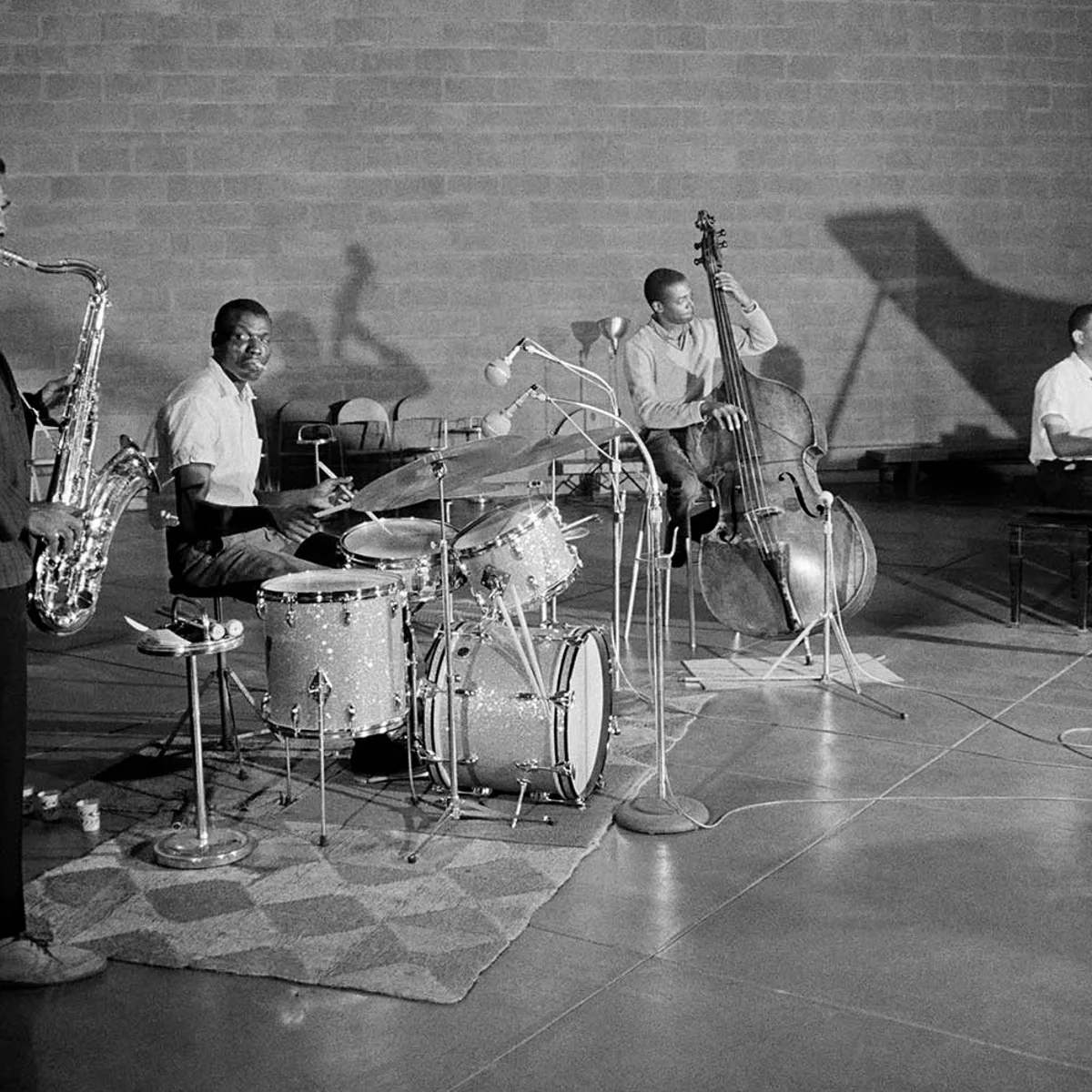
    The Quartet

    The quartet on this record is a product of experimentation, but the end result is a band that allowed Coltrane full inventiveness and full confidence in working together. The record could not have been made without their collective skill, ability, and knowledge of music.

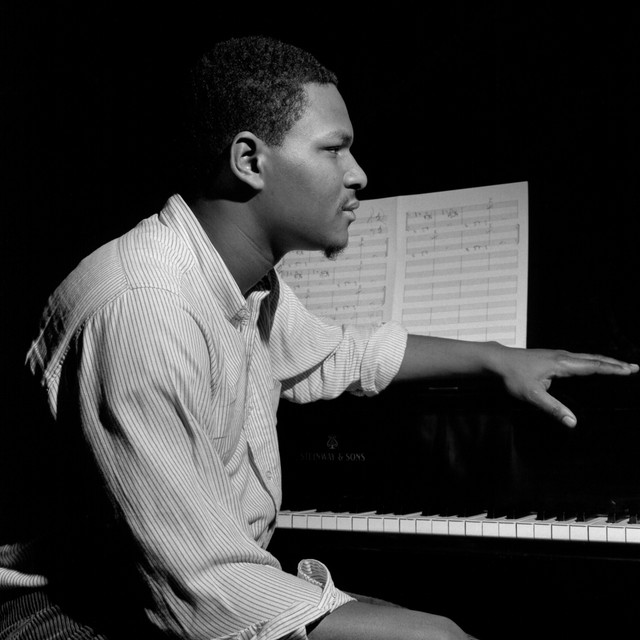
    Pianist: McCoy Tyner

    Tyner joined up with Coltrane around 1960, a confident young pianist who had what Coltrane wanted: a clean and astute harmonicist. Even though Tyner was 12 years younger than Coltrane, the two seemed to share the same musical focus and a spiritual leaning. They worked well together.

    Tyner relates the relationship to a brotherly one in Chasing Trane, the John Coltrane documentary. They were like brothers, and they were together for one reason: to create beautiful music. Full commitment. Full humility. No ego.

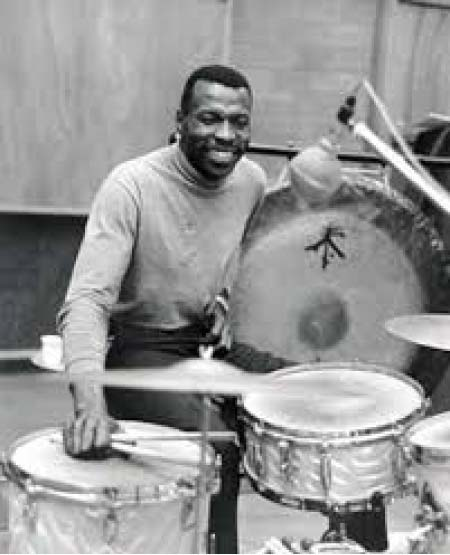
    Drums, Gong, and Timpani: Elvin Jones

    A master of the polyrhythmic style. Not the most in-demand drummer at the time, apparently. He would take liberties on the drum kit, drawing unwanted attention from bandleaders who wanted something tamer. But Jones was an amazing drummer, a master of his instrument, one who looked at the drums as intently as Coltrane looked at his horn. A naturally gifted player and a perfect addition to this quartet.

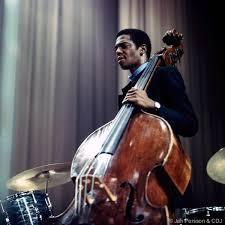
    Bassist: Jimmy Garrison

    Garrison had come up under another sax impresario and innovator, Ornette Coleman. Coltrane had been seeking a bassist who could match the strength required to work alongside a drummer as challenging and effective as Elvin Jones. Garrison joined the quartet in 1962 as the final piece of the band.

    The group gave Coltrane the feeling and the force he wanted. He wanted extremely capable musicians who could perform and sound like a unit without needing to force it. He wanted the feeling to be there rather than the hard edges of each musician playing on his own. Gathering this group was vital. From the point in 1962 when it solidified, the quartet became known for its work ethic, and its popularity shot up. It was Coltrane’s hot group, destined for something great.

    With this group, John Coltrane became the immense jazz figure that would seal his legacy. It tracked right into the making of A Love Supreme.

    The quartet formed, and the records came through. They recorded Crescent earlier in 1964, and man, what an album. Moodier, more contemplative, the band settling into longer forms and deeper waters. You can listen to it as a subtext, a prologue to A Love Supreme. Crescent is the record if you want to hear the quartet gathering itself for the leap.

    Producer: Bob Thiele

    On Bob, John said his duties were basically to keep the lights on and keep the tape running. A real backseat appearance for a producer. With all that expertise in the room, production gets pushed to the side. These were experts. Especially John.

    Significance

    The record landed in people’s homes like a gift from God. It was early 1965, right in the middle of the 60s. People were pursuing new religions and seeking truth through other means, music being one of them. People were seeking different lifestyles and accepting a universal consciousness. A Love Supreme was a perfect representation of that effort.

    A Love Supreme is dug deep into our cultural awareness, and that is something I’ve taken for granted myself. Even the phrase, the album title itself, inspired similar phrases down the line. A “blank” supreme. Anytime you hear that construction, it’s owed to Coltrane. It was one of the first records to be unapologetically devoted to a higher power.

    Many place the record, and sometimes Coltrane himself, into a religious context. For many listeners the music represents a voice from a supreme being, whether that voice is Coltrane himself or Coltrane channeling something through music. What you hear is someone playing an instrument beyond any extension of himself. It is himself. Full artistry, full mastery of craft, full immersion, and full transcendence.

    The Object

    My copy is not an original, not significant by any means. However, it is the music on vinyl, and for me that is significant enough. I’ll say that for a lot of records. It’s a 2023 US Impulse! reissue bought from my go-to record store right now, Recycled Records in Monterey, CA.

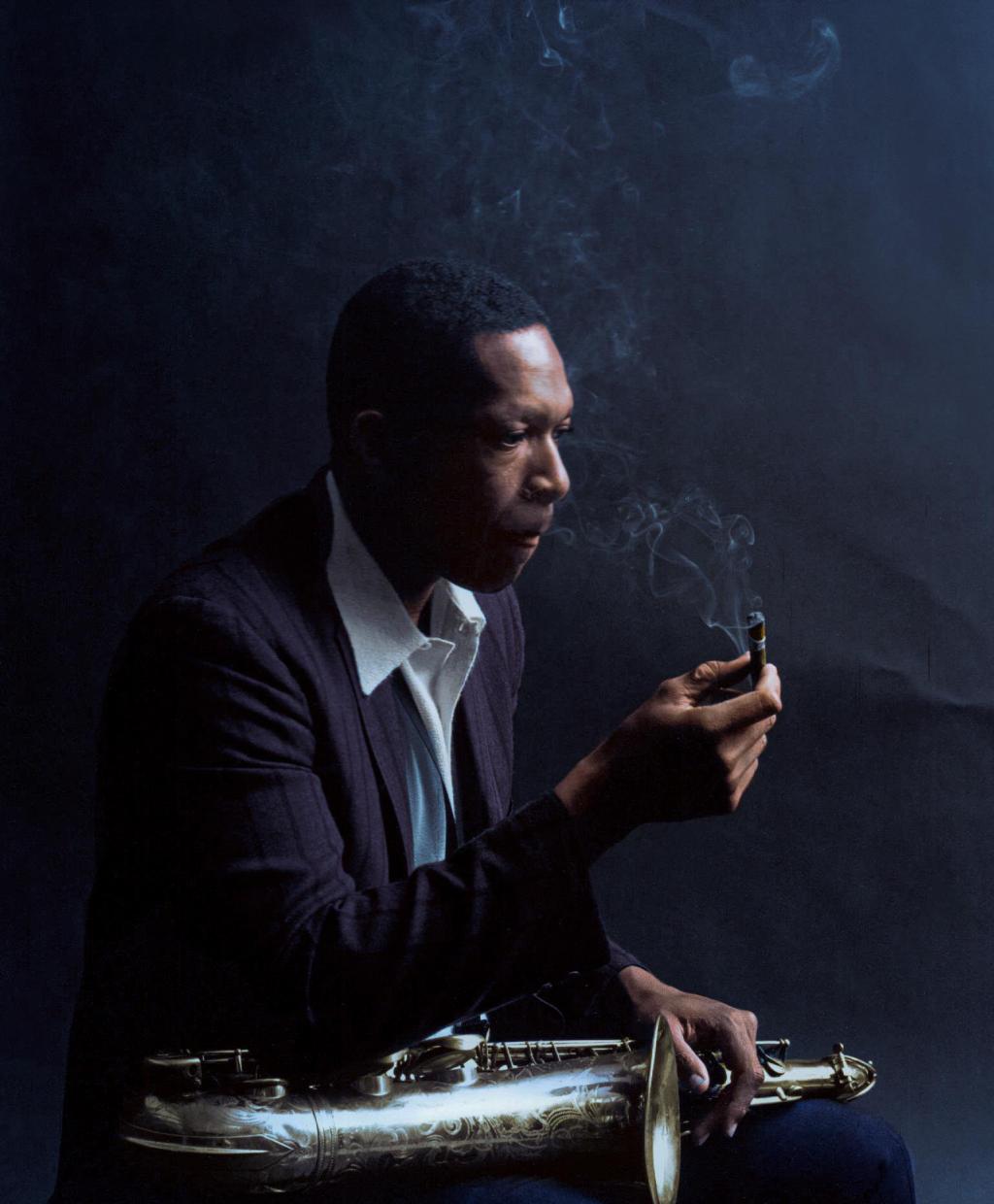
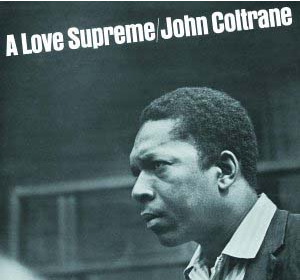
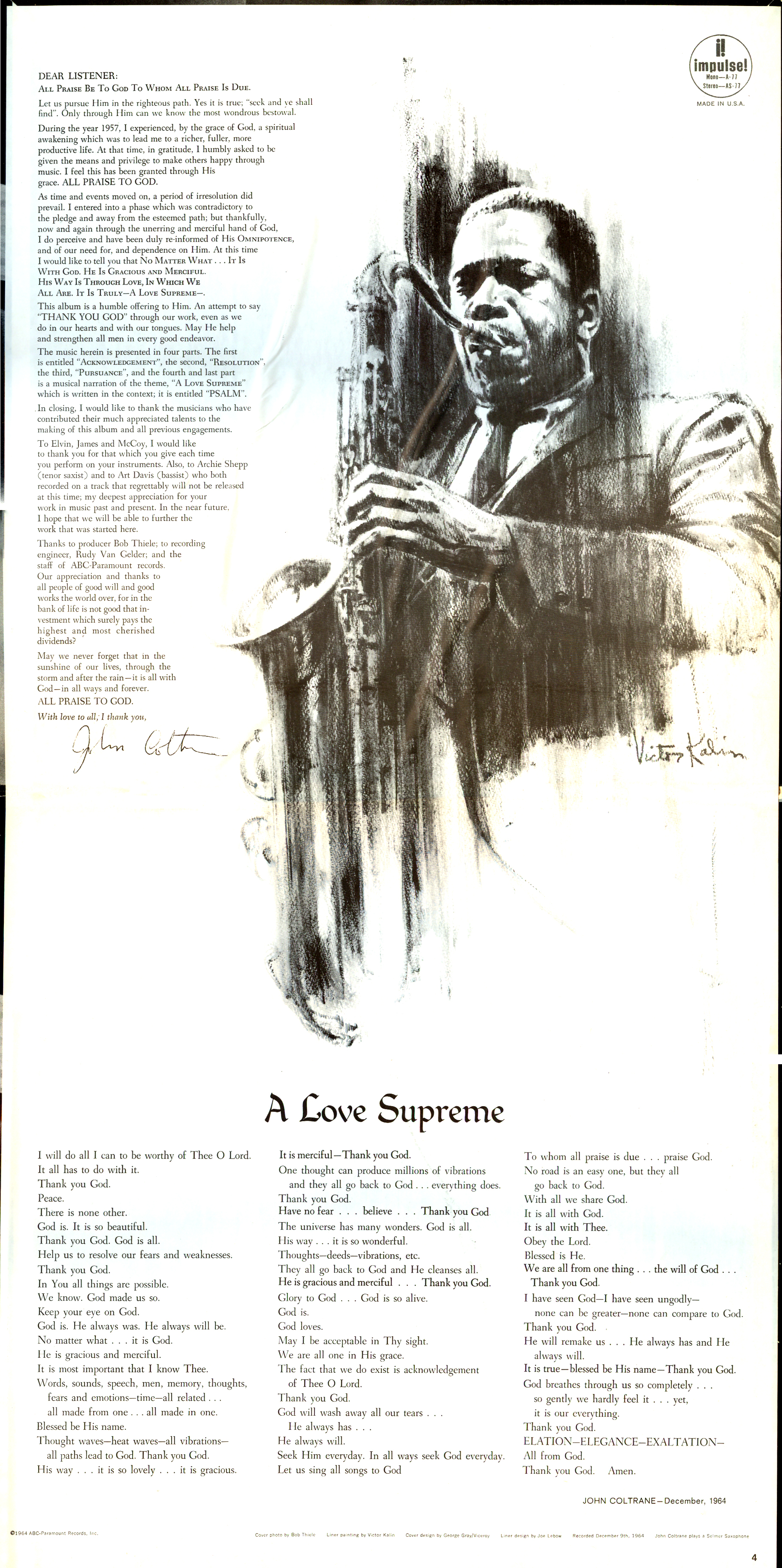
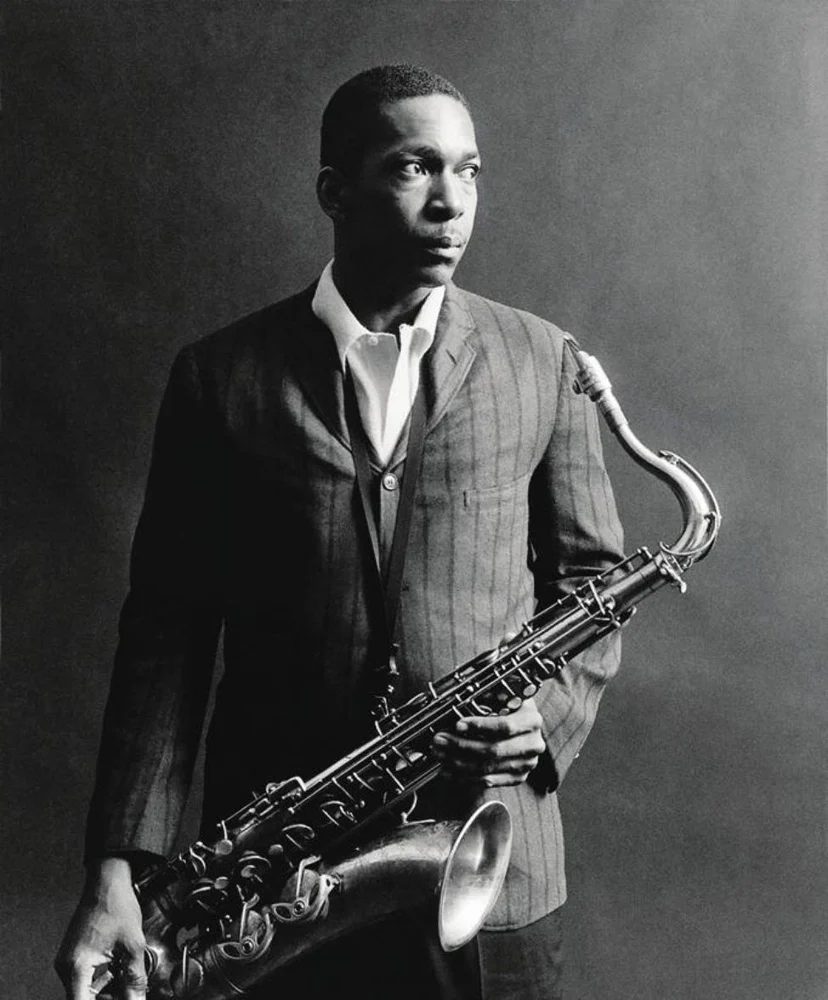
    A beautiful album cover. Instantly recognizable. Pure Coltrane. His gaze is not toward the camera but forward, toward a path to making better music. The photo was likely taken by producer Bob Thiele around the time of the recording. I really like the title font and how the title of the record comes first, then its maker. The tilt of the typeface seems to follow the same tilt as John’s eyes in the image. There’s not much simpler artwork than this, and it’s incredibly effective.

    The Music

    The album plays like improvisation mixed with composition. It blends genres together, and you can hear gospel, free jazz, bebop, and blues throughout. It eventually became known as spiritual jazz, a term that had never been used before. But many just see it as music, period.

    The John Coltrane sound: no vibrato, the shrieks, the rapid-fire runs. Vocal-like. It’s a tone. It’s purely him. It’s from deep within. It’s a howling soul and a wailing preacher together. On A Love Supreme he used the tenor saxophone for the entire recording, noting that it had the depth the music required. The tenor is close in tone to the human voice, and if these sessions were meant to come across as sermons, you can see why leaving the soprano behind made sense. The tenor is a voice here.

    Before even stepping into the studio, John had visualized the music as a connected suite: two pieces on side one and two pieces on side two. This is how the final product appears, and this is how the record was recorded.

    Acknowledgement

    The first gong hit and the opening lines from the sax are immediately transporting. You know you’re in for something different and special.

    Coltrane’s opening is transporting but familiar at the same time. To me it’s reveille, the wake-up call. It’s curtains opening. It’s a door opening. The signal to begin something. The signal for prayer to begin. The imam calling. Elvin Jones dances on the cymbals as that welcome ends. Then Garrison enters with that four-note motif. It is the album’s title in a four-note sequence.

    A love su-preme.

    Then Tyner takes a few chords as the rhythm develops. Coltrane’s horn returns. In full force. With a melody that just kills. Intensity is reached, and Tyner and Jones match it. Jones and Coltrane are really reaching heights here on “Acknowledgement,” interplaying so well. There’s a consistency from Jones that allows Coltrane’s flourishes and movements across the musical atmosphere. The cymbal is an interesting instrument to focus on here.

    Coltrane reaches peak intensity and then backs down, like a hiker on the downslope. Longer pauses open up between lines, and then the recurring theme enters the room. He plays the four-note motif 37 times in a row, in different keys.

    It’s an exercise in roaming key modulation. A masterful display. Some interpret it to mean that God exists everywhere, in every key. Some take it as a display of pure talent and ability.

    Then the tenor is put down and Coltrane takes the mic, one of the rarest moments on any of his records. He chants the mantra 15 times, drops to a lower key, and says it four more times. The song ends as the quartet slowly drops out, but Garrison remains. The bassist is the final musician you hear on this piece and the first you hear on the next.

    Resolution

    The seventh take. Garrison gives an introduction to the track on bass. A simple rhythm and theme, and it does little to warn you about the onslaught of Coltrane’s sax when it comes. It comes in blasting with the most out-there melody you’ve ever heard. Even today this melody makes me feel something I can’t pin down. It’s that dramatic and affecting. What ensues after the initial shock is a relatively traditional 4/4 jazz workout with Coltrane soloing.

    Then Tyner takes a solo. This solo is a highlight of the record. It’s insanely good and really hard to describe. Tyner’s left hand is fluid while his right hand stays fixed, playing mostly chords to follow and give structure to what the left hand is doing. I can’t begin to understand how difficult that is to do. But here, you can hear it done. It’s mind-boggling.

    Coltrane flows back in with his own solo, carrying a subtle respect for what Tyner just accomplished. His second foray as soloist on this track lasts through the remainder of the recording. He flourishes along, some of his lines blues-tinged. Then he strains on some wicked high notes, pushing the limits, and returns finally to the original melody. Garrison and Coltrane finish up while allowing the melody and the track to settle out and resolve, if you will.

    Pursuance

    This track begins with Jones taking a solo of about 90 seconds. His adaptable talent is on full display. Jones reported that Coltrane gave him no direction for this solo, so what you hear is supposedly unplanned. It is a showcase of his polyrhythmic ability. What it really sounds like is Jones using all of the drum kit at once. He playfully executes this extremely fun solo and slowly reaches a conclusion, still going at a brisk pace as Coltrane and the other two bandmates filter in.

    Coltrane’s intro rushes in with an initial blast of this new tune’s melody. Before that even gets a chance to sink in, Tyner takes another solo, his second on the album. Tyner really takes a walk around the room here, dancing around the melody of “Pursuance” at a sometimes breakneck speed. The left hand is just flying. Amazing stuff. Then Coltrane returns.

    Coltrane’s entrance into this track is the peak of the energy on the recording. It is a powerful exposition of melodic runs and strings of new ideas. It’s way out there. Underneath Coltrane is Jones, flying around the kit as well. The two together are reaching new heights simultaneously. A real partnership.

    Coltrane flourishes through the melody for a couple more measures, leaving Jones to find the track’s ending. In reality it’s a false ending. Jones gives some whaps to the snare and cymbals while Garrison begins an improvisation that runs for the next three minutes. His solo here is a truly unique point on the album. He does some great call-and-response work all by himself, moving from chord sequences to several-note combinations and answering them with chords. He travels up and down the strings with ease, and this closes out probably the most intense track on the record.

    Psalm

    The finale of the record. It is different from the three tunes before it, since it’s more of a mood piece. It’s pure emotion. It’s not regimented improv like before. It’s closer to a lyrical poem. The words of the passage appear in the album’s liner notes. It is essentially a conversation between Coltrane and God, giving thanks for his life and his gift. His praise for salvation, laid bare in his most effective form of expression.

    Accompanying Coltrane on the tune, mallets in hand on the timpani, is Jones. The timpani gives this piece the emotional weight it requires and makes the whole thing feel more orchestral and cinematic. Beneath that, Garrison and Tyner provide fills and layers where they can. But really this track belongs solely to Coltrane and his speech through the saxophone. You can listen along and read the words as Coltrane recites them through the horn, and it’s really not that difficult to follow. He does a fantastic job with that. As Coltrane works through the psalm he starts to sound strained, likely because this was the last tune recorded that night. It’s a voice at the end of its night.

    Coltrane finishes with a short reference back to “Acknowledgement,” there’s a roll on the timpani and cymbal, and A Love Supreme finishes.

    Closing

    Carlos Santana plays A Love Supreme every time he enters a hotel room. He does this to cleanse the room of harmful spirits. I do believe this record has that power. I feel something every time I play it. The feeling is a calm acceptance of the beauty and hugeness of my existence in this universe. I’m not a particularly religious person, but I do accept the existence of a higher power. A Love Supreme is a record some people will use to find their connection to, or their acceptance of, that higher power.

  • Dave Van Ronk – Folksinger

    Dave Van Ronk – Folksinger

    Studio Album | Released November 1962 | Recorded April 1962 at Van Gelder Studio | Prestige Records | Producer Shel Kagan

    This album is pure and simple. An urban performer taking his trade and applying it to reshape and reform the golden nuggets of folklore. The folk song unearthed, repurposed, re-bluesified and re-jazzified by a singer with a powerful, emotive voice and a knack for the guitar bent upon years and years of rambling, and practice practice practice.

    Dave Van Ronk didn’t agree with the title this release bestowed upon him. Van Ronk had traveled to Manhattan in the early 50s in an attempt to work and succeed and be famous as a jazz singer. His inspirations were jazz artists and big band leaders and musicians. Those jazz leanings were fused with blues leanings, and his inspirations remained as such throughout his life. The early members of his audience made note of his appearance and his voice. He was a very big guy. Above six feet and above 200 pounds. With a voice that could raise Lazarus from the grave.

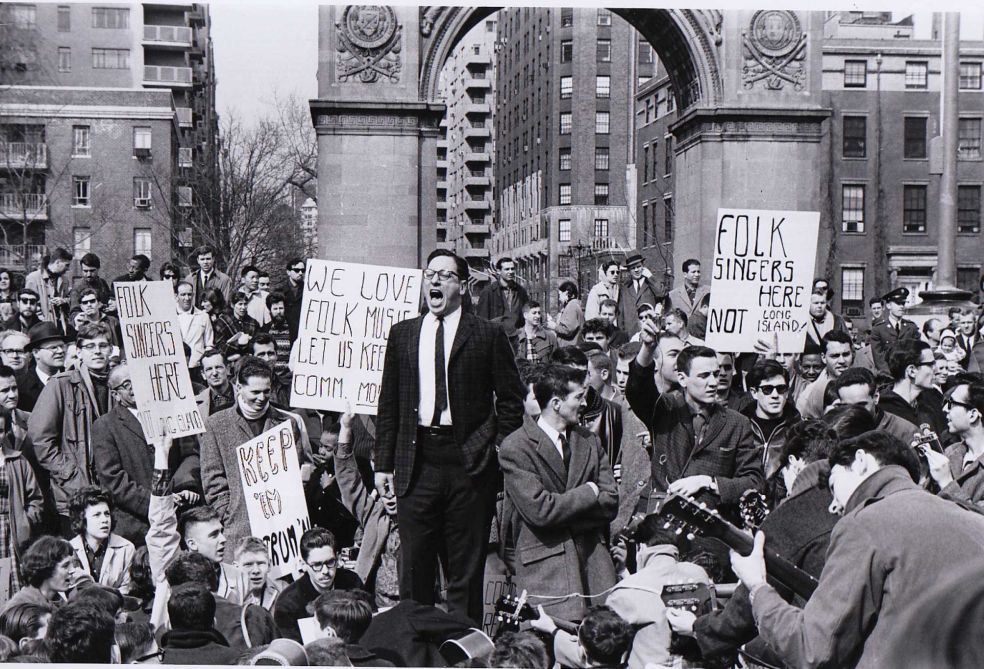
    In The Mayor of MacDougal Street, Van Ronk relates hearing an early version of “Stackolee” on an Alan Lomax reissue series record, one of the earliest records he ever purchased. The version by Furry Lewis had a distinct fingerpicking guitar style, and it perplexed Van Ronk. He felt it was two different guitars playing, when it really was one person playing both melody and bass line simultaneously. He ran into someone later in Washington Square Park picking their guitar in a similar way. He sat down and listened, and asked the person for a quick on-the-spot lesson. After that day, Van Ronk took a head-first nose-dive into the fingerpicking style. He would go to Washington Square Park to play, and to learn from those who already knew. He gave everything he had to mastering that style of playing, and that was his change from jazz to folk. It was a career decision, as Van Ronk states in his memoir. It was a move from complex to simple. It came out of necessity, and it was also a change in mood and mind, arriving right at the time the Village scene was about to make history.

    It was the Washington Square Park scene that Van Ronk developed inside of. This scene was sporadic pockets of musicians occupying various parts of the park, striking up tunes together or by themselves. A fertile music-breeding ground if there ever was one. Also passed around in copious amounts were drugs and left-leaning ideology. This was libertarian, progressive, communistic support for music that these folk thought was going to affect change at upper levels of government. Lots of hate for other groups, as he would say. Van Ronk’s MO at the time was to sit down somewhere and sing. The hope was that folks would gather around, and maybe pitch in money. He had an advantage for these impromptu live sessions: his voice volume. If you’ve heard Van Ronk you immediately notice his voice. It would carry well in a park setting, and even the least curious passerby would notice it.

    Somewhere around this time a reissue record comes out. The Anthology of American Folk Music, a compendium of traditional American music. Some had never heard these recordings before. Most hadn’t, actually. This became Van Ronk and friends’ guidebook for how to sing and make their music. It was the tome of the elders. It had all-time greats on it. Mississippi John Hurt, Blind Lemon Jefferson. Triple OGs. On contemporary phonograph equipment at the time, this record set must have blown minds. What it actually was was a set of old 78s collected onto LPs.

    The music would come from places other than America as well. Van Ronk’s song on this record, “Chicken Is Nice,” was a Liberian original. One of the only recordings at the time of an American folk singer repurposing a song from Liberia as his own. That alone makes this record a must-own and a must-listen.

    MacDougal Street, the Folklore Center, and the Scene

    By the time Folksinger came out, Van Ronk was pretty well established in the scene. He had become somewhat of a mentor and ringleader of sorts. The hangouts were the Caricature Coffee House, the lofts down on the Bowery, and the Café Bizarre. It was at a gig at the Café Bizarre, with Odetta as the lead attraction, that Odetta saw Van Ronk’s performance and was so impressed she asked him to send her a tape so she could pass it along to Albert Grossman.

    Van Ronk’s vocal influences were jazz and blues artists he began to mimic through a jazz lens. Josh White was one of those touchstones. White was a Black blues and folk singer who had lived in the Village for years and represented exactly the kind of vocal authority, dramatic phrasing and stagecraft that Van Ronk admired and absorbed. You can hear White’s influence in the way Van Ronk shapes a phrase, how he leans into a line for emotion and then pulls back.

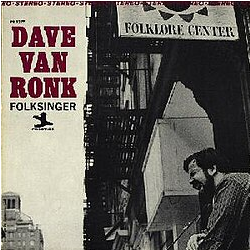
    Izzy Young’s Folklore Center on MacDougal Street was the other anchor of this world. It was part shop, part hangout, part bulletin board, part informal concert hall. Van Ronk spent enormous time there in the late 50s and early 60s, and the cover photo of Folksinger shows him standing right under its sign. There were also the hootenannies at the Gaslight Café and up and down MacDougal Street, which Van Ronk was central to.

    The Object

    My record is a faithful reissue of only the best kind, by the great company Vinyl Me Please. Every one of their reissues that I own I cherish for the quality of sound and the great presentation of some of the all-time greatest records, or at least the ones that hold the most importance. The sound quality on this release is fantastic. The jacket and wax are sturdy and guaranteed to last my lifetime. The liner notes are recreated. The true highlight of this package comes in the listening notes by Elijah Wald, in a little Moleskine-style notebook tucked away in the record sleeve. Give me something like that with every single record and I’ll be happy. With this record, and with the ones that come with lore, it’s a cool thing to see, a writer putting heart and devotion into detailing the music you’ll hear and giving you the stories you need to understand the notes and heart and emotion in Van Ronk’s voice.

    The album cover has a great photo of Van Ronk on it, in full belt, standing under the sign of the Folklore Center, the place where he spent a lot of his time in the late 50s and early 60s, and like the church of his inspiration, where he became linked to so many of the songs you hear on the record.

    The Music

    He Was a Friend of Mine

    This is a traditional folk song, originally unearthed by Alan Lomax. It’s simplistic in nature and exhibition in most versions that you hear. A song of lament, about a person recounting the death of an old friend. There are numerous versions. One of the most incidental was the Byrds’ version, given more weight as a somewhat pointed tribute to the dead president John F. Kennedy. The two early folk versions of the 60s belong to both Bob Dylan and Dave Van Ronk. Dylan’s version precedes Van Ronk’s and is similar in execution, and it did not end up being placed on Bob’s first record.

    Van Ronk’s version really makes you think this song belonged to him. When I first heard it, I suspected the song was new. As the first song on the record, it opens up the listener to the Van Ronk universe. The song is sung with quiet beauty here. Sustained notes start getting scratchy toward their end, like a road going from pavement to loose asphalt to grit. The road is the setting. The man who died, we don’t know who he was. What we do know is that Van Ronk is intensely broken up over this person’s death. And since Van Ronk himself has passed on, leaving his legacy in tattered records and folk legends and lore, perhaps this is a song that can serve as an obituary to the man himself.

    Maybe this is the one song on the record most connected with Dylan and the strange way that people connected Van Ronk to Bob Dylan. Each of them sang their own version of the track, maybe in reference to each other. As far as friends, enemies, rivals, mentors, I don’t know where the two fell. It’s difficult to understand truly how each of them felt for the other. What we do know is that they were both somewhat influences on each other, maybe moreso Van Ronk on Bob. Still friends though.

    The man who most could have been this friend, though, was Phil Ochs.

    A great live version of the song, maybe the most meaningful, was put forth by Van Ronk at the Phil Ochs Memorial Concert in 1976. Van Ronk sounds tore up singing it, his voice cracking with the emotion at the lament of the death of a fellow folk giant.

    Motherless Children

    Originally recorded by Blind Willie Johnson in 1927. The song moves through the gospel and blues tradition and was a natural fit for Van Ronk’s range, sitting somewhere between spiritual and field holler. He gives it that wide, deep voice and lets the guitar do the mourning underneath.

    Stackerlee

    This song’s legend holds a mirror to itself. It’s one of those legends made into song, and with each iteration a new artist and performer etches their name in the logbook of history. Originally the song was performed in the 19th century, about a famous African American criminal. Lee Shelton lived in St. Louis, Missouri, was a member of underground clubs, and gambled, drank, and bedded women. He would go “stag,” and eventually Stag Lee became his name.

    As folk tradition has it, the passing down of songs with different variations was the tradition. The names get changed, the ideas of the song change. The legend grows larger. “Stackolee” is a great example of this passing-down through generations, but with things different each time, like a generational game of telephone.

    Van Ronk relates his first time hearing “Stackolee” and it not making sense to him, that it must have been two guitar players in unison. Furry Lewis is completely inspiring on his rendition of this legendary song. Van Ronk makes note that he never changed much about the original Furry version. Bottom line up front though: if Van Ronk never hears this song on the Listen to Our Story anthology, put together by Alan Lomax and released in 1947 on 78 and 1950 as a 10-inch LP, Van Ronk probably never takes up fingerpicking.

    If you listen to a version by Furry Lewis, you can really make out the great imitator that Van Ronk was, in both his vocal stylings and his guitar work.

    Mississippi John Hurt’s version of this track is one of the most famous and earliest put down. That came in 1928.

    Mr. Noah

    An exhibition of Van Ronk’s great sense of humor, and a touch of goofiness. This one was sourced from blackface minstrel shows by way of Greenwich Village banjo great Billy Faier.

    As simple as this song appears to be, it exposes something inherent about Van Ronk, which is that he was a skeptic of institutions, religion being one of those. According to Elijah Wald, the song was popular as a barroom number, sung by drunk men in circles. It was a mock at religion, with a chorus of “hallelu, hallelu, hallelu.”

    Van Ronk deftly replaces “hallelu” with “doodly-dee-doo.” I think Ned Flanders would not enjoy this song.

    Come Back Baby

    Dave had recorded a version of this song on his preceding record. That version sounds primitive, worked out as a blues recording. On Folksinger, the version has more personal qualities to it. It’s recorded better, for one. You hear the inside of the guitar sound so well. And the vocal has resonance, and you are personally affected. Dave is singing in a slightly tender register. But it’s gruff. It’s like a bear with a soft voice in one line, and then a growl in the next line. That artistic style, that variance in pitch and demeanor, was something Van Ronk was a master of.

    Poor Lazarus

    This song’s source was Alan Lomax’s anthology American Ballads and Folk Songs. A work song with chain-gang roots, sung with a heaviness that Van Ronk’s voice was built for.

    Samson and Delilah

    Original arrangement by Reverend Gary Davis. Of biblical nature, and a narrative song. Reverend Gary Davis was another legend, and probably loomed pretty large for Van Ronk. The banjo of Davis is replaced here by Van Ronk in his own way. Van Ronk is in full throat on some of these lines, giving his best effort to imitate the master.

    Cocaine Blues

    Another song Van Ronk sang as an inspiration from Reverend Gary Davis. Davis’s version is a borrowing of a vintage country song, popularized in modernity by Johnny Cash, but here taken in the folk-singer revival tradition. Van Ronk gives this track its due, and it seems like a personal lament to the drug and its adverse effects. It’s really got that one-man-in-a-song-in-a-small-room setting, maybe more so than any other track on the record. Toward the end it becomes a confessional of sorts. On that last line of the chorus, Van Ronk raises his voice to full effect.

    This track was one of the early folk songs that mentioned drugs, and that inspired dozens of artists to create their own versions. Dave’s version maintains that original status still, and the song about cocaine gained definite appeal long after the 60s and into the 70s, as that drug lived its own life and so did this song about it.

    Many people connect this song to Dave Van Ronk as the closest thing he ever made to a hit. It was always requested, loudly, from the crowds at his live concerts. Van Ronk probably got sick of it. He stopped singing the song in 1972.

    A large section of Dave’s memoir is given over to the inspiration and the authority that Reverend Gary Davis had in his life as an influence. He notes the song’s importance as it came from the Reverend, who was the biggest inspiration on Van Ronk’s life.

    You’ve Been a Good Old Wagon

    This may be the track where you can most make out Dave’s jazz big-band and ragtime influence. You can hear just how important Dave’s vocals are in the arrangement and how the guitar part is giving the vocal its power. On a larger scale, there would be a full band backing up a vocal like this, but here it’s done subtly with just guitar and voice.

    An original song by Bessie Smith in the vaudeville blues tradition. A song that in Dave’s rendition is meant to be funny, though later Van Ronk would express some regret, since the original version holds a more funereal aspect to it.

    Fixin’ to Die

    A Bukka White song, from the album The Country Blues, put together by Dave’s roommate at the time, Samuel Charters. Dylan had also recorded his version of this track a year earlier.

    Hang Me, Oh Hang Me

    Sourced from an album by Sam Hinton, who was a West Coast folksinger. If you watch Inside Llewyn Davis, you’ll get a good dose of this song, sung by Oscar Isaac. The Coen brothers borrowed a lot of inspiration from the life of Van Ronk to make that movie, and it’s fitting that they chose this song as one of the figurepieces. The main character, down on his luck, in a constant cycle of trying to break out of a lack of success through music and talent. It’s downtrodden. If “He Was a Friend of Mine” is a lament about a friend gone away, then this song is a lament about one’s own miserable lot in life. Destined for poverty and hard times.

    Long John

    This song came from a version by Woody Guthrie on a 1950 record called Chain Gang. Another work song, another voice in the long American line of singing under the lash and the sun.

    Chicken Is Nice

    A fantastic ending song, and a unique one. Originally put down by a Liberian pianist named Howard Hayes. Van Ronk found it on a set called Tribal, Folk and Café Music of West Africa. Dave’s early years were occupied with searching out the deepest and best material out there on records. Likely on 78s, and not usually on LP compilations.

    Closing

    I must admit, purchasing, owning and listening to this Van Ronk record are recent events in my life. As an offering of songs, Folksinger is a truly brilliant gift of an album, from a singer who should definitely not be forgotten but too often is. And it’s more than being forgotten. I think he’s a bit misunderstood. Many connect Van Ronk to the Greenwich scene, but to me his life was much bigger than that. That scene was fertile ground for dozens of songwriters, artists, poets and all sorts of creativity. Van Ronk stood solo based on his presence as a person, and on his influences. Folksinger, from 1962, is a good entryway into the efforts and works of art of how he took his song influences and made them his own. Don’t compare him to anyone else. Don’t associate his name with any particular setting other than late-50s and early-60s American music revivals. It’s essential that Van Ronk is remembered as such. Folksinger is in fact a statement of that, and a great record.

  • Bob Dylan — The Times They Are A-Changin’

    Bob Dylan — The Times They Are A-Changin’

    Studio Album | Released February 10th, 1964 | Recorded August 6 – October 31, 1963 | Columbia Records| Produced by Tom Wilson

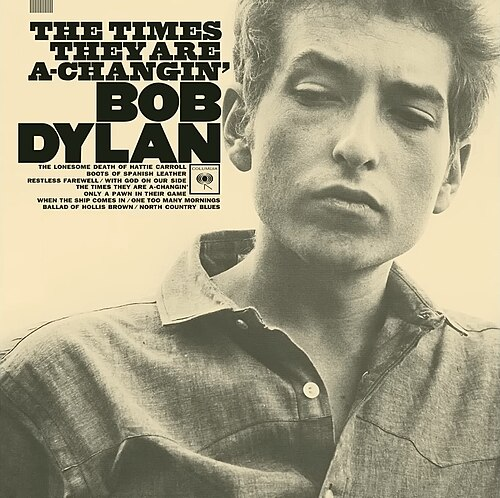
    In my opinion this record is Bob’s second brush with greatness after his second record, The Freewheelin’ Bob Dylan. The third record from the master bard and songwriter represents a stark contrast to that second one. On Freewheelin’ there’s some hidden optimism somewhere within it. It’s hopeful, it’s youth, and the world is open. There’s a hope that we can get things fixed if we all get on the right track. With The Times They Are A-Changin’, we along with Bob must accept the onslaught of an apocalypse. It’s a stark and haunting landscape. Windswept. Dusty. Dark. Black and white. The title represents a regard for a movement in a different direction. You listen to the record intently, you can feel that movement. In some songs you feel the damage already being done. In some ways things have already changed for the worst.

    Being noticed can be a burden.

    Bob’s fame was shooting to the top in the period between his second record and his third. Between spring 1963 and early 1964, Bob was being crowned the king of the protest song. This was a persona he was beginning to reject and come to terms with at the same time. You can feel that rejection, and some quiet acceptance, in this record. What also occurred during this period was the assassination of John Kennedy. That event really informed the album and had an indelible effect on the songwriter. Many people still associate that event with the title track, and rightfully so, it being such a turning point in his country’s and the world’s history.

    Bob’s relationship with Suze, which helped inspire several of the songs on his sophomore record, continued to struggle. What was coming into his life was a semi-rivalry, semi-courtship with female folk powerhouse Joan Baez. This partnership and career advancement opportunistic relationship took center stage on multiple occasions, most famously during the Newport Folk Festival held in July 1963. That festival was Bob’s joining of the folk zeitgeist, the world giving him the title of folk and protest song master. Bob was applauded in dirges. The want for his words and the want for him to represent the teeming masses was massive. They were on edge waiting for him to come and lead the way, even though he was just trying to make his way as a songwriter and as a young human man being.

    A guest tour with Joan Baez, and a performance at the March on Washington alongside Joan later, pretty much sealed the deal for Bob and Suze. Bob spent time with manager Albert Grossman, as well as spending time in Carmel, California, at the home of Baez. I currently live near this place, and have spent a lot of time in the area. I can sense the pastoral quality of this time period being injected into these lyrics. It may be why I’ve always felt a closeness to this record. It’s got that feel of sitting inside a cozy bedroom or living room, reading and writing, but with a black cloud of woe and worry passing overhead. The Carmel and Monterey fog living within the lines, maybe.

    Bob’s rejection of his personification as the spokesman of his generation informs much of the record as well. His popularity came with an expectation that he began to work against. He just wanted to do his own thing. What emerges are songs that evoke his inspirations and his life as a songwriter up to this point. What emerges in Bob and his persona is a spikiness, and an unwillingness to accept bullshit from the media, the critics, and the endless line of microphones and magazine article writers. It was this spiky Bob Dylan that went on to create his third record.

    The Object

    This record’s album cover has always been striking to me. The monochrome quality, the edges of age and maturity progressing across Bob’s face. It’s a very captivating image. Bob’s face shows a recognition of something harsh and intense going on. It’s post-apocalyptic in a way. You see age but also inexperience on his face. You sense a great emotion, and along with the big typeface of the lead track and the album’s title, a strong statement is made. It’s still very affecting, even by modern standards.

    This cover is also striking as a stark contrast to the preceding record. The brace against the cold on the New York street, along with the kind embrace with Suze and a general optimism, has been replaced with something like a mugshot or an image of poverty, isolation, and longing.

    The Music

    Recording began on the record in August 1963, and Columbia brought back the company producer Tom Wilson to oversee production. Tom Wilson had produced Bob’s preceding record, and went on to produce the next two. Wilson served the artistry here as more of a facilitator than an overseer. The approach with The Times They Are A-Changin’ is less is more, and you feel it throughout the record. If you focus intently on the songs and how they sound, you’ll notice more prominence to Bob’s vocal, and the refinements in the gentle rhythmic strumming guitars are assisting that voice, not playing alongside it.

    Three sessions were conducted in early August 1963 and produced the master takes for several songs: “North Country Blues,” “Ballad of Hollis Brown,” “With God on Our Side,” “Only A Pawn in Their Game,” and “Boots of Spanish Leather.” Touring interrupted further recording, and the rest of the master tracks were completed in October 1963. In this interim period, Bob may have actually been writing the tracks for the album as well, or at least finalizing ideas for songs he wanted for the record.


    The Times They Are A-Changin’

    Finger-pointing songs.

    Bob said this track was influenced by Irish and Scottish ballads like “Come All Ye Bold Highwaymen” and “Come All Ye Tender Hearted Maidens.” Each verse addresses a different group, and each verse provides a command to that group or groups. It’s a song and an anthem, wanting something from society, civilization, the institution, and the individual. Bob admitted that he made this song with the intent to make some social change. Maybe it’s his most literal call to change from his time as a protest singer in the 60s. It became one of his most well known songs.

    The opening verse calls everyone to gather and admit that the waters around them have grown. Water can destroy all things over time, water erodes. What exact waters is Bob referring to? Just the concept that we’re going in a direction where, if the tide or the flood hits a certain point, we’ll all be affected in some way. And we must admit that. Sink or swim, folks. Adapt, learn, evolve, or die essentially. On this first verse you can sense Bob settling in to the song in the studio, his voice and demeanor and maybe his body getting comfortable with the feeling and progression.

    The second verse turns to writers and critics. Is Bob calling to mind his own quality, or is he asking his writer peers to join with him, don’t miss the opportunity to make a grand statement about what’s going on? I can read these words in a political light. The constant flux of leadership. Don’t criticize the leaders now or the losers, the inevitability that they will be replaced is a constant. The loser now will later win, as if it’s all a game, a constant change, the tables always turning, all up to chance, the spinning wheel.

    Next come the senators and congressmen. Bob’s urge here is to get with the friggin’ program. Don’t cause hindrance. Don’t be an obstacle to change, be a facilitator of it. The times need you to change as well, and call upon yourselves to be the ones that help out. If you stand still, you’ll feel the pain of the oncoming change. The battle outside, the conflict you fail to participate in, will affect your home.

    Then mothers and fathers. Every new generation feels this. Bob would like the old ways to go away. It takes old folks to learn and adapt to new ways of thinking. Always. The youth movement was on its way. The times were showing a protesting population full of college-aged youths. They had ideas and were discussing them. Bob joins the thrall, and requests that if the older generation can’t get along or get with the change, then to simply get out of the way.

    Turning points are no longer even acknowledged. It’s a boundary, and the change has been made. Many have drawn biblical parallels to the final lines of this song, however I find similarity in Yeats’s “The Second Coming.” The order is rapidly fading. The blood-dimmed tide is loose.


    Ballad Of Hollis Brown

    This is a grim, morose song, full of hard-edged dusty imagery, of the poor farmer variety. Very Grapes of Wrath. Very Woody Guthrie, and old American. The story is of a South Dakota farmer overcome by poverty, reaching such desperation that he kills his entire family and then himself.

    An earlier version of the track was recorded during the Freewheelin’ Bob Dylan sessions in November 1962. The early version had a guitar strum pattern, the final version has a more primitive, fingerpicking style.

    This song is amazing and it’s my favorite on the album. It’s a staggering work and could be one of Bob’s more underrated masterpieces. Definitely belongs in the list of great murder ballads.

    If the title track was meant to attract, this song with its dark imagery, themes of ending, murder, and poverty, is meant to repel. The quick one-two punch of the title track’s finger-pointing call to action, paired with this track’s brought-down gloomy mood, establishes both the black-and-white theme of the record and the bleakness of Bob’s optimism. He asks folks to look at what’s happening, but in reality things all turn out bad in the end, and we all die and towns die with us. Whoever this Hollis Brown character is, none of us should want to be him or experience his woes.

    Sonically, the song is definitely gloomy. Bob takes that lower, Woody Guthrie or more dark folk register, delivering each line with a strong punctuation. A matter-of-fact, line-by-line storytelling style. The fingerpicking guitar strum, albeit gloomy as well with its simple chord sequence, is deliciously infectious when paired with the gloom of the song. If you’re someone who likes dark moods in songs, which I am, you’ll get enjoyment from this dark folk tale.

    The scenery and imagery are stark here. Hollis Brown lives on the outside of town with his wife and five children in a broken-down cabin. Such harsh poverty reduced to a hard one-line image: a child not able to smile due to hunger. I enjoy the way Bob is addressing the subject as “you,” placing his audience inside the character’s scene. It makes the listener feel the emotion as if it’s happening to them. Pacing the floor, asking why, never to get a response.

    The horror continues, and the want for some assistance, whether in human form or spiritual, continues. These added questioning lines give the song an anti-religious bent. Money is lord here in this universe, and when there is no money there is no lord. The psychosis is starting to set in. This is a maddening portrayal of someone pushed to his limits.

    Bleakness reaches its breaking point. He’s finished, and the shells will execute the plan. The cold coyote call. Just amazing alliteration. Very deep western. This song is spooky.

    What’s driving this character to commit this harsh act? Does the brain-bleeding imagery imply some madness taking over? Does the man have the same bad blood that the horses have in an earlier verse? There’s a slight disruption in the fingerpicking here, slight new note intonations. Indicative of the madness occurring.

    The seven breezes, to me, indicate an effort to escape, perhaps a run out of the house and the disturbed wind because of it. Nonetheless, seven shots ring out, seven shells spent. The ending lands hard. Seven people dead on a South Dakota farm, and somewhere in the distance, seven new people are born. That’s an inevitability. There are folks being born every day, and folks dying every day. The seven tragic endings may be replaced by even more tragic endings. Who knows.

    Bob chose to sing this song as part of his performance during Live Aid on July 13th, 1985. He expressed he hoped some of the money raised for the event would go to pay mortgages on farms in Africa.


    With God on Our Side

    The anti-war and anti-religious songs continue with this great track to make up more of the powerful songs of side one on this record. The irony of the song is simple. The events mentioned all fit the same pattern. It’s war justified by righteousness, throughout history.

    Bob was accused of plagiarism for this song, and how similar it is to “The Patriot Game” by Dominic Behan. He declined any conflict with Behan.

    With this song, Bob takes a stab at patriotism, at history’s alignment with religion, and at political will bending to support both for the pursuit of land, real estate, and monetary gain through war and killing.

    The song sounds like a funeral march. It’s simple, along with all the other tracks on the record, relegated to just Bob, a guitar, and harmonica. At this point in his life and career he’s still up against the man, and probably up against his own indifference to religion and institutions overall. His later days get a little preachy, and lots of folks drew issue with that when you look back on the statements he was making in songs like this.

    Bob does place himself inside the irony and the argument, though, stating that the country he comes from is called the Midwest. He was taught and grew up there, and the land he lives in has God on its side. He belongs to the country, so there are no exemptions.

    The next verse begins the walk through history, mentioning that the cavalries that charged and killed the Native Americans had God on their side. After that, the Spanish-American War and the Civil War take place. Bob notes that all the names in the history books, that he had to memorize, were the winners, and thus had God on their side.

    The First World War comes next. Bob didn’t get what the conflict was for. But he accepted it, because the dead don’t matter when God’s on your side.

    After that, the Second World War, naturally. And the most biting verse of all. The Germans lost, we forgave them, even though they oversaw massive genocides, and now they are on our side, with God.

    Cold War fascinations come next, where Bob notes that he’s been taught to distrust the Russians. If a war with them comes, it will be fought bravely with God on our side.

    Nuclear weaponry makes up the next verse, the weapons of chemical dust. Bob argues the decision would not be questioned. Because God’s on our side.

    Even the Bible’s key event is brought into question. Did Judas Iscariot have God on his side when he betrayed Jesus?

    The last verse brings it all together, and is basically the punchline to the song, if the song is a joke. If God really was on our side, there won’t be any war, and that God, if caring, would stop it. That turned out to be not exactly the way things went for the subsequent decades. Perhaps Bob found God through all those years of hurt.


    One Too Many Mornings

    This track has a calm beauty to it. It’s emotional, and shows a side of Dylan that has been affected by a difficult time and a difficult relationship. Probably the fallout of his Suze relationship coming to an end is the driver of the emotion in the track. The two impressionable young adults seemed to be on different tracks altogether, and eventually broke up in March 1964, after estrangement due to distance and people in the background interfering.

    This song at the time was cast aside as not protesty enough. A re-look at it, and a placement against some of Bob’s later material like Blood on the Tracks, gives it an immense weight. It’s an amazing track and gave a glimmer of the direction Bob would be taking in a few albums and into the 70s.

    To my ears, it has the best vocal performance as well as the best harmonica insertions on any song on the record. Following up the previous grim track with this sweet ballad is like stepping inside after being caught in an acid rainstorm.

    There’s still some melancholy here, and much of the themes deal with sadness and endings, and a mind not equipped for letting go.


    North Country Blues

    We’re back to the protest songs, and we’re back to the circle, gathered around Bob while he tells us a tale. This tale will turn out to be a personal one, about the iron mining towns of Minnesota and how they break people, and the effect on working people of capitalism’s ever-creeping cycle.

    Most people attribute the setting of this song’s story to Dylan’s hometown of Hibbing, Minnesota. Iron to Minnesota was like gold for Californians. It was a mad rush to mine the land in the 1890s, and Hibbing was a town built on those strips. The iron ranges, where Bob grew up near, gave birth to generations of miners. John D. Rockefeller broke the land, buying up huge pieces of land, amassing huge profits by selling iron to U.S. Steel in the early 20th century. By the 50s the area was mined up, and Bob saw the effects of the industry decline causing a depression in his town. Bob himself did not come from one of these poor mining families, but he was exposed to all of it enough to see it and empathize with their experiences on this great song. Perhaps young Bob’s exposure to downtrodden miners was his first brush with the disenfranchised.

    Bob is putting on a vocal performance on this track evocative of the bards of old, and really is emulating Woody Guthrie. His storytelling skills on this track are downright intense, and the vocal performance helps give the narrative the weight it deserves. He’s singing this story like a good country artist, but a folk country.

    The narrative of the track is told from the POV of a woman. The scene opens with an acknowledgement that this town doesn’t have the luster it used to. The red iron ore pits used to run a-plenty, but now folks have cardboard in their windows. Damage done. The woman narrator’s children are grown, but her own mother was sick and died, and she was raised by a brother. The ore trade flowed, but the woman’s brother died, just like her father. So this woman has children, a dead brother, and a dead mother and father.

    Winter comes, her schooling is cut, an indication that schools may have been closed or shut down. She notes she quit in the spring and marries John Thomas, who as luck would have it, is a miner. Three babies later, but work starts going away. The line about work being cut down to a half-day shift with no reason is a greatly written piece of poetry.

    More mines were closed. Prices for ore rise as supply goes down. Inevitably, and along with what would later resemble free-trade dynamics, the labor goes outside the country. The miners in the South American towns work almost for nothing.

    The next verse has an amazing line about the room smelling heavy from drinking. The work gone, no one to support the family, the inevitable demise. The man dies, the narrator is left alone, the stores all start to close. The children grow up and need to leave. There’s nothing left there to hold them.


    Only A Pawn In Their Game

    This track refers to the murder of Medgar Evers, one of the key leaders of the NAACP in Mississippi, in June of 1963. It was first performed by Bob at a voter registration rally in Greenwood, Mississippi. This was a peak song for Bob at the time, a very important event in the civil rights movement given its due treatment by a young folk singer on his way to making some of the greatest lyrics ever put down, in any genre.

    The song does a lot to recognize and analyze the origins of institutional racism in the South. It doesn’t just say this was a bad thing and we should all learn from it. Evers’s death was one in a string of heinous events towards black people in the South in the 60s. Heinous things purely just for asking for equal rights and freedoms.

    To my ears, there are similarities between the sound of this song and “With God on Our Side.” Of course, the verses end with the same line, each building on an examination of what the hell did this have to happen for. And Evers is just a small piece in the machine.

    In the second verse, the pawn in their game is the poor white man. The Southern politician tells the poor white man that he’s better than the black man, but as we all know, and Bob effortlessly explains to us, this is the game. They play us against each other for their own gain. It continues with the next verse, where the G-men are the ones getting paid, while the poor white man is their tool. He’s taught early that he’s privileged, the laws on his side. And that his skin will save him, so there’s no need to look outside himself, no need for empathy or creative thought.

    The next verse is where the worm turns in the mind of the poor white man. His enemy grows wider in his vision, while his poverty continues, wearing at his self-esteem and respect. The hate for the other leads him to gather with others who think the same, and to kill and lynch along with them.

    The final verse nails the concept true, with great skill. Medgar Evers’s death occurs, his funeral a moment of sadness, but the martyrdom is only surface level, because on the epitaph will read that he was only a pawn in their game.


    Boots of Spanish Leather

    Another beauty of a song inspired by the Bob and Suze relationship. This one feels achingly sad in its details, and Bob’s emotion in his voice. Bob describes it simply as a boy-leaves-girl story. It was written during Suze’s time in Italy, and when Bob had traveled there with folk singer Odetta. He had hoped to meet up with Suze on this trip, but that’s not what happened. This kind of wondering long-distance love vibe weaves through the track and Bob’s pain in his voice shows that.

    Each verse is like a letter to a loved one on a distant journey, so much delicate beauty packed into each neat package. There’s a subtle naivete about love and life here, Bob being young and in love. Generally there isn’t too much story, but each image brings to mind that lover seeing the end of their relationship in sight, and the journey through life becoming solitary, the distance between the two ever widening. The boots of Spanish leather, as the key metaphor, are the footwear for a long journey. The ever-rambling man must ever ramble on. If that’s the gift he wants given, the implication is he wants to be getting on down the road.


    When The Ship Comes In

    Written after an event shared between him and Joan Baez. They were supposedly checking into a hotel together, the clerk snubbed Bob but acknowledged Joan with much respect. The ensuing anger resulted in a quick flash of songwriting, and “When the Ship Comes In” was written that night. Bob’s biographer mentions the snub was due to Bob’s unkempt appearance at the time of check-in. Joan had to vouch for Bob.

    Maybe in this fit of anger, Bob’s selfishness set in. I read in the lyrics that the ship on the sail is Bob himself, or Bob’s ambition. The hour of this metaphorical ship’s coming is Bob’s rise to fame. It’s kinda like “I’ll show ’em.” That’s the feeling I get from the words, as well as the jaunty melody and uptempo strumming of the guitar chords, and the harmonica filled with a hope for better times.

    The track also features a lot of biblical imagery, with interpretations of conquering enemies and revolutionary time periods. Upheavals, new beginnings, the tide of change bringing in ships of hope for better.


    The Lonesome Death of Hattie Carroll

    The penultimate track is another semi-lengthy story song, this one about a hotel barmaid who was killed after being struck by a wealthy white man. The incident happened in early February 1963, in a Baltimore hotel. The barmaid was serving the man a drink, too slow for this rich person named William Zantzinger. He was the first white man accused of killing a black woman in Baltimore, and ended up only receiving six months in prison.

    Bob’s response to this severely sad event was a song that again spoke about the broader issue, not the event itself. He pens a terrific series of verses of poetry about the environment of serious racism in the country. He does this through poetry strong and evolving, the creativity of Bob getting stronger and on firmer ground. There are some intensely good and memorable lines, including an accusatory address to those who philosophize disgrace and criticize all fears, telling them to take the rag away from their face, that now isn’t the time for their tears. Bob is taking an accusatory tone with the people who politicize events such as this. William Zantzinger’s six-month sentence is the final line of the track, really nailing down the injustice of the system here.


    Restless Farewell

    Opinions seem to divide on this final track on the album. For my ears and my experiences with Dylan, hearing this track at the end of this record, knowing the change in direction he will take after this record, it may be the most fitting final track on any of his records.

    As with a lot of the tracks on this record, the melody is borrowed from some old folk songs popularized long ago. This track seems to borrow the melody from the Irish folk song “The Parting Glass.” That song is usually a parting song, sung after a gathering of sorts.

    Why did Bob want to have the punctuation on his third record be a farewell song? Who was he singing farewell to? To me, Bob wrote a lot about himself, his own life, his own songs, his own mind. The restless farewell could allude to his new direction and a relinquishing of his folk traditions, since after this record he’s on the pathway to rejecting the scene that made him famous, rejecting the old style for the new style, and plugging in an electric guitar at the Newport Folk Festival. And the reason why his next record would be called Another Side of Bob Dylan.

    There are plenty of lines that refer to this attitude towards the scene and life in general. The final words really were an attack, a true goodbye and a promise to never care about anything anybody said about him. Pretty ballsy of Bob at the time, he was getting criticism from multiple sides at this point, not to mention a rocky personal life. The image of the straight arrow, the slick point, piercing through dust no matter how thick. Making his stand and remaining as he is, and bidding farewell without giving a damn.

    Closing

    The assassination of John Kennedy looms over this record. The event turned out as pivotal to the mind of Bob, the reaction his album got, and his own reaction to feeling helpless against the G-men, his institutions, and the media. That event changed how the title track meant to a lot of folks. It was a turning point, a cultural hinge point. A revolution, towards one direction or another.

    The overall feeling of the record, even if we just focus on that last final line, is black and white. The world as black and white, whether in skin tone, or us and them. The vibe of the record is also darkness and whiteness. There are happy glimpses of bright, very subtle, but overall the darkness is what gives images their contour and context. It may be his most politically charged album, but there’s a frustration about the situation that exists on the fringe of hopelessness and giving up. If you match “bid farewell and not give a damn” to the songs he’s written, arguing to everyone to get their head out of their ass, then we see such a frightening display, a serious pessimism. It’s the darkness to his previous album’s lightness. It’s no easy listen for a vinyl spin. It’s quite bleak. But that’s what makes it a worthy album.

  • James Brown — Live at the Apollo

    James Brown — Live at the Apollo

    Live at the Apollo Live Album | Released May 1963 | Recorded October 24, 1962 at the Apollo Theater, Harlem, NY | King Records | Produced by James Brown

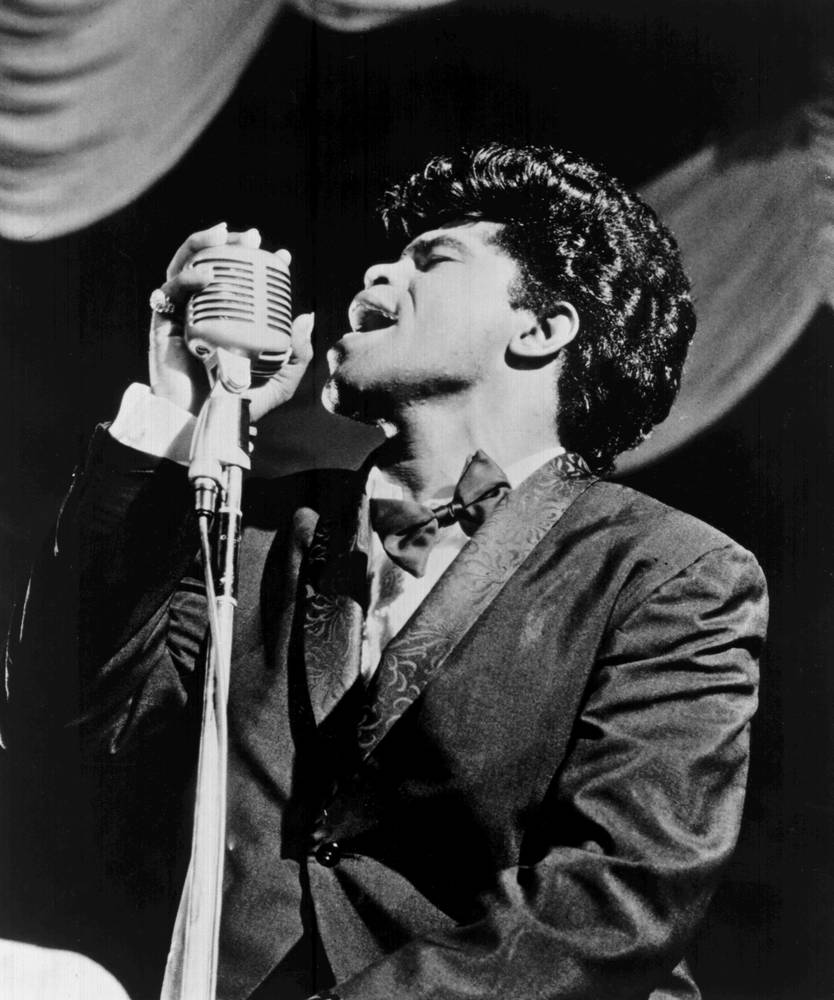
    One of, if not the most significant live recordings ever made. James Brown’s energy as a musician in a live setting is still damn near unmatched. His energy and work ethic off stage, in the studio, as an advocate for his band and his own self-image as a musician and producer, are equally unmatched. There will never be another James Brown, as cliché as that sounds. There will never be an artist more worthy of the title “Hardest Working Man in Showbusiness.”

    James Brown’s road to recording this live album was a rough one. It’s up in the air where he was born exactly, either small-town Tennessee or Macon, Georgia. What is accurate is that he spent his childhood in Augusta, Georgia. Definitely a Horatio Alger story. Young James worked through poverty, family abandonment, prejudice, and delinquency. As a child he shined shoes and danced on the street corners of old Augusta, sometimes falling in with rough crowds and drawing the attention of local police.

    I spent some time in Augusta myself and saw the streets as they are today. Definitely not the town of James Brown’s childhood. What I did see was the display of affection and pride that Augusta holds for being the hometown of one of the most influential musicians who ever lived. The Augusta History Museum has a brilliant display of Brown’s memorabilia and clothes, and James Brown even has a small display of honor at the Augusta Regional Airport.

    Brown started singing with gospel groups in the late 1940s and began touring. Then in the ’50s he started getting noticed as an R&B singer, distinguished by a powerful voice and stage presence despite his stature. His two early hits, “Please, Please, Please” and “Try Me,” became million sellers, and Brown quickly started to rise to dominance in the R&B game and circuit. His work ethic grew with his career, and he became secure enough to play large clubs and demand nothing less than an agreed-upon sum of around $1,200 a night. The Apollo Theater became the quintessential venue for what would become a landmark live album, even though recording a live album of all-original material was essentially unheard of at the time. It just wasn’t done.

    Place this album in its context. Think 1962, the Kennedy administration. Fever pitch. Bottom of the ninth for some Americans. Some people genuinely thought the country and the world were on the brink of full nuclear war. The Cuban Missile Crisis. This show was recorded right in the middle of that 13-day standoff, and folks must have been dancing and singing along to this show thinking it could have been their last night on earth.

    The Object

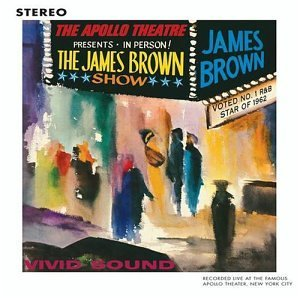
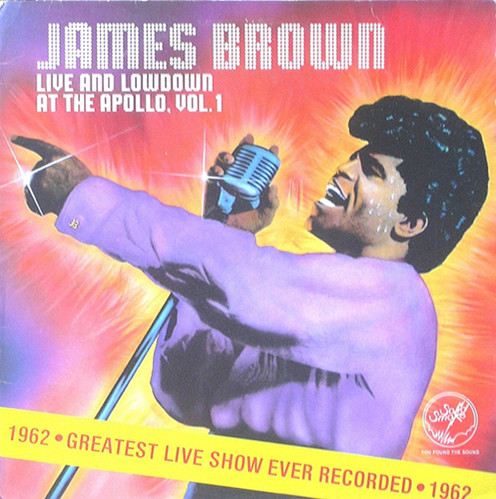
    My copy is a curious little reissue from 1980 on Solid Smoke Records. It carries the alternate title Live and Lowdown at the Apollo, which to me is pretty dope and really adds to the lore. The original cover is a slightly impressionistic piece depicting the front façade of the Apollo Theater in Harlem, names and lights and information filling the marquee. That cover is more about the impression and the vibe of the setting, which is important. The Solid Smoke reissue I own focuses more on James Brown himself, giving his name center stage alongside a stylized portrait of the artist in action, beautiful hair, mid-expression toward the audience, microphone in hand, delivering a vocal performance. The cover also makes the claim that 1962 saw the “greatest live show ever recorded.”

    I snagged this copy on Discogs at a pretty reasonable price. Originals on the King Records label probably go for much higher. The Solid Smoke release sounds really good. It has that energy captured in the recording and presents it well. The vocal is right where it needs to be, and most folks seem to agree the sound holds up against other releases. Douglas Wolk, in his book on the album, notes that this Solid Smoke release is something of an oddity, and also observes that the vocal appears on the left channel while the instrumentation sits on the right.

    The Music

    The Apollo Theater and the Chitlin’ Circuit

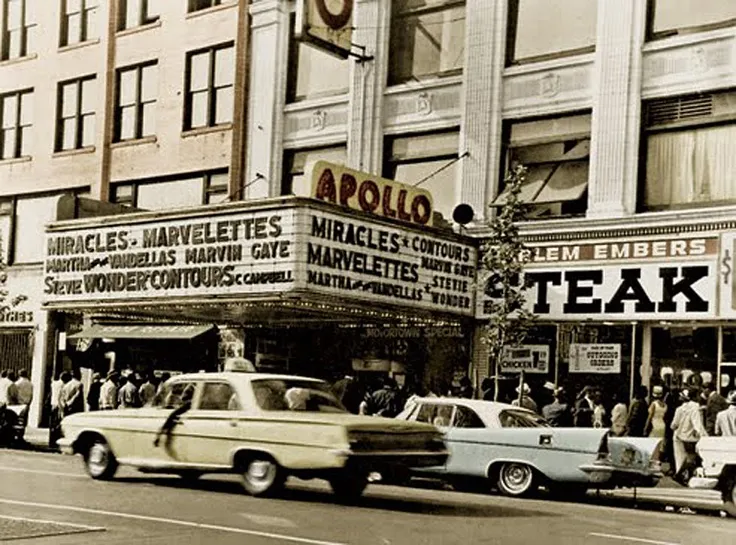
    What this record is, for some people, is a portal to another time. A key time in R&B and soul music, the early ’60s, and the cutthroat venues known as the Chitlin’ Circuit. For many, the Apollo Theater was the most demanding venue on that circuit. James Brown eventually established himself enough in the industry to become one of the original artists with a residency there. Think of the importance by recognizing a key predecessor: Little Richard and his band, the Upsetters. Brown and the Famous Flames eventually worked their way up to co-headline the Apollo right alongside Little Richard. Those must have been some great concerts. We can only imagine the energy in that room watching those two performers work their magic.

    At the Apollo, acts would typically play for a week or weeks straight, performing multiple shows a night. What this record contains in its grooves is only a short snippet of one of those nights. This is Star Time. The headline attraction after a full evening of music, with many other artists preceding. Also important to note: this likely wasn’t the first time the audience had seen James Brown on stage that same evening. An earlier portion of the program was given to the Famous Flames for an all-instrumental set, with Brown playing organ. The anticipation can be felt in Fats Gonder’s introduction and the crowd’s response. This audience was ready for a show.

    The Famous Flames, 1962 lineup:

    After multiple personnel upheavals, the lineup that performed at the Apollo had stabilized: Johnny Terry (original member, who would later leave to join the Drifters), Bobby Byrd (whose second return became permanent), Lloyd Bennett, and Bobby Stallworth.

    At the time this record came out, a live album featuring no new songs or previously unreleased material was an untouched concept in the industry. The recording was produced and overseen by Brown himself.

    Part of what strikes me about this recording is how absolutely in shape the band is. That is not an accident. James Brown was a known perfectionist who demanded a great deal from every musician who backed him. Minor imperfections in clothing, such as an unshined shoe, resulted in fines. A couple of notes off pace or out of tune during a performance resulted in a fine. Brown would signal these infractions by flashing his hands in rhythm with the beat. Four flashes meant twenty dollars docked from their pay. Behavior from a man who wanted the best out of his band, or who was simply unfair and unsympathetic to anything short of perfection in his eyes. Bobby Byrd described the system plainly: Brown didn’t want anyone to know what they were doing ahead of time, so he devised numbers and certain screams and spins as cues. The band as a live compositional tool, entirely subordinate to Brown’s will, requiring him to know every player’s strengths and weaknesses intimately. This endless pursuit of excellence was the product of an upbringing no one would be envious of.


    Introduction by Fats Gonder and Opening Fanfare

    It really doesn’t get better than this in terms of an intro. “Are you ready for Star Time?” immediately establishes what is about to follow. I’m sure that question and that term have long since entered the musical history zeitgeist. What makes this intro even better is the band’s full involvement, and the string of sobriquets Gonder unleashes.

    Fats Gonder really didn’t have to be this effective when he introduced James Brown, but one wonders how much pressure he must have felt. He was not only the emcee for the evening but also an organist in the band. Unclear why the role landed in his lap, but man, it’s a great introduction, and one that Danny Ray, the second hardest working man in showbusiness, aka the Cape Man, aka the number-two to James Brown’s number-one, would go on to emulate in all future shows.

    Gonder’s intro begins:

    “Nationally and internationally known as the hardest working man in showbusiness…”

    That title was originally attributed to Little Richard. Sometimes Little Richard would ghost shows, and James Brown would fill in. The title gradually started to precede James Brown’s name instead.

    Then Fats goes into a greatest hits list, and with each track mentioned, the crowd response grows progressively louder, until the final bang with “Night Train.” Between each song title there is a note, and with each note the progression and tension rise. The pot is boiling over.

    I’ll Go Crazy. Try Me. You’ve Got the Power. Think. If You Want Me. I Don’t Mind. Bewildered. Love Someone. Night Train.

    Mr. Dynamite! Mr. Please Please! The Star of the Show! Mr. James Brown and the Famous Flames.

    Important to note here that Gonder does a great job as master of ceremonies by not leaving out the full title of the band. Not neglecting the Famous Flames. They are stalwart musicians backing James Brown, and they deserve the credit, even if they didn’t always get it from the man himself.

    By the time Gonder gets to that ending, the crowd is like a primed engine ready to blow their frigging top. And then the band flies straight into the first song, bass line and drums and guitar and horns just exploding with energy. One of the more memorable introductions to any live show I can recall.

    What I imagine happening with the opening fanfare, and it’s easy to imagine if you’ve seen any footage of Brown’s work on stage, is his stage entrance. Ever the showman, his intros were some of the finest pieces of expert showmanship in the game. Fast dancing his way to the mic, or strutting and then dancing, sliding up to the microphone like he was born to do it. Many argue he most assuredly was born to play shows, and this recording proves it.


    I’ll Go Crazy

    Written by James Brown, this track was one of his first singles, from 1960, originally recorded in November 1959.

    Brown’s entrance gets the crowd to fever pitch all over again. The background vocals from the Flames are great here, and the band is right in touch with Brown, which was sometimes easier said than done. As the band worked with Brown, they had to learn how to follow his movements and commands, punctuating his shouts and hollers with horn bursts and drum hits.

    Here you can feel how good the band is and what a counterpoint that creates to James Brown. James delivers this vocal with confidence and swagger, claiming he will definitely go crazy if this person leaves him. The Flames act as the mediator between James and the object of his affection, imploring him to calm down and her not to leave him.


    Try Me

    Once Brown announces the first words, the crowd screams in recognition and excitement, and Brown settles into this ballad. One of his earliest singles, preceded only by “Please, Please, Please,” it was a number one hit in 1958. You can feel that popularity in the crowd’s response when Brown kicks it off. Short and sweet here on the live record, but very effective due to Brown’s heartstrung vocal.


    Think

    This track was originally written and recorded in 1957 by a group called the 5 Royales, on James Brown’s same record label, King Records. The James Brown version, especially the one here on the live album, is incredibly sped up, to the point of near ridiculousness. Taking a song and accelerating it into something urgent became part of the MO for Brown and the band.

    The live version is an uptempo clapper, with a strumming guitar, an instrumental jump-and-jive energy that really moves at pace. Those claps, and the way James Brown is so frenetic in his delivery, you can almost picture him cutting some seriously professional dance moves while he sings it. The track comes and goes quickly. For a moment you’re in it and then you’re out of it.


    I Don’t Mind

    Originally recorded in September 1960. The studio version feels a tad different from the Live at the Apollo version.

    The live version is amazing, even if it feels slightly off-kilter in some ways. It sounds like the band is negotiating a strange pace with Brown. Listen closely with headphones and the reward is you start to hear the crowd really becoming involved. A woman in the audience screams after Brown’s “I’m gonna miss you.” She says, I sure do, baby.

    The vowel vocalizing from the background singers is my favorite part of this song on the live record. There’s something about the register they’re in that’s transporting in a way that’s so emotionally affecting. This is an off-kilter track, but to me it’s a high point of the recording.


    Lost Someone

    After the final instrumental interlude, we’re now into something completely different from what came before. After the opening run of hits, what’s coming is a stretch of improvisational, pure musical emotion. A live performance hitting its extreme peak and not relenting until the final note.

    Brown starts with another introduction, something like what Fats Gonder did, but this one is James. He’s pleading with the audience to feel what he feels. And when he finally gets into the first line, “I lost someone,” we are fully engaged in this long, drawn-out song full of vocal power.

    The responding muted horns after each line are a welcome, easy punctuation to the vocal prowess Brown displays. He’s really going for it, and each crash and horn response is the cue for the crowd to respond. And respond they do. By now they are screaming in ecstasy.

    The repeated “I’m so weak.” He gives each one the same justice. Douglas Wolk posits that even here, since Brown knew he was being recorded and wanted to avoid distortion from overloading the microphone, he was holding back. It’s really difficult to comprehend that. With “I’m so weak,” he sounds distant from the mic, perhaps offering more to the live audience in the room than to future audiences listening in the living room. But his method here is an amazing piece of solo artistry. It demands to be heard.

    On the 1980 Solid Smoke reissue, this track is split in half between the last song on side one and the first song on side two. An interesting quirk for folks back then. To my ears it’s a tad jarring. Full recordings of the track are out there and worth seeking out to really hear the power and feel the whole arc of the performance. It’s remarkable through and through. A two-minute pop song stretched to eleven minutes. That was just insane for 1962.


    Medley: Please, Please, Please / You’ve Got the Power / I Found Someone / Why Do You Do Me / I Want You So Bad / I Love You Yes I Do / Why Does Everything Happen to Me / Bewildered / Please, Please, Please

    Within this medley we hear a touch of “Please, Please, Please,” the song that put Brown on the map and was his first hit. The crowd’s response when that kicks in is just staggering. They have been waiting for this moment for hours, or for some, probably their entire lives.

    What a curious song “Please, Please, Please” is. For Brown it’s a signature, one of his likenesses. And it’s a one-word chorus. That’s James Brown for you. The man only needed one word to make his effect.

    That effect is felt for about the first thirty seconds of the medley. A brief notice of the full track, but enough to set the proverbial souls of some audience members on fire. They are literally going insane.

    “You’ve Got the Power” is given only a brief snippet, barely the first line, before it moves on. “I Found Someone” gets thirty-nine seconds and functions as a natural answer song to “Lost Someone.” “Why Do You Do Me” is blink-and-you’ll-miss-it, only four lines, Brown in a lower register. “I Want You So Bad” gets another four lines of ballad. “I Love You Yes I Do”: Brown sings the first line in crooner mode and the band responds by going into the track. Astonishingly, it’s been noted that this medley was not prearranged. The band had to follow Brown’s cues, whether vocal or gestural, to know when to be ready. I’ll go ahead and say it: that’s insane, and I don’t know how they did it. They deserve recognition as some of the hardest working musicians in showbusiness. There’s also some great organ work in this stretch.

    “Why Does Everything Happen to Me” gets another short snippet, the crowd rolling along with what’s happening. “Bewildered” gets only twenty-five seconds, four lines, but that first Bewildered shoots the crowd off like a rocket. And then the finale of the medley turns back into “Please, Please, Please.” We’re back where we started, and the crowd and the band are back with us. We’ve just traveled through Brown’s late ’50s and early ’60s career in under five minutes.

    Was this where the cape routine happened? The cape routine, where Brown falls to his knees, pleading for mercy or forgiveness or submission, whatever you wish, and one of the band members, later it would be Danny Ray, comes over and drapes a cape over the singer as an offering of respite from the pain and sorrow of the performance. By the time of this recording, the cape routine would have been well known enough that Brown didn’t need to draw it out. The two pieces of “Please, Please, Please” would have been enough to trigger the image in everyone’s minds. On the recording the same effect is there. We must imagine some form of the cape routine likely occurred.


    Night Train

    A jazz standard from 1951, originally recorded by Jimmy Forrest. James Brown first recorded his version in 1961, replacing the original lyrics with a list of cities on his East Coast touring circuit. On this live record, that tradition maintains, and it makes for a deeply moving finale to everything that came before. It gets the folks moving, that’s for sure. And it’s got that train motif, which by tradition is a passed-down metaphor for the life of the musician. The constant movement, the place-to-place lifestyle that so many artists come to love and live with. The long lonely nights. The city-to-city movement. The loneliness. The Night Train coming along.

    James revisits the narrative: I’ve lost someone, but I know where to find them. All aboard?

    The crowd answers, and someone in the audience knows what’s coming, responding with the song title before Brown even announces it. It’s the Night Train.

    He starts southern and moves north: Miami, Atlanta, Raleigh, Washington D.C. Wait, we forgot Richmond, Virginia. Back north: Baltimore, Philadelphia, New York City, Boston. And finally, New Orleans gets the most honorable mention. The home of the blues.

    If you think to today, the modern hip-hop or rap artist mentioning all the towns where they have people, you start to wonder if this litany from James Brown was the first example of that method.

    The music is pretty simple. A recurring guitar riff and a blast of horns driving alongside it. Motivating and relentless to the end. The Night Train carrying him home. New York City, the end. He goes a couple of rounds, like an ouroboros. The tour circle keeps going round and round. The conductor is James Brown. He wants us all to come along with him, and whether we like it or not, we’re going to come along. Captivating.

    Night. The way James Brown closes this show. A fitting ending to an amazing piece of recorded music.

    Closing

    Live at the Apollo marks a specific moment in the life and career of James Brown. It also marks a specific moment in history. Harlem, New York. The Apollo Theater. The Chitlin’ Circuit. The United States, in the midst of an unprecedented paranoia: the Cold War, Soviet aggression, civil rights, nuclear war. Amidst all of it, James Brown and his band are putting out Black energy to a Black audience that probably needed it most. If that’s not a formula for a legendary show and a legendary recording, I don’t know what else you need.

    The legacy this album holds is impeccable. I really enjoy hearing about how DJs would play the entire first side uninterrupted, giving it the honor and space to breathe and letting the effect land. It’s one of the most memorable live records ever made. It was James Brown’s idea, and it became a massive commercial success. After this record’s release, it went to number two on the Billboard 200 pop album chart. The R&B albums chart didn’t yet exist. The success of this record led Billboard to create the R&B Albums chart in 1965.

    The record made James Brown a megastar. We must all bear witness to this creation. Hear it and visualize it for yourself. Hop on the Night Train. Go visit the Augusta History Museum and read up on the star. Be educated. James implores us all, children.