Studio Album | Released November 1962 | Recorded April 1962 at Van Gelder Studio | Prestige Records | Producer Shel Kagan
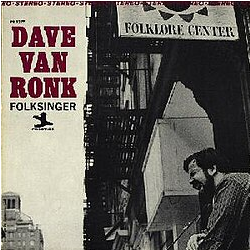
This album is pure and simple. An urban performer taking his trade and applying it to reshape and reform the golden nuggets of folklore. The folk song unearthed, repurposed, re-bluesified and re-jazzified by a singer with a powerful, emotive voice and a knack for the guitar bent upon years and years of rambling, and practice practice practice.
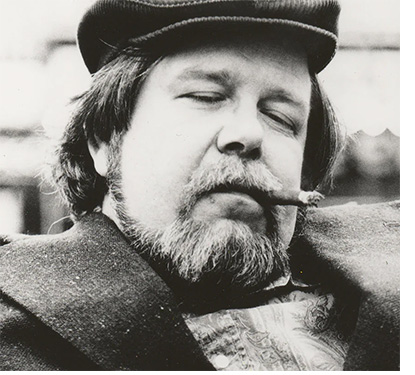
Dave Van Ronk didn’t agree with the title this release bestowed upon him. Van Ronk had traveled to Manhattan in the early 50s in an attempt to work and succeed and be famous as a jazz singer. His inspirations were jazz artists and big band leaders and musicians. Those jazz leanings were fused with blues leanings, and his inspirations remained as such throughout his life. The early members of his audience made note of his appearance and his voice. He was a very big guy. Above six feet and above 200 pounds. With a voice that could raise Lazarus from the grave.
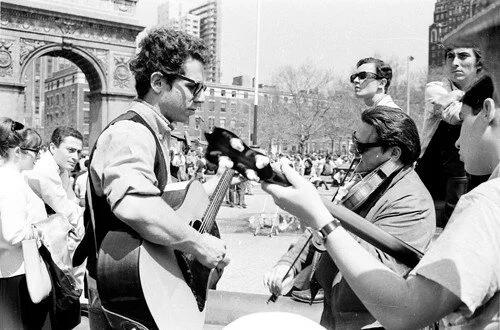
In The Mayor of MacDougal Street, Van Ronk relates hearing an early version of “Stackolee” on an Alan Lomax reissue series record, one of the earliest records he ever purchased. The version by Furry Lewis had a distinct fingerpicking guitar style, and it perplexed Van Ronk. He felt it was two different guitars playing, when it really was one person playing both melody and bass line simultaneously. He ran into someone later in Washington Square Park picking their guitar in a similar way. He sat down and listened, and asked the person for a quick on-the-spot lesson. After that day, Van Ronk took a head-first nose-dive into the fingerpicking style. He would go to Washington Square Park to play, and to learn from those who already knew. He gave everything he had to mastering that style of playing, and that was his change from jazz to folk. It was a career decision, as Van Ronk states in his memoir. It was a move from complex to simple. It came out of necessity, and it was also a change in mood and mind, arriving right at the time the Village scene was about to make history.
It was the Washington Square Park scene that Van Ronk developed inside of. This scene was sporadic pockets of musicians occupying various parts of the park, striking up tunes together or by themselves. A fertile music-breeding ground if there ever was one. Also passed around in copious amounts were drugs and left-leaning ideology. This was libertarian, progressive, communistic support for music that these folk thought was going to affect change at upper levels of government. Lots of hate for other groups, as he would say. Van Ronk’s MO at the time was to sit down somewhere and sing. The hope was that folks would gather around, and maybe pitch in money. He had an advantage for these impromptu live sessions: his voice volume. If you’ve heard Van Ronk you immediately notice his voice. It would carry well in a park setting, and even the least curious passerby would notice it.
Somewhere around this time a reissue record comes out. The Anthology of American Folk Music, a compendium of traditional American music. Some had never heard these recordings before. Most hadn’t, actually. This became Van Ronk and friends’ guidebook for how to sing and make their music. It was the tome of the elders. It had all-time greats on it. Mississippi John Hurt, Blind Lemon Jefferson. Triple OGs. On contemporary phonograph equipment at the time, this record set must have blown minds. What it actually was was a set of old 78s collected onto LPs.
The music would come from places other than America as well. Van Ronk’s song on this record, “Chicken Is Nice,” was a Liberian original. One of the only recordings at the time of an American folk singer repurposing a song from Liberia as his own. That alone makes this record a must-own and a must-listen.
MacDougal Street, the Folklore Center, and the Scene
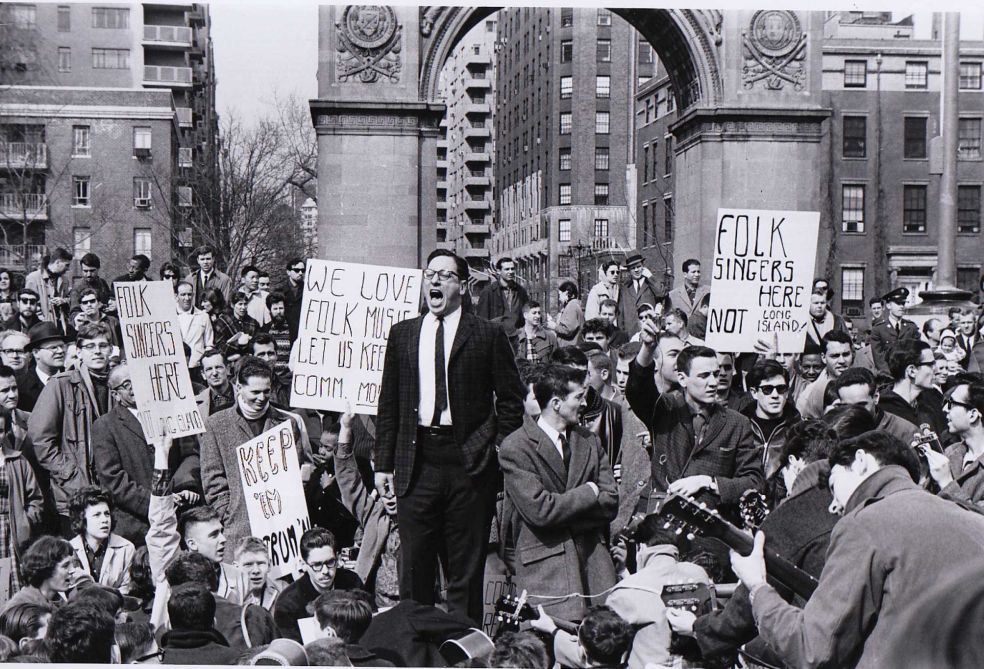
By the time Folksinger came out, Van Ronk was pretty well established in the scene. He had become somewhat of a mentor and ringleader of sorts. The hangouts were the Caricature Coffee House, the lofts down on the Bowery, and the Café Bizarre. It was at a gig at the Café Bizarre, with Odetta as the lead attraction, that Odetta saw Van Ronk’s performance and was so impressed she asked him to send her a tape so she could pass it along to Albert Grossman.
Van Ronk’s vocal influences were jazz and blues artists he began to mimic through a jazz lens. Josh White was one of those touchstones. White was a Black blues and folk singer who had lived in the Village for years and represented exactly the kind of vocal authority, dramatic phrasing and stagecraft that Van Ronk admired and absorbed. You can hear White’s influence in the way Van Ronk shapes a phrase, how he leans into a line for emotion and then pulls back.
Izzy Young’s Folklore Center on MacDougal Street was the other anchor of this world. It was part shop, part hangout, part bulletin board, part informal concert hall. Van Ronk spent enormous time there in the late 50s and early 60s, and the cover photo of Folksinger shows him standing right under its sign. There were also the hootenannies at the Gaslight Café and up and down MacDougal Street, which Van Ronk was central to.
The Object
My record is a faithful reissue of only the best kind, by the great company Vinyl Me Please. Every one of their reissues that I own I cherish for the quality of sound and the great presentation of some of the all-time greatest records, or at least the ones that hold the most importance. The sound quality on this release is fantastic. The jacket and wax are sturdy and guaranteed to last my lifetime. The liner notes are recreated. The true highlight of this package comes in the listening notes by Elijah Wald, in a little Moleskine-style notebook tucked away in the record sleeve. Give me something like that with every single record and I’ll be happy. With this record, and with the ones that come with lore, it’s a cool thing to see, a writer putting heart and devotion into detailing the music you’ll hear and giving you the stories you need to understand the notes and heart and emotion in Van Ronk’s voice.
The album cover has a great photo of Van Ronk on it, in full belt, standing under the sign of the Folklore Center, the place where he spent a lot of his time in the late 50s and early 60s, and like the church of his inspiration, where he became linked to so many of the songs you hear on the record.
The Music
He Was a Friend of Mine
This is a traditional folk song, originally unearthed by Alan Lomax. It’s simplistic in nature and exhibition in most versions that you hear. A song of lament, about a person recounting the death of an old friend. There are numerous versions. One of the most incidental was the Byrds’ version, given more weight as a somewhat pointed tribute to the dead president John F. Kennedy. The two early folk versions of the 60s belong to both Bob Dylan and Dave Van Ronk. Dylan’s version precedes Van Ronk’s and is similar in execution, and it did not end up being placed on Bob’s first record.
Van Ronk’s version really makes you think this song belonged to him. When I first heard it, I suspected the song was new. As the first song on the record, it opens up the listener to the Van Ronk universe. The song is sung with quiet beauty here. Sustained notes start getting scratchy toward their end, like a road going from pavement to loose asphalt to grit. The road is the setting. The man who died, we don’t know who he was. What we do know is that Van Ronk is intensely broken up over this person’s death. And since Van Ronk himself has passed on, leaving his legacy in tattered records and folk legends and lore, perhaps this is a song that can serve as an obituary to the man himself.
Maybe this is the one song on the record most connected with Dylan and the strange way that people connected Van Ronk to Bob Dylan. Each of them sang their own version of the track, maybe in reference to each other. As far as friends, enemies, rivals, mentors, I don’t know where the two fell. It’s difficult to understand truly how each of them felt for the other. What we do know is that they were both somewhat influences on each other, maybe moreso Van Ronk on Bob. Still friends though.
The man who most could have been this friend, though, was Phil Ochs.
A great live version of the song, maybe the most meaningful, was put forth by Van Ronk at the Phil Ochs Memorial Concert in 1976. Van Ronk sounds tore up singing it, his voice cracking with the emotion at the lament of the death of a fellow folk giant.
Motherless Children
Originally recorded by Blind Willie Johnson in 1927. The song moves through the gospel and blues tradition and was a natural fit for Van Ronk’s range, sitting somewhere between spiritual and field holler. He gives it that wide, deep voice and lets the guitar do the mourning underneath.
Stackerlee
This song’s legend holds a mirror to itself. It’s one of those legends made into song, and with each iteration a new artist and performer etches their name in the logbook of history. Originally the song was performed in the 19th century, about a famous African American criminal. Lee Shelton lived in St. Louis, Missouri, was a member of underground clubs, and gambled, drank, and bedded women. He would go “stag,” and eventually Stag Lee became his name.
As folk tradition has it, the passing down of songs with different variations was the tradition. The names get changed, the ideas of the song change. The legend grows larger. “Stackolee” is a great example of this passing-down through generations, but with things different each time, like a generational game of telephone.
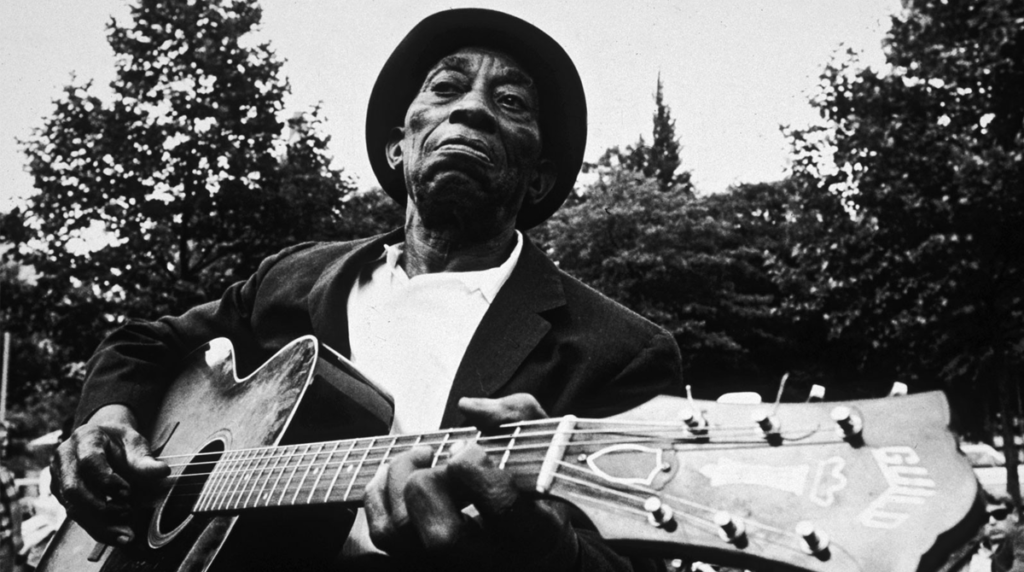
Van Ronk relates his first time hearing “Stackolee” and it not making sense to him, that it must have been two guitar players in unison. Furry Lewis is completely inspiring on his rendition of this legendary song. Van Ronk makes note that he never changed much about the original Furry version. Bottom line up front though: if Van Ronk never hears this song on the Listen to Our Story anthology, put together by Alan Lomax and released in 1947 on 78 and 1950 as a 10-inch LP, Van Ronk probably never takes up fingerpicking.
If you listen to a version by Furry Lewis, you can really make out the great imitator that Van Ronk was, in both his vocal stylings and his guitar work.
Mississippi John Hurt’s version of this track is one of the most famous and earliest put down. That came in 1928.
Mr. Noah
An exhibition of Van Ronk’s great sense of humor, and a touch of goofiness. This one was sourced from blackface minstrel shows by way of Greenwich Village banjo great Billy Faier.
As simple as this song appears to be, it exposes something inherent about Van Ronk, which is that he was a skeptic of institutions, religion being one of those. According to Elijah Wald, the song was popular as a barroom number, sung by drunk men in circles. It was a mock at religion, with a chorus of “hallelu, hallelu, hallelu.”
Van Ronk deftly replaces “hallelu” with “doodly-dee-doo.” I think Ned Flanders would not enjoy this song.
Come Back Baby
Dave had recorded a version of this song on his preceding record. That version sounds primitive, worked out as a blues recording. On Folksinger, the version has more personal qualities to it. It’s recorded better, for one. You hear the inside of the guitar sound so well. And the vocal has resonance, and you are personally affected. Dave is singing in a slightly tender register. But it’s gruff. It’s like a bear with a soft voice in one line, and then a growl in the next line. That artistic style, that variance in pitch and demeanor, was something Van Ronk was a master of.
Poor Lazarus
This song’s source was Alan Lomax’s anthology American Ballads and Folk Songs. A work song with chain-gang roots, sung with a heaviness that Van Ronk’s voice was built for.
Samson and Delilah
Original arrangement by Reverend Gary Davis. Of biblical nature, and a narrative song. Reverend Gary Davis was another legend, and probably loomed pretty large for Van Ronk. The banjo of Davis is replaced here by Van Ronk in his own way. Van Ronk is in full throat on some of these lines, giving his best effort to imitate the master.
Cocaine Blues
Another song Van Ronk sang as an inspiration from Reverend Gary Davis. Davis’s version is a borrowing of a vintage country song, popularized in modernity by Johnny Cash, but here taken in the folk-singer revival tradition. Van Ronk gives this track its due, and it seems like a personal lament to the drug and its adverse effects. It’s really got that one-man-in-a-song-in-a-small-room setting, maybe more so than any other track on the record. Toward the end it becomes a confessional of sorts. On that last line of the chorus, Van Ronk raises his voice to full effect.
This track was one of the early folk songs that mentioned drugs, and that inspired dozens of artists to create their own versions. Dave’s version maintains that original status still, and the song about cocaine gained definite appeal long after the 60s and into the 70s, as that drug lived its own life and so did this song about it.
Many people connect this song to Dave Van Ronk as the closest thing he ever made to a hit. It was always requested, loudly, from the crowds at his live concerts. Van Ronk probably got sick of it. He stopped singing the song in 1972.
A large section of Dave’s memoir is given over to the inspiration and the authority that Reverend Gary Davis had in his life as an influence. He notes the song’s importance as it came from the Reverend, who was the biggest inspiration on Van Ronk’s life.
You’ve Been a Good Old Wagon
This may be the track where you can most make out Dave’s jazz big-band and ragtime influence. You can hear just how important Dave’s vocals are in the arrangement and how the guitar part is giving the vocal its power. On a larger scale, there would be a full band backing up a vocal like this, but here it’s done subtly with just guitar and voice.
An original song by Bessie Smith in the vaudeville blues tradition. A song that in Dave’s rendition is meant to be funny, though later Van Ronk would express some regret, since the original version holds a more funereal aspect to it.
Fixin’ to Die
A Bukka White song, from the album The Country Blues, put together by Dave’s roommate at the time, Samuel Charters. Dylan had also recorded his version of this track a year earlier.
Hang Me, Oh Hang Me
Sourced from an album by Sam Hinton, who was a West Coast folksinger. If you watch Inside Llewyn Davis, you’ll get a good dose of this song, sung by Oscar Isaac. The Coen brothers borrowed a lot of inspiration from the life of Van Ronk to make that movie, and it’s fitting that they chose this song as one of the figurepieces. The main character, down on his luck, in a constant cycle of trying to break out of a lack of success through music and talent. It’s downtrodden. If “He Was a Friend of Mine” is a lament about a friend gone away, then this song is a lament about one’s own miserable lot in life. Destined for poverty and hard times.
Long John
This song came from a version by Woody Guthrie on a 1950 record called Chain Gang. Another work song, another voice in the long American line of singing under the lash and the sun.
Chicken Is Nice
A fantastic ending song, and a unique one. Originally put down by a Liberian pianist named Howard Hayes. Van Ronk found it on a set called Tribal, Folk and Café Music of West Africa. Dave’s early years were occupied with searching out the deepest and best material out there on records. Likely on 78s, and not usually on LP compilations.
Closing
I must admit, purchasing, owning and listening to this Van Ronk record are recent events in my life. As an offering of songs, Folksinger is a truly brilliant gift of an album, from a singer who should definitely not be forgotten but too often is. And it’s more than being forgotten. I think he’s a bit misunderstood. Many connect Van Ronk to the Greenwich scene, but to me his life was much bigger than that. That scene was fertile ground for dozens of songwriters, artists, poets and all sorts of creativity. Van Ronk stood solo based on his presence as a person, and on his influences. Folksinger, from 1962, is a good entryway into the efforts and works of art of how he took his song influences and made them his own. Don’t compare him to anyone else. Don’t associate his name with any particular setting other than late-50s and early-60s American music revivals. It’s essential that Van Ronk is remembered as such. Folksinger is in fact a statement of that, and a great record.


Leave a Reply